Newsletters


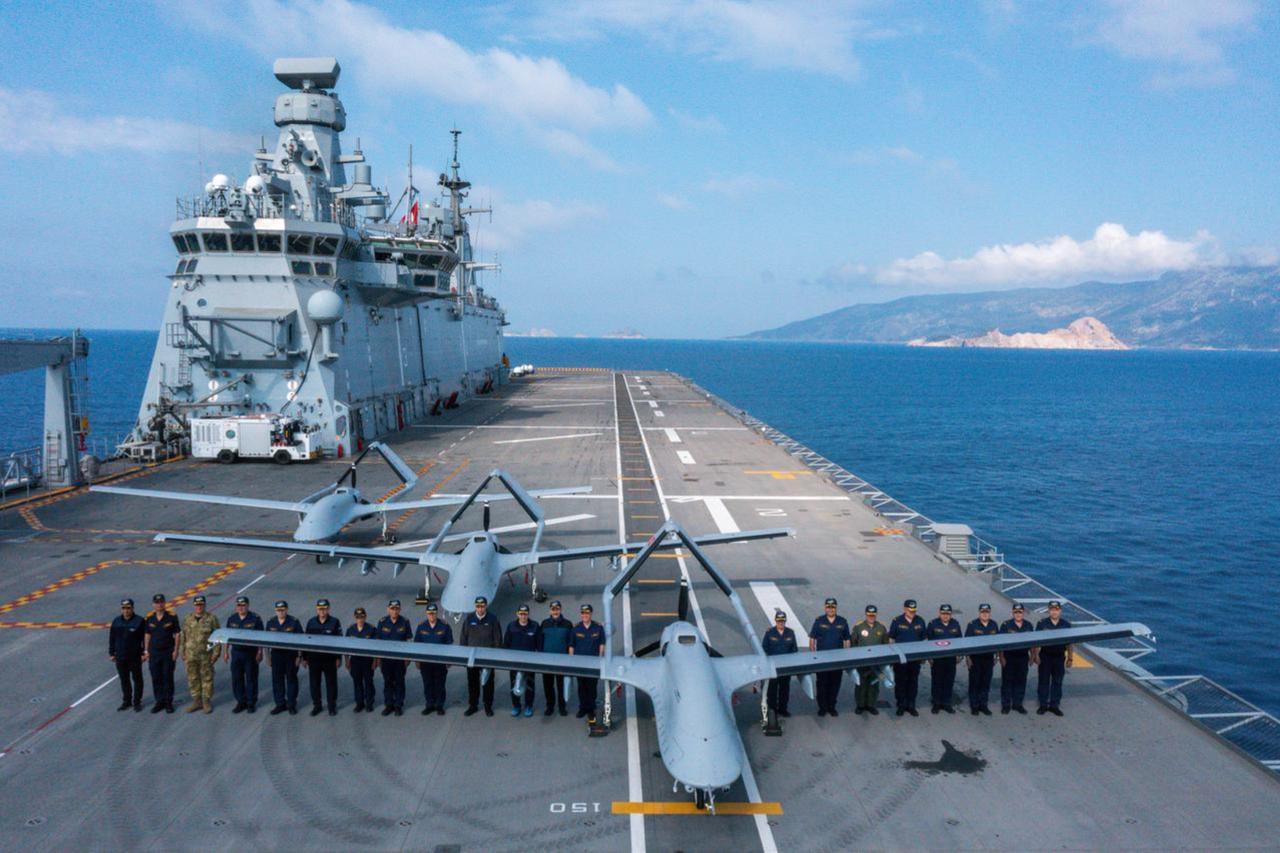


Türkiye lives in a neighborhood where security is evaporating, and Ankara is answering with a swarm. The recent pledge by Baykar CEO Haluk Bayraktar to seed drone hubs across all 81 provinces makes sense as a defensive logic, but a call to arms isn't the only reason for it.
This is a strategic pivot. While these centers will undoubtedly fortify the borders, the real play is much broader: the creation of a nationwide tech ecosystem designed to be as effective at saving lives as it is at defending them.
“We’ll use the revenues from the SAHA Expo to establish these centers, which will help us instantly achieve the production capacity of millions of drones nationwide at any given moment,” said Bayraktar.
According to Anadolu Agency, Haluk Bayraktar, who runs Baykar with his brother Selcuk, also added that the new centers will be open to the public and will encourage young people to train, produce, and test drones, becoming part of the country’s broader technology ecosystem.
SAHA 2026 International Defense and Aerospace Exhibition, organized by the SAHA Istanbul Defense, Aviation and Aerospace Cluster, is a non-profit of some 1,300 companies that compare notes and seek common ground in a highly competitive defense and aerospace market at home and abroad. Haluk Bayraktar is also the chairman of SAHA Istanbul.
The event is expected to bring together some 1,700 companies and 200,000 visitors. Whereas SAHA 2024 saw more than $6 billion worth of contracts inked between participating firms and governments, this year’s SAHA is expected to take that figure to $8 billion, a new record in contracts signed at a single event in Türkiye’s vibrant military-industrial complex.
Türkiye’s detractors often accuse Baykar and Turkish Aerospace Industries (TAI) for building drones that are somehow simultaneously “ineffective” and “too dangerous” on the battlefield, a notion disproved time and again by Turkish and allied successes that keep civilian casualties to a minimum. The “81 aloft drones for 81 provinces” idea is not only a call to arms.
Far from it: The sorts of drones that many lesser-known Turkish companies are building could have life-saving and cost-cutting applications. One cannot help but play this all to the tune of the German band Nena and its 1980s’ hit “99 Luftballoons” — call it “81 aloft drones.”
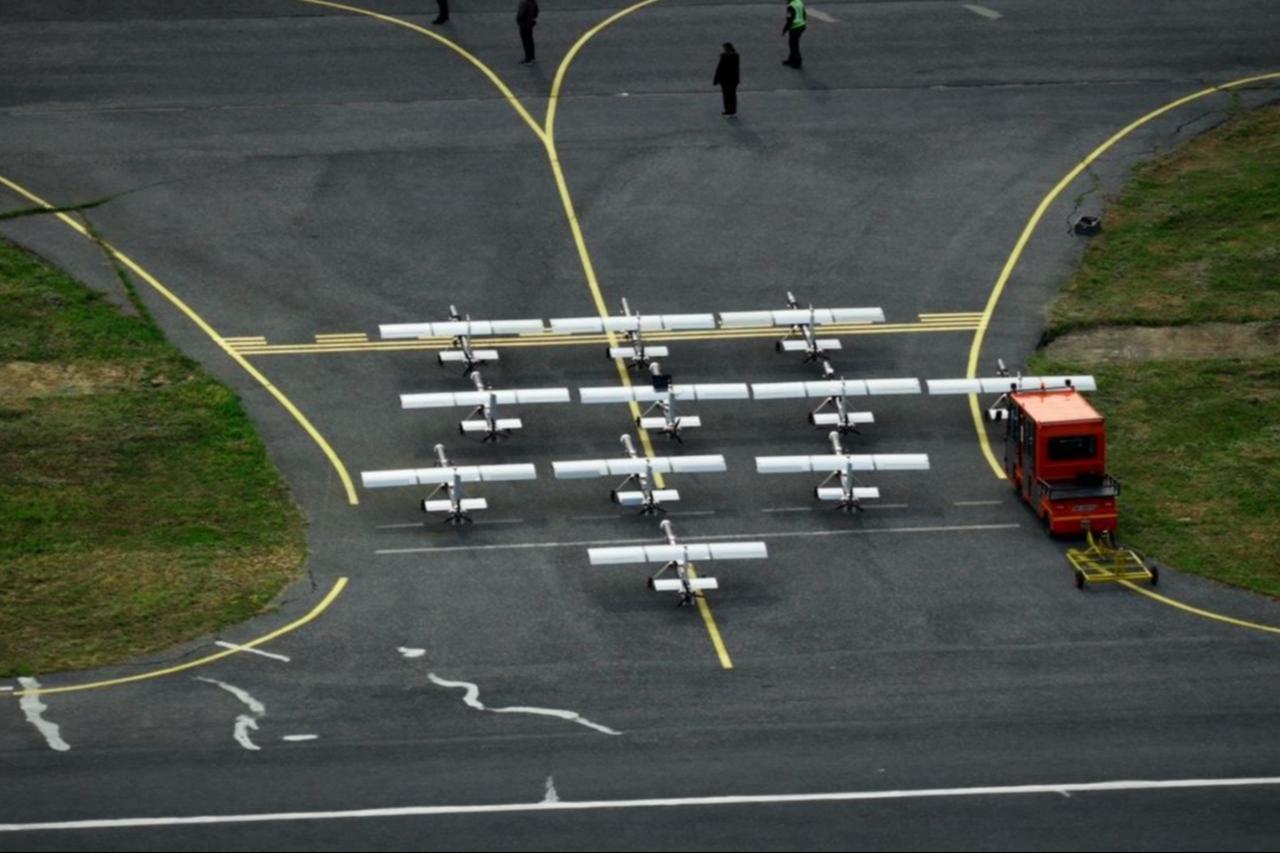

The 81 aloft drones could be useful in multiple fields. Altinay Defense subsidiary Dasal has developed the Puhu C75 vertical-takeoff and landing (VTOL) drone that could carry 75 kilograms (165 pounds) of payload across 10 kilometers (7 miles). It is already in use among the Turkish military, mostly to carry medical supplies. The newly developed Puhu C100 will be showcased at the SAHA Expo 2026.
Altinay and others are working on heavier units to carry more across longer distances, which would come in handy for the many sorts of natural disasters that Türkiye faces each year—forest fires, flash floods, and earthquakes.
The Turkish government has deployed Baykar- and TAI-made drones to track forest fires in the past. Bigger, heavier VTOL drones could help to bring supplies and fire suppressants to firefighters in remote areas.
In times of flash floods or post-earthquake search and rescue, powerful and stable drones could assist in rescuing trapped survivors or even with debris removal. Equipped with new-generation sensors like LiDAR and infrared modules, these units could locate survivors buried under rubble. Above ground, other drones could serve as emergency telephones and wireless data transmitters to restore vital communication.
On more ordinary days, the Turkish national police and gendarmerie could use drones to enforce speed limits and public safety rules on Türkiye’s many unruly drivers. Traffic accidents in Türkiye claim more lives each year than when PKK terrorism was at its height in the 1990s and 2016-2017. Drones also serve as excellent border security enforcers, a politically sensitive issue following the refugee influx from Syria and Afghanistan.
Turkish UAVs are also put to good use for less sensitive matters, such as critical infrastructure inspection, both above ground and for water and sewage pipelines. Using LiDAR, drones could help with archaeological and other underground surveys.
Out at sea, just as Turkish surface combat drones like Marlin and Pirana and STM’s Neta submarine drone are showing the flag, civilian naval units could help fishers track schools of fish. Simultaneously, researchers could use them to inspect sunken ships, underwater cables, the status of offshore drills, or environmental changes in real-time.
Conservationists could use drones to ensure marine life is not threatened by commercial activities.
Of course, there is no point in pretending that there is no military “dual use” for all of the above.
If there is one lesson from the wars in Ukraine and Iran, both fought on Türkiye’s doorstep, it is that low-flying, slow, yet agile drones are now a permanent fixture of the modern battlefield.
While the world knows much about Baykar TB2s, Akinci, and Kizilelma as well as TAI’s Anka series of drones, Türkiye is improving rapidly on the VTOL front.
The Turkish firm Asisguard’s Songar family of drones comes with assault rifles, grenade launchers, or multiple mortar rounds for quick delivery on the opposition.
Speaking of lacking shyness, Baykar unveiled its K2 “kamikaze” drones in March that can carry munitions and coordinate with other K2s to implement “swarm attacks” on enemy positions. K2-type drones and VTOLs could be used to hunt enemy drones as well.
The call to open 81 drone research and production centers proves that Türkiye wants to be able to produce UAVs for the best and worst of times.
Much like Nena’s “99 Luftballons,” an anti-war cry born from the tension of the 1980s Cold War, the hope is that these “81 aloft drones” will be used to better lives in Türkiye and beyond, rather than to destroy them.


 Set as preferred source
 Set as preferred source



 4 min read