Newsletters




This article was originally written for Türkiye Today’s weekly economy newsletter, Turkish Economy in Brief, in its May 4 issue. Please make sure you are subscribed to the newsletter by clicking here.
Global markets left April behind amid uncertainty in the Middle East. After rising over 40% in March, oil prices gained another 7.6% in April, closing the month at $111.
As attention shifts to developments in the Middle East in May, focus has turned to a new Iranian proposal to the United States, delivered on the final trading day of last week. The move has helped keep hopes alive for negotiations and a potential agreement.
However, President Donald Trump said Washington is still “not satisfied” and continues to keep military strikes on the table.
Developments in Türkiye’s markets are being closely monitored, as the critical April inflation data was released today. Monthly CPI increased by 4.2% in April, following a 1.94% rise in March. Annual inflation thus came in at 32.4%.
Looking at the breakdown, inflation driven by rising oil prices is reflected in notable increases in food, summer textile products, housing expenses, and service sectors such as restaurants and accommodation.
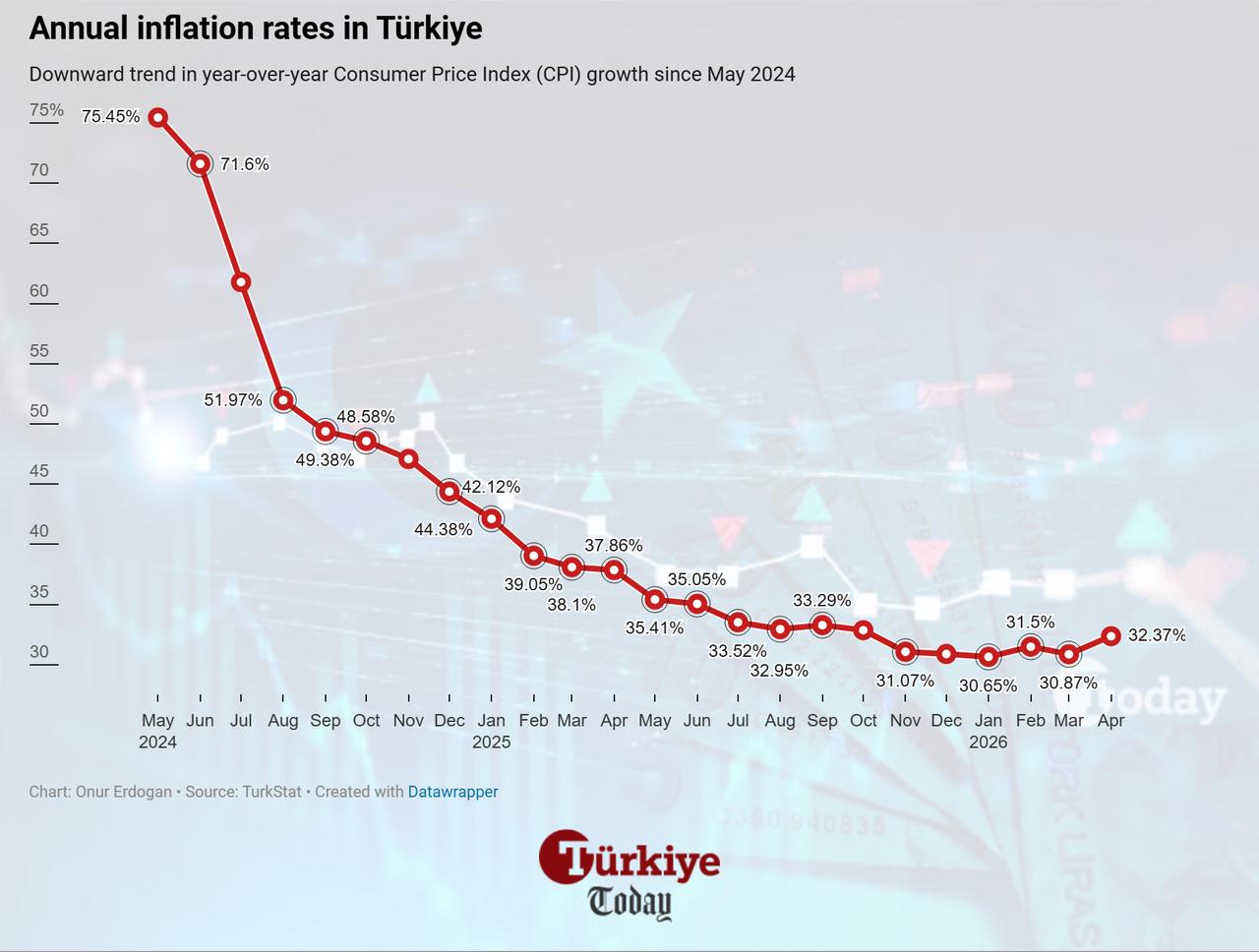

The rise in inflation is no surprise to markets.
Following the major shock in the Middle East, higher overall price levels were already expected. Despite signaling tighter monetary policy ahead, elevated inflation has not prevented positive price action in Turkish lira assets, particularly on Borsa Istanbul.
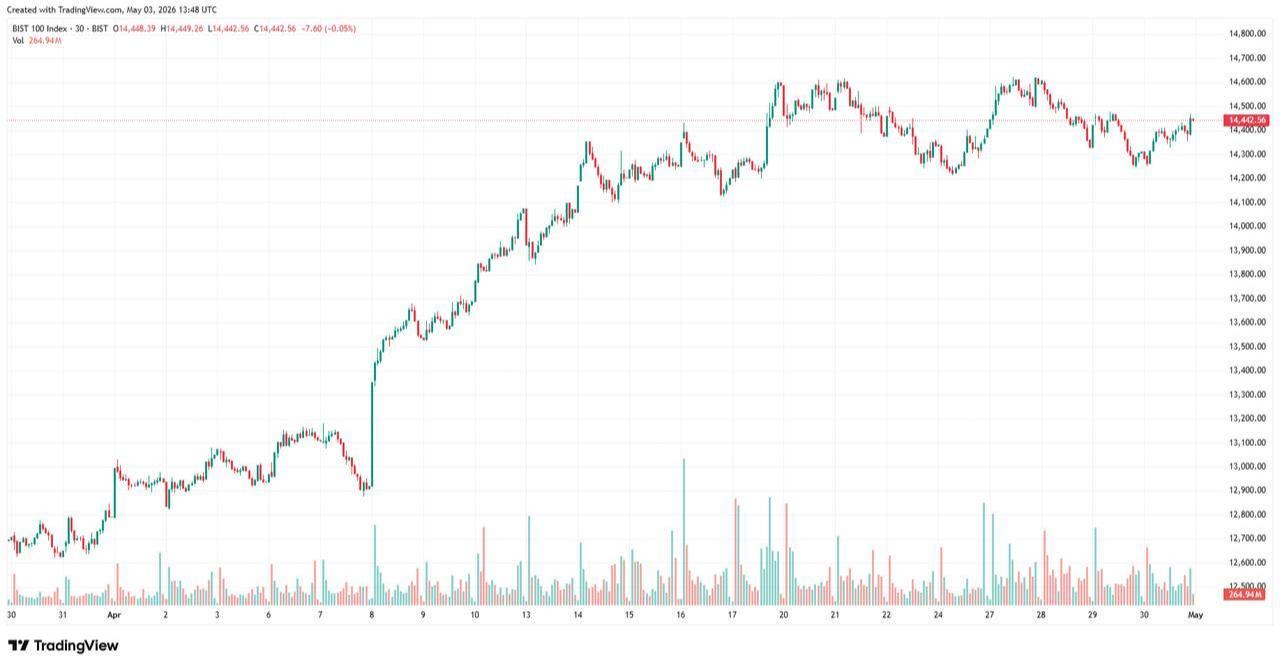
The BIST 100 index climbed 12.91% in April to close at 14,442.56 points and hit a new record of 14,621.97 during the month. This raises questions such as: “Are markets overly optimistic?” or “Are risks being overlooked?”
However, developments are supporting this optimism.
During the period of heightened tensions in the Middle East, the Central Bank of the Republic of Türkiye’s (CBRT) policies have been the key factor supporting market optimism.
Following the outbreak of the conflict, the Monetary Policy Committee met twice, in March and April. At both meetings, the CBRT kept the policy rate unchanged at 37%, citing risks to the outlook.
Meanwhile, market funding has been conducted at the upper end of the interest rate corridor—around 40%—since early March. This effectively established a tight monetary policy stance.
As a result, the Turkish lira experienced less depreciation than its peers during this period.
CBRT Governor Fatih Karahan stated at the bank’s General Assembly that the policy stance was kept tight in March and April due to risks to the inflation outlook.
He added that monetary policy could be tightened further if there is a significant and persistent deterioration in inflation. Karahan emphasized that stability in the lira has helped contain cost pressures.
First-quarter 2026 financial results from companies listed on Borsa Istanbul are starting to come in, and overall, results are exceeding expectations, supporting optimism in the stock market. Looking at two of Türkiye’s largest companies:
Optimism in global stock markets during the conflict period has also positively affected emerging markets.
In particular, a new rally driven by artificial intelligence has emerged in U.S. markets. On Wall Street, the S&P 500 index rose 10.42% in April, closing at 7,209 points. On the first trading day of May, it reached 7,230 points, marking an all-time high.
Last month, Intel surged by 114.09%—a rare triple-digit monthly gain in Wall Street history—while Nvidia rose 14.43%, Amazon 27.27%, and Microsoft 10.16%, all delivering double-digit returns.
Recent artificial intelligence investments by U.S. tech companies, totaling around $700 billion, along with newly launched products, have further fueled the market rally.
Markets have been positively influenced, albeit cautiously, by the ongoing “ceasefire” process since early April. Although no agreement has yet been reached between the U.S. and Iran, ongoing mutual proposals during the ceasefire period are helping sustain optimism.
The main focal point remains the Strait of Hormuz. While the U.S. blockade continues, disruptions in this critical waterway have now entered their second month. Global oil supply has declined by over one billion barrels since the start of the war. The supply shock is keeping oil prices above $100 for now.
The world is waiting, with cautious hope, for the Strait to reopen.


 Set as preferred source
 Set as preferred source



 4 min read