Sign in
 Newsletters


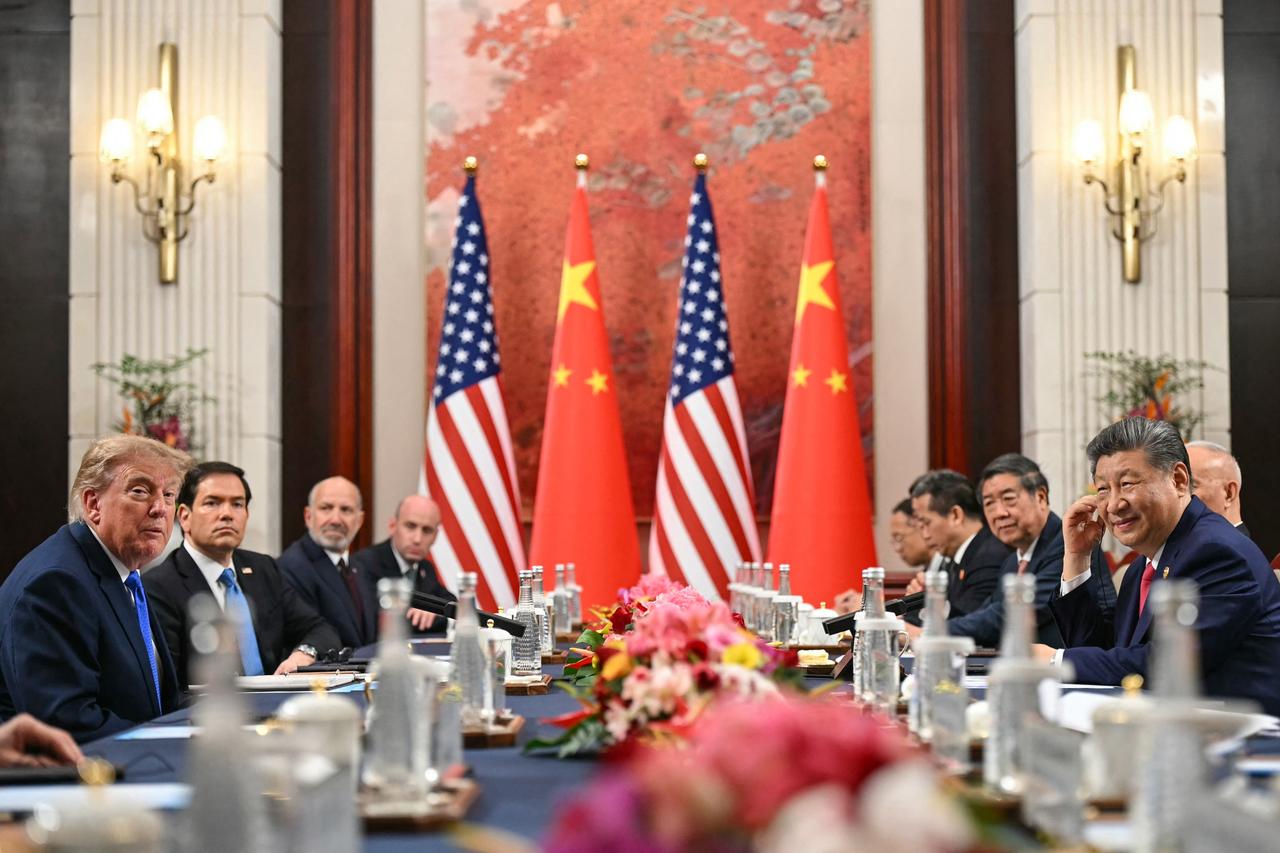


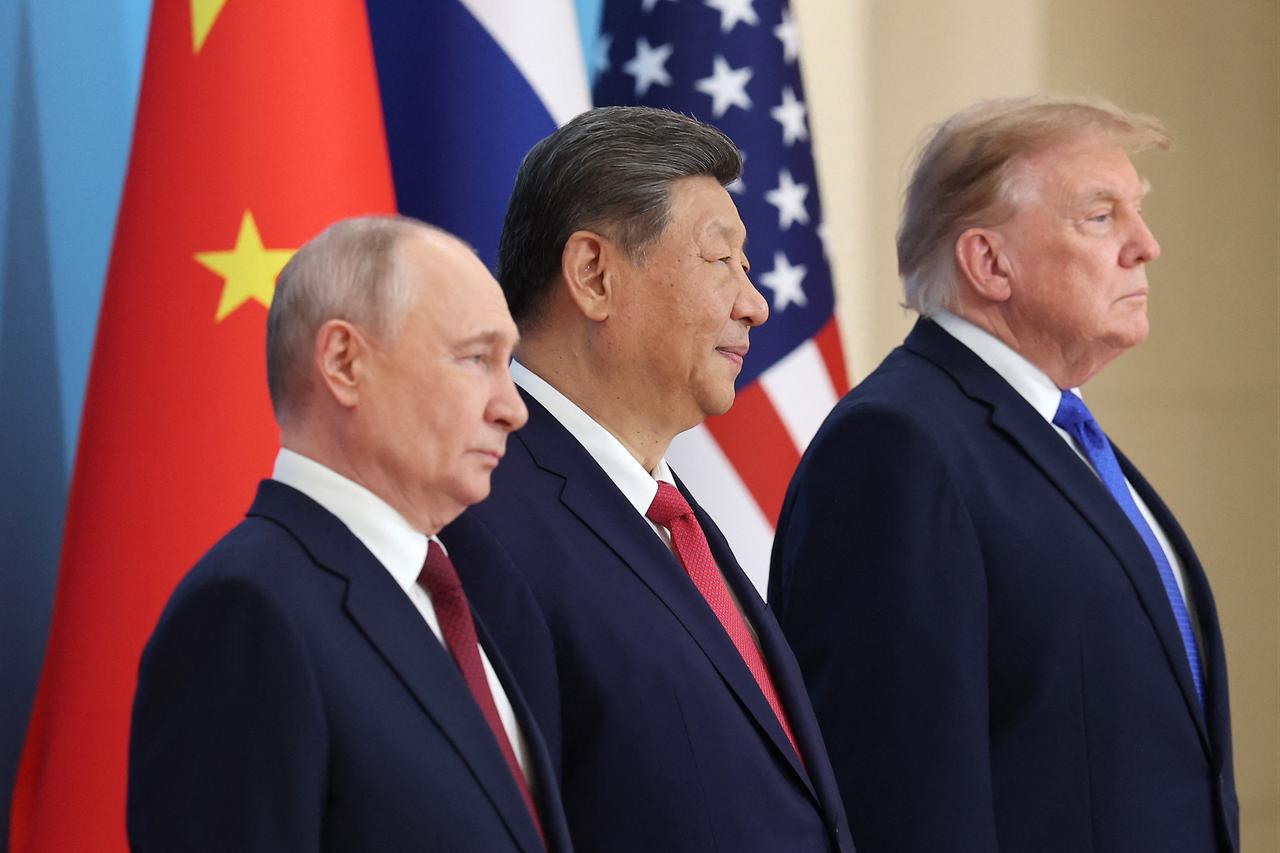
U.S. President Donald Trump and Chinese President Xi Jinping met behind closed doors in Shenzhen on Nov. 19, 2026, and only one side left a record. Beijing published a summary of the talks. Washington published none.
That asymmetry was not new. After their May talks in Beijing and September talks in Washington, both sides issued readouts, but the U.S. versions left out Taiwan while China's state news agency Xinhua quoted only Xi. This time, with no American account to compare it against, Xinhua's version stood alone. It wrote that Trump told Xi, "The United States does not support 'Taiwan Independence.'"
With Washington silent the next day, Taipei answered Beijing's account by itself. Chiu Chui-cheng, head of Taiwan's Mainland Affairs Council, called Xinhua's report "not factual" and urged Washington "to provide the full facts."
The timing could hardly be worse. With Taiwan's Nov. 28 local elections days away, Beijing's summary and Washington's silence are feeding a suspicion in Taiwan that the U.S. is stepping back from Taipei in exchange for a truce with China. And Taipei is not the only audience. Allies including Japan and South Korea are watching too, studying how Washington communicates after talks held behind closed doors.
Early in November, Asia-Pacific Economic Cooperation preparations showed Beijing's conditions toward Taipei. Unlike in 2014, when Beijing delivered Taiwan's invitation in person, China emailed this year's invite and stressed its one-China principle. Envoy Stan Shih, founder of Taiwanese electronics maker Acer, still said Taiwan participated "on an equal footing."
Two days before Shenzhen, Taiwanese Deputy Foreign Minister Chen Ming-chi voiced confidence in Washington while acknowledging a delayed $14 billion U.S. arms package, including Patriot missiles and air-defense radar, remained "very much up to" Trump. Because Trump said in May that it could be a China trade bargaining chip, assuring voters of solid U.S. ties carried risk once Washington stayed silent.
Hours before the talks, Taipei expected silence on Taiwan. Mainland Affairs Council spokesperson Liang Wen-chieh said "Taiwan is not the focus," anticipating talks on Ukraine and Iran.
That afternoon, China's Foreign Ministry placed Taiwan alongside U.S.-China cooperation on farm products, energy, fentanyl, and artificial intelligence safety, quoting Xi urging Washington to "keep doing the right thing" on Taiwan.
Washington released only a summary of Trump's Fox News interview. Without a U.S. readout, Xinhua's report on Trump's Taiwan remark went unanswered in the first news cycle and stayed unconfirmed as of Nov. 23.
At the same time, Xinhua's quote does not prove a U.S. policy shift. Taiwanese scholar Chang Wu-ueh noted on Nov. 23 that Xinhua used Washington's 1998 "does not support" formula instead of "opposes," Beijing's preferred term.
An incoming Democratic-controlled U.S. Congress makes formal concessions unlikely, and during the week of Shenzhen, Washington moved to close export loopholes on advanced artificial intelligence chips while China kept rare-earth exports down.
However, Washington's silence still left Taipei with two options. Taipei could either stay quiet and make Beijing's account look true or deny it and dispute words attributed to Trump. "China does not necessarily need to change U.S. policy immediately," Taipei policy researcher Jeff Lin argued. Creating the impression that Washington and Beijing jointly manage Taiwan shapes voter expectations before Saturday's ballot even without a policy shift.
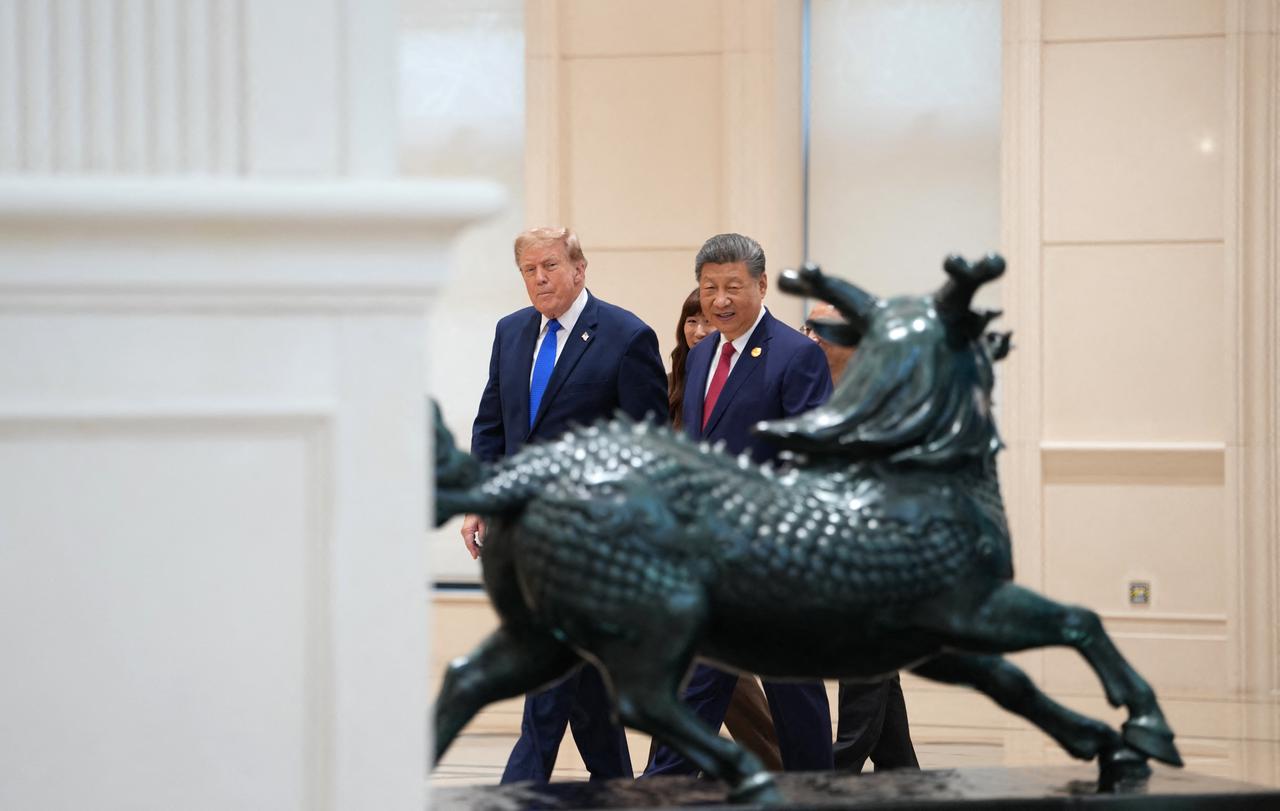

Saturday's vote across 22 cities and counties tests Taiwan's three main parties: the ruling Democratic Progressive Party, the opposition Kuomintang, and the smaller Taiwan People's Party. The vote precedes the 2028 presidential race, and a Nov. 19 U.S. congressional report on China noted that Beijing hopes pressure produces a Taipei government more open to China though most voters want the status quo.
President Lai Ching-te's Democratic Progressive Party rejects Beijing's one-China claim and relies on close U.S. support. His government denied Xinhua's report alone. Because Washington stayed silent after Shenzhen and approved U.S. arms remain delayed, the party is on the defensive as opponents argue Lai cannot manage Trump.
Even in Taipei, which the party has not won since 1994, its candidate, Puma Shen, caught up in the polls by focusing on urban renewal and child welfare instead of anti-China slogans.
By contrast, the Kuomintang favors closer talks with China, while the Taiwan People's Party appeals to independent voters backing neither major party. Both avoided running against each other in several races, and Taiwan People's Party founder Ko Wen-je campaigned alongside Kuomintang Taipei Mayor Chiang Wan-an on Nov. 21. Washington's silence helps the Kuomintang.
It can argue that talking with Beijing is safer than relying on Trump, though leaning too close to Beijing's one-China line carries risk, so the party that day denied backing an unapproved ten-year "peaceful unification" plan circulating online.
Even so, local concerns come first on Saturday. Voters also decide a referendum on returning to nuclear power after Taiwan's last nuclear plant at Maanshan closed last year, though in close races like Taipei, where mid-November polls put Shen and Chiang nearly tied, doubts over managing Washington and Beijing could sway undecided voters.
Outside Taiwan, U.S. allies track Trump's schedule. His three-way Shenzhen talks with Xi and Russian President Vladimir Putin lasted twice as long as his Manila Quad meeting two days earlier with Australia, India, and Japan.
Closed-door talks without a U.S. record test Washington's predictability. Council on Foreign Relations scholar Rush Doshi noted that Beijing treats this U.S.-China calm as a temporary pause, and missing summaries leave partners unsure whether U.S. commitments hold.
Publishing brief bilateral summaries that repeat standard U.S. phrasing after closed-door talks with Beijing would remove that ambiguity without changing existing U.S. policy.
Saturday's vote offers an early gauge. If Washington leaves high-level talks undocumented while approved arms stay delayed, doubts over where Washington stands will follow Taiwan into its 2028 race and weigh on U.S. partners alike.


 Set as preferred source
 Set as preferred source


 2 min read
 1 min read