Newsletters


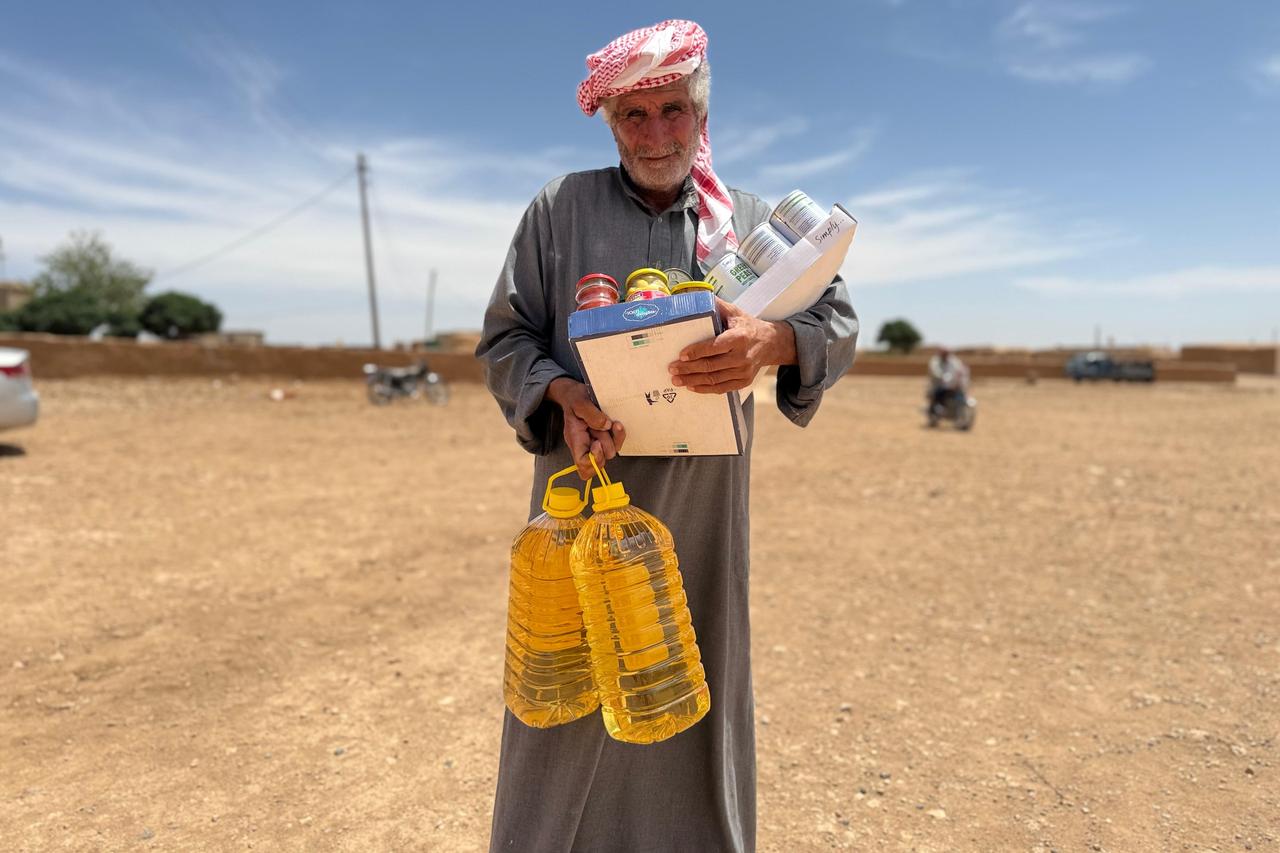


“We say we are going, to be coming back, to the house of love, without knowing where the journey leads.” These haunting words belong to “Rajeen Ya Hawa,” a song by the famous Lebanese singer Fairuz.
For displaced people across the Arab world—especially Palestinians—Fairuz’s voice has long carried the weight of exile. After the war in Syria began, her songs also became a vessel of hope for millions of Syrians, both internally displaced and those forced abroad, that they too might one day return home.
Fourteen years of war have killed at least 400,000 Syrians and displaced 13 million. In the 11 months following the fall of the Assad regime on Dec. 8, 2024, more than 1.2 million Syrians returned from neighboring countries, mainly Türkiye, Lebanon and Jordan, and 1.9 million internally displaced people (IDPs) went back to their homes. Around 7.4 million people remain displaced inside Syria, and 1.5 million still live in camps or camp-like settlements.
Those who return do not find much to welcome them.
Many struggle to secure work, housing, and access to basic services. International organizations report that 16.7 million people in Syria need humanitarian assistance, and 90% of Syrians live in poverty, and 66% live in extreme poverty. According to the World Bank, rebuilding Syria will cost an estimated $216 billion. Food insecurity, limited access to health care, lack of clean water and sanitation, and unsafe housing remain the most urgent problems.
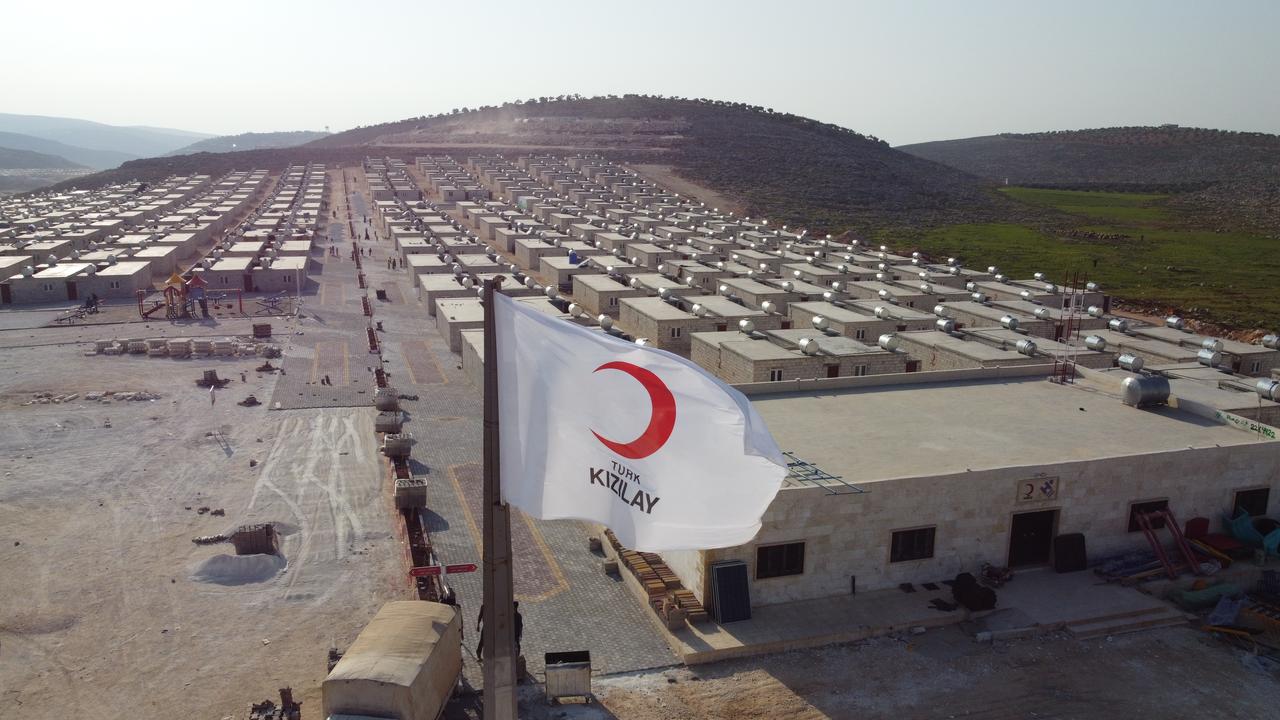

From the beginning of the war, Türkiye has been one of the leading countries providing aid, both to Syrians who fled to Türkiye—whose number at its peak reached 3.7 million under temporary protection—and to those in northwest Syria.
After the fall of the Assad regime, returns accelerated. Since then, 709,919 Syrians have voluntarily returned to their homes from Türkiye. Including voluntary returns before December 2024, the number of Syrians under temporary protection in Türkiye has fallen to approximately 2.32 million. Cross-border humanitarian aid has gained even greater importance since the regime’s collapse, and as the geographic reach of assistance has expanded, as have its scale and volume.
Two key institutions carry out Türkiye’s humanitarian work in Syria: the Disaster and Emergency Management Presidency (AFAD) and the Turkish Red Crescent. AFAD coordinates the planning and cross-border delivery of humanitarian aid; organizes logistics for food, shelter, health services and essential supplies; works with NGOs and international organizations; supports infrastructure and temporary housing in northern Syria; and leads search-and-rescue and emergency response efforts after disasters such as the February 6, 2023, earthquake, which also caused major destruction in Syria.
The Turkish Red Crescent focuses on emergency shelter, food assistance (including hot meals and food boxes), cash support, psychosocial services, blood services, and social aid programs. During disasters, it works closely with AFAD and engages directly with people in need.
From the start of the war in 2011 to December 2024, the Turkish Red Crescent carried out uninterrupted humanitarian and protection activities in northern Syria, including rural Aleppo and Idlib, as well as in areas where Türkiye conducted military operations and maintained zones of influence during the war, i.e., the Operation Euphrates Shield, Operation Olive Branch, and Operation Peace Spring areas. Its goal has been to meet basic needs and improve humanitarian conditions for conflict-affected populations.
Its work has included cross-border distribution of relief supplies, health services, protein support programs for mothers and children, construction of schools and shelters, solar panel–supported water towers, greenhouses and infrastructure improvements.
After Dec. 8, the Turkish Red Crescent expanded its reach across the country in cooperation with the Syrian Arab Red Crescent, launching aid operations in areas such as Damascus, Hama, Latakia and Tartus, where access had previously been limited.
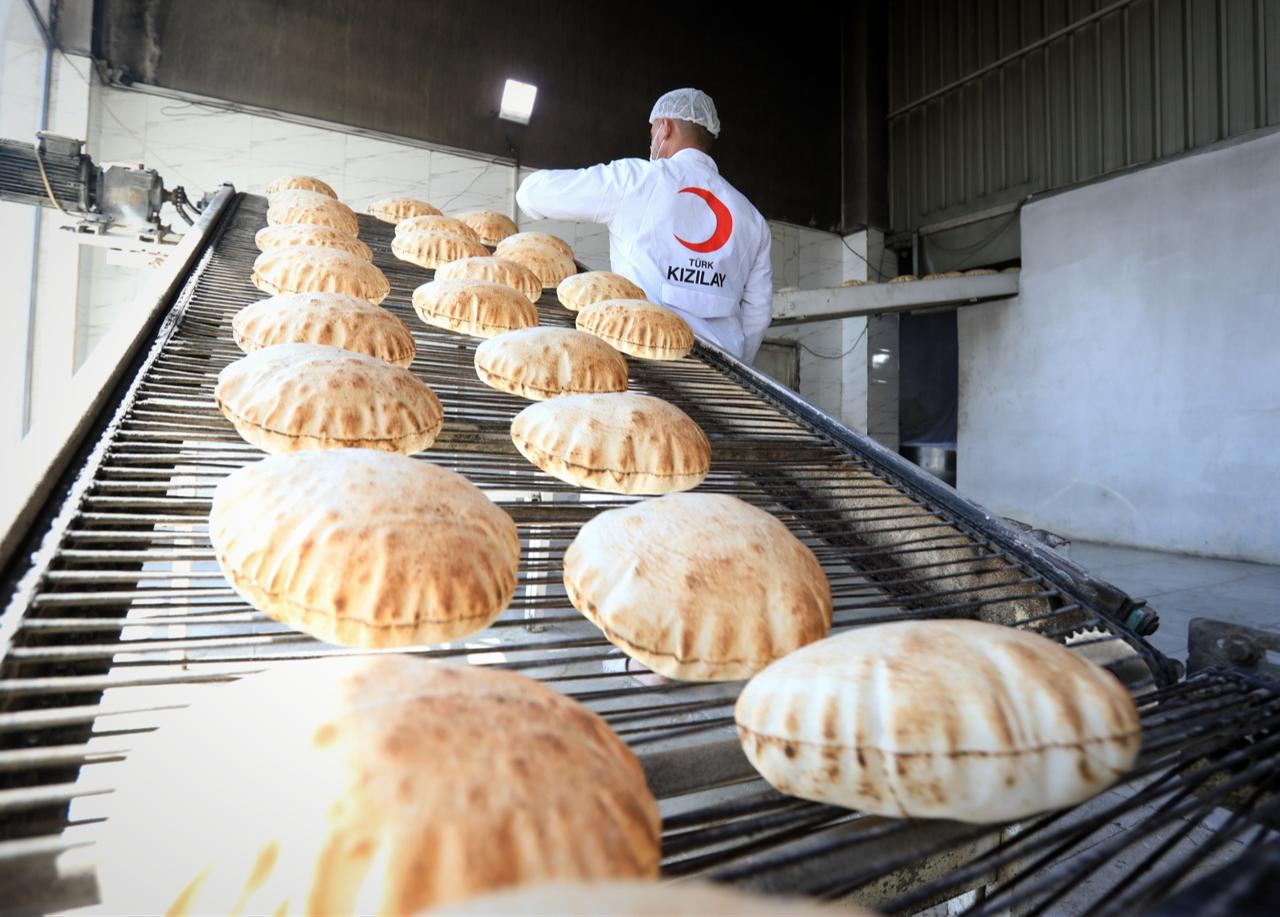
It continues its work in the same sectors across northern and other regions of Syria. Clothing support through “Sevgi Boutiques,” cash assistance, winter aid, bread distribution, home and school rehabilitation, and infrastructure and hygiene services in camps have become especially important.
In areas such as Idlib, Afrin, and Aleppo, it has built 29 hospitals and health centers, nine water towers, seven Sevgi Stores, and brick housing units, which have provided shelter to 27,000 people so far, and has completed the repair and rehabilitation of 62 homes.
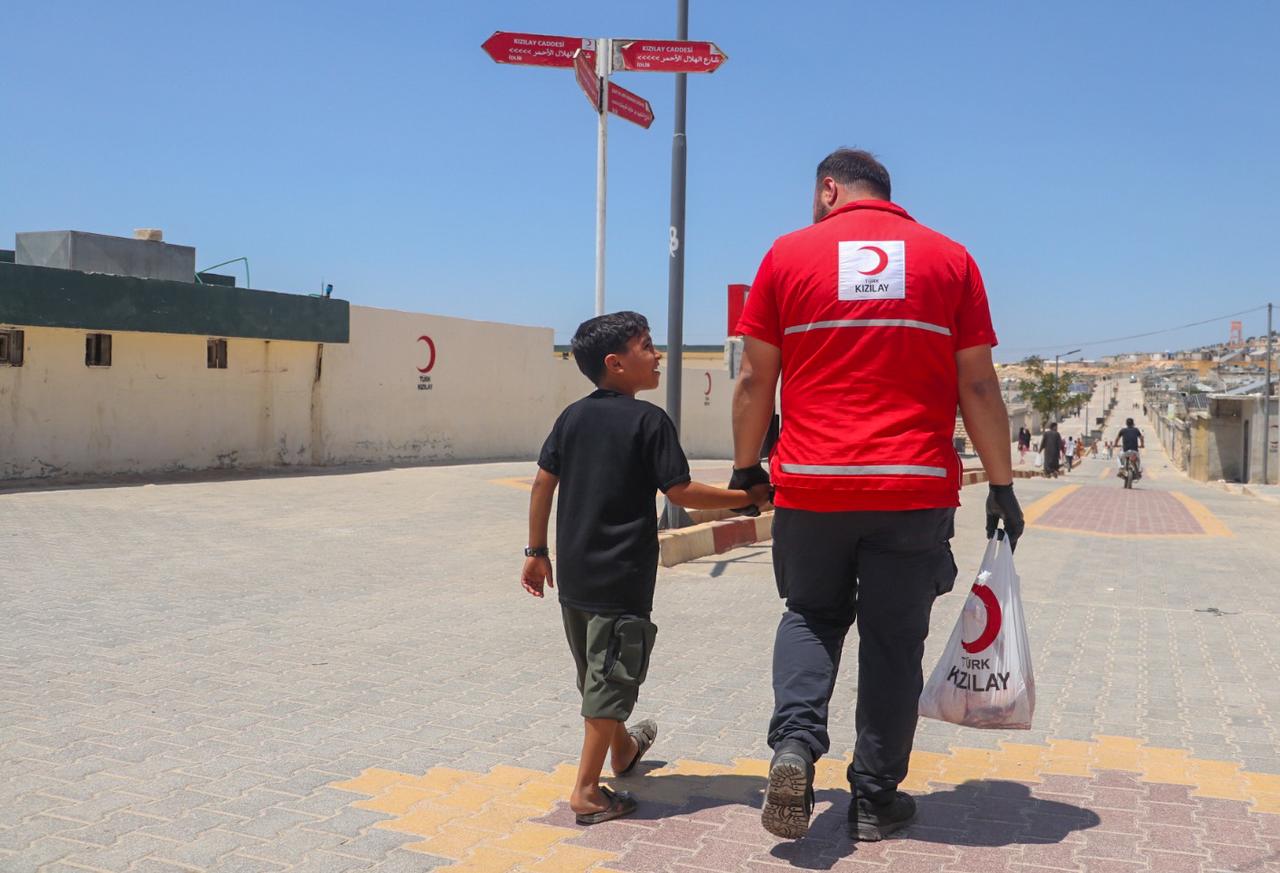
During the war, Idlib—the last major rebel-held stronghold—came under the control of Hayat Tahrir al-Sham and hosted nearly 3 million displaced people living in extremely difficult humanitarian conditions. For 13 years, when the central government and other aid organizations were unable to reach Idlib, the assistance provided by Türkiye and its institutions was vital.
As of late 2024 and early 2025, Idlib remains the region with the highest concentration of displaced people in Syria, with a population of 2.9 million to 3.1 million. About 1.1 million to 1.3 million live in formal or informal camps, mostly near the Turkish border. Others survive within host communities, in unfinished buildings or in temporary shelters.
The population is highly vulnerable. Around 60% to 65% of those living in camps are women and children. The Turkish Red Crescent continues to address the humanitarian crisis in Idlib through brick housing projects, health services, and regular aid distributions. EU-supported NGOs also provide emergency cash assistance to families returning to eastern Idlib after the regime change, as well as support for the construction of shelter units.
In the governorates of Raqqa, Hassakah and Deir ez-Zor—areas that until recently were under SDF control and the Autonomous Administration of North and East Syria—humanitarian needs remain high and chronic. Economic collapse, damaged infrastructure, and limited public services have left millions facing food insecurity, lack of clean water, inadequate health care, and insufficient shelter.
Under a recent comprehensive ceasefire and integration agreement between the government in Damascus and the SDF, the gradual integration of both military forces and civilian institutions into Syrian state structures is planned.
While the integration of former civil administrations into state structures is ongoing, restrictions affecting cross-border aid mechanisms continue to weaken the sustainability of humanitarian assistance, leaving northeastern Syria among the most fragile regions in the country.
Given the fragile situation in Northeast Syria, the European Commission allocated an additional €20 million ($23.61 million) in humanitarian funding to address basic needs, including health care and protection services, both inside and outside the camps.
In 2024, the European Union’s humanitarian funding specifically for Syria was reported at over €163 million, and for 2025 as of August, the EU reported humanitarian funding for Syria totaled over €204 million, with emergency support distributed in response to violence and displacement. Recent reporting shows that Gulf countries—especially Qatar, Saudi Arabia, and Kuwait—have increased humanitarian and reconstruction support to Syria through both direct aid and multilateral channels.
Despite all these efforts, the U.S. decision in 2025 to sharply cut foreign aid—reducing humanitarian funding for United Nations programs from $14.1 billion in 2024 to $3.38 billion in 2025 and $2 billion in 2026—has turned an already serious funding gap into a major global crisis.
This decision has created a gap that will be difficult to close for regions with high humanitarian needs, including Syria. In Syria, alongside ongoing security threats, there are also looming risks related to meeting basic needs: food insecurity, access to clean water, shelter and health services. For millions of Syrians, return is no longer just a dream carried in a song. It is a daily struggle to rebuild life in a country still ravaged by war.


 Set as preferred source
 Set as preferred source


 2 min read

 1 min read