Newsletters


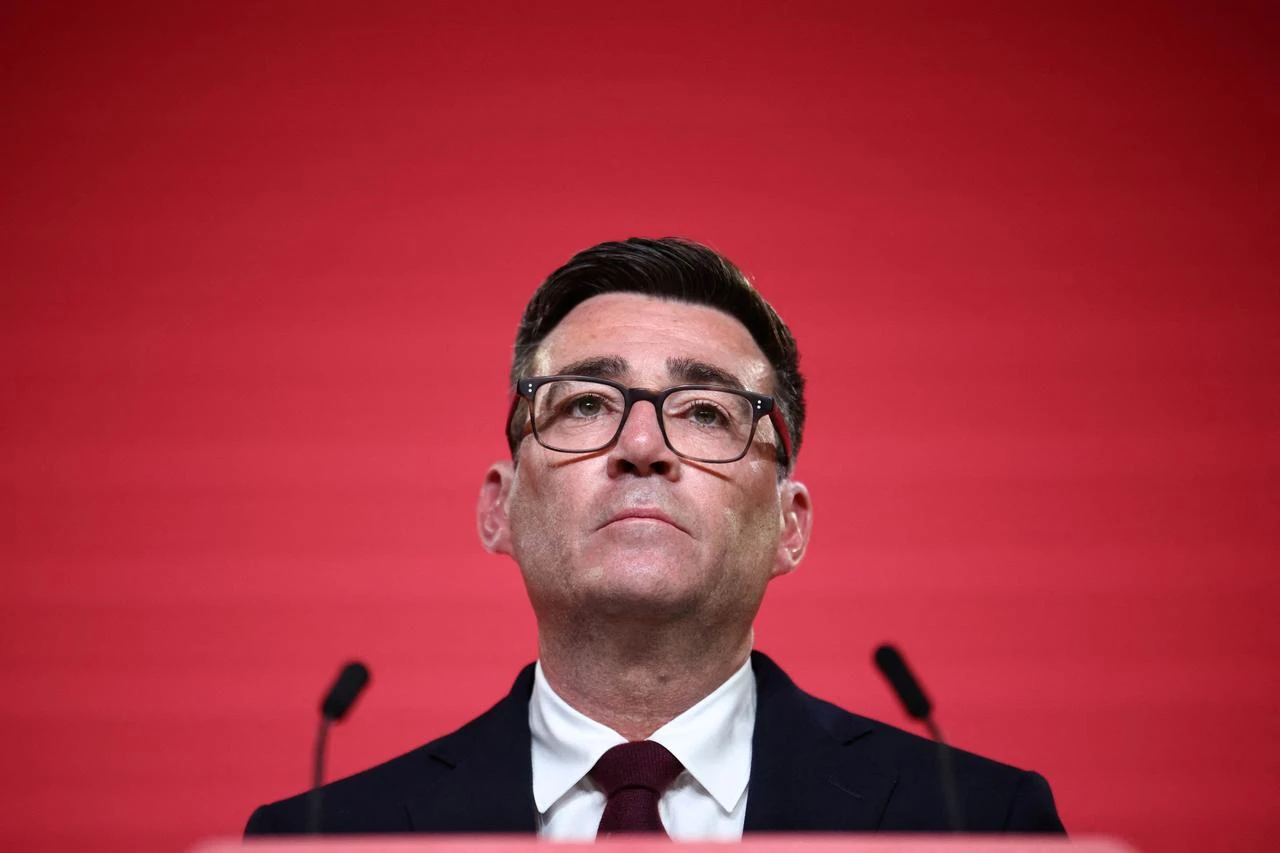


On Monday, Andy Burnham enters Downing Street as Britain's seventh prime minister in a decade. His first act will be to write the letters of last resort.
Somewhere between that unenviable duty and the portraits of Walpole, Pitt and Churchill lining the walls sits a harsh truth of his inheritance. He enters an office still expected to shape the world, attached to a state no longer equipped to do so alone.
Burnham has begun to sketch a response. In The Times last week, he pledged to rebuild British hard power, raise defense investment and deepen alliances, naming shipbuilding, munitions, AI, and quantum as sovereign priorities, alongside closer European defense cooperation and an unbending commitment to NATO, Ukraine and the deterrent.
The diagnosis is right. Security can no longer be separated from industry, energy, technology or the resilience of the state. The harder question is what kind of power Britain should try to be.
Britain no longer possesses its empire, but London's security interests still span a landscape where the sun never sets. From the North Atlantic to the Gulf, the Falklands to the Indo-Pacific, Britain still shapes the environments dictating its safety and prosperity and is increasingly at their mercy.
Yet the world in which those interests sit is no longer one Britain helps to order. It is shaped by two powers on a scale London cannot rival: an unpredictable United States and a muscular China, alongside middle powers with sharper elbows than a decade ago.
Britain cannot compete on mass. Nor is it merely another European middle power. It is a recognized nuclear state, holds a permanent seat at the U.N. Security Council, commands world-class intelligence services, and retains an outsized diplomatic network and the institutional memory of a world it once led.
Britain is, in the plain rather than wounded sense, a second-tier global power, below the giants but with reach beyond almost every other state.
A country in that position cannot dominate; it must make itself indispensable. By becoming so technologically, operationally, and industrially useful to its coalitions that London's absence weakens the whole, Britain earns its indispensability through contribution rather than size. Burnham should build his strategic doctrine around it.
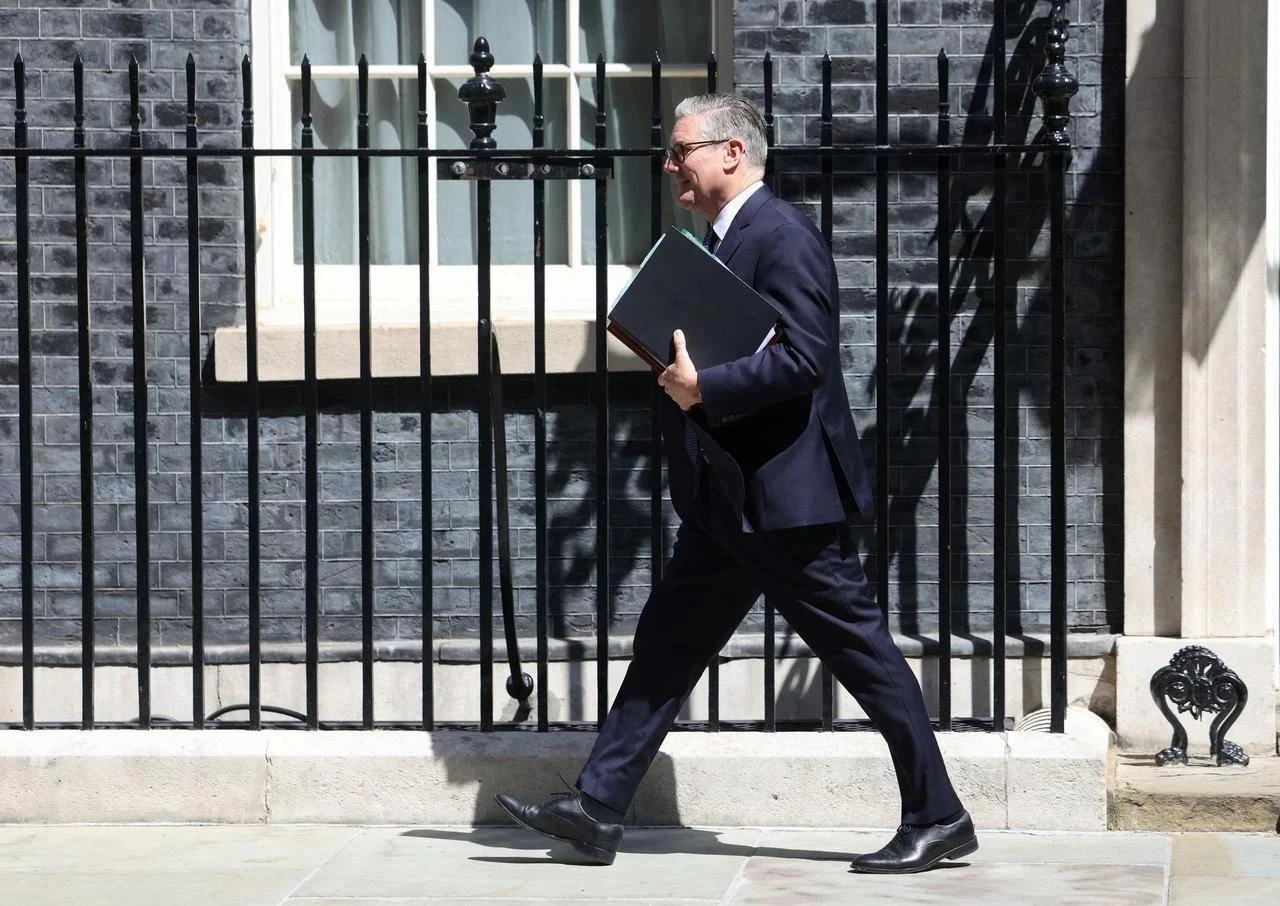

Churchill once placed Britain at the intersection of three circles: the empire, the English-speaking world and a united Europe. The geometry is worth reviving, redrawn for the present.
The first is Europe. Britain's foremost threat remains Russian aggression, compounded by a less resolute American commitment to the continent. London must lead NATO's European pillar through the E5, the JEF, sustained support for Ukraine and deeper bilateral ties with France, Germany, Poland, the Nordics and Türkiye.
But "Europe first" must never collapse into "EU only." The new U.K.–Türkiye security and defense partnership proves that two non-EU powers can supply what their governments rightly called irreplaceable contributions to Euro-Atlantic security.
The second is the Anglosphere, which itself divides into two. Canada, Australia, New Zealand and Britain share a head of state, the Westminster system, common law and the English language—an institutional alignment no treaty can manufacture. It makes intelligence sharing, procurement and political coordination swifter than in any comparable grouping. Five Eyes and AUKUS already rest on it, and deeper industrial, basing and mobility integration should follow.
The American relationship demands a different discipline. "Special relationship" was a phrase for an era when British usefulness to Washington could be assumed. Today it must be demonstrated.
An America stretched thin will value allies to the extent they augment its power, not invoke a twentieth-century golden age. Britain's task is to identify where it materially extends American reach, including nuclear cooperation under the Mutual Defense Agreement, submarines through AUKUS, signals intelligence through Five Eyes, and expeditionary weight through the JEF, and to be the ally Washington would notice losing.
The third is a ring of pivotal regional powers: Türkiye, Japan, India and Saudi Arabia, with whom Britain shares critical strategic interests. With some, London has the balance.
The U.K.–Türkiye security partnership and the Global Combat Air Programme (GCAP) with Japan show what interest-led engagement, sustained across governments, can build.
Elsewhere, London has treated the relationship as a running audit of the partner's domestic conduct, then discovered, in a crisis, that audits are not alliances. Partners courted for years have declined to take calls, procurement has moved to competitors, and British influence has been quietly displaced. An interest-led policy cooperates where interests meet, differs where they don't, and refuses to turn every bilateral into a test of ideological conformity. Values still matter; they build trust and distinguish Britain from the powers it competes with, but they should guide statecraft, not substitute for it.
Burnham is right to rebuild the defense-industrial base. The danger is measuring resilience by the share of kit stamped "made in Britain." Britain's advantage was never self-sufficiency. It was the fusion of sovereign technology with allied capital, production and expertise.
Typhoon binds Britain, Germany, Italy and Spain. GCAP joins Britain, Italy and Japan. AUKUS links the British submarine enterprise to America and Australia. The £8 billion Typhoon agreement with Türkiye makes the logic concrete, with integration adding to British employment, exports and influence rather than subtracting from sovereignty.
Burnham should adopt a simple sovereign-capability test. Retain national control only where foreign denial would be fatal: the nuclear deterrent, intelligence, command and control, cryptography, critical munitions, submarines, and the defense of the realm.
Everywhere else, lean toward allied development and open procurement. The principle is straightforward. Sovereign, where denial would be fatal. Allied where scale matters. Commercial where the market can supply.
That demands overdue procurement reform, long-term demand signals to industry, multi-year orders for missiles and ammunition, statutory minimum stockpiles, and exportability designed in from the start, with the Treasury's role in defense spending decisions circumscribed accordingly.
Burnham should also consider widening the Multilateral Defense Mechanism now being built by Britain, the Netherlands, Finland, and Poland and invite Türkiye and Norway in from the outset. It offers a way past a European defense debate too often warped by institutional protectionism.
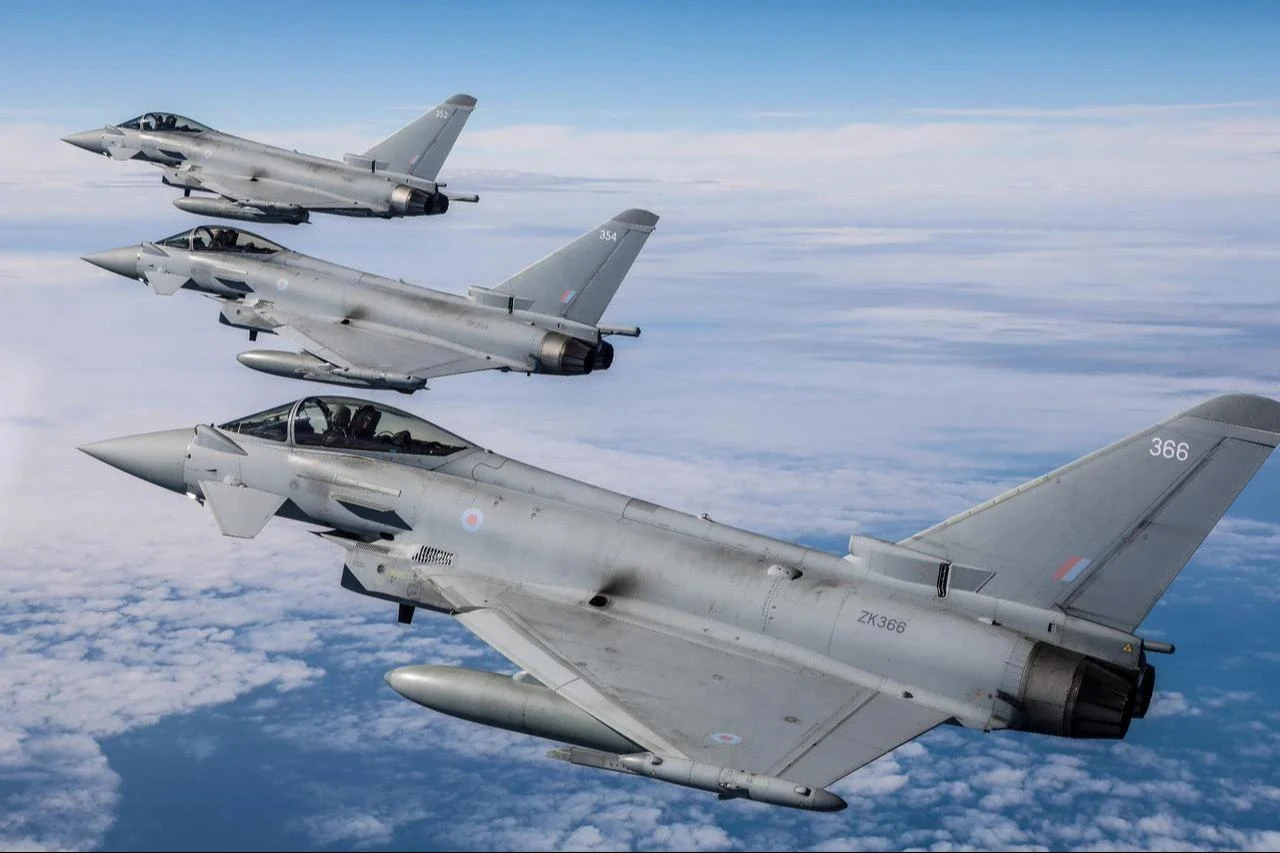
Burnham inherits a Defense Investment Plan of almost £298 billion over four years, with core NATO spending set to reach 2.7% of gross domestic product (GDP) from 2027–28 and 3.5% by 2035. The test is not the size of the commitment but what it yields.
Ukraine has shown that exquisite platforms without ammunition, drones and industrial depth are hollow. Britain needs its submarines and combat aircraft, but it also needs mass, affordable autonomous systems, air defense, electronic warfare, long-range fires, and factories that can surge.
And it needs people. Britain had 126,740 full-time trained personnel in April. The numbers remain thin for a state that means to hold a deterrent, guard the North Atlantic, reinforce NATO's east and keep a global presence. Recruitment and retention should be treated as industrial policy.
None of this should crowd out Britain's outsized soft power. Rebuilt militaries and industrial bases matter because they give British diplomacy, policy and institutions the credibility to be listened to and the freedom to act.
Soft power should be measured by whether Britain is more influential, more consulted, more culturally resonant and more respected at the end of this parliament than at its start.
The BBC World Service, the British Council, the universities and the diplomatic network are means to that end, not ends in themselves. Defense exports belong to the same logic. A country that buys British ships also buys training, doctrine and a relationship measured in decades.
Britain can keep spreading thin resources across ambitions it cannot sustain alone, shrink into an enlarged European middle power, or become the leading networked power of the democratic world's second tier, leading in Europe without waiting for Brussels, Atlanticist without being dependent, guided by values but disciplined by interests, and sovereign only where it must be.
Burnham is right that Britain must rebuild its hard power. His larger task is to ensure that every pound spent builds capacity at home, partnerships abroad and freedom of action for the British state.
Britain cannot outspend the superpowers, but it can still convene, organize and lead better than almost any of its peers and decide, deliberately, which partners it cannot afford to do without. That is where Burnham should begin.


 Set as preferred source
 Set as preferred source



 7 min read