Newsletters


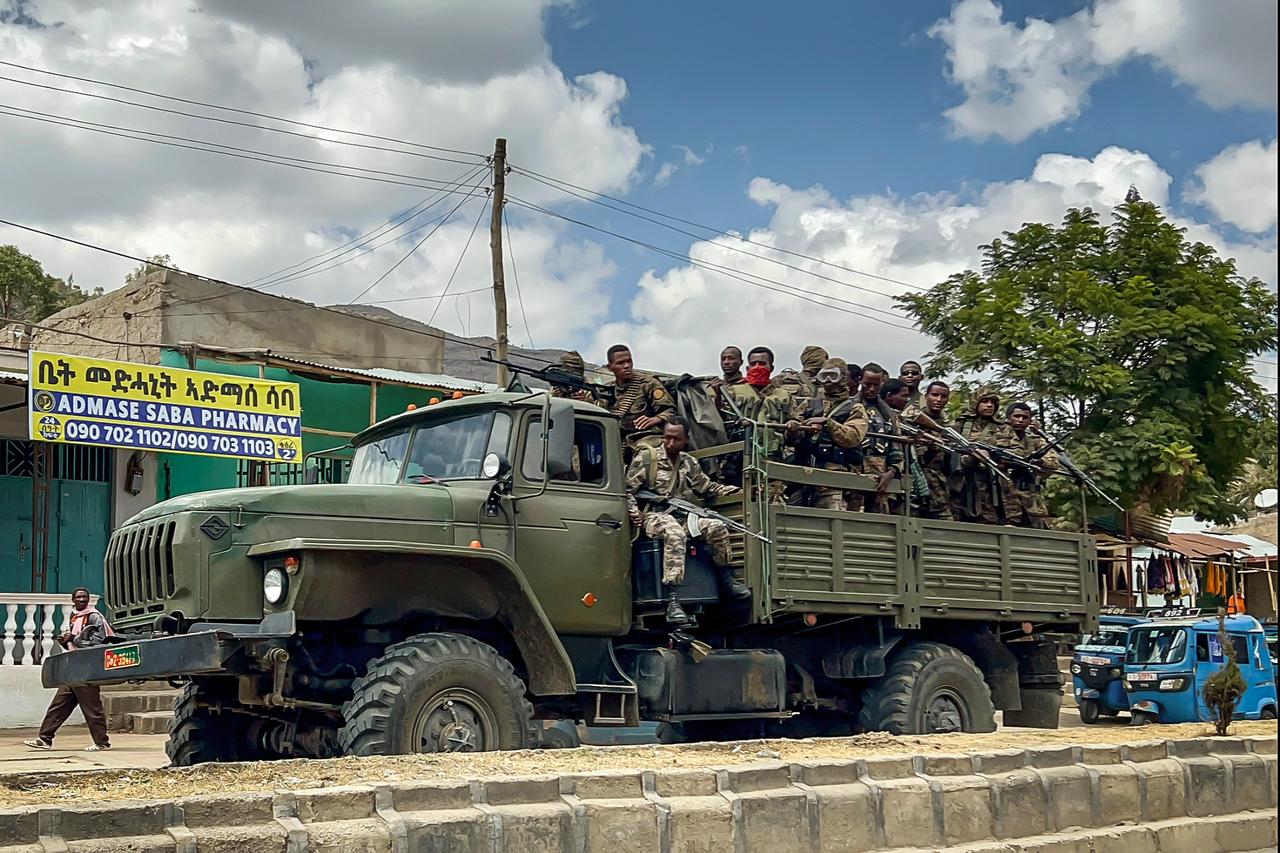


In Mekelle this week, young men who had been carrying rifles lined up to register for disarmament, and many would not say their names aloud. Hundreds of kilometers of mountain road away, tanks were reported rolling toward the Eritrean border. Between those two images lies the problem Prime Minister Abiy Ahmed now has to solve.
On Oct. 16, the Ethiopian government announced a six-month interim administration for Tigray. The decision came roughly two weeks after an armed coalition led by the Tigray People’s Liberation Front (TPLF) pulled out of Mekelle, and it shows Addis Ababa trying to turn its military advantage into a system of governance.
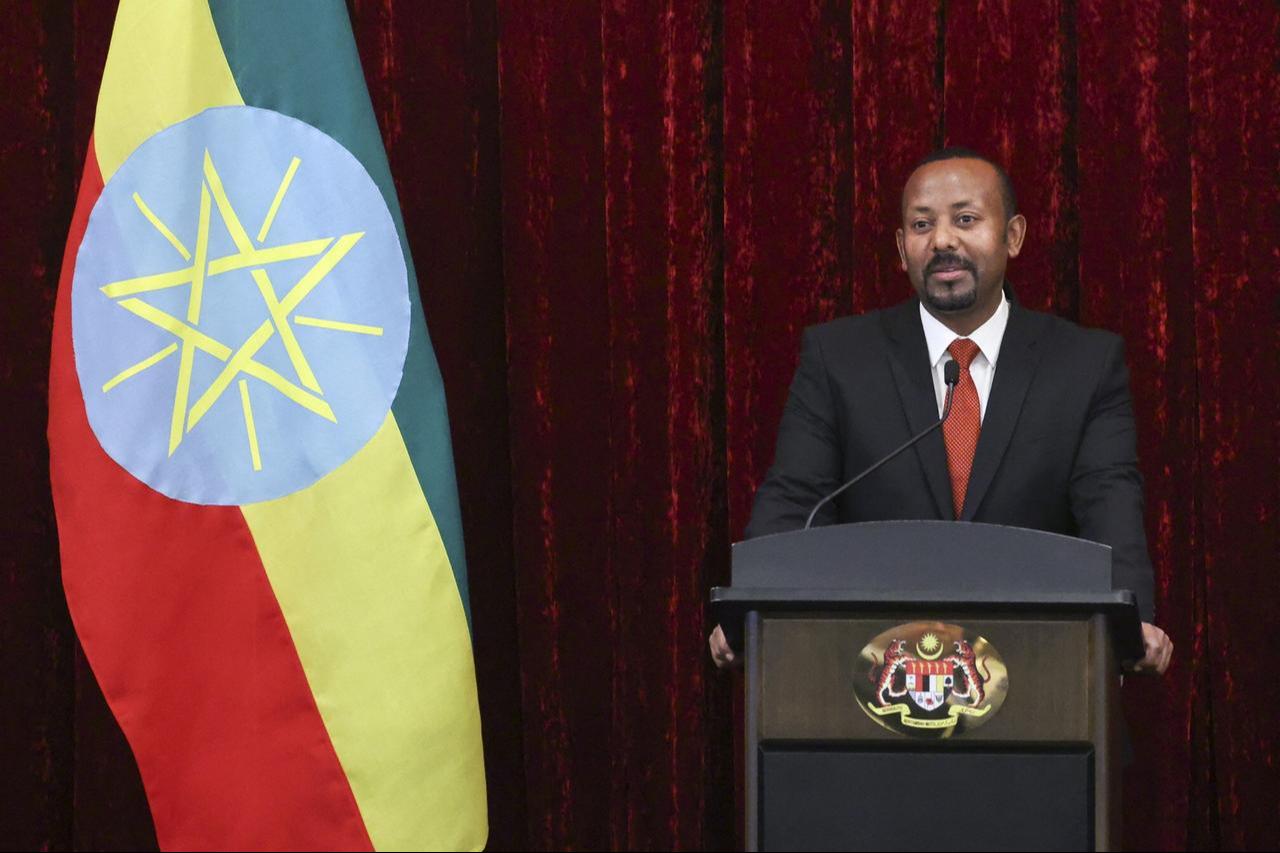
Prime Minister Abiy Ahmed faces two challenges that feed into each other. He must restore central authority in Tigray while keeping tensions on the northern border from turning into an interstate war.

In September, the TPLF and six other groups launched an offensive against the federal government. On Sept. 23, the coalition seized the airports in Mekelle, Aksum and Shire. A federal counteroffensive on Oct. 3-4 forced it out of Mekelle, and government-aligned forces entered the city.
The Pretoria Agreement of November 2022 ended a two-year war that killed hundreds of thousands of people.
In the years that followed, its provisions on disarmament, public services and the return of displaced people were only partly implemented.
The status of Western Tigray, the powers of the regional administration and accountability for wartime crimes are still unresolved.
The new administration has a defined mandate. Under federal supervision, it is expected to restore public services, repair war-damaged infrastructure, help displaced people return home and prepare for elections within six months.
No single president has been named. Assefa Abraha Hagos will oversee administration and public services, while Brig. Gen. Gebre-Egziabher Beyene Hailu, commander of the Tigray Peace Force, which operates alongside the federal government, takes the security portfolio.
Tewodros Aregawe will oversee the economy and reconstruction, Redae Halefom political affairs, and Shishay Amare Mekelle’s municipal administration.
Addis Ababa appears to be relying on officials it considers dependable. Other TPLF factions have been left out, and a significant share of Tigrayans may not regard the new administration as their legitimate representative.
No firm election date has been set either. Securing a vote while armed groups remain active will be difficult, and a ballot held with restricted participation is unlikely to bring lasting stability.
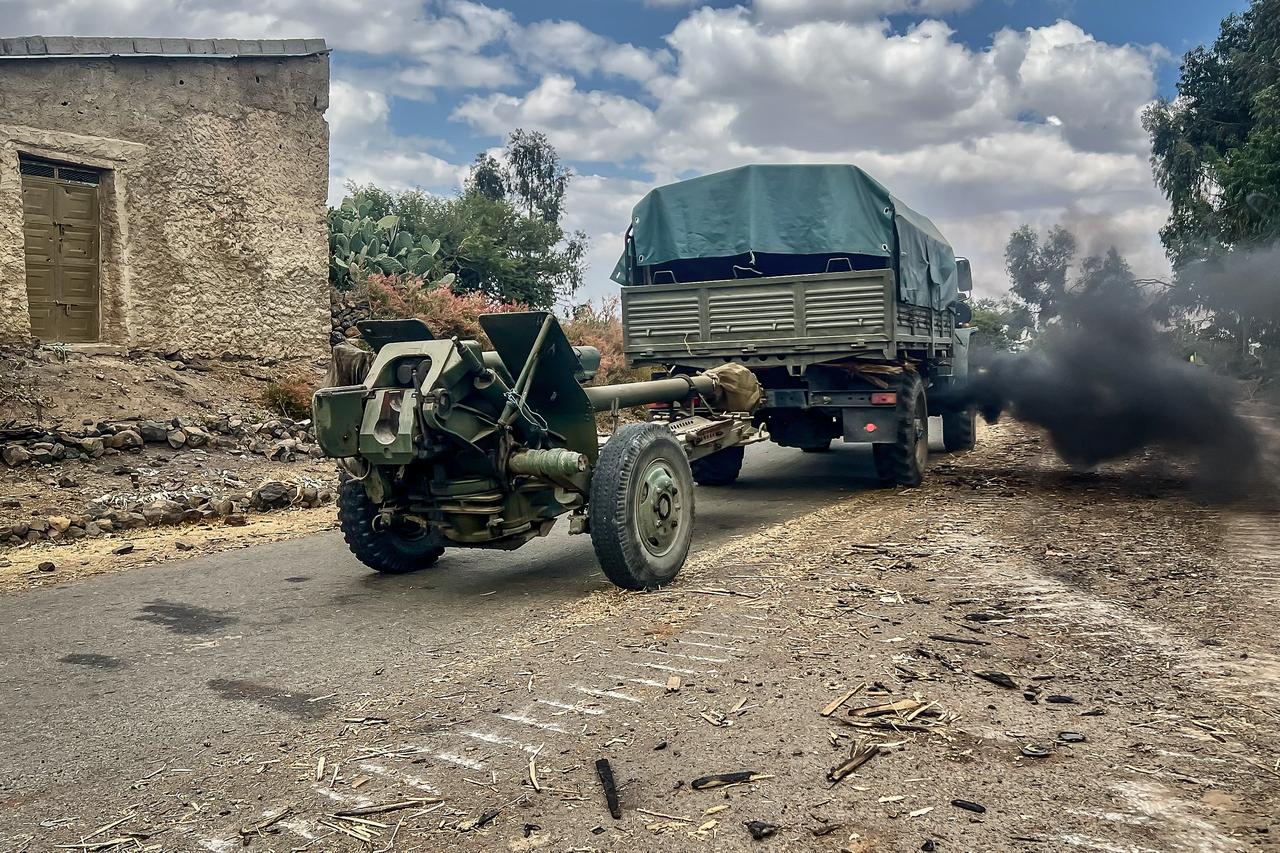
The federal army and the Tigray Peace Force have reportedly taken Adigrat, Adwa and Aksum. The Tigray Defense Forces, however, announced on Oct. 14 that they had recaptured Abiy Addi and Werkamba, and similar claims have emerged about Shewate Higum and Yechila.
None of these reports has been independently verified. It would hardly be surprising if the fighting shifted from the towns to the mountainous countryside, where small units move easily and holding main roads and urban centers does not end resistance.
In Mekelle, hundreds of former Tigrayan fighters began registering for disarmament and reintegration programs. The TPLF called Tigrayans cooperating with the federal government “traitors” and urged its forces to keep fighting.
Some of those registering were reluctant to speak for fear of reprisals. Here lies the hardest task facing the interim administration: young people looking for a way out of the war on one side, an organization unwilling to abandon armed struggle on the other.
Ethiopia’s security problems extend beyond Tigray. Fano militias in Amhara and armed groups in Oromia are still fighting the central government, and prolonged operations on several fronts will strain both the army and the public budget. The humanitarian costs go far beyond these calculations.
Around 750,000 Tigrayans remain internally displaced, according to recent reports. On Oct. 14, the United Nations allocated $8.5 million for urgent needs in northern Ethiopia, where renewed fighting and drought are making life harder. For a family to return to its village, an end to the shooting is not enough.
Its home must still be standing, its farmland accessible, its children able to attend school and the nearest health center operational.
Relations between Ethiopia and Eritrea have swung between extremes for three decades. The two countries fought a bloody border war between 1998 and 2000.
The rapprochement Abiy launched with Eritrean President Isaias Afwerki in 2018 later earned him the 2019 Nobel Peace Prize.
During the Tigray war that began in 2020, Eritrean troops fought alongside the federal army against their common adversary, the TPLF. Asmara still stresses that it was never a party to the Pretoria process, from which it was excluded.
The rupture came at the beginning of October. Ethiopia closed its embassy in Asmara on Oct. 1 and expelled 10 Eritrean diplomats, and Eritrea severed diplomatic relations.
In an Oct. 9 letter to the U.N. Security Council, Foreign Minister Gedion Timothewos accused Eritrea of deploying troops inside Ethiopia and supporting armed groups, invoking the right to self-defense under Article 51 of the U.N. Charter.
His Eritrean counterpart, Osman Saleh, called this a pretext for an attack and asked the council to act against Ethiopia. U.N. Secretary-General Antonio Guterres also expressed concern over reports of Eritrean forces operating inside Ethiopia.
Information from the ground remains inconsistent. Federal troops reached Zalambessa around Oct. 13, and conflict monitors reported Eritrean units withdrawing from nearby areas.
Accounts from the region over the weekend, however, still placed Eritrean soldiers in and around the town. No direct clash between the two armies has been confirmed, nor has it been established that Ethiopian forces have crossed the international border.
With opposing forces this close, the risk of miscalculation grows. U.S. Secretary of State Marco Rubio spoke with Abiy on Oct. 14, calling for de-escalation and respect for neighboring countries’ sovereignty.
The tensions also have a longstanding economic dimension. When Eritrea became independent in 1993, Ethiopia lost its direct access to the sea, and it now conducts most of its foreign trade through Djibouti.
On Oct. 5, Abiy reiterated Ethiopia’s need for access to the Red Sea. Asmara reads such statements as a threat, particularly to the port of Assab.
Yet the assumption that another war could give Ethiopia a secure port is questionable. Such a conflict would more likely leave trade routes vulnerable and keep investors away.
Ethiopia has also accused Egypt and Sudan of supporting the TPLF-led coalition, which both deny. Relations with Cairo, already strained by the Grand Ethiopian Renaissance Dam, have become more fragile, even though these remain accusations rather than documented military involvement.
On Oct. 4, the leaders of Egypt, Eritrea, Somalia and Sudan met in El Alamein and issued a joint declaration on the role of coastal states in Red Sea security.
The declaration is no military alliance, yet it shows how much pressure Ethiopia now faces from its neighbors. With instability around the Bab el-Mandeb and the war in Sudan, another front on the African coast would weigh heavily on maritime trade.
Türkiye holds a modest but potentially useful position here. By facilitating the Ankara Declaration between Ethiopia and Somalia in December 2024, Ankara showed that disputes over sea access can be settled through negotiation while sovereign rights are protected.
Its relations with Egypt and the Gulf states also allow it to engage parties across the region. Progress on the Somalia file will not resolve the Eritrean crisis automatically, though. The two disputes have different historical origins, and the parties carry distinct security concerns.
Türkiye’s contribution could therefore focus on keeping communication channels open and supporting a revival of the African Union’s Pretoria mechanisms.
Abiy now has to choose between extending his military advantage through further operations and laying the groundwork for political reconciliation.
A war with Eritrea before lasting security is established in Tigray could leave Ethiopia with new problems for years to come. The recapture of Mekelle shows what a military operation can achieve.
Whether peace has genuinely returned will become clearer over the next six months, in the political order built in Tigray and in what happens along the border at Zalambessa.


 Set as preferred source
 Set as preferred source


 1 min read
 1 min read