Newsletters




This article was originally written for Türkiye Today’s weekly newsletter, Saturday's Wrap-up, in its Jan. 31, 2025, issue. Please make sure you subscribe to the newsletter by clicking here.
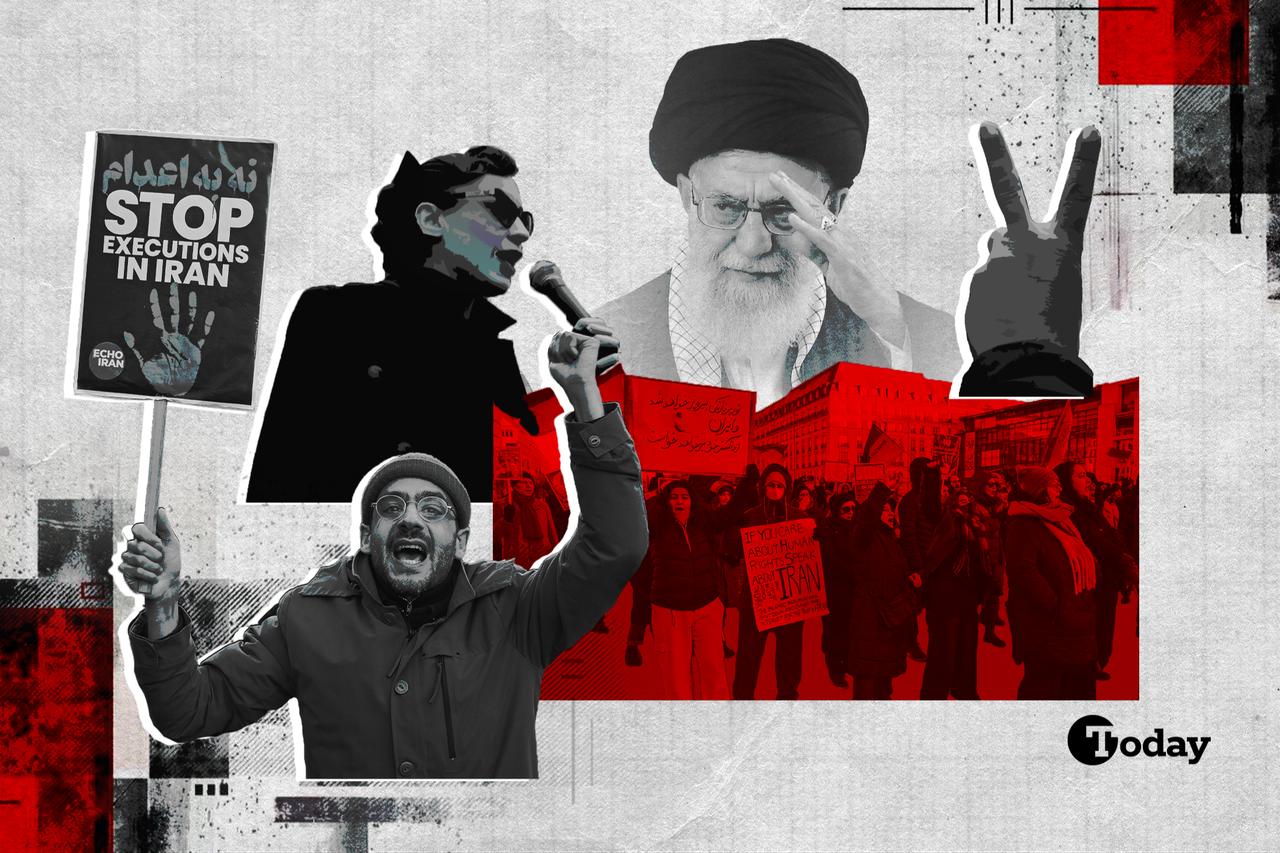
It was a long, nail-biting session in Ankara as mass demonstrations erupted in central Tehran in the final days of 2025.
The peaceful demonstrations of bazaaris quickly descended into ultimate chaos.
At first, the Turks did not publicly pick a side, as explicitly defending the Iranian government is a highly risky business. The Erdogan–Trump bromance was a hard-earned gain for Türkiye, and risking it was not an easy choice.
At the end of the day, the Iranian government is known for brutally killing protesters, and moral grandstanding offered little strategic upside. Türkiye has other pressing priorities, such as northern Syria and military upgrades.
The sudden collapse of Iran seemed dangerously close, and Iran as a failed state would have been a nightmare.
To name a few: mass migration, a new breeding ground for the terrorist group PKK, likely disruption of Türkiye’s peace process, and the emergence of a likely puppet government in Tehran.
To put it very bluntly, Türkiye prefers a weak Iran, definitely not a failed one.
This week, Türkiye busted an Iranian spy network, which was gathering intelligence on Incirlik Air Base, a base run by Türkiye despite hosting U.S. troops for decades.
Türkiye is now speaking more openly against an all-out attack on Iran.
President Erdogan received Iran’s Kent University-educated, uncharismatic foreign minister, Abbas Araghchi. It was a message showcasing Ankara’s increasingly firm stance on the issue.
Ankara is against any operation on Iran, even a limited one.
The kidnapping of Nicolas Maduro may have changed the game when it comes to Trump’s unpredictability in such scenarios.
Türkiye now thinks a U.S. attack on Iran is increasingly likely. There are many signs indicating a potential U.S.–Israeli attack on Iran, regardless of its size or scope. These include European countries’ bandwagoning behind U.S. policies, Trump’s habit of sending mixed messages daily, and even the Syria–SDF deal that took place on Jan. 30.
From Türkiye’s point of view, the worst-case scenario is not limited to a U.S. strike or Iranian retaliation, but a rapid chain reaction in which escalation becomes irreversible.
A direct confrontation between Washington and Tehran may spill into Iraq, Syria and the Gulf, turning Türkiye’s eastern and southern periphery into a pressure cooker.
In such a scenario, Ankara fears losing what little control remains over regional dynamics while being forced to absorb the consequences.
Türkiye is one of the few actors that can still talk to both sides without being immediately dismissed.
A NATO member that openly opposes an all-out attack on Iran; a regional power that maintains working channels with Tehran; and a government that understands Trump’s transactional unpredictability better than most after years of direct engagement.
That is why Ankara is positioning itself less as a mediator chasing grand bargains and more as a venue for damage control.
Can Ankara do it? Single-handedly, no.
The Erdogan-Trump bromance will not mean anything if Trump makes up his mind.
One popular Turkish saying goes, ‘If a fox decides to eat the sheep,’ he may find an excuse easily.
Türkiye’s calculation is ultimately pragmatic. A strong Iran is a rival. A weak Iran is manageable. A failed Iran is catastrophic.
Ankara’s push against military escalation is not driven by ideological sympathy for Tehran, but by a cold assessment of geography, history and cost.
In this sense, Türkiye’s loud opposition to an all-out attack is less about defending Iran and more about defending itself.


 Set as preferred source
 Set as preferred source



 4 min read