Newsletters


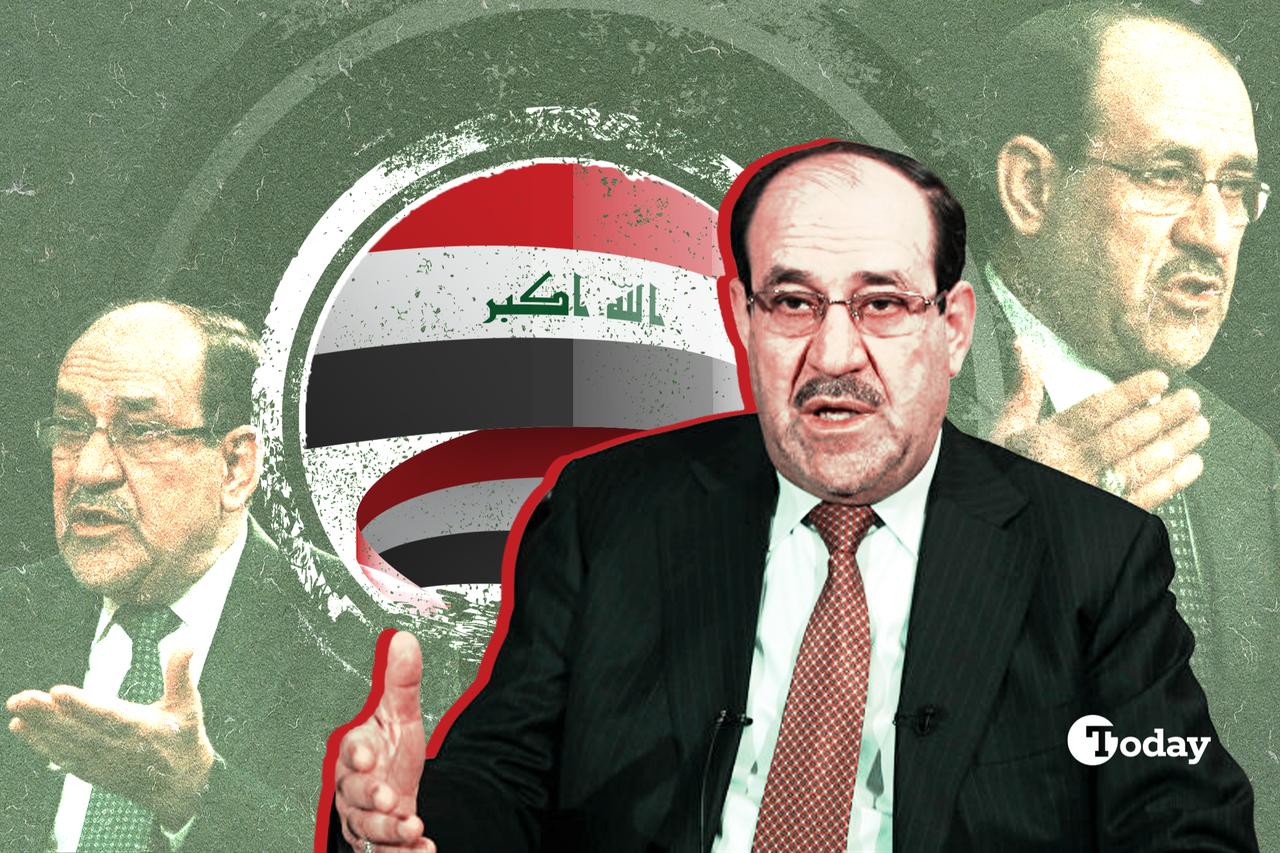


Washington sees Nouri al-Maliki’s potential return as a repeat of an old headache. But for Türkiye, it’s a full-blown emergency. Ankara isn't just watching another political drama in Baghdad; it’s confronting the possibility that the fragile architecture it has built along the southern frontier could fall apart all at once.
Iraq today sits at the center of Türkiye’s security, energy and trade calculations. It is a buffer against regional spillover, a partner in counterterrorism, a key export market, and, through the planned Development Road corridor, a gateway to Europe for Gulf trade. A Maliki-led government threatens to place each of these pillars under strain simultaneously.
This is not speculation rooted in ideology. It is an assessment grounded in precedent, current Iraqi dynamics, and the rapidly escalating confrontation between the United States and Iran.
The immediate market reaction to Maliki’s nomination was telling. Within days, the Iraqi dinar fell by roughly 7%, signaling investor anxiety over renewed U.S.–Iraq confrontation and fears of financial pressure from Washington. For Türkiye, this matters directly. Iraq is among Ankara’s largest regional trading partners, and economic instability south of the border tends to translate quickly into trade disruption, currency risk, and informal cross-border activity.
The broader context is one of political paralysis in Baghdad. Iraq’s parliament has repeatedly postponed presidential election sessions amid a crowded field of candidates and factional deadlock. The Shiite Coordination Framework’s move to rally behind Maliki is an attempt to force resolution through confrontation rather than consensus, precisely the approach that proved destabilizing during his previous tenure.
Washington’s response has been unambiguous. President Donald Trump warned that if Maliki returns, the United States will cut aid to Iraq, explicitly describing him as aligned with Iran. Secretary of State Marco Rubio reinforced the message, cautioning that Iraq’s next government should not be dominated by Iran-aligned figures. These signals matter to Ankara because they point toward a scenario in which Iraq becomes the central pressure point of U.S.–Iran rivalry once again.
Türkiye’s most acute vulnerabilities lie in northern Iraq. Ankara’s strategy there depends on three assumptions: a working relationship between Baghdad and the Kurdistan Regional Government (KRG), tacit coordination on security matters, and economic interdependence that discourages escalation.
Historically, Maliki favored political centralization and repeatedly clashed with Kurdish authorities over budgets, oil exports, and disputed territories. A return to that approach would almost certainly reopen tensions over energy policy and revenue sharing, issues that directly affect Turkish firms, pipeline arrangements, and cross-border trade.
More critically, security cooperation against the PKK could erode further. Baghdad has long been reluctant to confront PKK entrenchment in northern Iraq, and Iran-aligned factions have at times tolerated or indirectly shielded PKK elements where this served their own strategic interests. Under a government politically dependent on those factions, Ankara should expect even less willingness from Baghdad to coordinate meaningfully. This situation could undermine the "terror-free Türkiye" initiative under a possible Maliki government.
The likely result is a familiar but dangerous cycle: diminished cooperation leads Türkiye to expand military operations; these operations trigger nationalist backlash in Iraq; and militias exploit the tension to strengthen their position. Each turn of this cycle raises the risk of miscalculation.
Perhaps the most underappreciated casualty of a Maliki return would be Iraq’s Development Road project. Designed to link Iraq’s southern ports to Türkiye and onward to European markets, the corridor is central to Ankara’s long-term economic vision. It would anchor Türkiye as a logistics hub, deepen economic integration with Iraq, and offer Baghdad a path toward diversification beyond hydrocarbons.
Yet the project is inherently geopolitical. Its success depends on sustained cooperation between Türkiye, Iraq’s federal government, and the KRG, as well as a degree of insulation from regional rivalries. A government in Baghdad more closely aligned with Tehran would have weaker incentives to prioritize a route that enhances Türkiye’s role and strengthens Western-linked trade flows. Iran has its own competing transit visions, many of which bypass Türkiye altogether.
If the Development Road is slowed, politicized, or quietly shelved, the loss would extend beyond infrastructure timelines. It would represent Iraq’s retreat from a plural economic strategy toward deeper dependency on a single regional axis—one that offers Türkiye little strategic upside.
While economic and political risks dominate Ankara’s immediate calculations, security developments inside Iraq add another layer of concern. Daesh detainees evacuated from Syria are in the process of being transferred to prisons across Iraq, including facilities near Baghdad and in the Kurdistan Region. Iraqi officials have warned that the financial and security burden of managing these prisoners cannot fall on Iraq alone.
At the same time, Iran-aligned militias have escalated their rhetoric. Kataib Hezbollah has urged fighters worldwide to prepare for an all-out war in defense of Iran, while the Badr Organization has declared that any attack on Tehran would leave “no room for neutrality." For Türkiye, these statements are not abstract posturing; they suggest a heightened risk that Iraq could be drawn directly into a broader regional conflict.
An unstable or militarized Iraq would generate secondary pressures that Ankara knows well: irregular migration, smuggling networks, and security threats along its southeastern frontier. Türkiye is already preparing contingency plans for a worst-case scenario involving Iran, including measures to prevent new refugee flows. A parallel crisis in Iraq would compound these challenges.
Türkiye’s position is further complicated by its relationship with the United States. Ankara and Washington share concerns about Iranian overreach and regional instability but differ on tactics and priorities across multiple theaters. A Maliki-led Iraq could force Türkiye into uncomfortable alignment choices.
If Washington moves to apply financial pressure on Baghdad, through dollar access restrictions or banking scrutiny, Iraq’s economy could deteriorate rapidly. That deterioration would hit Turkish exporters and contractors even if Ankara is not directly involved in the pressure campaign. At the same time, Türkiye has limited appetite for openly supporting U.S. coercive measures that could accelerate Iraq’s fragmentation.
The margin for maneuver is narrow. Ankara must balance its interest in avoiding an Iran-dominated Iraq with its need to preserve working relations with Baghdad and prevent economic fallout.
For Türkiye, the question is not whether Maliki can form a government, but what kind of Iraq emerges if he does. A return to centralized, factional governance would undermine the fragile equilibrium that has allowed Ankara to manage its southern border, expand trade, and pursue long-term connectivity projects.
Iraq’s instability has rarely remained confined within its borders. In 2026, the spillover risks are higher than they have been in years. For Türkiye, a Maliki comeback would not simply recall the past; it would threaten to reopen a set of unresolved challenges at the worst possible moment.
The lesson for Ankara is stark: Iraq’s internal political choices now carry direct strategic consequences for Türkiye’s security and economic future. Preventing a slide back into zero-sum politics in Baghdad is no longer a matter of distant diplomacy—it is a core Turkish interest.


 Set as preferred source
 Set as preferred source



 4 min read