Newsletters


On June 14, 1985, representatives of five European governments met aboard the Princesse Marie-Astrid, a passenger boat tied up on the Moselle near Schengen, Luxembourg. The location was symbolically apt.
Schengen lies near the meeting point of Luxembourg, France, and Germany, and the agreement was signed there by Belgium, France, West Germany, Luxembourg, and the Netherlands as an intergovernmental arrangement outside Community law, since not every member of the European Community was ready to join.
The agreement was later implemented through the Schengen Convention, signed in 1990 and entering into force in 1995. Forty-one years after the signing, the Schengen area covers 29 countries and about 450 million people. Its central premise was tested again in late July 2026, this time at Spain’s North African enclave of Ceuta.
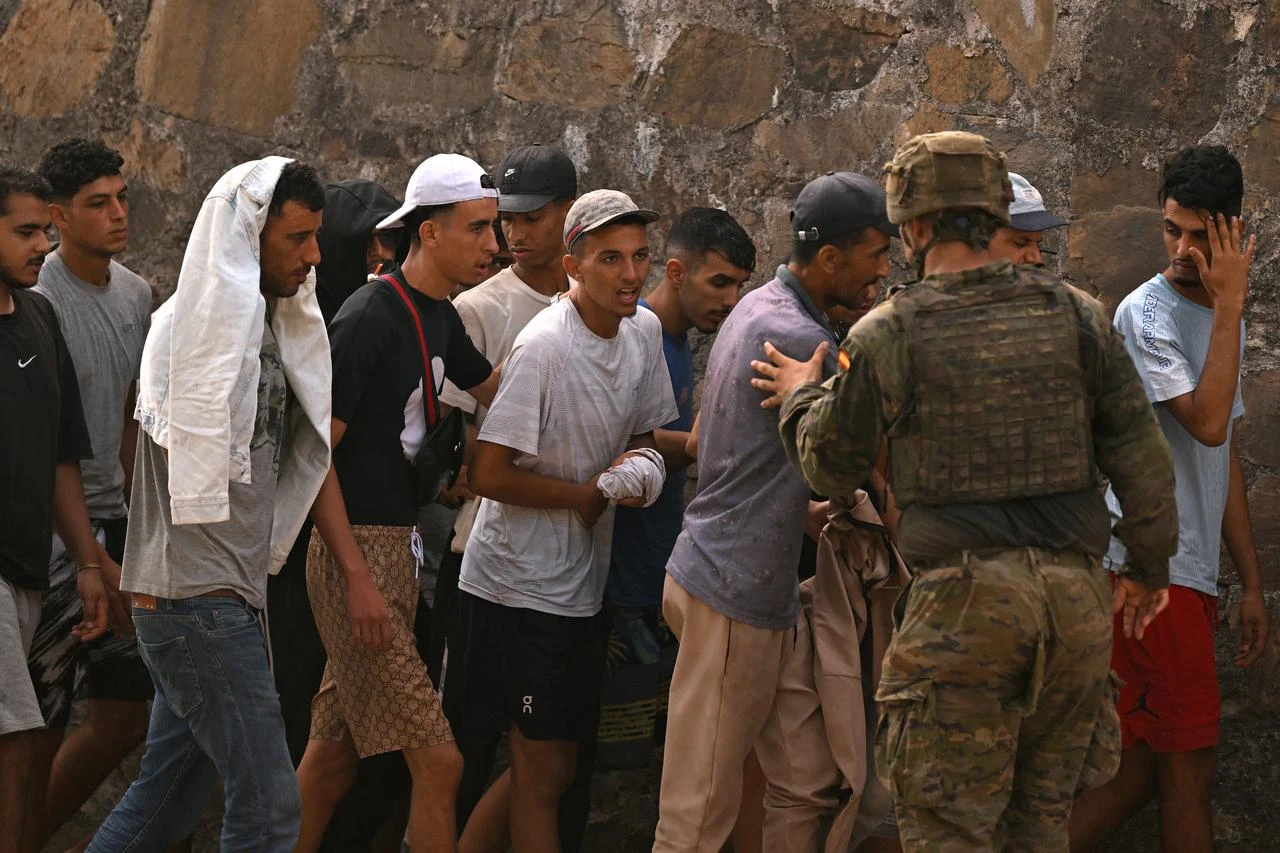
On Thursday morning, tens of thousands of people began crossing from Morocco into Ceuta, the Spanish city on the North African coast. Most swam around the Tarajal breakwater from Fnideq, a Moroccan town roughly 5 kilometers away.
Others crossed from Belyounech, where the distance is shorter. Spain's Interior Ministry estimated that about 50,000 people crossed within 24 hours. Juan Jesus Vivas, Ceuta's president, put the figure closer to 60,000, more than half the city's population. At least 67 people are reported to have died attempting the crossing.
On July 30, Prime Minister Giorgia Meloni and Deputy Prime Ministers Antonio Tajani and Matteo Salvini signaled that Rome was prepared to take exceptional steps, including suspending Schengen with Spain.
The following day, Interior Minister Matteo Piantedosi convened Italy's Committee for Migration Analysis and Border Security. Thereafter, the ministry ordered that document checks on travelers arriving from Spain be conducted for one month.
Three things should be said about that order.
First, Italy and Spain share no land border. The checks, therefore, fall at airports and seaports. European Union citizens are exempt, and the controls are directed at non-EU travellers.
Second, the legal exposure the measure was meant to close never existed. The Schengen Borders Code carves out a special regime for Ceuta and Melilla, and identity checks on travel from the enclaves to mainland Spain were already in force during the crisis.
Nobody who reached Ceuta gained free movement into the rest of Europe—Magnus Brunner, the EU's migration commissioner, said as much while Italy's cabinet was still deliberating. Nor is the exception new: Spain wrote it into its 1991 accession declaration to the Schengen Convention. It has stood for 35 years.
Third, the crossings had largely stopped before the order took effect. By Friday, Spanish Foreign Minister Jose Manuel Albares was telling Brunner that almost everyone who had entered had already returned to Morocco. Nobody reached the European mainland.

What happened at the Tarajal breakwater does not explain a month of document checks at Rome's Fiumicino airport and the port of Civitavecchia.
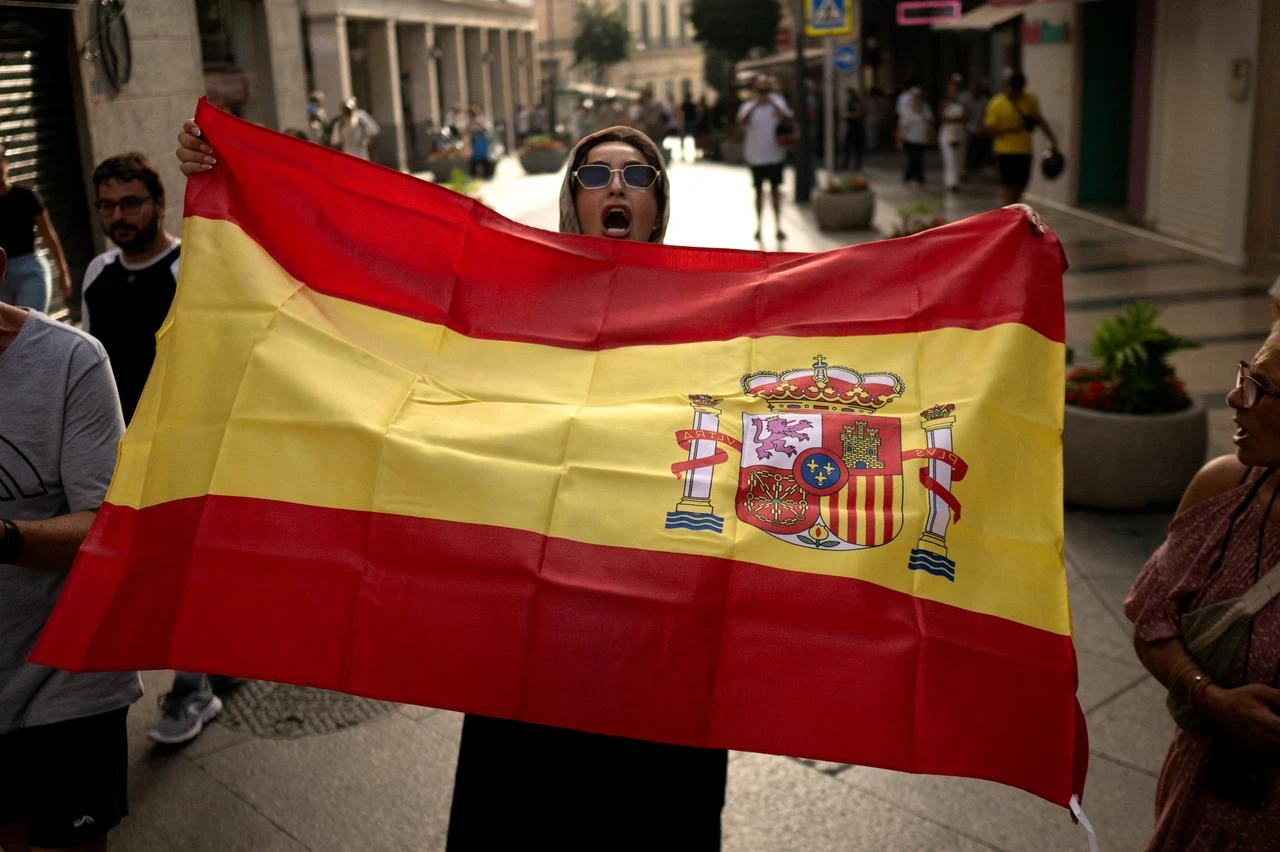
Meloni's coalition, in office since 2022 on a promise to curb irregular migration, faces pressure from a new far-right party led by former general Roberto Vannacci ahead of next year's election. Critics in Rome read the suspension as an appeal to that constituency. Sanchez, too, faces an election, and an opposition charge that he has lost control of Spain's borders.
Moreover, Madrid's own account is not disinterested. The government attributes the surge to trafficking networks exploiting confusion over a Supreme Court judgment delivered on 29 June and made public on 8 July.
Spain has long practiced what officials call “hot returns." A person reaching Ceuta could be returned to the Moroccan side within minutes, without registration or any opportunity to lodge an asylum claim. The court found in July that it was unlawful to intercept anyone at sea.
The ruling covers precisely the route people took, since almost everyone swam. The weakness is transmission. Migrant rights groups in Morocco say most of those who set out from Fnideq had no plausible way of learning what a Spanish court had decided weeks earlier.
Morocco, which controls the beaches people set out from, has said nothing about that morning. Whether Moroccan police stepped back from the beaches at Fnideq, and whether they were told to, is knowable only in Rabat.
The 2021 precedent suggests why the silence matters. In May 2021, between 8,000 and 10,000 people entered Ceuta in two days after Moroccan police eased controls during a dispute over Spain's decision to hospitalize Brahim Ghali, the Polisario Front leader. The European Parliament responded with a resolution the following month. Five years later, Spain has still not found an answer to it.
Each of the three governments has taken the position that suits it. Rome offers an explanation it doesn't have to prove; Madrid offers one it can't prove; Rabat sees no need to explain at all.
Twenty-two governments, Italy, Denmark, Austria, Belgium, Bulgaria, Cyprus, Croatia, the Czech Republic, Estonia, Finland, Germany, Greece, Hungary, Latvia, Lithuania, Malta, the Netherlands, Poland, Romania, Slovenia, Slovakia and Sweden, signed a letter to the Commission and Council presidents demanding an emergency videoconference of interior ministers and reserving their right to reintroduce internal border controls. Spain, France, Portugal and Luxembourg did not sign.
Beyond the letter itself, the individual positions differed only in degree. Denmark's prime minister told Agence France-Presse (AFP) that every option should be considered, including suspending Schengen cooperation. Austria's interior minister accused Madrid of giving out entry tickets to the European Union.
By contrast, France pursued both courses simultaneously. President Emmanuel Macron sent four mobile police units, aircraft, and drones to the Spanish border.
In the same statement, he offered Frontex support and admitted that Ceuta does not have the right of free movement into the rest of the Schengen area. He was tightening the border against a threat he had just said did not exist.
Nevertheless, the combination is not incoherent. Macron is facing a leadership challenge, with the Rassemblement National leading in most polls. The reinforcement is directed at a domestic audience, while the offer of Frontex assistance addresses the Commission. Von der Leyen publicly stated that no one had reached mainland Spain. The letter remained unchanged.
In practice, none of these measures required a new instrument. France has kept internal border controls almost nonstop since 2015. Germany extended checks to all its land borders in September 2024. Austria, Denmark, Sweden, and Norway have renewed their controls for years.
Introduced as exceptional measures, internal border controls have become a recurring feature of Schengen practice. What was new at the end of July was the object rather than the instrument. For the first time, the controls targeted how another member state managed the external border, and this was the reason given.
The legal framework remained intact throughout the last week of July. As Tajani noted, every measure taken was permitted under the treaties.
Solidarity is not absent from those treaties. Article 80 of the Treaty on the Functioning of the European Union subjects border, asylum, and migration policy to the principle of solidarity and fair sharing of responsibility.
The Pact on Migration and Asylum, applicable since June 12, 2026, gives that principle operational form through an annual solidarity pool, set for 2026 at 21,000 relocations or €420 million ($484.03 million) in financial contributions.
Spain was among the four member states the Commission had identified as being under migratory pressure. Nevertheless, contributing states determine the form of their own contributions, and migratory pressure is assessed on an annual cycle rather than in response to events.
The Ceuta incident carries implications beyond Spain. Morocco has now twice demonstrated that pressure on the enclaves is available to it as an instrument, and the response of July 2026 suggests that such pressure produces division among member states rather than a common position.
Whether the interior ministers' meeting addresses that question or confines itself to Spain's handling of a single week will indicate how the pact's solidarity provisions are likely to operate in practice.


 Set as preferred source
 Set as preferred source


 4 min read