Newsletters




Every murder mystery begins with a body.
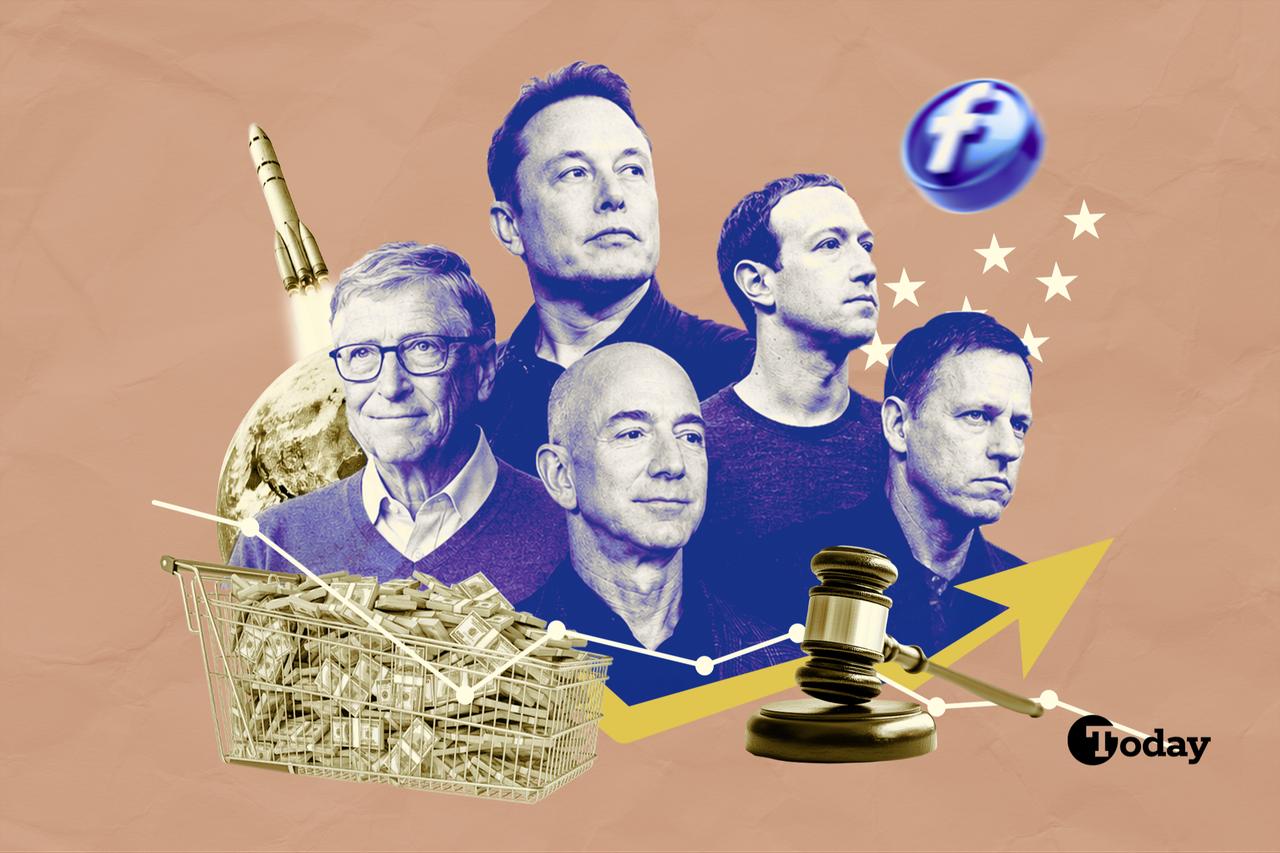
This one has five, scattered across the globe, dressed in hoodies, black turtlenecks, and rocket-company jackets.
Bill Gates, Mark Zuckerberg, Elon Musk, Jeff Bezos, and Peter Thiel glare out from the endless digital scroll like perps in a police lineup. Their corporations span continents, influence elections, shape commerce, and manage the daily habits of billions.
The question is not who killed whom. The question is who created the conditions that, according to Pew Research, have led nearly eight in 10 Americans to believe Silicon Valley has accumulated too much political power and two-thirds to believe it possesses too much economic power.
The verdict is no longer confined to the left or the right. The jury has gone mainstream.
The blood splatter leads back to a Detroit courtroom. The weapon was not a revolver. It was an idea.
Inventors photograph well, so it’s easy to mistake them for history’s authors. They stand beside machines and point to the future. The people who create the rules governing those machines are harder to spot. They sit in boardrooms, write legal opinions, and quietly alter the architecture of civilization.
In 1916, Henry Ford was making money so fast it seemed almost embarrassing. Model Ts poured from assembly lines and into American life. Farmers bought them. Bootleggers bought them. Everybody wanted one.
Ford had developed a dangerous habit. He talked as though corporations existed for more than shareholders. He wanted lower prices, expansion, and workers paid enough to buy what they built. He believed prosperity should circulate rather than accumulate.
To investors, Ford's suggestion that prosperity should be shared was a capital crime against dividends.
Among them were the Dodge brothers, shareholders in Ford Motor Company who preferred larger dividends to social experimentation. They sued. What began as a dispute over profits evolved into a fight over the purpose of the corporation itself.
The resulting court decision became one of the most influential business rulings in American history. The court declared that a corporation exists primarily to benefit its shareholders. At the time, the ruling appeared technical, the sort of thing that excites lawyers and bores everyone else.
But history specializes in disguises.
A century later, that argument still echoes through business schools and earnings calls. Not because a single court case determined the future, but because it articulated an idea that dominant institutions were eager to adopt.
Fast forward to the internet pouring jet fuel onto every economic theory already lying around the house. Shareholder primacy has leached into the culture.
Executives absorbed it. Investors celebrated it. Entire generations of managers learned to evaluate success through a single lens: growth in shareholder value.
A corporation was not a community. It was a machine judged by output.
By the end of the 20th century, the appliances had become global and enormous. The industrial giants of the old era manufactured automobiles and Oreo cookies. The new giants manufactured information, attention, software, and dependency.
Microsoft supplied the operating systems through which millions worked. Facebook transformed social interaction into a monetized data stream. Amazon devoured retail, logistics, publishing, and cloud computing with an astonishing appetite.
Musk’s mesh of corporate states fused rockets, satellites, automobiles, and artificial intelligence into a single industrial spectacle. Thiel’s financial and intellectual ecosystem delivered much of the muscle.
Before long, millions of people spent more time inside corporate systems than inside any civic institution. This was not the result of a conspiracy.
Conspiracies are way too incompetent to last a century. It was the result of incentives.
Once shareholder value becomes scripture, growth becomes virtue, and dominance becomes destiny. Run that logic for a century, and corporations stop behaving like businesses.
They become digital nation-states, governing populations they never asked to govern and were never elected to rule.
The shareholders who sued Ford thought they were fighting over dividends.
What survived was the logic. It hardened into doctrine, settled into habit, and disappeared into the infrastructure of modern life.
The old state collected taxes. The new one collected the data and dependence to trigger the political tremor now rattling through America’s 250th birthday party.
Listen closely on July 4th and you'll hear Republicans and Democrats reacting to democratic-socialist candidates such as New York City Mayor Zohran Mamdani as though epidemiologists had discovered the first domestic case of political Ebola.
Indeed, President Trump and his MAGAs have already started to ritually humiliate Mamdani’s crew as the new Red Menace, while feckless and elderly Democratic leaders scramble to find ways to run Mamdani out of town without losing his generation of voters.
Yet both sides are arguing over fingerprints while the murder weapon sits in plain sight on the table.
What voters are reacting to is not theory. It is a scale. After 40 years of watching corporations grow larger than cities, wealth pool deeper than reservoirs, and executives acquire influence once reserved for cabinet ministers and monarchs, a growing number of people have begun to wonder whether the machine has become too large for democratic control.
They look at housing costs, healthcare bills, stagnant wages, and the invisible toll booths erected across digital life and conclude that conventional wisdom has been overselling the American Dream.
The phenomenon is hardly confined to America. Across Europe, Latin America, and the Anglosphere, citizens raised on the doctrine that bigger is always better are beginning to question the faith.
The political labels vary, but the suspicion is the same.
The mood feels less like a revolt than a jury losing confidence in a witness. The corporate city-states remain rich, powerful, and admired, but no longer quite so trusted. And when trust evaporates, history has a habit of reopening old cases.
The crime scene stretches from Detroit to Silicon Valley and beyond. The gunshot came over a century ago, but most people were too busy admiring the machinery to hear it. Only now are they starting to count the bodies.


 Set as preferred source
 Set as preferred source


 7 min read