Newsletters


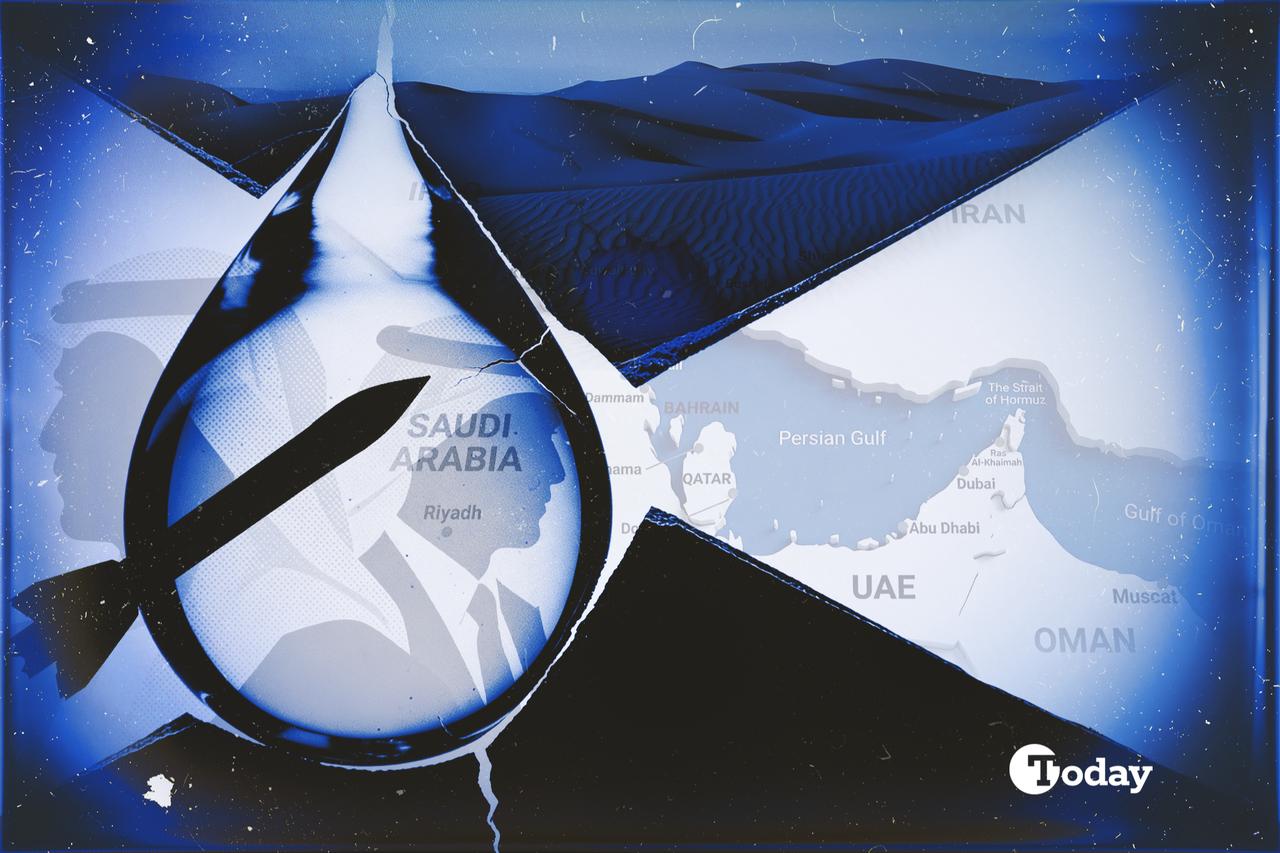


The oily desert has always percolated a bottomless talent for illusions.
Mirages shimmering on the horizon.
Promises of unity dissolving into heat waves.
And now the United Arab Emirates has decided to stop the make-believe.
While Saudi Arabia gathered its Gulf allies under chandeliers and soft diplomacy, the Emiratis lit a flare from afar and stayed home, flipping the table after realizing OPEC’s house rules were annoying and rigged for someone else.
Call it timing, coincidence, or catawampus theater. It really doesn’t matter. In this part of the world, symbolism is policy.
For years, the Gulf Cooperation Council crowd has operated under a polite fiction: that they are aligned, united by oil, Islam, and a shared fear of Iran.
But wars have a way of stripping varnish off old alliances. Since the latest round of U.S. and Israeli strikes triggered Iranian retaliation—thousands of missiles and drones arcing across the Gulf—the facade has cracked wide open. Instead of solidarity, we’re seeing divergence.
Coordination is passé. Improvisation is the new cool.
And the Emirates, small in size but bloated with cash and ambition, has decided it’s done being the punch line in the oil cartel’s blooper reel.
Leaving OPEC is not just an energy policy maneuver. It’s a declaration that the old order is, well, old.
The UAE’s exodus dissolves 13% of OPEC’s production capacity, according to the International Energy Agency. That does more than damage OPEC’s ability to manage the market. It’s a veritable Declaration of Independence accompanied by the Ya'illahi Chorus.
For decades, OPEC functioned less like a cartel and more like a monarchy with Saudi Arabia as its reluctant suzerain. Production quotas weren’t just economics; they were instruments of regional discipline. You stayed in line; you got stability. You strayed, you risked isolation.
Now, one of the most sophisticated players in the game has decided the constraints are no longer worth the benefits.
The official line from Abu Dhabi is clean and bloodless. This is about market flexibility, long-term supply, and meeting global demand.
But nobody in the region is naive enough to believe that hooey. This is about control; specifically, who gets to decide how quickly the Gulf monetizes its remaining oil wealth before the world pivots away from fossil fuels.
Saudi Arabia is playing a long game. It needs high prices to bankroll its sprawling economic transformation projects, maintain domestic stability, and host the World Cup. That requires discipline—cutting production, managing supply and keeping the market tight.
The Emirates is playing a different game entirely. It looks at the same horizon and sees a closing window. Pump more now, sell faster, diversify aggressively, and don’t get caught holding stranded assets when the energy transition finally bites.
Cash out before the party ends.
Those strategies are fundamentally incompatible. And once that becomes clear, OPEC becomes a straitjacket.
But the oil story is only one thread in a much messier tapestry.
Zoom out, and the Emirates has been drifting away from the Saudi orbit for years. Yemen was the first obvious fracture. What began as a joint intervention turned into a proxy tug-of-war, with each side backing different factions.
Sudan followed the same script, with Abu Dhabi allegedly supporting paramilitary forces that run counter to Saudi and Egyptian interests. Even diplomacy has diverged. The Emiratis have leaned into normalization with Israel, while others hedge or retreat.
This is not haphazard. It’s a pattern.
The UAE is behaving less like a junior partner and more like a mid-sized power with global ambitions. With over $2 trillion in sovereign wealth and a sprawling network of investments from London to Singapore, it doesn’t need to hide behind regional consensus anymore. It can afford to freelance.
And then there’s the Persian problem—the great destabilizer that was supposed to unify the Gulf but instead exposed its fractures.
When Iranian missiles started landing near critical infrastructure, the expectation was a tightening of ranks. Instead, each state recalibrated individually.
Saudi Arabia condemned loudly but kept one eye on diplomacy. The Emirates took a colder, more surgical approach, quietly severing ties and hedging its exposure. Others hedged in their own ways.
The takeaway is uncomfortable but unavoidable: The Gulf states no longer trust collective security frameworks to protect them—not OPEC, not regional alliances, and increasingly, not even President Donald Trump’s version of the U.S.A.
For decades, the American security umbrella allowed these countries to outsource risk. That trickery is fading. When drones slip through defenses and oil facilities burn, the message lands hard.
You are on your own.
And when everyone is on their own, coordination becomes optional.
That’s the real story behind the UAE’s exit from OPEC. It’s not just about oil barrels; it’s about a psychological shift. Multilateralism in the Arab world has always been fragile, but now it’s openly questioned.
Emirati officials are already floating the possibility of pulling back from other institutions—the Arab League, the GCC, and even broader Islamic organizations. Whether they follow through is almost secondary.
The fact that it’s being discussed seriously tells you everything.
OPEC survives. Institutions like this don’t collapse overnight. They erode. If a wealthy, strategically positioned player like the UAE can walk, others can at least consider loosening the leash.
Expect fragmentation. More side deals, more quota violations, more quiet deviations dressed up as technical adjustments. The cartel becomes less a unified force and more an ostentation of peacocks, flightless.
The genuine threat is irrelevance.
As global energy markets diversify and demand growth plateaus, OPEC’s ability to dictate prices weakens structurally. Add internal fractures to that equation, and you’re looking at a slow-motion fade rather than a melodramatic collapse.
Yet OPEC won’t die in a headline. It dies in increments—five years of erosion, maybe ten if Saudi Arabia manages the decline skillfully. But the era of unquestioned dominance is already over.
The desert delusion of unity is gone.
And if you’re still betting on old structures to hold it together, you’re staring at a mirage.


 Set as preferred source
 Set as preferred source



 4 min read