Newsletters


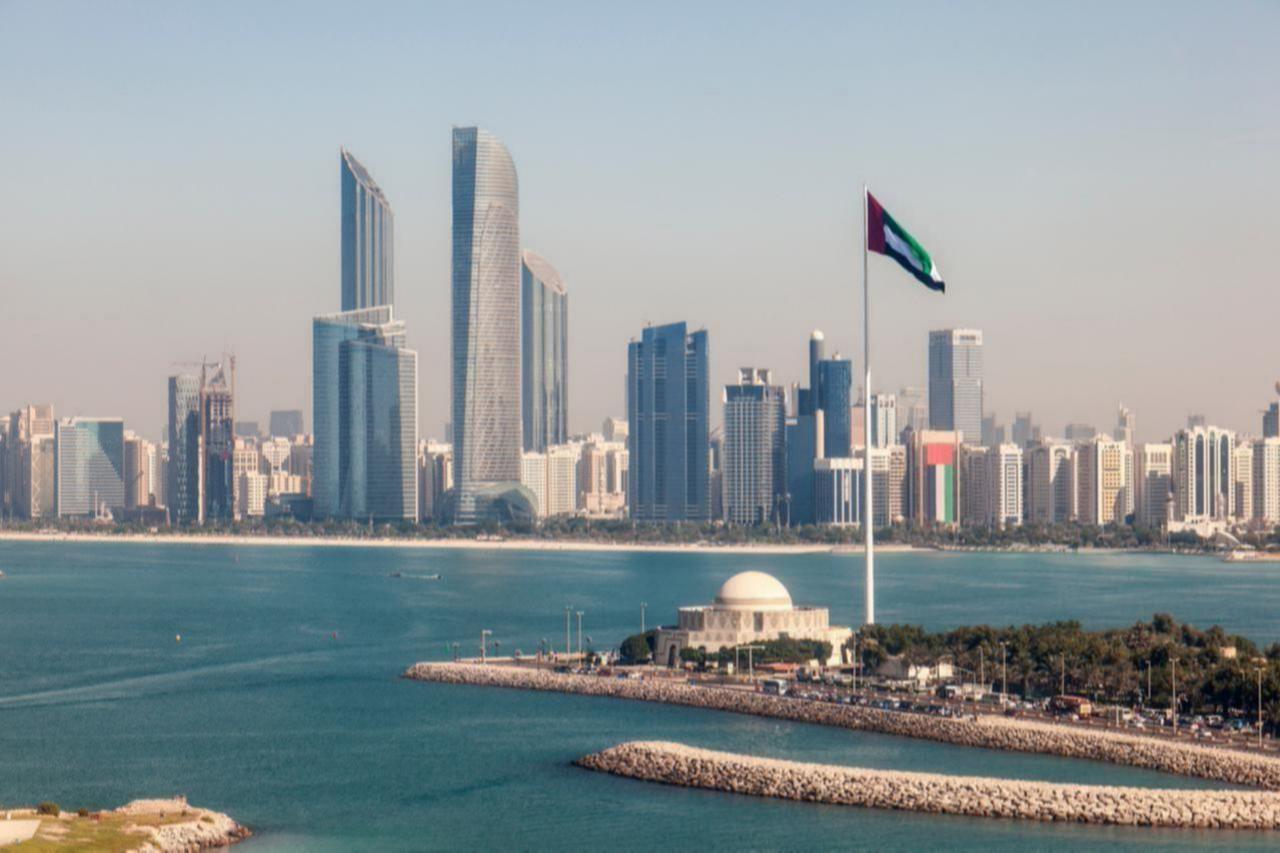


The United Arab Emirates announced on April 28, 2026, that it would leave OPEC and OPEC+ as of May 1. The timing of the decision is telling.
With Brent trading above $110 and the Strait of Hormuz effectively closed amid the Iran-U.S.-Israel conflict, the UAE’s move marks a potential turning point for both energy markets and the regional balance of power.
Still, assessing how significant that turning point really is, and what it means for Türkiye, requires a data-driven and measured reading.
The UAE’s move did not come out of nowhere. Abu Dhabi had been signaling a possible break for at least five years. The first signs of tension emerged ahead of the OPEC+ summit in November 2020, while the first open rupture came during the July 2021 meeting.
To understand this historical context, it is enough to look back to 2020: amid the Saudi-Russian price war, the Abu Dhabi National Oil Company (ADNOC) had already announced plans to raise output to 4 million barrels per day from April 2020 and to reach 5 million barrels per day in capacity over the longer term.
In other words, the UAE’s large-scale production ambitions and its discomfort with OPEC restrictions became public not in 2026 but six years earlier.
The UAE accounts for roughly 12% of OPEC’s total production and holds a critical position as a swing producer. Qatar left in 2019, and Angola followed in 2024, but both were relatively small producers. The UAE’s departure belongs in a very different category, both in terms of volume and strategic weight.

At the heart of the split are two very different national models. Saudi Arabia remains heavily dependent on oil revenues from a fiscal perspective and needs higher prices to fund mega-projects such as Vision 2030.
The UAE, by contrast, has spent recent years diversifying its economy, making oil revenue a more marginal component of its broader economic model. Abu Dhabi also expects long-term demand for fossil fuels to decline, so it wants to monetize its reserves today rather than risk leaving them as stranded assets.
Bloomberg’s Javier Blas captures this dynamic sharply: the real road to the exit begins in Riyadh and takes a turn through Texas.
The U.S. shale revolution had already narrowed OPEC’s room for maneuver, while the UAE and Saudi Arabia had been locked in a quiet cold war for a decadeover the cartel’s direction. The humiliation of July 2021 was never forgotten.
Emirati political scientist Abdulkhaleq Abdulla, speaking to U.S. media, points to a broader transformation: “What we’re seeing today is like a new UAE. This is how the UAE will be behaving, and will be conducting itself regionally, globally.”
Bachar El-Halabi of Argus Media puts the same shift into a more concrete, market-based frame: “While Saudi Arabia aims to sustain oil markets for the next century, the UAE feels no such urgency.”
It is natural to link the UAE’s announcement to the Iran war and the Hormuz crisis. But as Blas suggests, the closure of Hormuz is not the real reason behind the UAE’s exit. It is the diplomatic cover.
The Saudi-Emirati rupture that erupted over Yemen in December 2025 was already there beneath the surface. Iranian attacks did not heal that split. They deepened it.
Kpler’s Middle East energy director, Amena Bakr, reads the timing through the lens of post-conflict strategy: the UAE wants to be able to put more oil on the market once the bottleneck in Hormuz is cleared, without being constrained by quotas.
Its current output has already fallen below 2 million barrels per day because of the war, so the immediate price impact of the exit remains limited for now.
Thanks to the port of Fujairah, the UAE has maritime access on both sides of Hormuz. That geographic advantage, combined with expanded pipeline capacity, could turn Abu Dhabi into a long-term model hub for reducing Gulf oil’s dependence on the Strait of Hormuz.
Bloomberg’s scenario unfolds in two stages: there is extreme scarcity now, but once Hormuz reopens, scarcity could quickly turn into abundance, possibly alongside a simultaneous price war.
Capital Economics estimates that the UAE alone could add 1 million barrels per day of supply once the strait is reopened.
Goldman Sachs has raised its year-end West Texas Intermediate (WTI) forecast to $83, but BBC's Faisal Islam says oil could fall to $55 within 12 months if a Riyadh-Abu Dhabi price war breaks out.
The real path will most likely fall somewhere between these two extremes. The UAE’s exit statement committed to raising production in a “gradual and measured” way, while repairs to damaged infrastructure will also take months.
This is where Amena Bakr’s more cautious assessment matters: OPEC has survived many crises, and as long as its market-stabilizing role remains intact, a collapse may not follow.
Of course, the UAE also has another calculation behind this decision.
By gaining production independence, Abu Dhabi is positioning itself to help ease one of the outcomes of the Iran war launched by the U.S. and Israel that has most unsettled the Trump administration: volatility in oil prices.
In doing so, it hopes to absorb some of the pressure it faces from Washington over tensions in Africa, particularly Sudan, Somalia and Chad, as well as criticism of its joint projects with China. This is the expectation written on the other side of Abu Dhabi’s ledger.
The more important question comes from CSIS’s Clay Seigle: if the wealthy UAE has decided that supply discipline is no longer worth the cost, why should Iraq, which depends far more heavily on oil revenue, remain inside the cartel? Venezuela could also be added to that list, while Kazakhstan already has one foot outside.
Still, it is important not to overstate the case. Qatar left in 2019, Angola followed in 2024, and the organization survived.
The real difference is that the UAE carries a very different kind of weight, both in terms of volume and swing-producer capacity. This is a breaking point, but not an automatic unravelling.
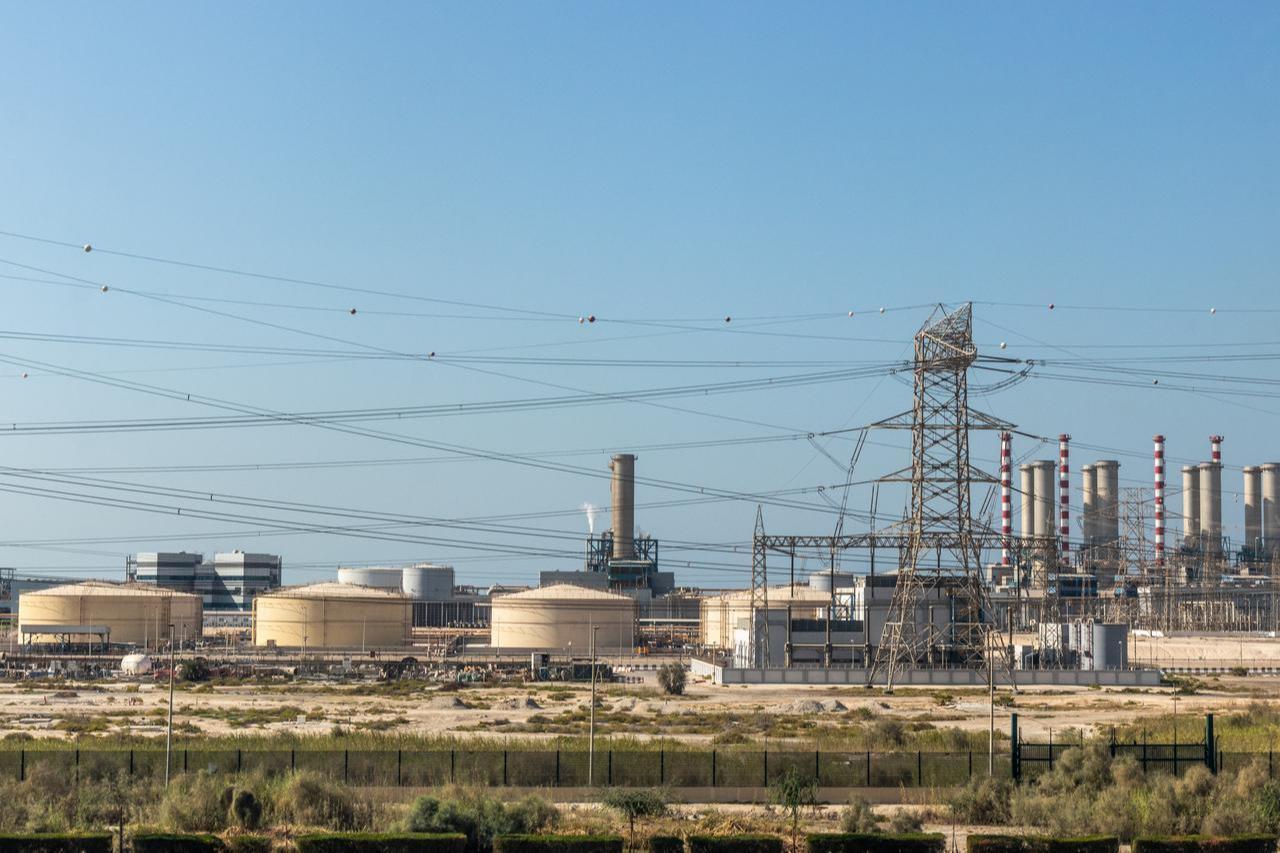
Türkiye’s position is more nuanced than it is often presented. In March 2026, Energy and Natural Resources Minister Alparslan Bayraktar said the Hormuz crisis had not created a direct problem for the country’s energy supply.
“At the moment, there does not appear to be a problem for our country’s energy supply security. Our energy infrastructure and the diversification policy we have pursued so far are keeping us in a safe position. Our dependence on this region is around 10% in oil, which is a manageable level. In natural gas, we had no gas purchases from the region,” Bayraktar had said.
This statement provides important context. Türkiye’s direct dependence on Gulf oil is around 10%. A significant share of the oil coming from Iraq also arrives through the Kirkuk-Ceyhan pipeline, which is independent of Hormuz.
On the natural gas side, as the minister noted, there is no Gulf link. Türkiye’s gas supply is shaped more by U.S. LNG agreements and western routes.
Still, Bayraktar’s warning should also be noted: “If this continues into the medium and long term, it could turn into a problem capable of affecting the entire global economy.”
With Brent trading around $110, Türkiye’s import bill and indirect inflation pressures are rising. This cost is manageable, but it cannot be ignored.
Türkiye’s real opportunity, however, lies not in price but in geography. The UAE’s rivalry with Saudi Arabia, the new Gulf power alignment triggered by its OPEC decision, and Abu Dhabi’s Fujairah model—all increase Türkiye’s transit value over the medium term through routes such as Baku-Tbilisi-Ceyhan and TurkStream.
Turning this into diplomatic leverage will not happen automatically. It requires an active energy foreign policy, and Türkiye has long pursued a proactive approach on this front.
The UAE’s exit from OPEC is a real rupture. The organization losing 12% of its total production, a critical swing capacity and decades of member loyalty cannot be dismissed as a minor development.
It is also clear that the Saudi-Emirati rivalry in the Gulf is no longer merely implicit. It has become openly visible.
Still, two exaggerated conclusions should be avoided. The first is the expectation of an immediate OPEC collapse. The organization has survived departures and periods of crisis before. A domino effect is possible, but it is not inevitable.
The second is a disaster scenario for Türkiye. Bayraktar’s figures show that Türkiye’s direct dependence on Hormuz is limited, while its diversification policy provides a short-term buffer.
The real questions belong to the medium term: how the UAE’s post-Hormuz production increase will reshape the market, how Türkiye would manage and possibly turn a price-war scenario to its advantage, and how active a role Ankara will take in the region’s new power alignment.
In other words, the UAE’s decision does not point to a major negative shock for Türkiye’s energy market.
It signals a period that could offer opportunities in political and energy geostrategic terms.


 Set as preferred source
 Set as preferred source


 1 min read
 1 min read