Sign in
 Newsletters




In David Lynch’s cult film "Lost Highway," the main character drives for miles along a dark highway while fleeing the police, only to find himself back where he started. The film evokes a sense of déjà vu, an inescapable loophole in time and space.
Since last week's trilateral Russia-Ukraine-U.S. talks in Abu Dhabi, the reports about Russian demands appearing in the media have given me the same feeling of entrapment, the same sense of déjà vu.
It is as if nearly five years of war, more than one million Russian casualties, Russia's inability to advance decisively on the battlefield, and numerous rounds of peace negotiations had never happened.
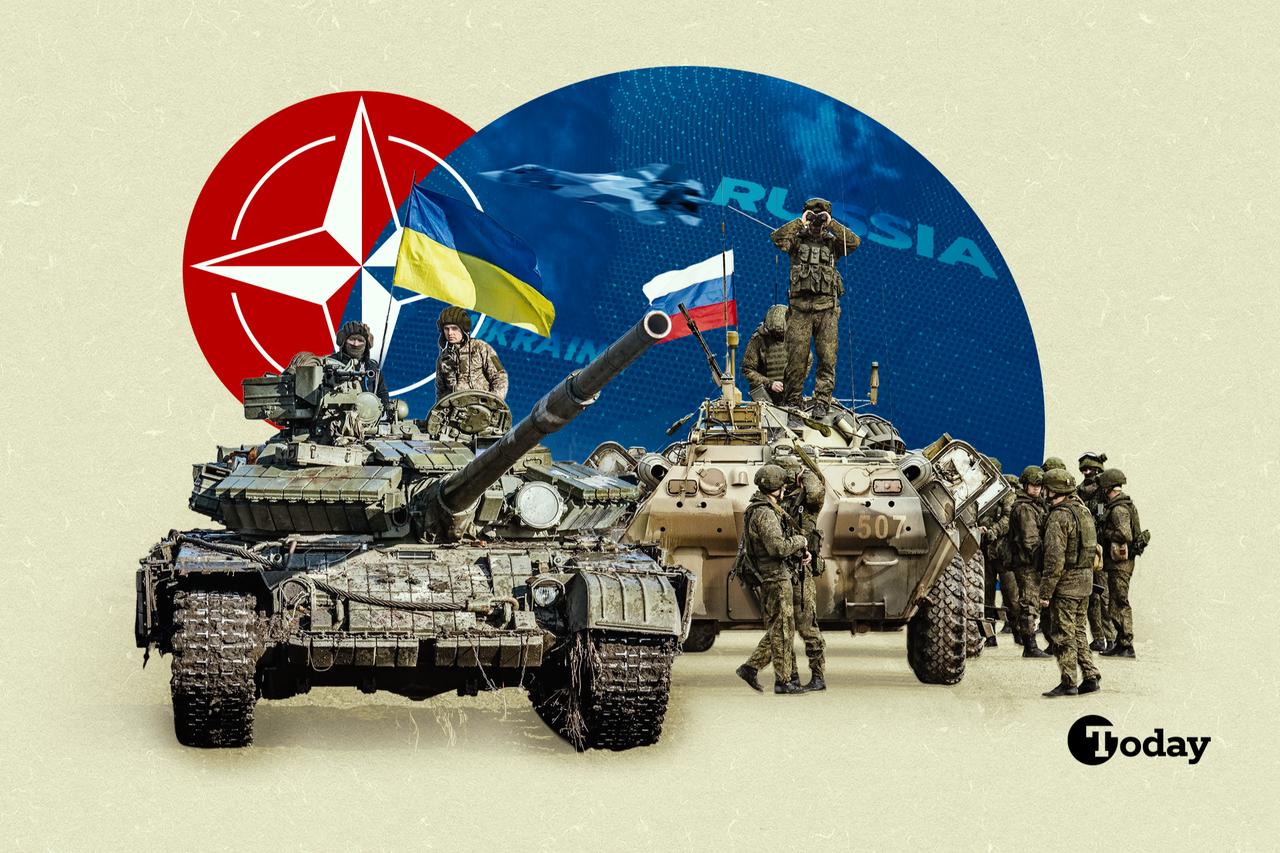
Moscow has returned to the same demands it presented before the war, taking us back to December 2021, when it was massing troops along Ukraine's borders and demanding security guarantees from the United States and NATO. Then, Russia threatened war; today, it is trying to obtain at the negotiating table what it has failed to achieve on the battlefield.
By making an end to the war in Ukraine conditional on a new European security architecture and presenting the West with maximalist demands it cannot accept, the Kremlin signals that it does not genuinely seek peace. Instead, it is shifting the focus toward what it calls the "root causes of the war": NATO's eastward expansion.
Russian demands demonstrate that Moscow remains obsessed with weakening NATO's presence in territories it considers its sphere of influence, establishing its own zones of influence in Europe and undermining the principle of collective security.
By disregarding fundamental concepts such as sovereignty, which lie at the heart of the European security architecture, and once again interpreting the concept of "indivisible security" on its own terms, Moscow is recycling its familiar demands.

In fact, these demands are rooted in much older claims. Since the Cold War, Russia has advocated a single European security architecture based on the principle of "indivisible security": no state should enhance its security at another's expense.
Moscow has used this principle to argue that Western-controlled security mechanisms, particularly NATO, should be constrained and that Russia should have an equal role in European security arrangements. It has consequently portrayed NATO enlargement as undermining Russian security interests and as a threat to the strategic balance in Europe.
Russia continued to advocate this principle through various channels after the Cold War.
Putin became one of the principle's most ardent advocates. In his 2007 Munich Security Conference speech, he called for a new global security architecture, criticized the U.S.-led unipolar order and NATO enlargement, and accused the West of violating security assurances allegedly given to the Soviet Union in 1990.
Citing NATO Secretary-General Manfred Wörner's statement that NATO troops would not be deployed beyond West Germany, Putin questioned where those guarantees had gone.
Just days before the full-scale invasion in 2022, Putin accused Ukraine of violating the principle of "equal and indivisible security" by seeking its own security arrangements, once again using the principle to challenge other countries' sovereign choices.
Russia's alternative vision is clear: replace the Euro-Atlantic security system with continent-wide agreements that accommodate Russian interests and constrain NATO.
This approach was most clearly articulated in December 2021, when Russia presented the United States and NATO with two draft agreements demanding formal security guarantees amid escalating tensions over Ukraine. The demands now emerging from Abu Dhabi largely revive those proposals.
Then, as now, Moscow's central objective was to restrict the sovereignty of Ukraine and other post-Soviet states, make them recognized as part of Russia's sphere of influence, and limit the Western military presence in these territories.
In its 2021 draft agreements, Russia’s main demands included an end to NATO enlargement and a return to the alliance's 1997 military posture; restrictions on military exercises, bases and cooperation across Eastern Europe, Ukraine, the South Caucasus and Central Asia; a ban on deploying missiles capable of striking the other side's territory; restrictions on military deployments, bombers and warships near the other side's borders; an end to NATO cooperation with non-member post-Soviet states; and the withdrawal of US nuclear weapons from Europe.
Despite differing media reports, the document Russia reportedly presented in Abu Dhabi, according to The New York Times, and Moscow's subsequent statements suggest that Putin is reviving the demands made in 2021.
These include NATO's return to its 1997 military posture, which presidential adviser Yuri Ushakov described as part of Russia's vision of "indivisible security," opposition to further NATO enlargement, and an end to "any military activity" in Ukraine and other parts of the post-Soviet space.
Moscow has reportedly added demands to prevent France and the United Kingdom from extending their nuclear protection to other European countries and to end all weapons supplies and military assistance to Ukraine.
Alongside the negotiations, proposals concerning a new security architecture by Alexei Drobinin, head of the Russian Foreign Ministry's Foreign Policy Planning Department, also attracted attention. His suggestions for bilateral non-aggression or mutual assistance agreements with individual NATO countries would effectively undermine the alliance's collective security system by replacing it with fragmented arrangements.
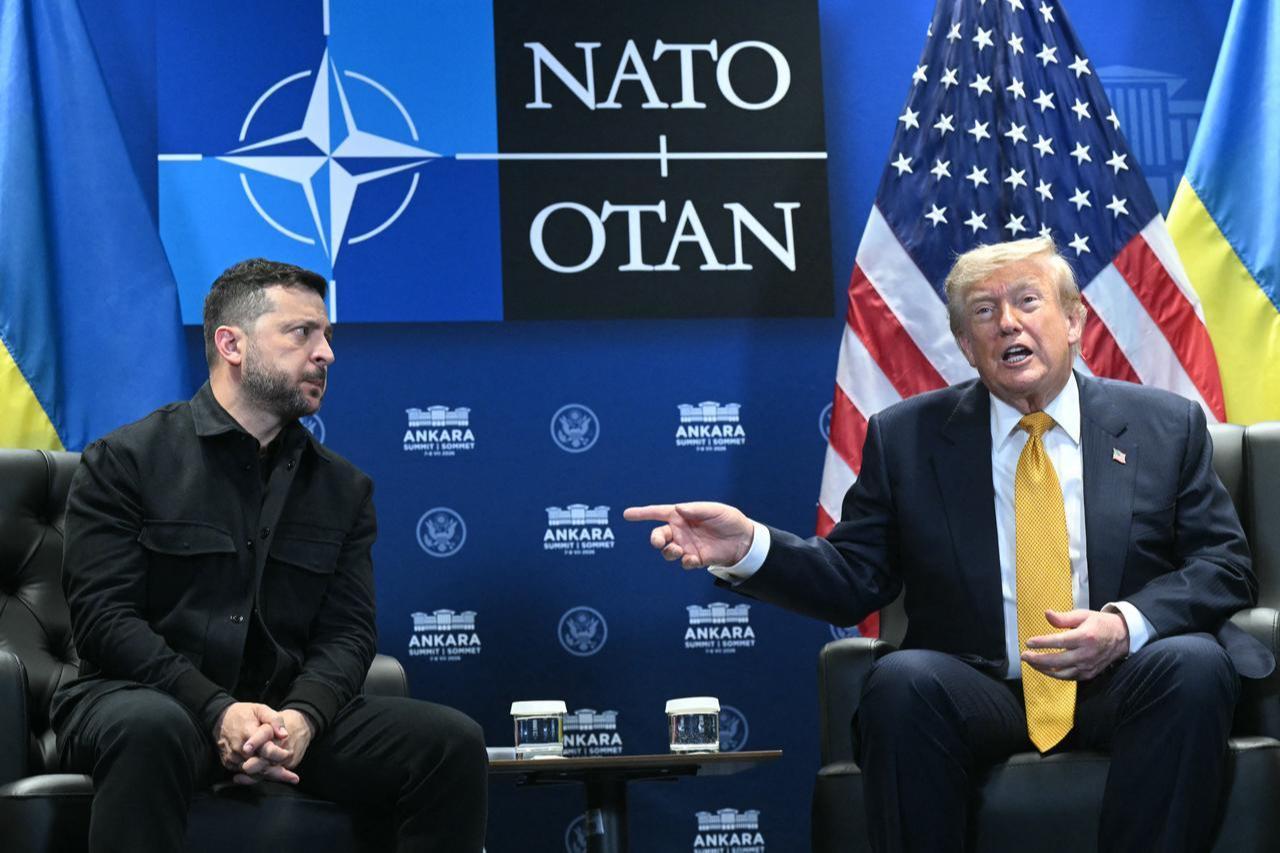
As in 2021, Russia wants to negotiate Europe's future security architecture with the United States alone, on an equal footing, rather than with European countries. Although American envoys reportedly insisted that European allies should participate, the Kremlin has yet to confirm whether it accepts this.
While Washington may be willing to discuss Russia's demands, they are non-starters for Europe. It is hardly convincing to argue that an inclusive security system in Europe, one that also takes Russia's interests into account, would provide lasting peace.
The fundamental disagreement concerns sovereignty and international law: Moscow continues to defend outdated concepts such as spheres of influence. Its aggression against Georgia in 2008, annexation of Crimea in 2014 and full-scale invasion of Ukraine in 2022 demonstrate its revisionist ambitions and make bilateral security guarantees unreliable.
Only collective security can protect Europe. Had the Trump administration offered Ukraine stronger support instead of accommodating Moscow, Russia might not have returned to the negotiating table with the same demands after five years of war.
In 2021, Washington rejected most Russian demands but offered talks on missile deployments, military transparency and risk-reduction measures. Moscow dismissed these proposals as insufficient, insisting that halting NATO enlargement and rolling back its military presence in Eastern Europe were non-negotiable red lines.
Looking back today, we can say that Russia's demands in 2021 were a pretext for starting the war. Today, the United States has an administration that is much more sympathetic toward Russia, attaches less importance to Ukraine's legitimate struggle, and also wants to reduce its military presence in Europe.
In such an environment, the re-emergence of demands that Europe cannot accept, even under the banner of peace negotiations, shows just how far away peace remains.


 Set as preferred source
 Set as preferred source


 2 min read
 1 min read