

 Newsletters





When Saudi Crown Prince Mohammed bin Salman, Turkish President Recep Tayyip Erdogan, and Pakistani Prime Minister Shehbaz Sharif signed the Mecca Joint Defense Agreement on Aug. 7, the most conspicuous absentee was the Arab world's most populous state, Egypt.
Egyptian Foreign Minister Badr Abdelatty said the matter is under "serious consideration," and his Turkish counterpart Hakan Fidan called Egypt a "natural partner" whose entry awaits only technical work.
On Oct. 20, Libya’s eastern-based parliament ratified a 2019 maritime agreement signed between the Libyan U.N.-recognized government in Tripoli and Turkiye to delimit maritime boundaries in the Mediterranean Sea. Egypt, a long-time supporter of the political and armed forces in Eastern Libya, objected to this move, claiming it is null and void.
Türkiye, through Foreign Minister Fidan, responded in a very mature and responsible way, saying that Ankara understands Egypt's concerns. Moreover, the Defense Ministry announced that Ankara is ready to sign a maritime boundary agreement with Egypt that could expand Cairo's maritime jurisdiction in the Eastern Mediterranean.
Yet, Egypt issued a joint statement supporting the Greek position, thus raising the question of whether expecting its membership in the Mecca alliance is realistic.
The founders of the Mecca alliance did not close the doors on membership. They say it is open to any country willing to uphold its principles. In theory, Egypt is a natural candidate. It is already a member of the R4 group comprising Saudi Arabia, Turkiye, and Pakistan.
On Oct. 11, the four issued a joint statement condemning Houthi attacks on Saudi Arabia, and two days later Abdelaty said Egypt would answer any Saudi request for support. Turkish-Egyptian relations are at a high point, with a joint planning group, military exercises and cooperation, and a $15 billion trade target.
Geographically, Egypt would extend the alliance's reach to North Africa, the Eastern Mediterranean, the Suez Canal, the Red Sea and the Horn of Africa, areas where Cairo, Riyadh, and Ankara already hold aligned positions, such as support for Somalia's territorial integrity.
Egypt would add the largest army in the Arab world and give the pact a genuinely Arab center of gravity. That said, there are other factors that indicate Cairo might not become a member anytime soon. These could be related to self-choices or obstacles.
First, Egypt might not be ready, legally or politically. Article 151 of Egypt's 2014 constitution requires a public referendum before any treaty of "peace and alliance" can be ratified, and a mutual defense pact plainly qualifies.
One should ask, would Cairo want to put such a defense commitment to a national vote? The text of the Mecca alliance raises the stakes further.
This means a prospective member cannot base its decision to join on tactical calculations or short-term gains. Because the alliance would be tested from the day it is formed, its members must be prepared for a long-term commitment.
Second, the Israeli factor. Article VI of the 1979 Egyptian-Israeli peace treaty forces Cairo not to enter into any alliance or obligation that conflicts with it. The pact's members insist it targets no one, but some Israelis read it as cutting against Israel. Egypt also relies on Israeli gas imports, and the peace framework underpins its annual U.S. military aid.
Accordingly, Cairo has reasons not to sign anything Washington or Israel could read as a hostile alignment, at least until the trajectory of Gaza and Israeli politics becomes clearer.
Third, Egypt might have little to offer to the pact's formula. The alliance rests on complementary inputs. Saudi Arabia’s money and energy resources, Türkiye's defense industry, military professionalism and NATO-standards, and Pakistan's nuclear deterrent and combat experience.
Egypt has manpower, but it is a net recipient of Gulf finance, relies on imported weapons, and has no serious defense industry. It also lacks the deep military ties with Pakistan that Riyadh and Ankara have built over decades. Its main asset, a large army, is also a liability, because collective defense cuts both ways.
Additionally, Egypt would bring its own disputes that would include the Nile dam standoff with Ethiopia, instability in Libya, and war in Sudan on its southern border.
Fourth, Cairo’s lack of commitment and contradictory behavior. Egyptian foreign policy works by staying close to rivals at the same time to maximize benefits from all actors. It courts Türkiye while keeping strong ties with Greece and Greek Cyprus, Ankara's Eastern Mediterranean adversaries.
It partners with Saudi Arabia while deepening its alignment with the UAE, whose regional policies often diverge from Riyadh's. While such behavior might be useful on the tactical level, it does not project trust, reliability, credibility, and commitment—things that are essentially needed for an alliance. A formal alliance would force choices on exactly the files that Cairo does not want.
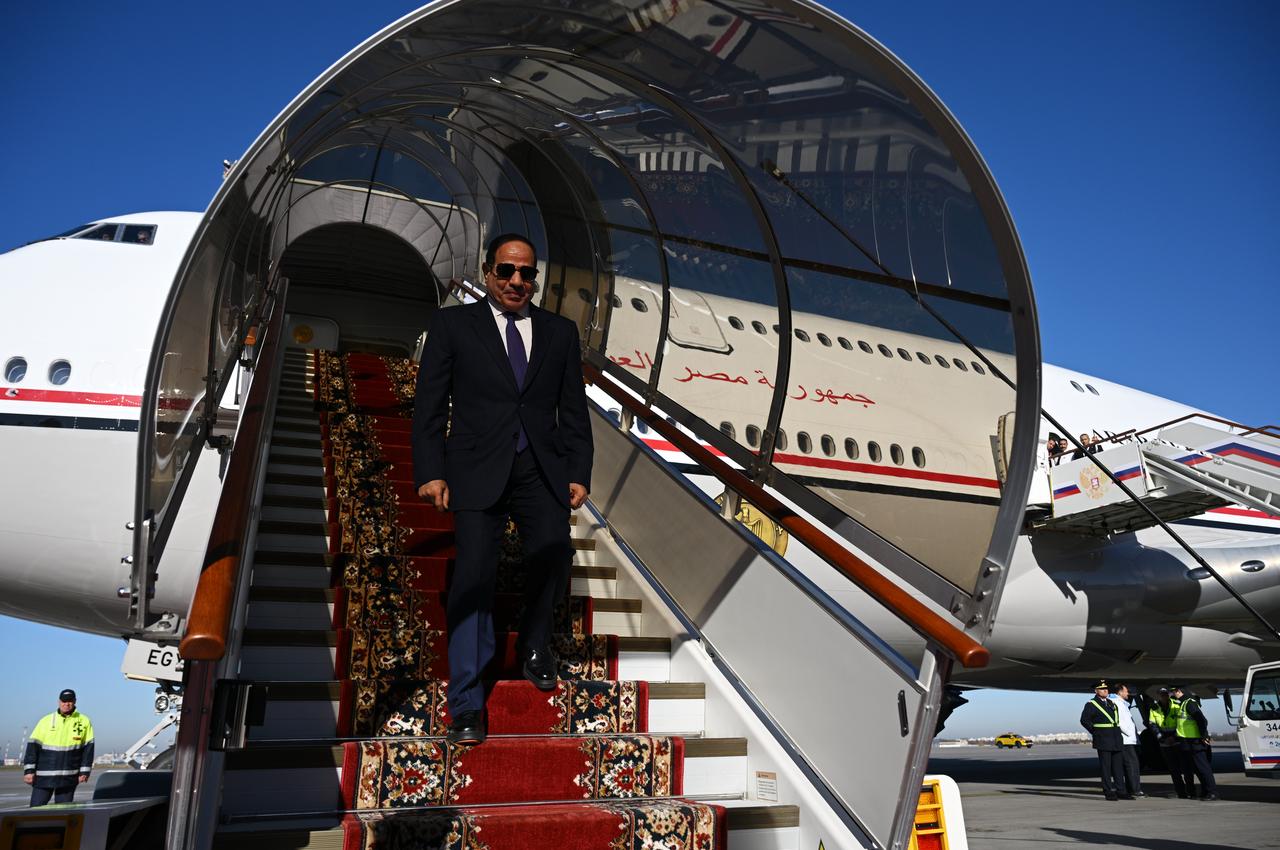

Given these factors, one would ask how Egypt will manage its ties with the Mecca alliance or whether it has to choose between full membership and staying out entirely.
Observation suggests that Cairo is working closely with the pact’s members without formally joining it. It is deepening coordination within the R4 group, expanding joint exercises and defense cooperation with Türkiye and Saudi Arabia, and aligning its positions on shared files such as the Red Sea, Sudan and Somalia. This path spares Cairo a referendum, avoids a direct clash with its treaty obligations toward Israel, and keeps it free of a 10-year commitment.
For the alliance, too, a close partner that cooperates where interests meet may be more useful than a hesitant member whose divided loyalties could weaken the pact from within.
However, this course of action might not be sustainable. The clearest test of Egypt’s intentions lies in the Eastern Mediterranean.
Ankara’s offer of a maritime boundary agreement would give Cairo a concrete gain: more maritime space, wider energy prospects, and a stronger regional position. Accepting it would show that Egypt is ready to make strategic choices and to build trust with its prospective allies.
Continuing to side with Greece on the same file would confirm that Cairo still prefers balancing between rivals over commitment. Alliances are built on choices like this one, not on statements of interest. How Egypt answers the maritime question will reveal more about its readiness for the Mecca alliance than any official declaration.
Despite these challenges and obstacles, Egypt’s future membership should not be ruled out entirely. However, as the Mecca alliance advances, other regional states will have less room to maneuver, and it will become harder for influential countries to stay outside it.


 Set as preferred source
 Set as preferred source


 2 min read


 1 min read


