Newsletters




Days have passed since the United States and Israel attacked Iran. The region is in turmoil. The escalation has spread to the oil-rich Gulf states and their tourism resorts. Almost all international flights have been canceled. While the region is on fire, one cannot help but wonder whether the current security chaos for Arab states was avoidable.
The best way to answer this question is to ask another: Which policy goal has been—or can be—achieved through the direct involvement of the United States that could not have been achieved by Israel alone?
The answer to this question is of utmost importance, as Iran justifies targeting Arab states in the region by pointing to American involvement in the attacks against Israel. If the U.S. had not been involved in the first place, Iran would not have had the pretext to target sites in Arab states.
To counter this argument, U.S. officials—including Marco Rubio—argue that the U.S. military joined the fight preemptively, as Iran was going to retaliate against American targets anyway.
They contend that Israel was going to attack Iran regardless. Putting aside why the U.S., as the patron state in the patron-client relationship with Israel, could not stop Israel, this argument does not hold.
All indications and past experiences point in the opposite direction. Since October 7, we have witnessed several rounds of Israeli-Iranian escalation.
In none of them did Iran attack the U.S. Only during the 12-day war did Iran conduct a limited attack against the U.S. base in Qatar, in response to the U.S. Air Force destroying Iranian nuclear facilities.
Logically, it would not make sense for Iran to drag the mighty U.S. military into the conflict and expand its adversaries. And if it somehow did, the U.S. would have greater domestic and international legitimacy to bomb Iran.
Looking at these basic facts, one would assume that there must be a political objective that convinced the Trump administration to join the war. Yet, judging by how events have unfolded, that policy goal is not visible.
If the goal was regime change, as initially articulated by American and Israeli officials, the American presence becomes questionable.
The airstrike that killed the Iranian Supreme Leader, Ali Khamenei, was conducted by the Israeli Air Force. The U.S. was involved only at the intelligence and logistical levels. The same airstrike could have been conducted without the U.S. formally joining the war. Iran has virtually no effective air defense capabilities that could hinder Israel. It was the US that hindered Israel in the past.
Furthermore, Khamenei’s death has not incited a popular uprising or regime collapse in Iran. Anyone with a basic understanding of Iran could have anticipated this. Loyalty in Iran was never to Khamenei as a person but to his position of the Wilayat al-Faqih.
If the Trump administration believed that U.S. participation would send a strong symbolic message to the Iranian people, prompting them to flood the streets and seize the moment to topple the regime—as suggested in some official statements—this would have been utterly foolish. It is difficult to assume that the Trump administration acted so recklessly as to endanger the security of Arab states based on a foolish hope.
Assuming the goal was not regime change but rather depriving Iran of the strategic assets needed to build a nuclear bomb does not resolve the conundrum as well.
The current airstrikes do not indicate that the U.S. bombed a site that could not have been destroyed by the Israeli Air Force. Even if such a target existed that wasn’t destroyed in June, it would still not justify full U.S. involvement in the war. The U.S. could have repeated what it did during the 12-day war and conducted limited, standalone strikes.
Observing U.S. officials’ desperate attempts to justify American participation—and searching for a policy goal that Israel could not have pursued alone—it becomes clear that the U.S. was dragged into this war by Israel.
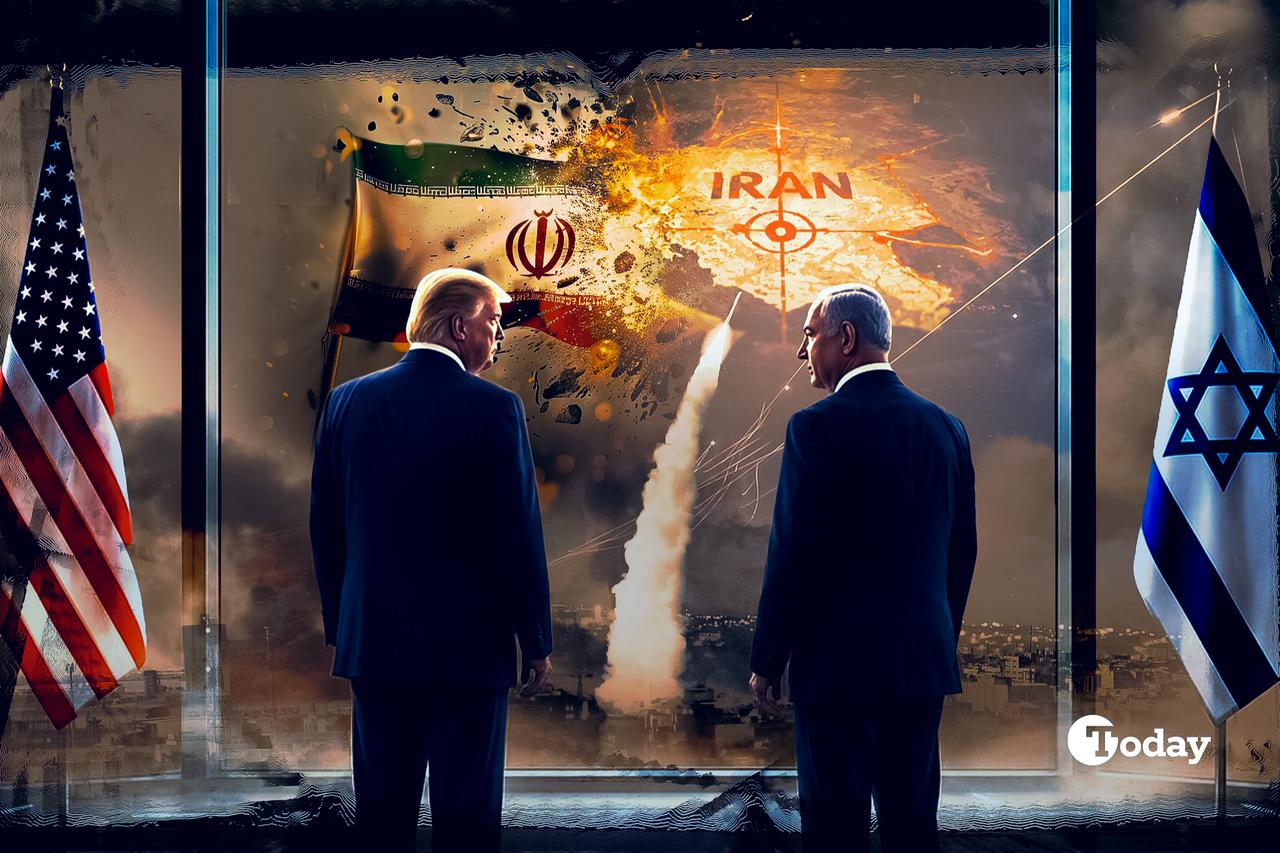
First, Israel drew the U.S. in by deciding to attack Iran, as Rubio himself stated. Second, Israeli lobbying appears to have been the crucial factor in convincing the Trump administration to bomb Iran. It is not without reason that Netanyahu poses with a book titled “Fighting with Allies."
But what motivated Israel to draw the U.S. into this war?
The answer is straightforward: U.S. participation reduces the costs for Israel in fighting Iran. American involvement not only adds firepower on Israel’s behalf but also diverts Iranian capabilities away from Israel—perhaps even more significantly if the war becomes prolonged.
Netanyahu is heading into elections. Securing U.S. participation in the fight against Iran is a major political achievement for him. It reduces the potential for domestic backlash and will very likely boost his chances of winning.
For Arab states, U.S. involvement in the fighting against Iran brings only bad news. Not only are they suffering from Iranian attacks and regional escalation, but they now face a new security reality. When Iran bombed Qatar, Arab states saw that the U.S. security commitments to Arab partners were insufficient against Israeli actions.
Now, the situation is even more troubling. They see that Israeli domestic political considerations outweigh the safety and security of Arab states.
Israel even outweighs the Arab states in an indirect setting.
Gulf states have invested billions in defense cooperation with the U.S., yet they are now left exposed. The U.S. has failed to articulate a policy goal that justifies joining the war and has decided to endanger Arab states, anyway.
Hopefully, tensions will eventually subside. But when that day comes, Arab states will face a deeply unsettling security dilemma.


 Set as preferred source
 Set as preferred source


 2 min read
 1 min read