Newsletters


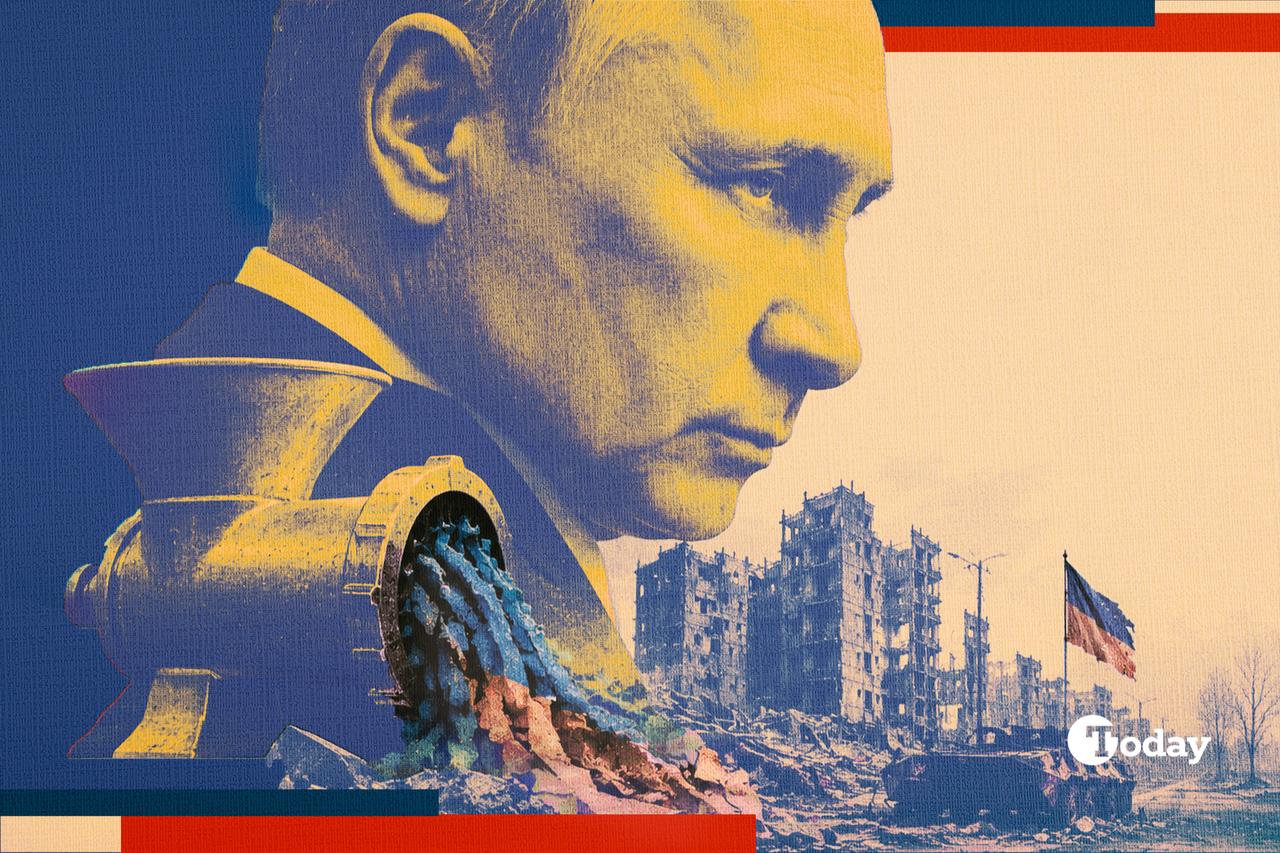


Vladimir Putin invaded Ukraine expecting a coronation. He got a slaughterhouse.
The former Russian Committee for State Security (KGB) lieutenant figured Kyiv would fall in days, NATO would fold in weeks, and Western leaders would return to condemning Russian atrocities while counting Kremlin money.
Putin had the West pegged for a rigged stock exchange where morality was a junk bond and every politician could be bought, bullied, or bored into submission.
Having covered Russia since 1980, including as a Moscow correspondent, I can guarantee that the Kremlin changes its flags more readily than its appetites.
Nearly five years after Putin's tanks rolled toward Kyiv, that appetite has produced a war Russia cannot decisively win and Ukraine cannot afford to lose.
The roots of this catastrophe reach back to the Soviet collapse, when the KGB's surviving reptiles discovered that capitalism offered better opportunities than communism for stealing a country blind.
After 1991, former Communist bureaucrats, intelligence operatives, and entrepreneurial gangsters converted state property into private fortunes.
Western bankers welcomed the loot. London sold them mansions. Europe bought their gas. Washington entertained the deranged proposition that enough money would eventually transform a criminal syndicate into a democracy.
Putin understood the racket. The West wanted profits. He wanted power. Everybody was happy until the invoices arrived.
The first bill came in 2014, when Russia seized Crimea and ignited war in eastern Ukraine. Putin called it historical justice. Western governments imposed sanctions while continuing to do business with Moscow—and that’s when the Kremlin learned aggression was just another operating expense.
President Recep Tayyip Erdogan had history on his side. After a dozen wars with Russia spanning three and a half centuries, the Tall Man, as some of his voters call him, hardly needed lessons.
“Unlike today, the West did not take a firm stance against the occupation,” Erdogan observed in March 2022, recalling Putin’s seizure of Crimea. “We are experiencing this today as a result.”
Coming from a NATO leader who had spent years negotiating with both Moscow and Washington, the verdict was damning on the West’s habit of confusing diplomatic restraint with strategic surrender.
Erdogan echoed his point in September 2024: “The return of Crimea to Ukraine is a requirement of international law.”
Even Putin’s sometime friend in Ankara understood what Western capitals kept burying beneath their communiques: stolen territory does not become legitimate property simply because the thief has nuclear weapons.
But Putin had already drawn his own conclusions from the West’s feeble response to Crimea. Eight years after seizing the peninsula, he went after the entire Ukrainian franchise on Feb. 24, 2022.
The Kremlin promised to rescue Ukrainians from imaginary Nazis. Patriarch Kirill supplied the holy water. State television supplied the lunacy. The security services supplied the prisons.
And Putin, that peculiar specimen of Soviet atheism turned mystical imperial prophet, increasingly wrapped himself in Orthodox symbolism and fantasies of Russia's sacred destiny.
Surrounded by nationalist philosophers and spiritual opportunists, the old KGB man appeared to believe that history had personally appointed him to rescue civilization from the decadent West.
It was an extraordinary spectacle: a secret policeman claiming a divine mandate for grand theft territory.
But Ukraine refused to play the corpse.
Volodymyr Zelenskyy, a former television comedian, became the improbable wartime nemesis of a Russian president who had spent decades manufacturing the image of an invincible strongman supported by a coterie of well-fed medieval villains.
Kyiv survived.
Russian troops retreated from northern Ukraine. Bucha exposed atrocities. Mariupol was pulverized. By autumn 2022, Ukrainian forces had reclaimed territory around Kharkiv and liberated Kherson city.
Putin's lightning conquest became an industrial meat grinder.
Then, in June 2023, the Russian gangster state nearly devoured itself.
Yevgeny Prigozhin, the mercenary boss whose Wagner fighters had helped turn eastern Ukraine into a charnel house, launched a rebellion against Russia's military leadership. His men advanced toward Moscow before suddenly turning around.
Two months later, Prigozhin was liquidated in a plane crash.
The lesson was vintage Kremlin.
In the Soviet days, proximity to power might earn you an invitation to go bear hunting with the politburo.
Under Putin, the rewards included private jets, mercenary armies, and offshore billions. The rules remained simple: loyalty bought privilege; disloyalty could buy a coffin.
Ukraine discovered that courage could not manufacture artillery shells.
Its 2023 counteroffensive failed to achieve a decisive breakthrough. During 2024, Russian forces captured Avdiivka and advanced through parts of eastern Ukraine.
Ukrainian soldiers fought an increasingly savage war of drones, trenches, artillery, and exhaustion.
The conflict had become a contest between a dictatorship willing to sacrifice enormous numbers of men and a democracy whose survival depended partly on the attention span of Western politicians.
Then came January 2025 and the return of Donald Trump.
For Putin, Trump was the Kremlin's most valuable patsy: an American president whose vanity could accomplish what Russian intelligence operatives had spent decades trying to achieve. The Kremlin no longer needed to manufacture every crack in the Western alliance. Washington was providing demolition services.
Trump approached the war like a mobbed-up foreclosure proceeding on a sovereign nation, confusing personal chemistry with strategic leverage and a press conference with a peace treaty.
Putin understood what Trump appeared incapable of grasping: every public humiliation of Zelenskyy, every quarrel among NATO allies, and every suggestion that Ukrainian territory might be bartered away strengthened Moscow without requiring another Russian battlefield victory.
Throughout 2025 and into 2026, negotiations repeatedly collided with irreconcilable demands over territory, security guarantees, and Ukrainian sovereignty.
The killing continued.
By October 2026, the diplomatic circus had reached a level of absurdity that would have embarrassed a drunken Kremlin propagandist.
On Oct. 9, Washington eased restrictions on Russian diesel exports, seeking relief from soaring fuel prices. Critics warned that the arrangement could replenish Moscow's revenues while Russian missiles continued battering Ukraine.
On Oct. 11, Trump declared an immediate ceasefire on attacks against energy infrastructure. Kyiv had not agreed to its terms. Moscow had not confirmed it.
Zelenskyy offered to halt strikes on Russian refineries if Russia stopped attacking Ukrainian energy facilities.
By Oct. 13, Zelenskyy was reporting fresh Russian strikes on Ukraine's power infrastructure. Moscow acknowledged discussions, not an agreement. Trump insisted a ceasefire existed.
The bombs disagreed.
The next day, Elon Musk's SpaceX throttled Ukraine's military satellite connections, sending combat drones into electronic confusion while Russian missiles continued their murderous business. Musk pointed toward Washington, claiming his Starlink military internet system answered to the Pentagon and ultimately Trump.
Marvelous.
The defense of a sovereign nation had become a subscription service with a presidential kill switch, and somewhere in the circuitry of American power, the Ukrainians were discovering that even survival came with terms and conditions.
There it was: Washington offering Moscow economic relief, proclaiming a ceasefire nobody had agreed to, and leaving Ukraine to discover that even its electronic defenses could be switched off in the middle of a war.
Putin had failed to extinguish Ukrainian statehood, but Russian troops still occupied Ukrainian territory. Ukraine had survived without securing victory. Western sanctions had inflicted costs without ending the invasion.
The temptation is to blame the whole catastrophe on Putin's imperial delusions, KGB upbringing, mystical fantasies, and obsession with historical destiny.
But that lets too many accomplices escape.
Western money helped construct Putin’s criminal empire. Political cowardice excused it. Energy dependence financed it. And the conviction that every atrocity could eventually be negotiated away encouraged the next one.
Ukraine is paying the bill for a much larger historical swindle.
The Kremlin promised Russians an empire. It delivered a human abattoir, a wrecked neighbor, and a continent wondering who handed the lunatics the nuclear codes.
Karl Marx, the original ideological Godfather, warned that history repeats itself, first as tragedy, then as farce. His wayward Kremlin godson, Vladimir Putin, has hijacked the family business, rewritten the script in blood, and turned Ukraine into a graveyard.
Somewhere in the shadows, the old Don must be wondering who let this psychopath into the family.


 Set as preferred source
 Set as preferred source


 2 min read
 1 min read