Newsletters


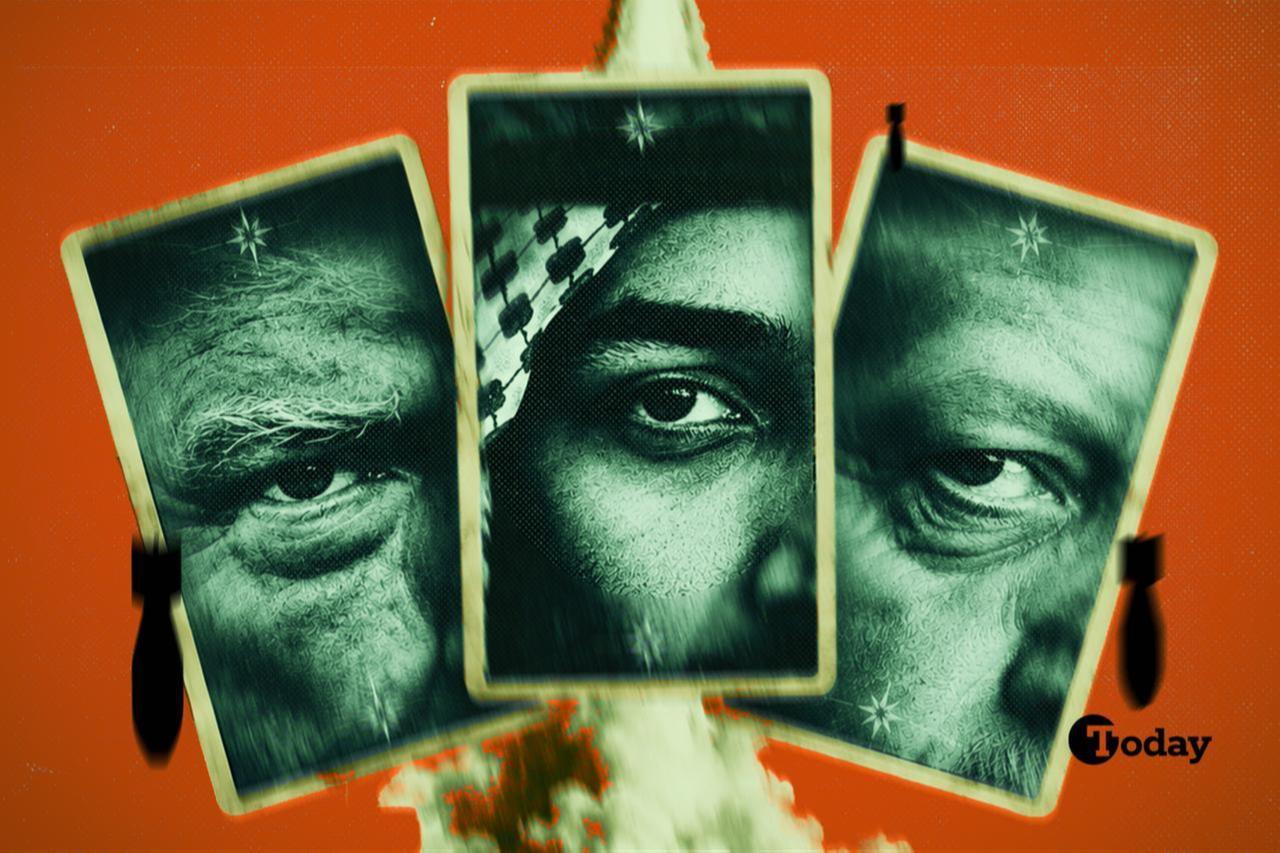


There’s a woman in Texas who believes tarot cards can solve a quadruple homicide. There’s a prince in Riyadh who believes a trillion dollars could purchase the future. And there’s a president in Washington convinced that every international catastrophe can be negotiated like a fire sale at a morgue full of fresh corpses.
In this grand theater of manufactured reality, everybody has a narrative, nobody has an exit strategy, and the missiles remain distressingly indifferent to the script.
Consider the Idaho professor who discovered that a TikTok clairvoyant had cast her as the mastermind behind four murders.
No evidence. No connection to the victims. Just tarot cards, an internet connection, and the entrepreneurial instincts of a carnival pickpocket.
Millions watched. Death threats followed. Her family lived in fear. Even after the killer was convicted, the digital lynching continued.
The professor had collided with the defining political technology of our age: the manufacture of a reality more commercially attractive than the truth.
Now transport that principle 7,000 miles east, trade tarot cards for military intelligence briefings, and replace TikTok influencers with presidents, princes, revolutionary militias and the occasional intelligence operative sporting a suspiciously expensive wristwatch.
Welcome to the Middle East.
Since the beginning of 2026, more than 8,500 people have been reported killed across the region’s overlapping wars, from Gaza and Lebanon to Iran and the Gulf. The true toll is higher, and no comprehensive accounting has yet captured it.
None of this was in the brochure. Mohammed bin Salman, Saudi Arabia's 41-year-old crown prince, was supposed to be constructing tomorrow. Neom. Artificial intelligence. Desert skiing. A colossal architectural cube. A petroleum monarchy reborn as a futuristic investment paradise, with enough glass, steel and imported optimism to make a Las Vegas developer weep.
Instead, he is reportedly shuttling between fortified palaces while Houthi missiles rearrange the architecture of Riyadh's international airport.
The weekend assault reportedly killed at least 13 people and injured hundreds. The airport terminals became monuments to the difference between PowerPoint presentations and ballistic trajectories.
The Saudis had devised an ingenious answer to Iran's blockade of Hormuz: pump oil westward across the desert toward the Red Sea.
Unfortunately, geography has two ends.
The Houthis grasped this elementary proposition rather more quickly than the consultants designing Saudi Arabia's futuristic ski slopes.
Threaten Bab al-Mandeb, menace the pipeline, and strike the airports, and the kingdom's magnificent diversification program begins to resemble an exceptionally expensive hostage negotiation.
The Saudi Finance Ministry reportedly anticipates a 3.6% economic contraction in 2026.
That’s a considerable dose of economic reality for a government accustomed to purchasing alternative versions. And in barrels, Donald Trump, all lacquered hair, flying elbows and casino swagger, assuring the crown prince that the house always wins, even as the roulette wheel catches fire.
Washington wants Saudi investment, stable oil markets, military access and regional tranquility. Riyadh wants American protection without surrendering its autonomy. Tehran wants leverage without capitulation. The Houthis want survival, territory and recognition.
Everybody wants victory. Nobody wants the invoice.
The trouble is that the Houthis are not simply Persian puppets equipped with missile launchers. They have political ambitions, territorial calculations, and long memories of Saudi Arabia's devastating intervention in Yemen.
Bombing them harder may produce spectacular television footage. It does not necessarily produce surrender.
And then, through the smoke and diplomatic wreckage, strides Turkish President Recep Tayyip Erdogan, looking suspiciously like the only fellow at the table who has bothered to read the fire regulations.
While the others trade threats, fantasies and imaginary victories, Erdogan arrives with something more useful than tarot cards: a defense industry, a formidable military establishment and the instincts of a veteran political operator who can smell a strategic vacuum from three borders away.
Türkiye, Saudi Arabia and Pakistan reportedly signed the Mecca Joint Defense Agreement, treating an armed attack against one as an attack against all.
Ankara calls it deterrence. Erdogan has announced plans to put the pact before Türkiye's parliament for ratification, reaffirming solidarity with Riyadh after the Houthi strikes.
Trump no longer calls the shots. Now three heavily armed governments are writing their own rules, and one of them has nuclear weapons.
Erdogan brings the soldiers, Riyadh the oil billions, and Islamabad a nuclear arsenal capable of turning a border skirmish into radioactive history. The Americans are no longer the only ones dealing the cards.
But there’s a nasty catch. Mutual defense sounds splendid until a missile rips through an airport terminal, scattering glass, steel and body parts.
The real trouble begins when political fantasies clash with physical reality. The Idaho professor survived a digital hallucination that persisted long after the truth emerged.
The Middle East is trapped in something infinitely more lethal: men with missiles who believe their own propaganda.
There are no tarot cards to save them, no algorithms to blame, no delete button when the warheads land.
Reality has finally come calling. And it brought a body bag.


 Set as preferred source
 Set as preferred source


 9 min read