Newsletters




Something enormous is churning beneath the waves.
Satellites caught it first: a mass of heat sliding east across the Tropic of Capricorn, disturbing the ocean and threatening flood, drought and fire.
Scientists call it El Niño. Israelis call it elections.
Israel votes on Oct. 27, three weeks after the anniversary of the security catastrophe that still drives its politics.
El Niño has climate models; Israel has polls and TV panels. Both measure pressure building beneath the surface, waiting to break across 120 seats. Sixty-one forms a government—and decides who navigates the tempest.
The storm over Israel exposes a brutal political pressure point. For most of his political career, Prime Minister Benjamin Netanyahu built his career on one overriding proposition—that whatever they think of him personally, he is the man they can trust to keep the country safe.
That promise collapsed on Oct. 7.
Netanyahu’s answer is vintage Bibi: danger everywhere, salvation conveniently standing at the microphone.
The election will show how many Israelis are still buying his narrative.
Netanyahu’s answer is already familiar: judge him not merely by the catastrophe that happened on his watch, but by everything that followed—the wars, the military campaigns, the blows against Israel’s enemies and the reshaping of the region’s strategic landscape.
His opponents offer the inverse argument: Oct. 7 was not an unfortunate footnote to the Netanyahu era but the event that exposed its accumulated failures.
One side asks voters to see a wartime leader who restored Israeli deterrence; the other asks them to see the prime minister whose long stewardship ended with the country’s greatest security disaster.
Still, everything in Israel orbits around Bibi.
The ultra-Orthodox draft, Gaza, the hostages, the judiciary, the economy, and the fractures between secular and religious Israelis, Jews and Arabs—all remain combustible. And Netanyahu’s proposition remains magnificently convenient: whatever is burning, only Bibi can put it out.
Call me Schlemiel.
Once Netanyahu was “Mar Bitachon,” Mr. Security. Oct. 7 turned his hip Hebrew moniker into an accusation. The fortress failed catastrophically on his watch. He answered with war—as strategy, vindication and political oxygen—and now asks voters to entrust Israel’s security once again to the man whose defining promise was shattered by the worst attack in the country’s history.
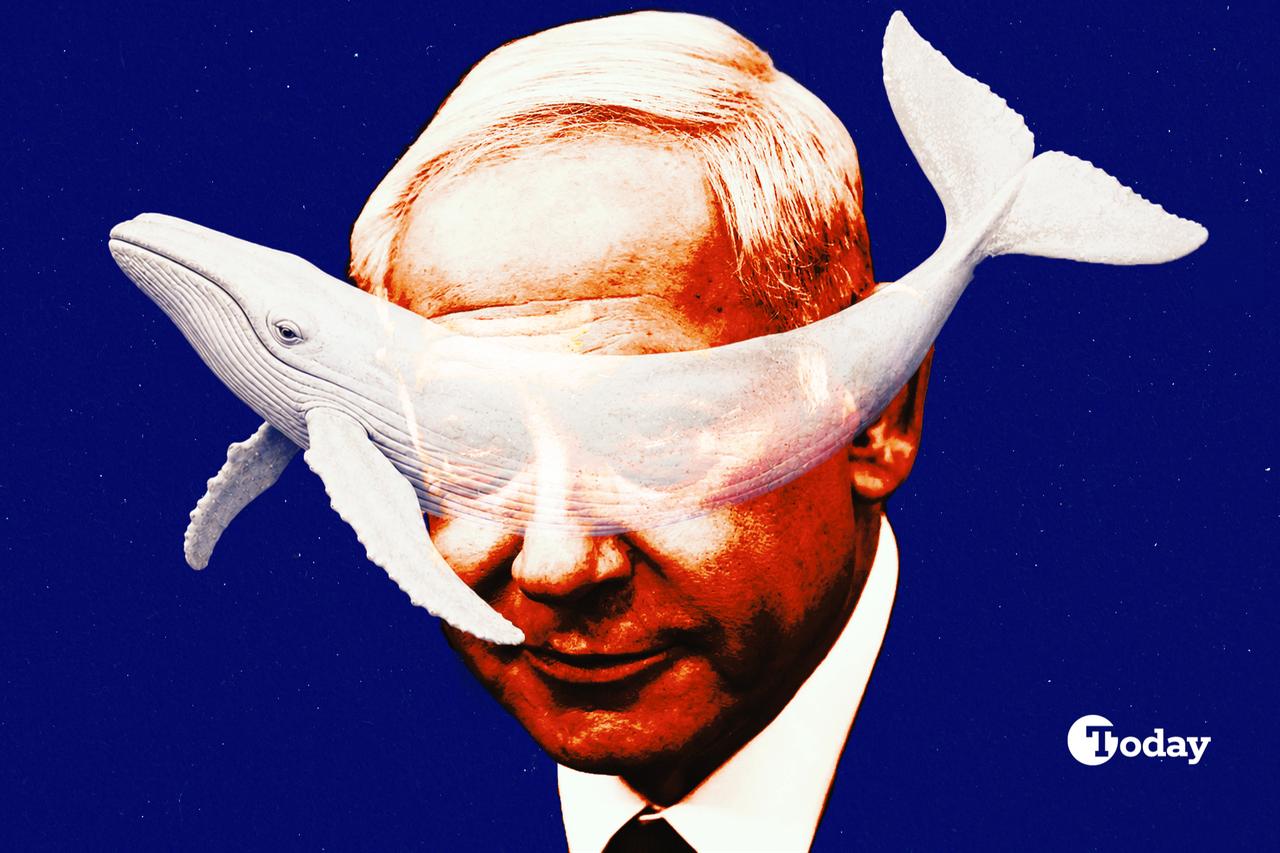
And so we arrive at the whale.
Netanyahu is Israel’s Captain Ahab. Palestine is his obsession; at endless war with the sea he sails, and the nation he runs lashed to the voyage. The Knesset is Netanyahu’s Pequod now, 120 souls aboard a ship whose every quarrel eventually returns to its captain and the dark water ahead.
Whatever has gone wrong with Israel, Benjamin Netanyahu remains the answer.
This produces the peculiar arithmetic of Israeli elections. A party can rise above the electoral threshold on Monday and disappear beneath it by Thursday like a Mediterranean fishing boat with an unreliable engine.
A politician can be finished before breakfast, indispensable by lunch and interviewed at dinner as the only person capable of saving the country.
Pollsters calculate blocs with the solemnity of nuclear physicists even though the decisive question may not be how many seats a camp wins but whether its members can tolerate one another long enough to form a government.
That has always been Netanyahu’s dark gift. He does not need to be loved, only to make the alternative look more frightening: a flotilla of incompatible parties bound together by one conviction—that he must go. His opponents must somehow turn that conviction into 61 seats without devouring one another before the cabinet photograph.
But this election reaches beyond the fate of one man. Oct. 7 exposed the rot beneath old assumptions: security failed, institutions buckled, and political hatred became a method of government.
Israel now faces an accounting, and the danger is mistaking vengeance for repair. It is one thing to drive a man from power. It is another to discover, after he is gone, what waits in the darkness beyond him.
South of the equator, El Niño gathers heat accumulated over years. In Israel, an election gathers anger, fear and memory. One moves through oceans and the atmosphere; the other through polls, parties and the arithmetic of 61. Both begin below the surface. Both announce themselves before they arrive.
The scientists have issued their warning: the disturbance is already in motion.
Now it is too late to blame the weather.
That may be the most useful forecast Israelis receive. The instruments are flashing, the pressure is dropping, and the air tastes of bilge water.
The storm arrives at the ballot box. Netanyahu is at the helm. The sea is black, the compass is spinning, and the captain has begun to call the rocks a conspiracy.
The rain is the least of it.


 Set as preferred source
 Set as preferred source



 6 min read