Newsletters


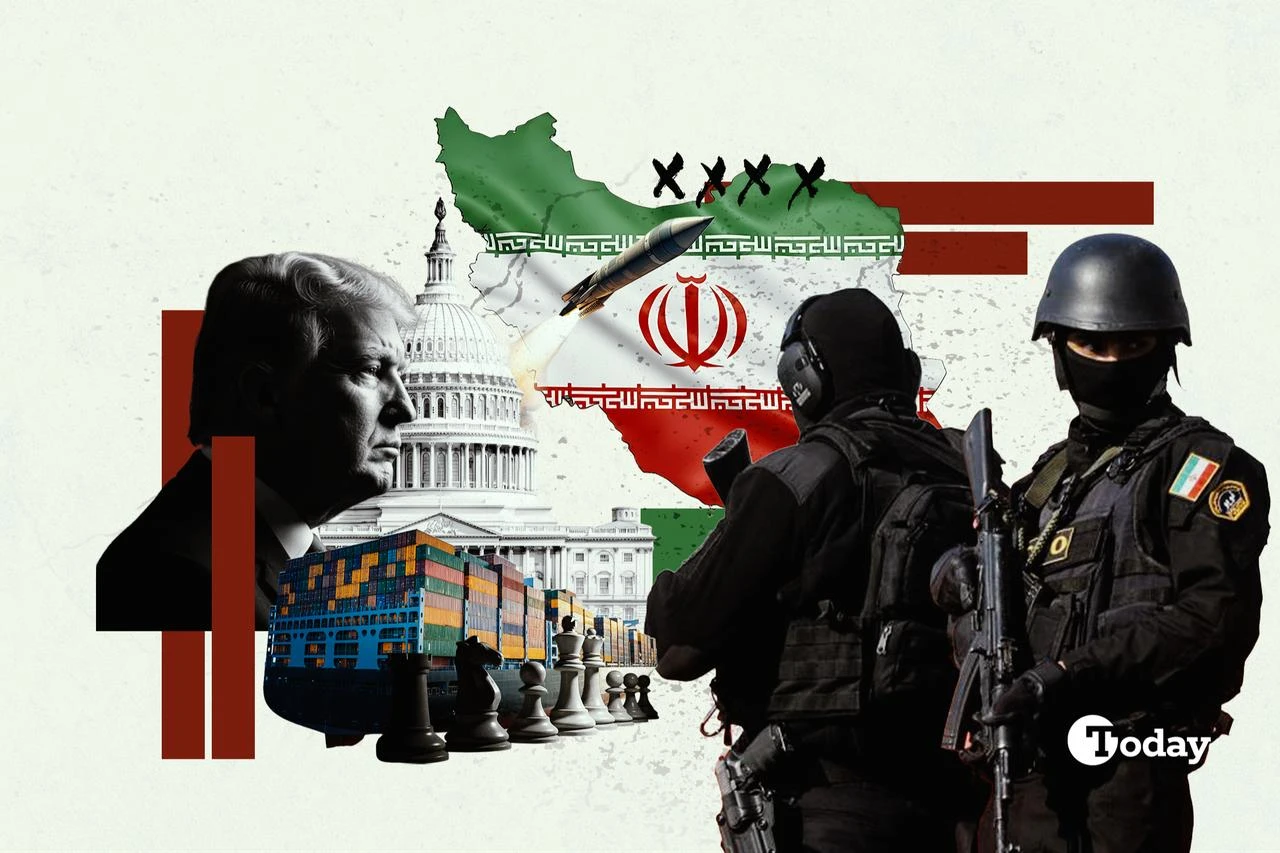


Iran is a theology.
It is no longer a country.
Not in the way diplomats mean the word. Not in the bureaucratic sense that produces signatures, ministries, chains of command, and solemn communiques printed on heavy paper before disappearing into filing cabinets.
What remains of Iran is something stranger: a prayer house where the faithful still answer a call no one can command.
MAGA still behaves as though there’s a political switchboard secreted in Tehran, even after six destructive months of war. They imagine some paneled room where a weary official picks up the telephone, listens gravely, and relays instructions down an orderly ladder of command. That fantasy died before the ink on the latest memorandum of understanding had dried. The ceasefire was less a peace than an intermission between explosions.
American officials now concede what was obvious from the opening act: the agreement never had a pulse worth checking. Ironically, the reason was not military failure but military success. The strikes shattered the machinery that was supposed to make diplomacy possible. You cannot negotiate with an organization after you've demolished the office where the negotiations are supposed to be approved.
Political scientists spend careers asking Robert Dahl's famous question: "Who governs?" In today's Iran, the answer is comic in its emptiness.
Nobody knows.
Perhaps not even the people carrying the titles.
The civilian leadership resembles survivors wandering through the smoking remains of a railway station after the schedules have burned. Presidents, speakers, ministers—everybody still wears the costume of authority, but the authority itself has slipped away like water through cracked concrete.
One faction plots assassinations while another schedules diplomatic meetings. One hand reaches for the olive branch while the other loads another missile. Analysts describe this as a contradiction. It looks more like fragmentation.
President Donald Trump keeps sending ill-educated negotiators to meet officials who may possess elegant offices, polished talking points, and perfectly tailored suits—but none of those things constitute power. They can promise almost anything because they control almost nothing. It is diplomacy performed on a theatrical stage whose backstage has already been blown apart.
Meanwhile, the Revolutionary Guards continue operating according to a logic entirely their own. Their command structure, decentralized long before the bombs fell, survives differently from the civilian institutions surrounding it. The civilian faces become interpreters rather than decision-makers, translating events they neither ordered nor prevented.
The temptation in every capital is to believe there must be "moderates" somewhere. Somewhere behind the curtains sits a reasonable technocrat waiting patiently for the extremists to tire themselves out. It is a comforting myth because it preserves the idea that every conflict can eventually be reduced to coffee, conference tables, and mutually acceptable language.
Reality is much less civilized.
Power in revolutionary systems has always been a slippery substance. Titles matter until they don't. Institutions exist until men with rifles decide they no longer do. Constitutions become decorative literature whenever armed organizations discover they can write their own amendments in smoke.
That’s why the post-strike behavior appears so erratic. The contradiction isn't necessarily evidence of strategy. It may simply be evidence that no conductor is standing before the orchestra anymore. The brass section is playing one anthem and the percussion another, while a bunch of guys backstage are auctioning off the violins.
MAGA policymakers often make the same mistake because democracies naturally assume other governments function the way their own do. Every meeting should produce implementation. Every agreement should have an enforcement mechanism. Every signature should bind the state.
That assumption becomes dangerous when the state itself has dissolved into competing centers of gravity.
The consequence is strategic whiplash. Diplomats negotiate while missiles fly. Sanctions tighten while proxies regroup. Markets react to every headline because no one—not investors, generals, or cabinet secretaries—can confidently identify which character in the Farsi Follies will remain on stage by tomorrow morning.
The Strait of Hormuz becomes less a shipping lane than a pressure gauge attached to the world's economic nervous system. Every tanker passing through carries not merely oil but accumulated anxiety. Traders stare at charts. Admirals stare at radar screens. Politicians stare at polling numbers. Everyone waits for somebody else to blink.
And beneath it all sits the larger question of what exactly has been broken?
If the governing assumption is correct—that Iran's central authority has fractured beyond practical coherence—then the old diplomatic playbook belongs in a museum beside rotary telephones and treaties negotiated by plump gentlemen in waistcoats.
Continuing to bargain with officials who cannot reliably command the institutions they represent is mistaking ceremony for substance.
Washington is in the grip of analysis paralysis. Continue negotiations despite mounting evidence that the negotiators lack the power to enforce them. Escalate economic pressure and attempt to constrict the financial arteries feeding the remaining centers of force. Or resume military operations in the belief that unfinished campaigns rarely become easier with time.
None of those paths promises elegance. History seldom offers elegance after governments begin coming apart.
Perhaps that’s the strangest lesson of all. Nations often disappear long before their flags do. Embassies stay open. Maps remain unchanged. Airlines still print the same destination. Yet somewhere underneath the familiar symbols, the mechanisms that transform geography into government quietly fail.
When that happens, outsiders continue searching for a capital, discovering only competing claimants to authority.
The world calls it Iran because maps need names.
Names are cheap. They turn a nation into shorthand for a chaos few American leaders have ever understood.


 Set as preferred source
 Set as preferred source


 1 min read

 1 min read