Newsletters


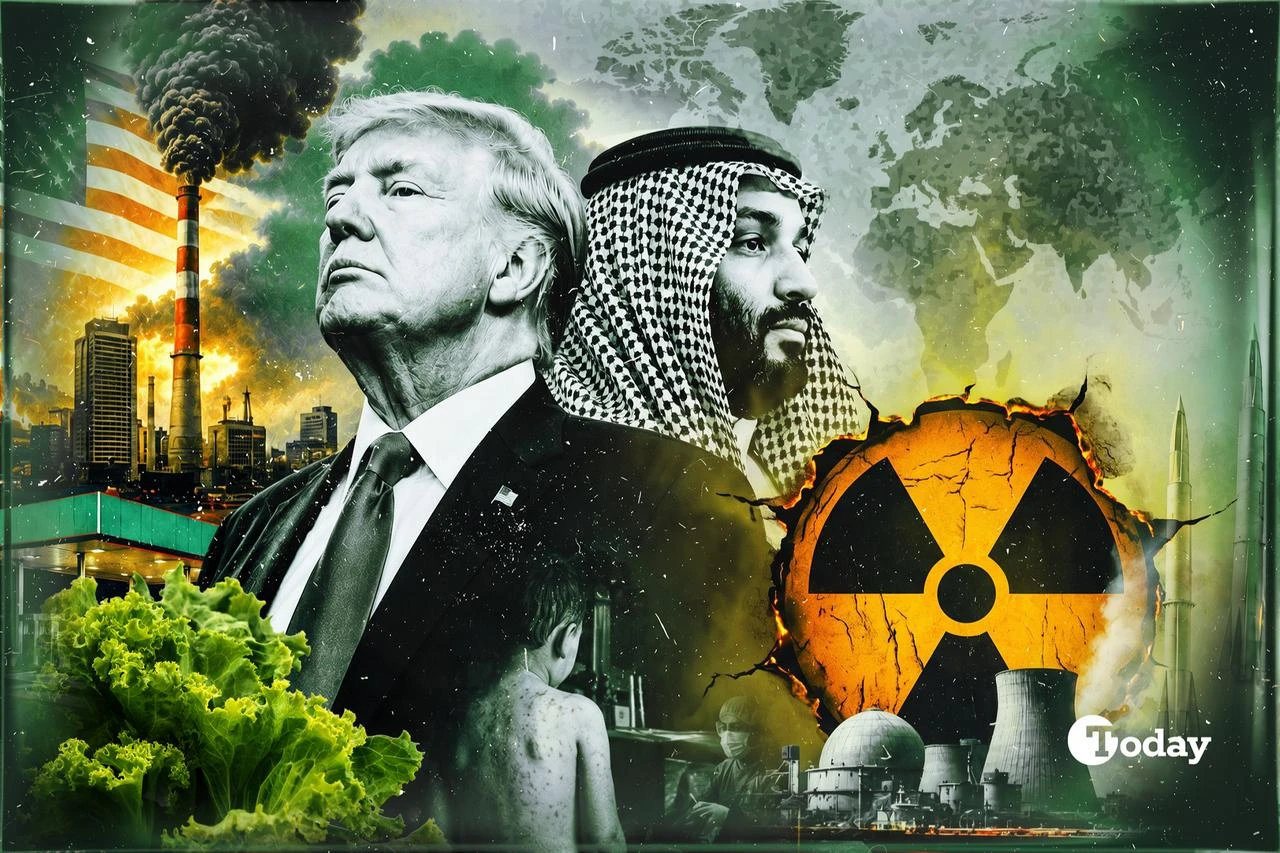


After recovering from weeks of salads and speaking engagements in California, I can report on President Donald Trump's America: it has a measles epidemic, choking skies, unaffordable gas, and a parasitic outbreak. Over 11,000 people are suffering from diarrhea after Health Secretary Robert F. Kennedy Jr. ordered the Centers for Disease Control and Prevention to stop tracking the infection.
But at least now the Saudis have a nuclear program.
That is the ledger of modern MAGA priorities. The now 250-year-old republic is coughing blood into reasonably priced 2-ply Costco Kirkland Signature paper towels while shoveling fresh ordnance onto the Persian Gulf bonfire.
There was a time when nuclear diplomacy came wrapped in the language of hope. Dwight Eisenhower walked into the United Nations in 1953 selling "Atoms for Peace," an ambitious bargain that imagined mankind could split the atom without splitting itself apart. The premise was quaint: share nuclear technology in exchange for solemn promises that nobody would build bombs.
Seven decades later, the slogan might as well be "Atoms for Maybe."
Because that's what this Saudi agreement represents. Not peace, but hedging. Strategic ambiguity with radioactive consequences. A White House eager to land contracts for American corporations has apparently decided that the old nonproliferation rulebook is less a constitution than a set of suggestions.
The kingdom may eventually gain the right to enrich uranium for civilian reactors while accepting inspection standards softer than those demanded for shredded iceberg lettuce infected with the Cyclospora parasite.
That's the sort of loophole that keeps arms-control experts awake at three in the morning, while somewhere a gastrointestinal surgeon is pouring another cup of coffee and wondering how many emergency colectomies bad governance can produce.
The Saudis aren't exactly hiding the game. Crown Prince Mohammed bin Salman has repeatedly said that if Iran gets the bomb, Riyadh will pursue one too. There is no mystery novel here. The villain explained the plot in chapter one.
Washington insists this is only about peaceful nuclear energy. Of course it is. Every nuclear program begins with glossy brochures about electricity, economic development and clean energy. Nobody cuts the ribbon on a reactor while promising an eventual mushroom cloud. The danger isn't today's press conference. It's tomorrow's precedent.
The real contagion isn't uranium; it's insecurity.
Around the globe, countries that once slept comfortably beneath the American security umbrella have started checking the weather forecast.
Germany is debating its strategic future. Poland openly talks about nuclear ambitions. South Korea wants nuclear-powered submarines as North Korea rattles its arsenal. Japan, long haunted by Hiroshima and Nagasaki, is publicly reconsidering the role of nuclear weapons in its defense. France has responded by expanding its own deterrent and offering Europe's neighbors a measure of protection once assumed to come automatically from Washington.
The experts have a clinical phrase for this phenomenon: nuclear hedging. Friendly proliferators, some call them. Nations that may never build a bomb but desperately want to stand close enough to the machinery that they could if circumstances demanded.
It is insurance purchased in an increasingly lawless neighborhood.
That neighborhood got rougher after Russia invaded Ukraine, exposing the fragility of energy markets. It became more volatile still after conflict with Iran disrupted confidence in the Persian Gulf. Every crisis teaches governments the same lesson: dependence is dangerous. If oil can be blocked, alliances questioned, and trade routes threatened, then nuclear capability starts looking less like madness and more like the ultimate backup generator.
This is where precedent becomes poison.
The United Arab Emirates accepted America's so-called gold standard agreement in 2009, agreeing not to enrich uranium domestically and opening itself to stringent inspections.
Saudi Arabia now appears positioned to receive something considerably more permissive. Every future customer will notice. If Riyadh gets exceptions, why shouldn't the next buyer demand them? And if Washington refuses, Moscow or Beijing may happily oblige.
The old architecture of nonproliferation depended less on paperwork than on trust. America's alliances discouraged allies from seeking independent deterrents because the U.S. promised its own. Erode confidence in that promise, and suddenly everyone starts browsing the nuclear catalog.
Perhaps Saudi Arabia remains years away from any genuine weapons capability. Building a bomb is neither simple nor quick. But history is often less about immediate consequences than about the precedents that quietly rearrange the future.
Once the standards soften, they rarely harden again.
Meanwhile, as the plane takes off from San Francisco, the measles spread, the air burns, grocery bills climb, public health is treated like an optional subscription service, and the political class celebrates another strategic masterstroke that somehow makes the most combustible region on Earth just a little more combustible.
It's an extraordinary achievement. America 2026 has become a nation capable of ignoring the smoke in its own house while enthusiastically handing out matches to the neighbors.


 Set as preferred source
 Set as preferred source


 7 min read