Newsletters


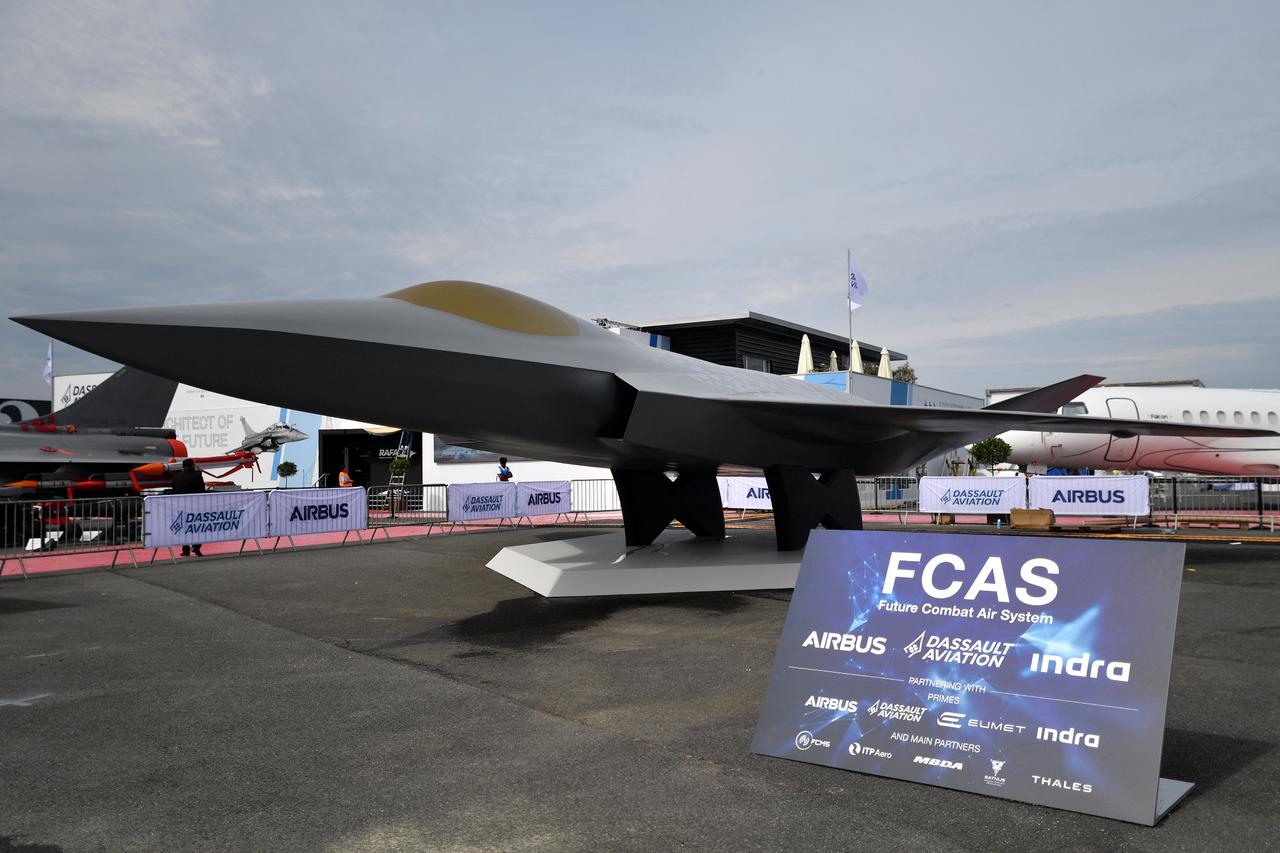


For nearly a decade, the Future Combat Air System (FCAS) program was billed as Europe’s proof of concept, the proof that the continent could design its own deterrent and stop renting air power from the United States. This month, the proof collapsed.
When Emmanuel Macron and Angela Merkel launched FCAS in 2017, the ambition was breathtaking.
This was never merely a jet. It was a “system of systems”: A stealthy combat aircraft flying alongside swarms of drones equipped with precision guided weapons, jammers and other sensors of all sorts, all stitched together by a battlefield network.
The plans called for service entry by 2040, and it would replace the Rafale and the Eurofighter, and stand out as Europe's response to the F-35.
However, after a series of public debates, controversies and disagreements at technological, industrial, military, and political levels, the program was cancelled.
The visible reasons for this have been stated as divergence of approaches over worksharing. But the decision underscores a more serious issue about Europe’s strategic autonomy goals and capabilities to achieve them.
The FCAS, or as known in French as Systeme de Combat Aerien du Futur (SCAF), was one of Europe’s most ambitious aerospace programs. The program comprised several interconnected projects aimed at developing a next-generation air combat capability.
Consisting of the New Generation Fighter (NGF) combat aircraft, swarming drones that would operate in close coordination with the NGF, also called remote carriers (RCs).
The platforms and weapons would connect through Combat Cloud (CC), a next-generation information highway, enabling all friendly and allied assets to share information, thereby generating a shared intelligence and awareness about the operating environment.
The roots of the program go back to the European Technology Acquisition Program, launched in 2001 by several European states to examine future air-combat architectures involving manned and unmanned systems.
A later Franco-British initiative under the Lancaster House framework explored future air combat technologies, including unmanned demonstrators such as Dassault nEUROn and BAE Systems Taranis. That route weakened after the U.K. moved toward its own Tempest program in 2018. In parallel, France and Germany moved to build a continental European alternative.
The modern FCAS program emerged politically in 2017, when France and Germany agreed to cooperate on a future combat air system. Spain formally joined in 2019, turning the project into a Franco-German-Spanish effort. Belgium later entered as an observer.
The program was meant to replace France’s Rafale and Germany and Spain’s Eurofighter fleets from around 2040 onward. Its political meaning was as important as its military purpose: FCAS was presented as a flagship of European strategic autonomy, defense-industrial sovereignty and Franco-German leadership.
The central idea was a “system of systems.” At its heart stood the Next Generation Weapon System (NGWS), composed principally of the NGF and RC.
The NGF was to be a sixth-generation crewed combat aircraft, while RC's were envisaged as unmanned assets operating with the fighter. They would be developed as expendable or recoverable platforms for sensing, electronic attack, decoying, weapons delivery or collaborative combat.
These would be connected through a Combat Cloud, a secure digital architecture linking aircraft, drones, sensors and command nodes in real time. In operational terms, FCAS was a networked air-combat ecosystem.
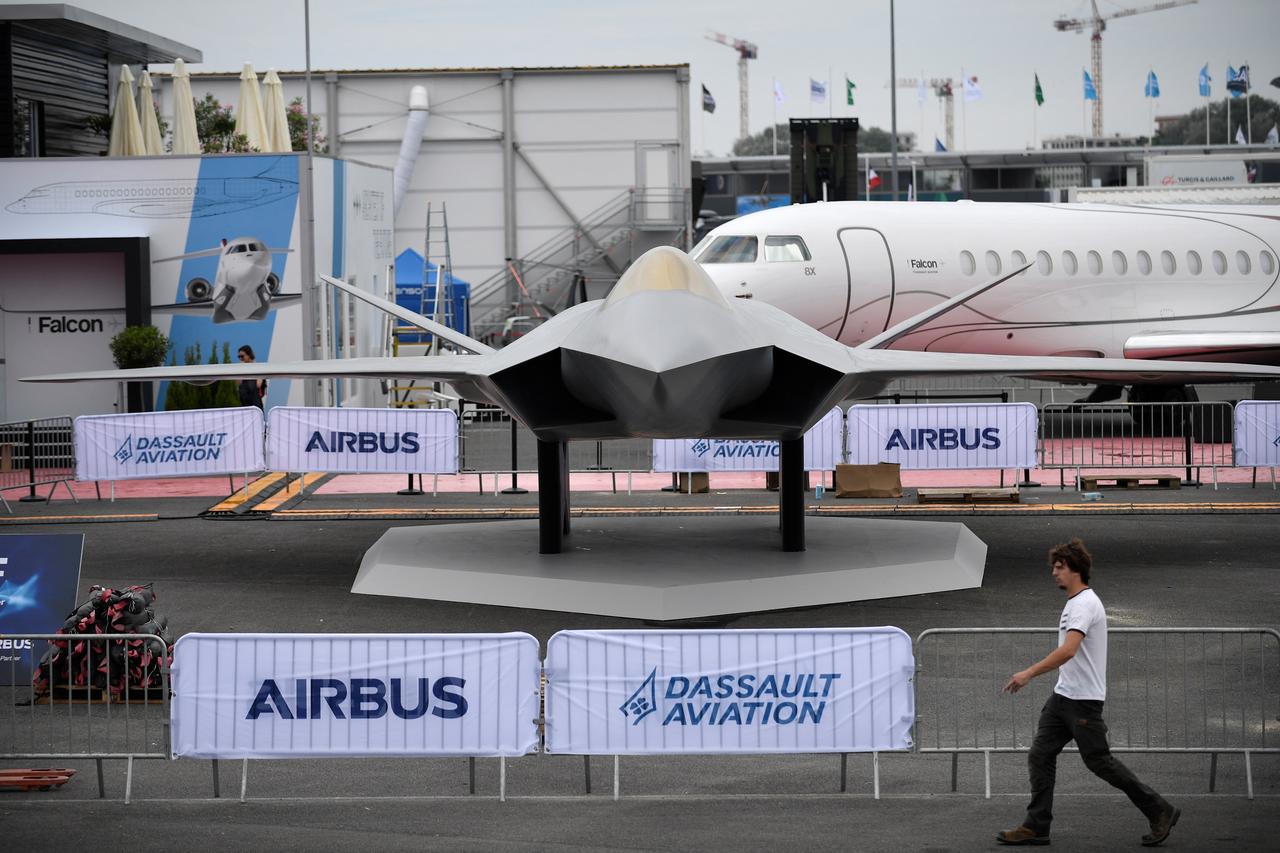

At the conceptual level, FCAS was promising. It recognized that the future of air power would not be decided by a single platform, however stealthy or sophisticated.
The real center of gravity would be the network: Crewed aircraft, unmanned systems, sensors, satellites, weapons, electronic warfare assets and command nodes fused into a combat cloud. But in practice, the program never escaped the gravitational pull of the fighter itself.
Publicly, FCAS was sold as a system of systems. Politically, it was wrapped in the language of sovereignty. Industrially, however, the decisive question became much simpler: Who would control the aircraft?
Once that happened, the program's broader logic narrowed into an old European argument about national champions, workshare, intellectual property and industrial leadership.
The Dassault-Airbus dispute was therefore not a side issue. It was the program’s central fault line.
Dassault believed it had the only credible European track record in designing and delivering a sovereign combat aircraft in recent decades. From the French perspective, the NGF could not be managed by a committee. It required a clear prime contractor, technical authority and design discipline.
Airbus, representing German and Spanish interests, could not accept a subordinate role in a program financed by multiple states and presented as a European undertaking. Germany, in particular, wanted industrial weight proportional to its financial contribution.
This clash exposed a deeper political problem. France and Germany both spoke the language of European strategic autonomy, but they did not mean exactly the same thing.
For France, autonomy meant preserving a sovereign combat-aircraft design capability, nuclear-delivery competence, carrier aviation and export freedom.
For Germany, autonomy increasingly meant strengthening its own aerospace industry, securing access to key technologies, and avoiding a future in which Berlin pays heavily but receives limited control. These are not trivial differences. They go to the heart of how each country understands sovereignty.
The operational requirements were just as difficult to reconcile. France needed a Rafale successor able to support its nuclear deterrent and operate from an aircraft carrier.
Germany wanted a land-based, conventionally armed, NATO-integrated successor to the Eurofighter. These are not simply two variants of the same aircraft. Carrier suitability affects structure, weight, landing gear, certification and design priorities. Nuclear delivery affects doctrine, integration, security and national command arrangements. Germany’s needs pointed toward a different aircraft logic: air superiority, networking, interoperability and conventional deterrence.
Thus, FCAS tried to make one future aircraft satisfy two strategic cultures. That is hard enough in ordinary procurement. It is almost impossible when the aircraft is also expected to anchor Europe’s defense-industrial future for half a century.
The program was also trapped between politics and industry. Leaders could announce cooperation, sign declarations and repeat the mantra of European sovereignty. But they could not force Dassault and Airbus to agree on issues that would determine their technological positions for decades.
Political will launched FCAS; industrial distrust slowed it down; unresolved governance eventually hollowed it out.
The result was a familiar European pattern: ambitious summitry at the top, unresolved execution below.
The export policy added another layer of tension. French combat-aircraft economics depend heavily on exports. A future fighter that could not be sold flexibly would be a strategic and commercial liability for Paris.
German export policy, by contrast, is often more restrictive and politically sensitive. This created a predictable French fear: that cooperation with Germany could produce an aircraft too constrained to compete globally. For a high-end fighter program, exportability is not a luxury. It is part of the business model.
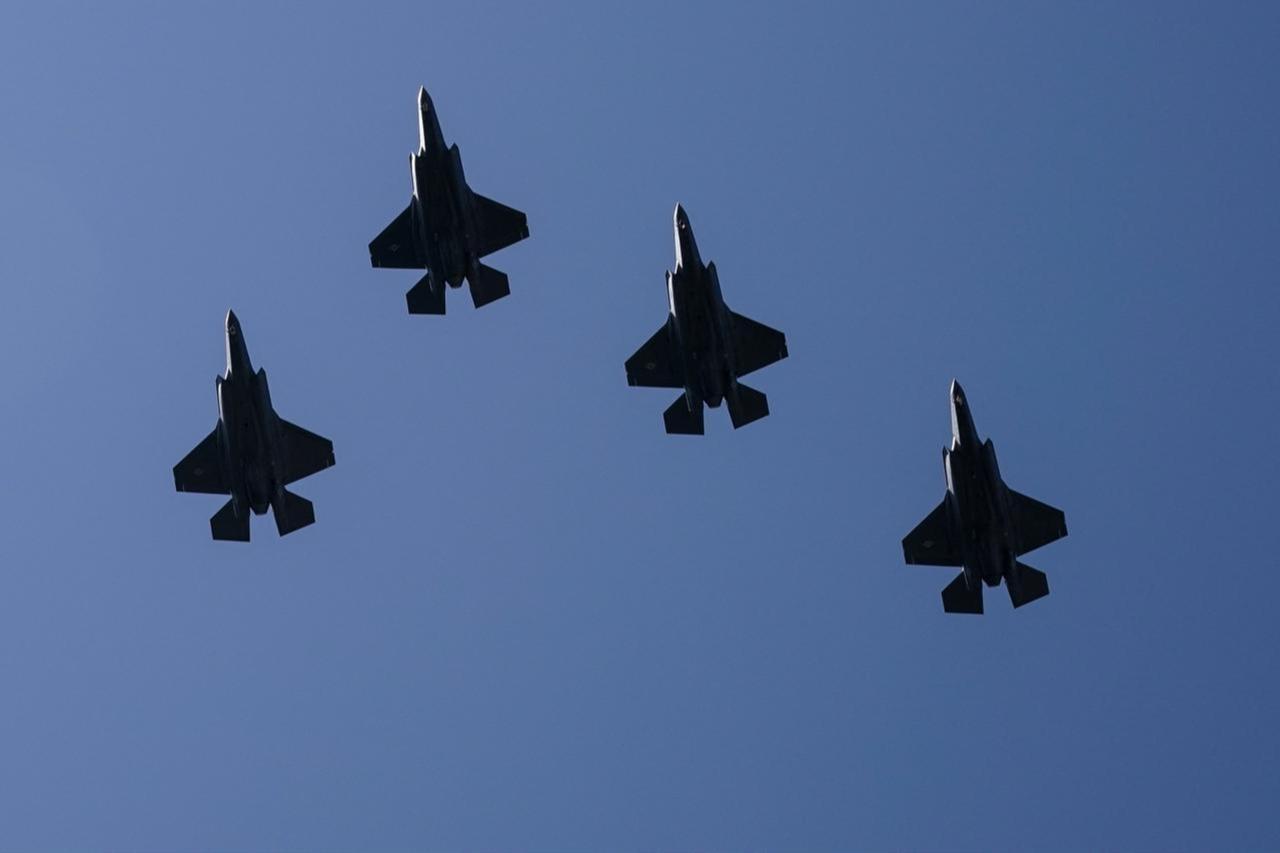
The F-35 debate hovered over FCAS from the beginning. The program was meant to reduce European dependence on American combat-air technology. Yet Germany’s capability gap before 2040 raised a hard question: should Berlin protect FCAS politically, or buy the aircraft that already exists? The more FCAS slipped, the stronger the F-35 logic became.
This is the irony at the heart of the story.
A project designed to strengthen European autonomy may end up deepening European dependence on American air power, at least in the medium term. Plus, Germany ordered 35 F-35As to replace the Tornado, both in interdiction and, more importantly, in NATO nuclear sharing missions.
Nor was FCAS ever isolated from wider European politics. Spain wanted equal status, not symbolic participation.
Italy saw the Franco-German framework as exclusionary and drifted toward the U.K.-led Tempest, later Global Combat Air Program (GCAP). Belgium watched as Europe multiplied future fighter projects while talking endlessly about integration. Sweden and Saab remained a possible alternative pole. The result was strategic fragmentation dressed up as strategic autonomy.
 2 min read
In the end, FCAS became overloaded. It was expected to replace Rafale and Eurofighter, preserve French nuclear sovereignty, satisfy German industrial ambition, include Spain meaningfully, compete with the F-35, coexist with GCAP, support carrier aviation, enable unmanned teaming, build a combat cloud, sustain exports and demonstrate European unity.
No single program can carry that much political weight without a brutally clear governance model.
The failure of FCAS, or at least of its fighter pillar, is therefore not primarily a failure of technology. Europe has the engineers, the companies, the budgets and the operational need.
What it lacked was disciplined political-industrial architecture.
The continent knew the future of air power would be networked, unmanned, data-driven and sovereign. What it could not decide was who would lead it, who would own it, who would export it, who would modify it, and who would profit from it.
That is the real lesson of FCAS. European defense cooperation does not fail because Europeans lack ambition. It fails because ambition is too often used as a substitute for authority. FCAS promised a future combat air system. What it revealed was a present governance deficit.


 Set as preferred source
 Set as preferred source


 1 min read