

 Newsletters


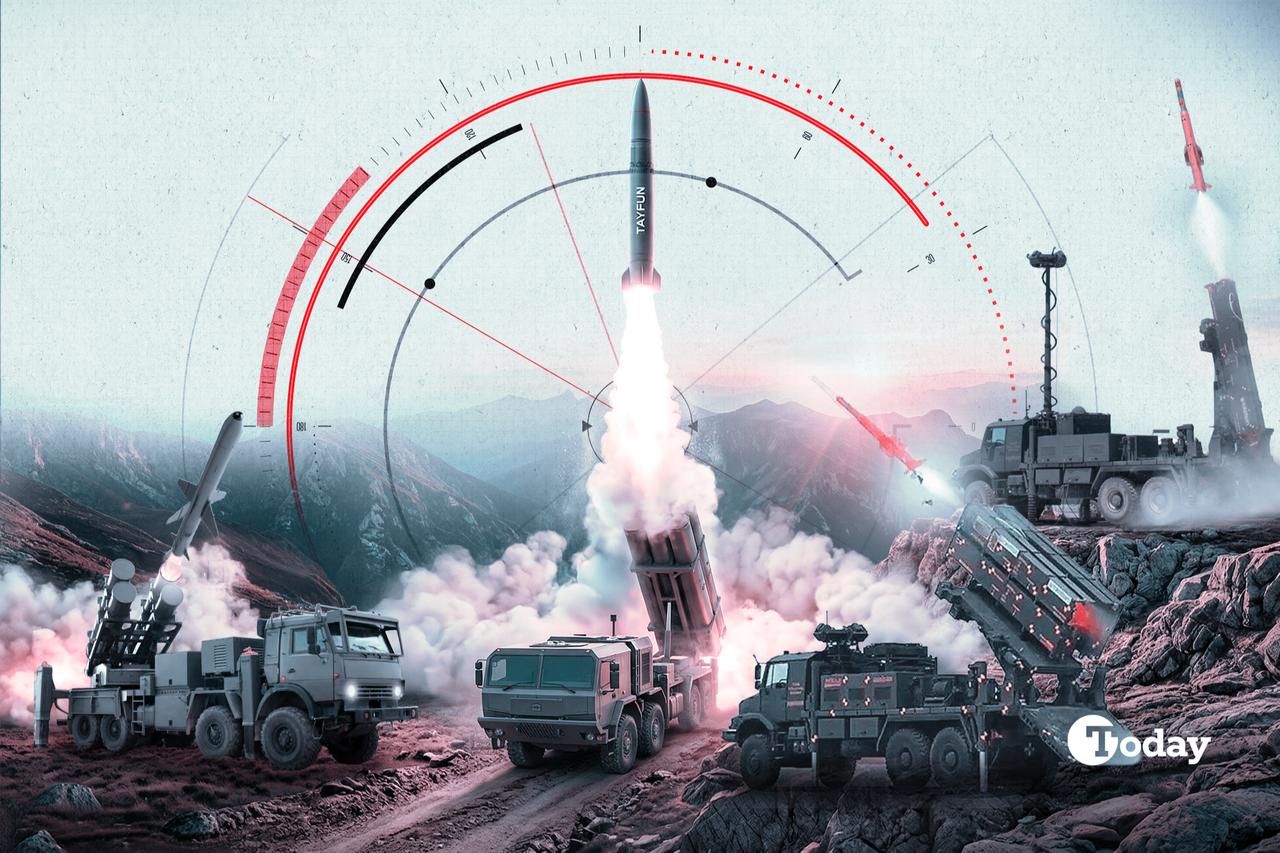


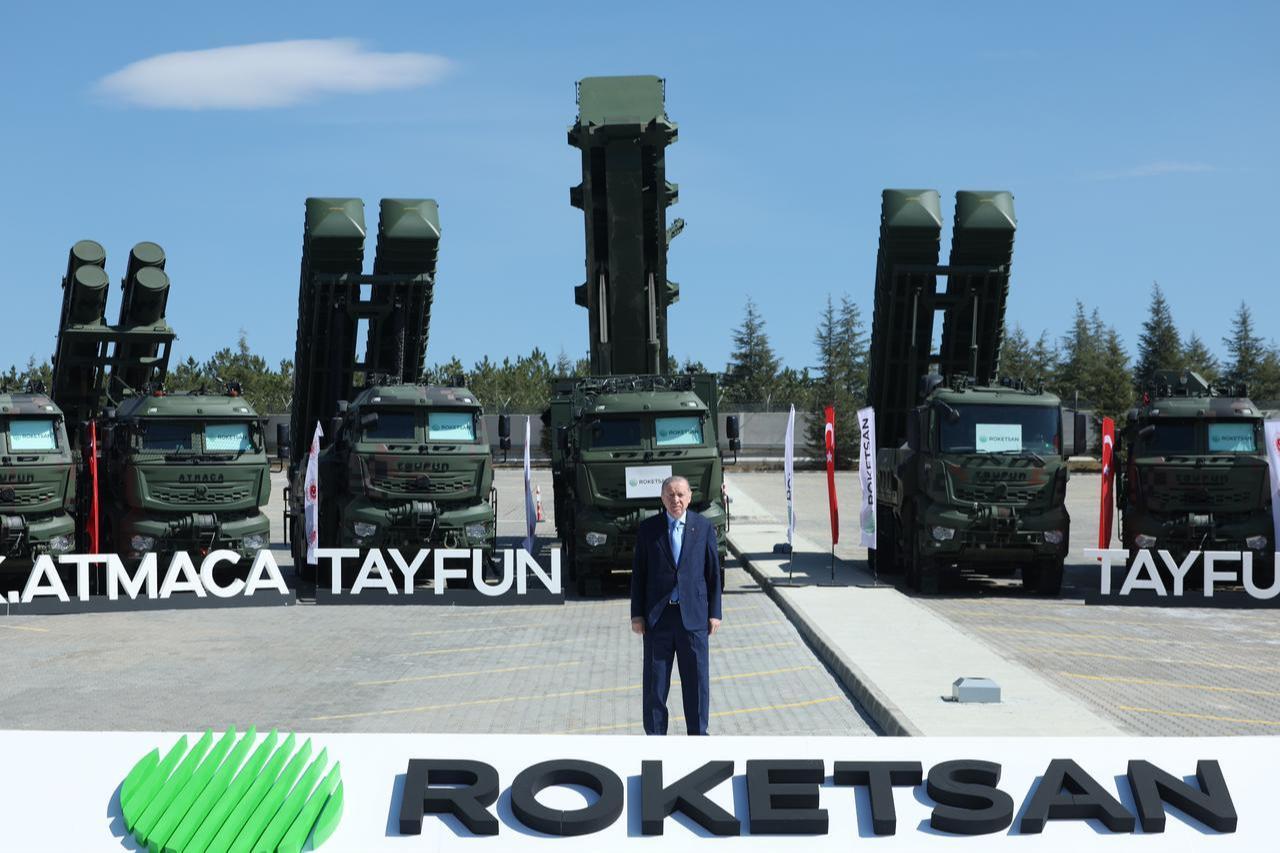
On April 7, President Recep Tayyip Erdogan attended the opening of Roketsan’s new production facilities. The ceremony also included the official delivery of several missile systems to the Turkish Armed Forces (TAF).
Erdogan stated that these facilities will accelerate the mass production of various homegrown missiles. The event featured some of the country’s latest military hardware, including the Tayfun ballistic missile, the Kara Atmaca land-attack cruise missile, and the Hisar and Siper air defense systems.
The wide variety of missile systems delivered on that day is striking, and in itself offers a revealing snapshot of Türkiye’s evolving defense and security trajectory.
Missile technology is among Ankara’s top priorities, alongside unmanned systems and electronic warfare, where the strategic objective has long been to achieve total and unconstrained technological autarky.
To understand the strategic significance of this moment, it helps to place it within the broader trajectory of Türkiye’s missile development—from alliance-dependent deterrence to a more autonomous, multi-domain strike capability.

At its core, Türkiye’s missile development reflects a steady move away from relying on outside security guarantees and toward building its own capabilities.
During the Cold War, Ankara’s strategy was shaped by NATO membership and the protection of the U.S. nuclear umbrella. Missiles were part of the threat environment, but not something Türkiye possessed itself. That imbalance was acceptable as long as the alliance held together and those external guarantees felt credible.
That assumption began to unravel in the late 20th century. The Iran–Iraq War, particularly during the so-called “war of the cities,” and Iraq’s use of Scud missiles during the 1991 Gulf War exposed a stark vulnerability: Population centers and critical infrastructure could be targeted with relative ease, and defensive measures were limited. At the same time, political frictions within NATO, especially regarding missile defense deployments, highlighted the conditional nature of allied support. These developments catalysed a strategic rethinking in Ankara: deterrence could no longer rely solely on others.
The response was a dual-track approach that remains visible today. On one hand, Türkiye sought to acquire operational capabilities quickly through imports, such as the ATACMS tactical ballistic missile system from the United States. On the other hand, Ankara invested in building a domestic industrial base capable of designing and producing missiles independently. This second track proved far more consequential over time.
By leveraging technology transfer agreements, most notably with China in the late 1990s, and consolidating institutional expertise under organizations like Roketsan and TUBITAK SAGE, Türkiye laid the groundwork for sustained indigenous development.
The ballistic missile program perfectly illustrates this evolution. Early systems, such as the J-600T Yildirim, were based on the Chinese B611 design and lacked precision. However, subsequent developments, most notably the Bora, marked a major leap forward. With improved accuracy (a 10-metre CEP) and an extended range of nearly 300 kilometres, the Bora was more than just a technological milestone; it was a conceptual one.
Precision, rather than sheer destructive power, became the defining feature of Türkiye’s missile capability.
This shift aligns with global trends. Advances in guidance systems, microelectronics, and materials now allow ballistic missiles to reach levels of accuracy once reserved for airpower.
For Türkiye, the doctrinal impact is significant: since the early 2000s, ballistic missiles have evolved from mass-effect weapons into precision tools. With these technological leaps, missiles can now take on certain mission types that previously required manned aircraft.
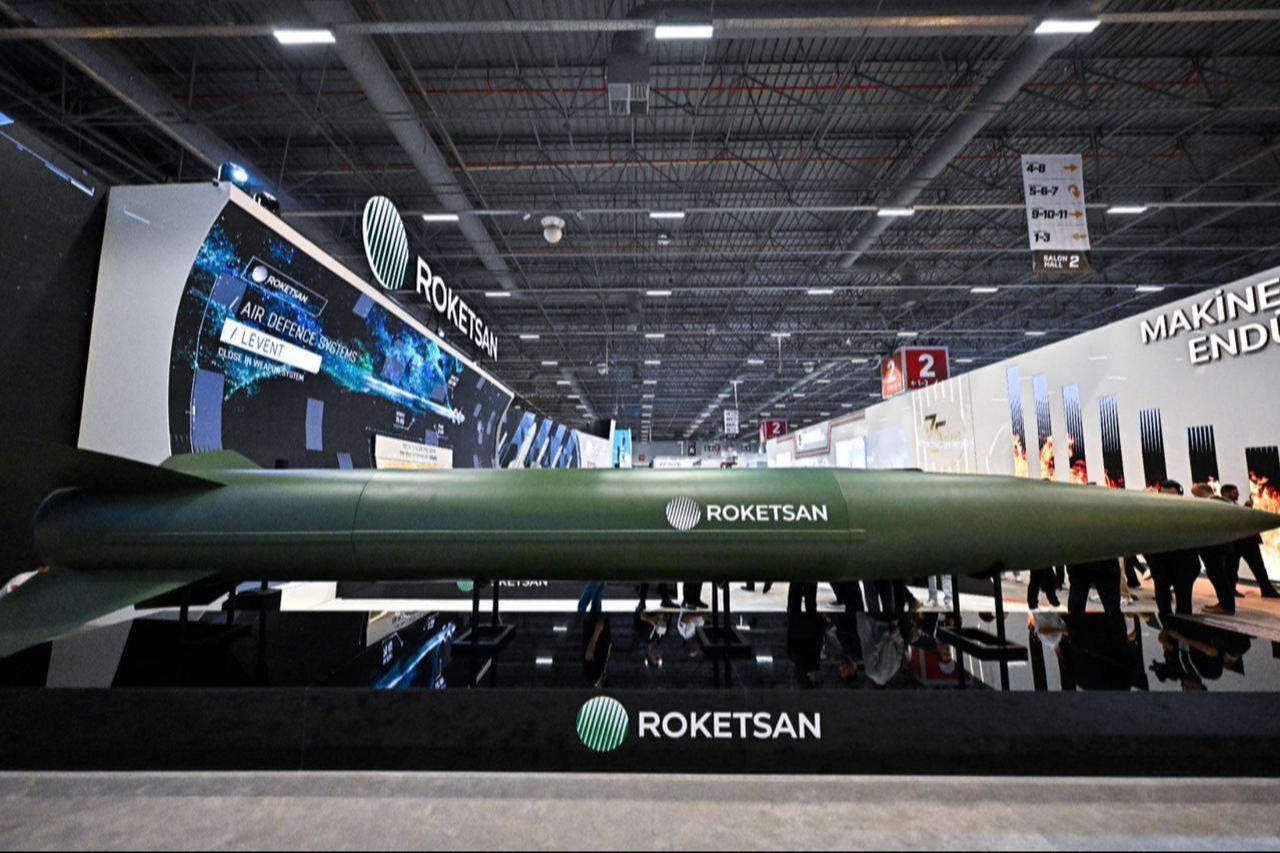
The progression from Yildirim to Bora and more recently to the Tayfun family underscores a clear ambition: Extending range while maintaining or improving accuracy.
The Tayfun, with a range potentially exceeding 500 kilometers and future variants reportedly targeting 800 kilometers and beyond, signals Türkiye’s entry into a more strategic tier of missile capability.
The unveiling of even larger systems, such as the Tayfun Block IV, suggests that Ankara is not content with incremental improvements but is instead pursuing a step change in capability, potentially approaching the 1,000-kilometre class.
Even more intriguing is the Cenk program. While details are still limited, its design, featuring a separating warhead and signs of maneuverability, points toward a new generation of missiles. These systems appear to incorporate advanced countermeasures and potentially exo-atmospheric flight paths. If successful, the Cenk would mark Türkiye’s transition from tactical, theater-level missiles to truly strategic assets with regional reach.
Parallel to these ballistic developments, Türkiye’s cruise missile program has followed a distinct but complementary path. While ballistic missiles prioritize speed and trajectory, cruise missiles emphasize flexibility, stealth and precision.
The SOM family, developed by TUBITAK SAGE from the mid-2000s onward, reflects this approach. With variants using infrared seekers, data links, and specialized warheads, the SOM has evolved into a versatile platform capable of hitting both fixed and, increasingly, moving targets.
The development of the Gezgin cruise missile represents a further expansion in ambition. Envisioned as a long-range land-attack system with a range potentially exceeding 1,000 kilometers, the Gezgin is designed for multi-platform deployment, including submarines and surface vessels. Its development has been slower and more complex than that of ballistic systems, largely due to challenges in propulsion, particularly the acquisition of suitable turbojet or turbofan engines. Yet the eventual success of domestic engine programmes, led by Kale Jet Engines, suggests that these barriers are being overcome.
Taken together, these developments reflect a deliberate effort to build a layered, diversified strike capability. Where ballistic missiles provide speed and penetration, cruise missiles offer flexibility and survivability. Both are increasingly integrated into a broader operational framework that includes uncrewed systems, networked targeting, and multi-domain operations. The result is a more resilient force that is no longer dependent on any single platform or technology.
Equally important is the industrial dimension of this transformation. Türkiye’s missile ecosystem now encompasses a wide range of actors, from propulsion specialists and electronics firms to system integrators and research institutions. This vertically and horizontally integrated structure not only supports current programmes but also enables future innovation.
It is this ecosystem, rather than any individual missile, that constitutes Türkiye’s most significant strategic asset.
However, this trajectory is not without constraints. Geography remains a persistent challenge, particularly for testing long-range ballistic systems. Türkiye’s limited test ranges have necessitated creative solutions, including the development of a spaceport in Somalia. While officially intended to support space-launch activities, such facilities also provide the infrastructure needed for testing longer-range missiles.
This overlap between civilian and military applications underscores the dual-use nature of modern aerospace technologies and the strategic advantages of mastering them.
Another constraint lies in the evolving international environment. Missile proliferation, export controls, and regional rivalries all shape Türkiye’s options and incentives. The Missile Technology Control Regime (MTCR), which Türkiye joined in 1997, imposes limits on the transfer of certain technologies but does not restrict indigenous development.
Indeed, Ankara’s emphasis on domestic capability can be seen as a direct response to such regimes, as well as to the broader uncertainties of international cooperation.
The operational relevance of missiles has been reinforced by recent conflicts, from the Russia–Ukraine war to exchanges between Iran and Israel. These conflicts have demonstrated both the effectiveness of long-range precision strikes and the difficulties of defending against them.
For Türkiye, they serve as both validation and warning: validation of its investment in missile capabilities, and warning of the challenges it may face in defending against similar threats.
Ultimately, Türkiye’s missile programs reflect a broader strategic recalibration. They are about redefining the country’s position in the regional and global security architecture. By developing a comprehensive and largely indigenous missile capability, Ankara is seeking to enhance its strategic autonomy, reduce its dependence on external actors, and expand its options in both deterrence and coercion.
This transformation is ongoing, and several uncertainties remain. The performance of next-generation systems, the speed of innovation, and how global actors react will all shape the final outcome. Yet, the direction is clear: Türkiye is moving from reliance to self-sufficiency—shifting from a purely defensive focus to a balanced approach that includes credible offensive power.
In doing so, Türkiye is not only reshaping its own strategic landscape but also contributing to a broader shift in the nature of military power. Precision-guided missiles, once the exclusive tools of a few major powers, are becoming increasingly accessible and central to modern warfare. Türkiye’s experience illustrates how a determined state, driven by geopolitical necessity and industrial ambition, can successfully navigate this transition.
The implications extend beyond Türkiye. As more states acquire similar capabilities, the dynamics of deterrence, escalation, and conflict will likely change in profound ways. In this emerging environment, the ability to develop and deploy advanced missile systems will be a key measure of strategic influence.
Türkiye has clearly recognized this and is acting accordingly.


 Set as preferred source
 Set as preferred source


 2 min read
 1 min read


