Newsletters


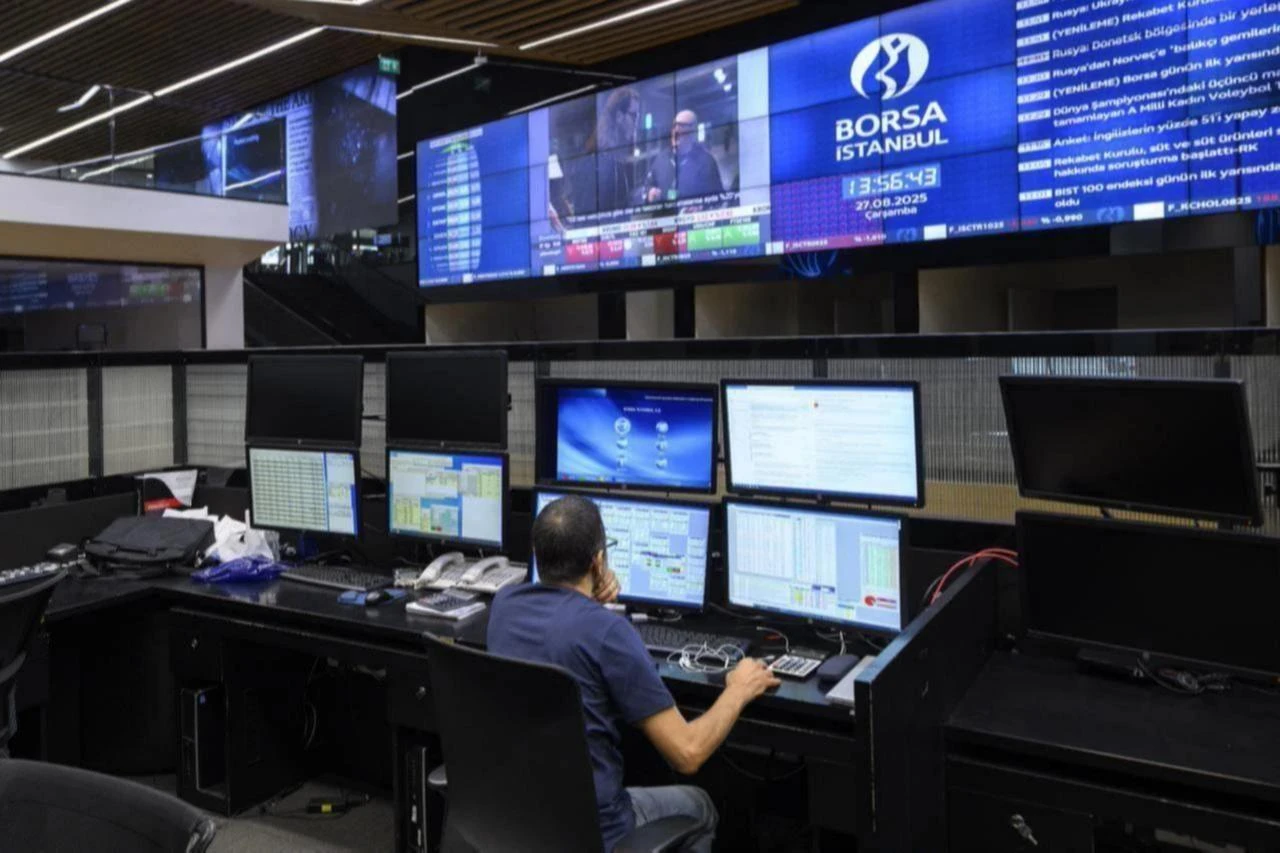


This article was originally written for Türkiye Today’s weekly economy newsletter, Turkish Economy in Brief, in its Aug. 3 issue. Please make sure you are subscribed to the newsletter by clicking here.
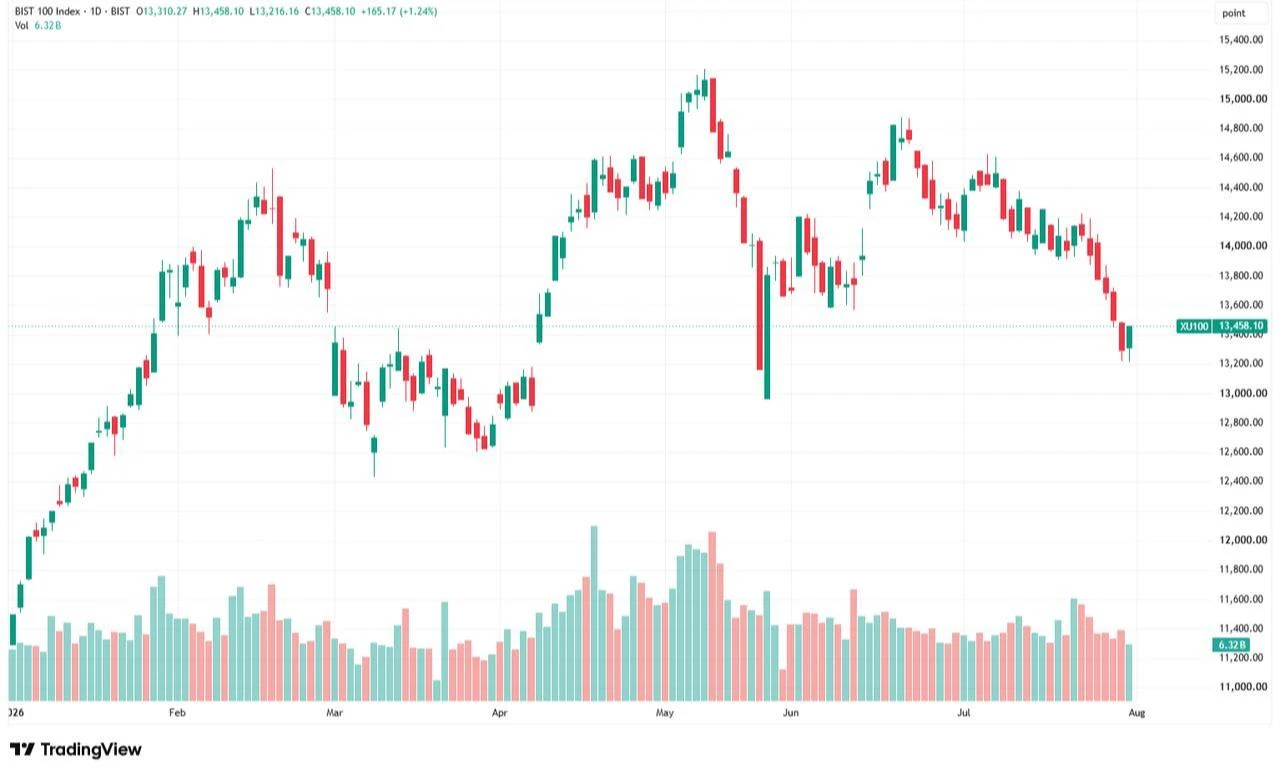
July was a month of highly volatile pricing in Turkish markets. Borsa Istanbul's BIST 100 index closed the month at 13,458 points, down 4.70%. Meanwhile, the U.S. dollar gained 1.89% against the Turkish lira, while the euro advanced 2.85%.
Monthly returns on Turkish lira deposits stood at around 2.85%, while money market funds delivered returns of up to 3.20%.
Fighting between the United States and Iran resumed in July. After plunging sharply in May and June on optimism, oil prices rebounded. Crude ended the month at $87.90 per barrel, up nearly 20%.
At its July 23 meeting, the Central Bank of the Republic of Türkiye (CBRT) kept its policy rate unchanged at 37%. Due to inflationary pressures—particularly those stemming from risks in the Middle East—market funding continues at 40%. The CBRT reaffirmed its commitment to maintaining a tight monetary stance.
The U.S. Federal Reserve also left its policy rate unchanged at 3.50%–3.75%. However, it adopted a hawkish tone by signaling that it remains prepared to use interest rates to counter rising inflation risks.
Against a backdrop of rising risks and persistently high interest rates, it is easier to understand why Borsa Istanbul remains under pressure. On the final trading day of July, the BIST 100 index fell as low as 13,216, marking its weakest level in the past 10 weeks.

We observe four key developments behind the market's weakness:
Rising oil prices: The renewed increase in oil prices is adding pressure to Türkiye's inflation outlook and current account balance. Higher energy import costs require more foreign currency, making exchange rate stability and reserve management increasingly important.
These developments are also pushing back expectations for interest rate cuts, reducing investors' appetite for equities. With risk-free returns remaining attractive, Turkish lira deposits have become a stronger alternative for investors.
High interest rates: The high-interest-rate environment is squeezing banking sector margins and weighing on profitability. In July, the banking index plunged 16.46%.
The sharp decline in bank stocks—long considered the driving force behind Borsa Istanbul—has dragged the broader market lower.
Wave of initial public offerings: Twelve companies launched initial public offerings in July, raising a combined ₺38.4 billion ($721.3 million).
At a time when fresh capital inflows remain limited, investors often sell their existing holdings to participate in new IPOs, putting additional pressure on the market.
Meanwhile, listed companies have started releasing their second-quarter financial results, although only a limited number have reported so far.
Among major companies, Akbank posted a net profit of ₺15.2 billion in the second quarter of 2026, while Yapi Kredi reported ₺10.7 billion.
Compared with the first quarter, Akbank's profit declined by 20%, while Yapi Kredi's earnings fell by 47%.
According to Trive Investment, "The limited number of second-quarter earnings reports released so far have reinforced negative expectations. In addition, selling pressure in stocks trading at elevated valuations has created further downward pressure on the index."
Kuveyt Turk Investment said that following the CBRT's decision to keep the policy rate unchanged at 37%, concerns over delays in the disinflation process and uncertainty stemming from geopolitical developments continue to shape asset pricing in Türkiye.
The brokerage also noted that cautious expectations for the earnings season, the growing number of IPOs dispersing market liquidity, and fading expectations for interest rate cuts have intensified selling pressure. However, it added that the current environment is creating opportunities for medium- to long-term investors to gradually build selective positions in Borsa Istanbul.
Pusula Investment pointed out that the BIST 100 index is approaching its 200-day moving average and identified 13,075 and 12,500 as key support levels.
In its strategy note, the brokerage said:
"Under both scenarios, the index has begun to offer meaningful return potential over the medium to long term. Given that the upside potential outweighs the downside risks, we believe the next one to two weeks should be viewed as an opportunity for investors looking to build medium- to long-term portfolios."
The CBRT does not have a monetary policy meeting scheduled for August, with its next meeting set for Sept. 10.
A Monetary Policy Committee meeting is not required for the central bank to lower its funding rate from the upper end of the interest rate corridor (40%) to the policy rate (37%).
In the course of the U.S.-Iran conflict, oil prices and inflation will remain the key drivers for markets.
In this context, July inflation data released today came in at 1.78% month-on-month, broadly in line with expectations.
Looking ahead, easing geopolitical tensions would provide the most supportive scenario for financial markets. However, a prolonged conflict combined with more persistent inflation could further delay expectations for interest rate cuts.


 Set as preferred source
 Set as preferred source



 4 min read