Newsletters





Former Israeli Defense Minister Yoav Gallant used his personal blog on Friday to publish an article titled “The Next Strategic Shift in the Middle East.”
In the article, the retired general outlined a forward-looking assessment of regional realignments that could shape the coming decades.
While Gallant maintains his stature as a quintessential security hawk as a former general, he has carved out a distinct space within the Israeli right.
His latest assessment, while grounded in the familiar anxieties of the Israeli defense establishment, pivots away from reflexive antagonism. Instead, he offers a pragmatic alternative, which involves a refusal to view Ankara’s burgeoning footprint as an inherently zero-sum threat.
Gallant’s political identity has long straddled two currents within Israeli politics. On security matters, his military background has translated into consistently hardline positions. As a former general, he tends to frame regional developments through the lens of deterrence and operational readiness.
Yet domestically, he has at times positioned himself against more radical elements within Israel’s governing coalition.
In 2023, he emerged as one of the most prominent cabinet voices opposing the government’s controversial judicial overhaul. His intervention was framed not as ideological dissent but as a warning about institutional erosion and internal cohesion.
He has also advocated for universal conscription, including for ultra-Orthodox communities, a stance that placed him at odds with religious parties allied with Prime Minister Benjamin Netanyahu.
This institutionalist streak, defending state cohesion while maintaining hawkish security views, carries over into his foreign policy thinking.
Likewise, on matters of long-term strategy where the smoke of active conflict has cleared, Gallant adopts a more institutionalist mode of statecraft. He swaps the tactical lens of a commander for a structural assessment of power, viewing regional shifts not as threats to be neutralized, but as variables to be managed through strategic foresight.
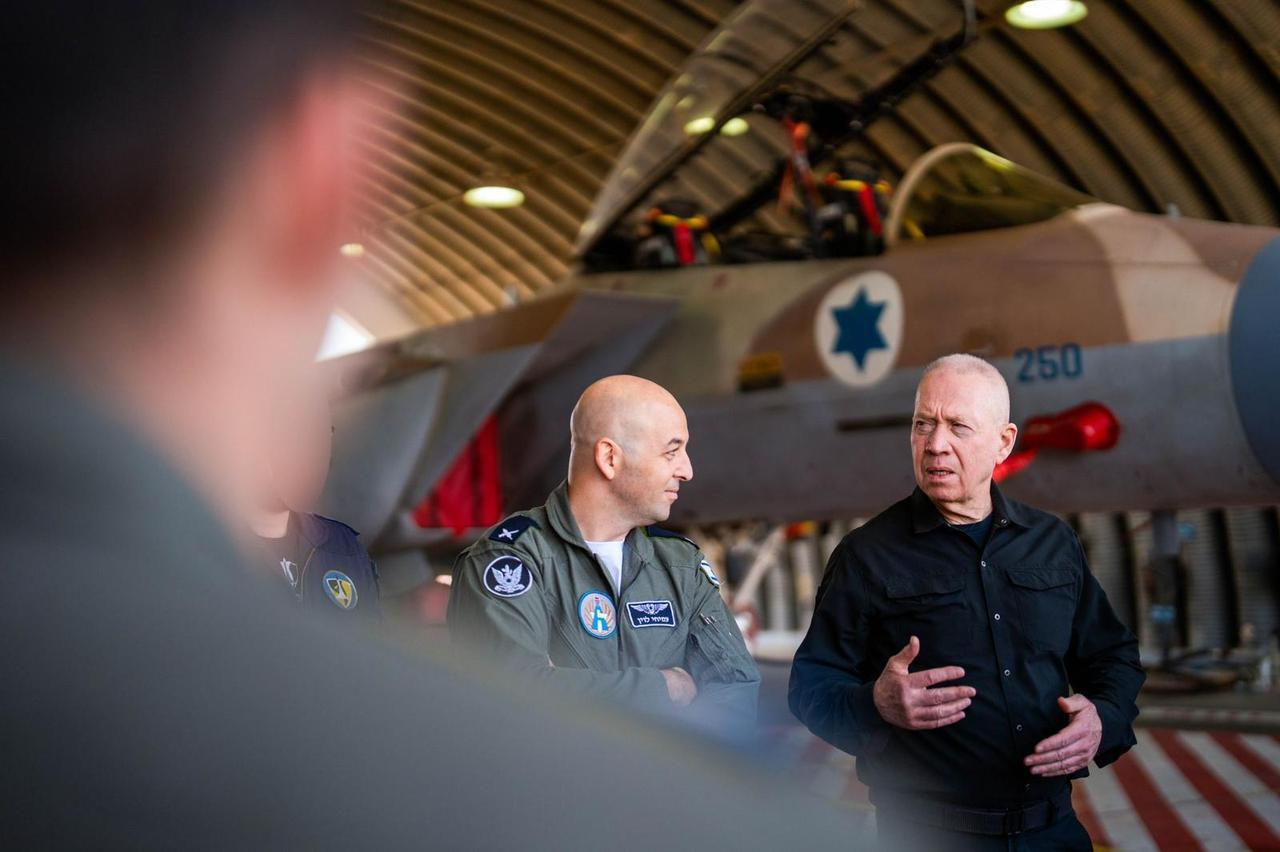

Gallant argues that the weakening of Iran has opened a strategic vacuum across parts of the Middle East. In his assessment, Türkiye is moving decisively to occupy that space.
He describes Ankara as possessing the military capacity, institutional coherence, and strategic ambition necessary to shape the next regional order.
Crucially, he suggests that decisions taken in the coming weeks and months could solidify the region’s future for decades.
Syria occupies a central place in Gallant’s analysis.
He characterizes Türkiye as the principal external backer of transitional governance structures in parts of northern Syria, with entrenched military and intelligence assets on the ground.
Ankara’s presence, he notes, extends beyond border security. Its air defense deployments and expanding operational footprint create what he views as strategic depth. From Israel’s perspective, this proximity carries both diplomatic and security implications.
Gallant underscores that Turkish influence now stretches toward areas close to Israel’s borders. While not framed as an immediate threat, the implication is that any durable regional order must account for this reality.
Beyond Syria, the analysis sketches a broader arc of Turkish engagement. North Africa and East Africa are cited as regions where Ankara has steadily increased diplomatic, economic, and security ties.
Gallant also points to Turkish interest in Jerusalem and its holy sites, as well as efforts to remain diplomatically engaged in Gaza through international mechanisms.
These moves are interpreted as part of a larger strategy to position Türkiye as a central Sunni actor in the post-Iranian phase in his analysis.
Türkiye’s expanding defense industry features prominently in the assessment. With defense exports surpassing $10 billion annually and one of NATO’s largest standing armies, Ankara possesses tangible leverage.
Its status as a NATO member gives it structural access to Western systems even as it pursues an independent regional strategy. Discussions around renewed defense cooperation with the United States, including potential pathways back into advanced procurement programs, reinforce this dual positioning.
Gallant presents this combination of Western integration coupled with strategic autonomy as making Türkiye a more complex actor than Iran. It operates within the Western system while retaining freedom of maneuver.
Gallant ultimately calls for repairing relations with Türkiye. He argues that diplomatic engagement is necessary to manage friction and prevent miscalculation.
At the same time, he warns that Turkish military proximity to Israeli borders introduces risk variables that cannot be ignored. National security considerations, he insists, remain paramount.
This balancing act of engagement without complacency reflects a broader realist approach that is also visible in segments of the U.S. policy community, as many in Washington are uneasy with persistent friction between two longstanding partners.
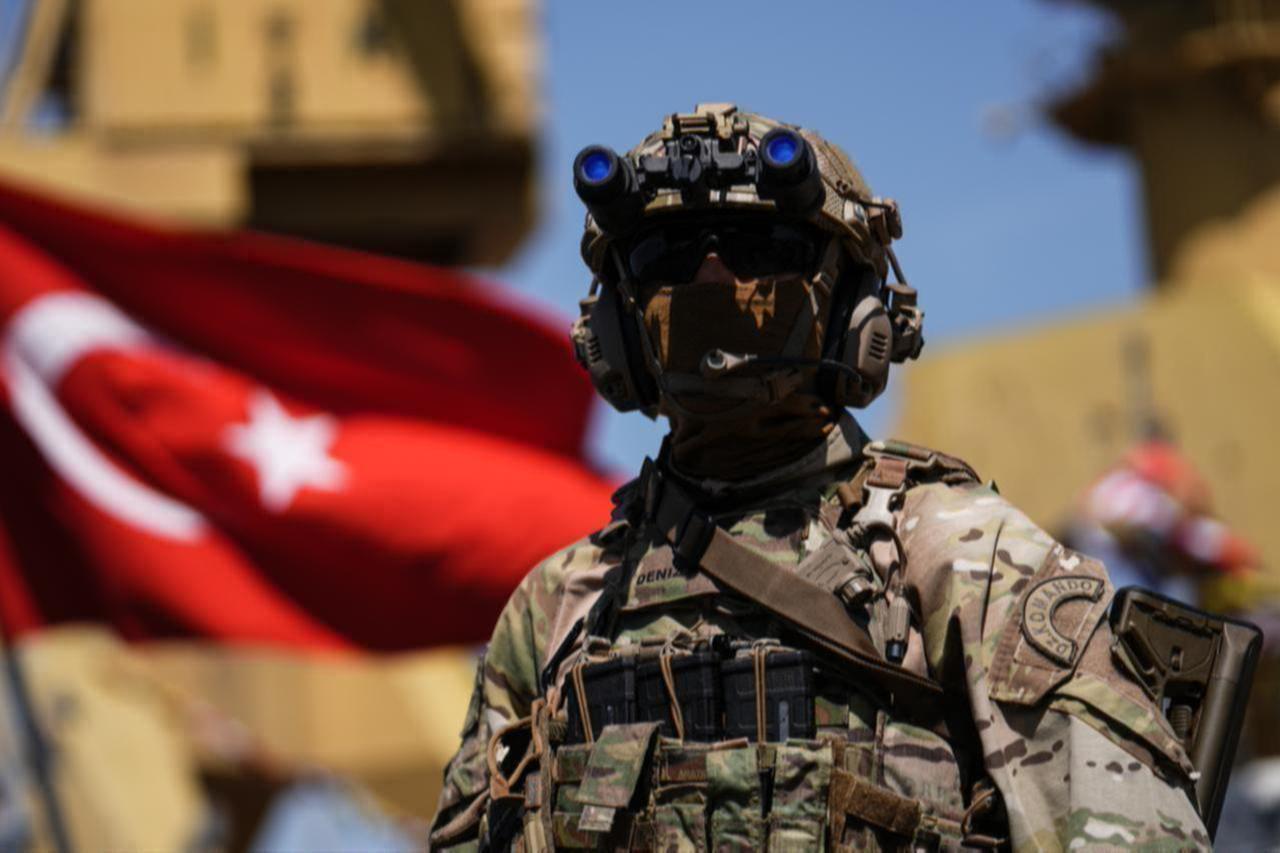
The feasibility of such recalibration depends on the political atmosphere in both capitals. While Gallant’s analysis assumes a degree of Turkish pragmatism, Ankara’s approach to any meaningful dialogue requires strong structural incentives changing in the Israeli political arena.
Observers caution that expectations of compartmentalization, similar to Türkiye’s managed relations with countries like the United Arab Emirates, may not translate into the Israeli context. Without shifts in Israel’s domestic political climate, Ankara may see limited strategic gain beyond merely preventing open confrontation.
In that sense, Gallant’s proposal reads less as a diplomatic blueprint and more as a warning. The regional order is shifting, Türkiye is consolidating influence, and Israel faces choices that will define its posture in the next Middle Eastern era.
Gallant’s approach arrives at a moment of profound doctrinal flux in Israel.
Speaking to senior American Jewish leaders last week, former Prime Minister and leader of the "Bennett 2026" movement, Naftali Bennett, articulated a sharply different vision.
Bennett argued that Oct.7 and the subsequent regional fallout shattered the "illusion of defense," calling for a move away from the decades-old policy of containment toward one of preemptive initiative.
Declaring similarly that "Türkiye is the new Iran," he warned that "the vacuum left by a weakened Tehran is not an opportunity for diplomatic calibration but a summons to hunt down enemies 'throughout the Middle East' before they can solidify."
From that perspective, the approach that actual Israeli policymakers choose, particularly in the run-up to and aftermath of the 2026 elections, will be decisive not only for the trajectory of bilateral relations but also for the broader direction of the region itself.


 Set as preferred source
 Set as preferred source


 1 min read
 1 min read