Newsletters


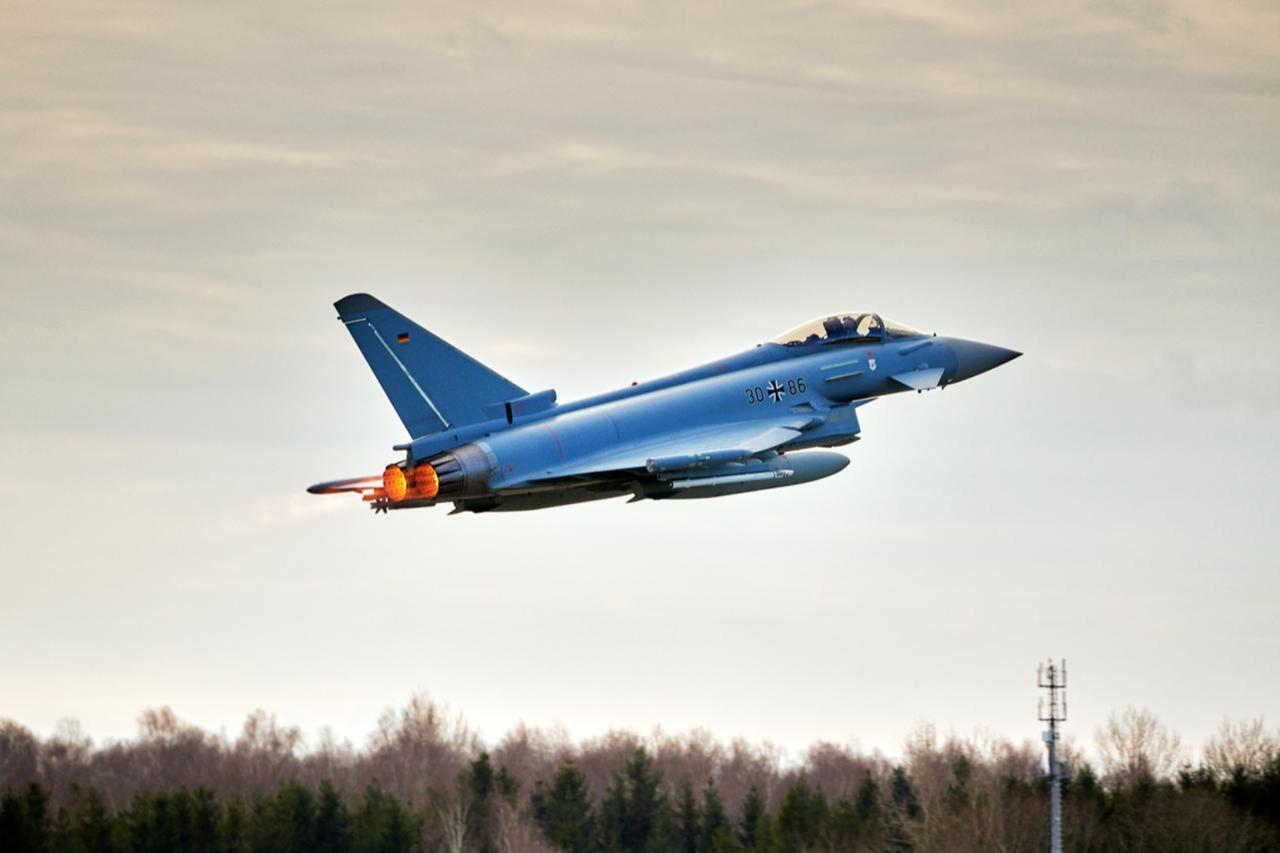


Türkiye plans to acquire at least 12 additional Eurofighter Typhoon aircraft on top of the 44 units it announced it would purchase last year, adding vitality to the Turkish Air Force’s aging fleet of F-16 Fighting Falcons and a few F-4E Phantoms.
The defense news website TurDef reported on Feb. 20 that Türkiye might raise the number of its planned Typhoons from 44 to 56, with the additional 12 units coming from Oman.
Since October, Ankara has been negotiating the transfer of 24 little-used second-hand Typhoons from Qatar and Oman, have them retrofitted to enable NATO-compatible communication and datalink systems. Another 20 brand-new ones will be produced in Farnborough, U.K.
There are good reasons for Türkiye to obtain additional Typhoons—they are capable fighters—despite their relatively high acquisition and operating costs.
Currently, the Turkish Air Force (TuAF) operates approximately 240 F-16s and around 20 F-4s. The Typhoons will enable the force to retire the Phantoms and send a steady stream of its F-16s to Turkish Aerospace Industries (TAI) for their complete renewal under the “Ozgur” (Free) project. In the meantime, TAI can work on the nascent fifth-generation national stealth fighter, the MMU Kaan, as well as the jet trainer and light-combat aircraft, the Hurjet, of whichNATO ally Spainis also a purchaser.
In this context, Typhoons are much more than a stopgap measure until a critical mass of the Turkish-made systems joins TuAF.
When they were first conceived in the 1980s, Typhoons were expected to fight against the Soviets’ numerical superiority in MiG-29s and Su-27s. With the end of the Cold War, the Typhoon underwent a mission change and found itself as a multirole fighter when it entered serial production in 1998-2002.
So able the Typhoon became, one of them even “killed” an F-22 Raptor, the US Air Force’s most advanced air superiority fighter, during the Red Flag exercise in Alaska in 2012.
Like many defense and security-related news, Turkish social media is excited about the additional Typhoon acquisition. Some wondered if another 24 brand-new ones ought to be purchased to raise the total number of Turkish Typhoons to 80 by the late 2030s, which would make for four combat squadrons.
Raising the number of TuAF Typhoons to 80 units tracks with public conversations about the future of TuAF. Huseyin Fazla, a retired TuAF fighter pilot and brigadier general, pointed out that the force in the early 2010s had planned to raise the total number of manned fighter aircraft to 400.
But the Lockheed Martin F-35s, of which TuAF was supposed to receive 100 units, were a “no show” following Türkiye’s acquisition of Russian-made S-400 air defense systems and the overall deterioration of Ankara’s ties with Western partners. In 2019-2020, Türkiye found itself the subject of the U.S. Congress’ Countering America’s Adversaries Through Sanctions Act (CAATSA).
The question now is how Türkiye will reach that 400 manned fighter aircraft goal. If and when all Turkish F-16s go through the “Ozgur” modernization and TuAF acquires 44 Typhoons, the force will still not even reach 300 manned aircraft by the early 2030s. By then, many of the Hurjets will be serving as trainers and only a handful of Kaans—of which TuAF is likely to obtain 100 to 150 units—will be at the “initial operational capability” stage.
To supplement those manned platforms, experts propose relying on one of Türkiye’s greatest strengths: Unmanned systems.
Fazla, who is also the founding director of the Ankara-based think tank Center for Strategic Studies (STRASAM), proposed that manned aircraft should be further boosted with 400 of the most advanced Turkish-made unmanned platforms, such as the Baykar Kizilelma, billed as the world’s “unmanned fighter jet,” and the TAI Anka-3, a flying-wing design that is expected to be the stealthiest airframe in the Turkish inventory.
Meanwhile, leading Turkish defense analyst Arda Mevlutoglu has argued for Türkiye to focus on unmanned national systems—instead of purchasing platforms from abroad—until Hurjets and Kaans are ready.

One of the open secrets in Ankara these days is that while the Turkish side wants to assuage the United States about the S-400s, remove the CAATSA sanctions, and acquire F-35s and perhaps even new-generation F-16s, there is a sense that Washington can no longer be trusted.
Buying 40 new F-16s and 40 F-35s would easily help Türkiye meet its force goals and regain its edge as the region’s strongest air force. But there is a growing sense that Washington is still overpricing the deal as if Ankara has no alternatives, making concerns about the Typhoon’s cost less significant.
Then there is the Israel problem.
At a time when a former (and future hopeful) prime minister of Israel is openly calling Türkiye a “threat” and the U.S. Congress (and Washington in general) continues to act like a branch of the Israeli Knesset, it is prudent for Ankara to prove itself both a good customer and reliable partner to European countries, which are worried about America’s wavering commitments to NATO
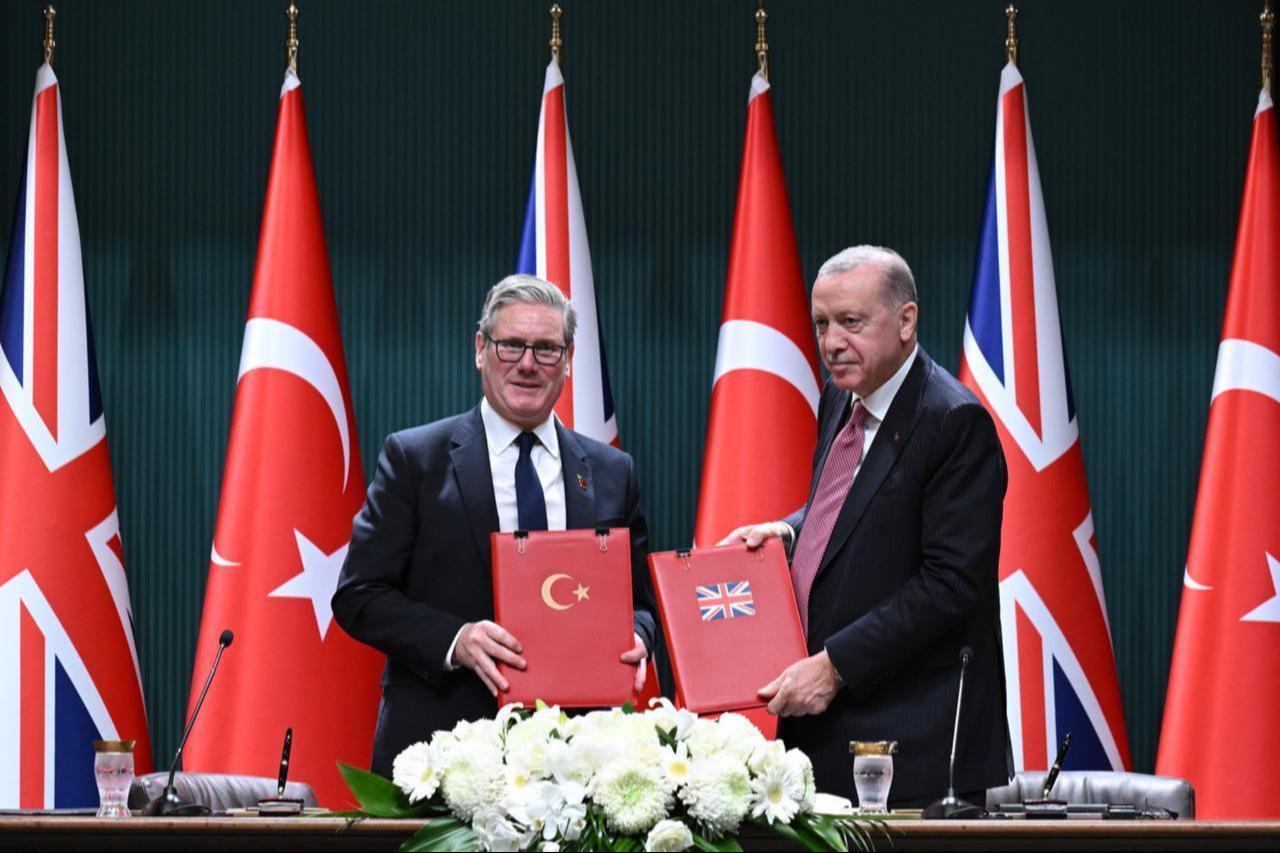
To be sure, it is unlikely for Türkiye and the European Union to restart Ankara’s accession negotiations for full membership. The Europeans have only now recognized the wisdom of updating the 1995 Customs Union agreement with Ankara, while the Turkish government has yet to amend its laws to enable its citizens to travel to the Schengen zone visa-free. It will be ages before the two sides can think of “deep integration.”
But purchasing Typhoons from the Eurofighter consortium could open new doors in defense cooperation between Türkiye and Europe at a time when the neighborhood around them is becoming less safe, and they share common security goals, even if not the same or even comparable values. Recognizing those differences puts Türkiye’s acquisition of the Typhoon in its proper context.


 Set as preferred source
 Set as preferred source



 7 min read