Newsletters


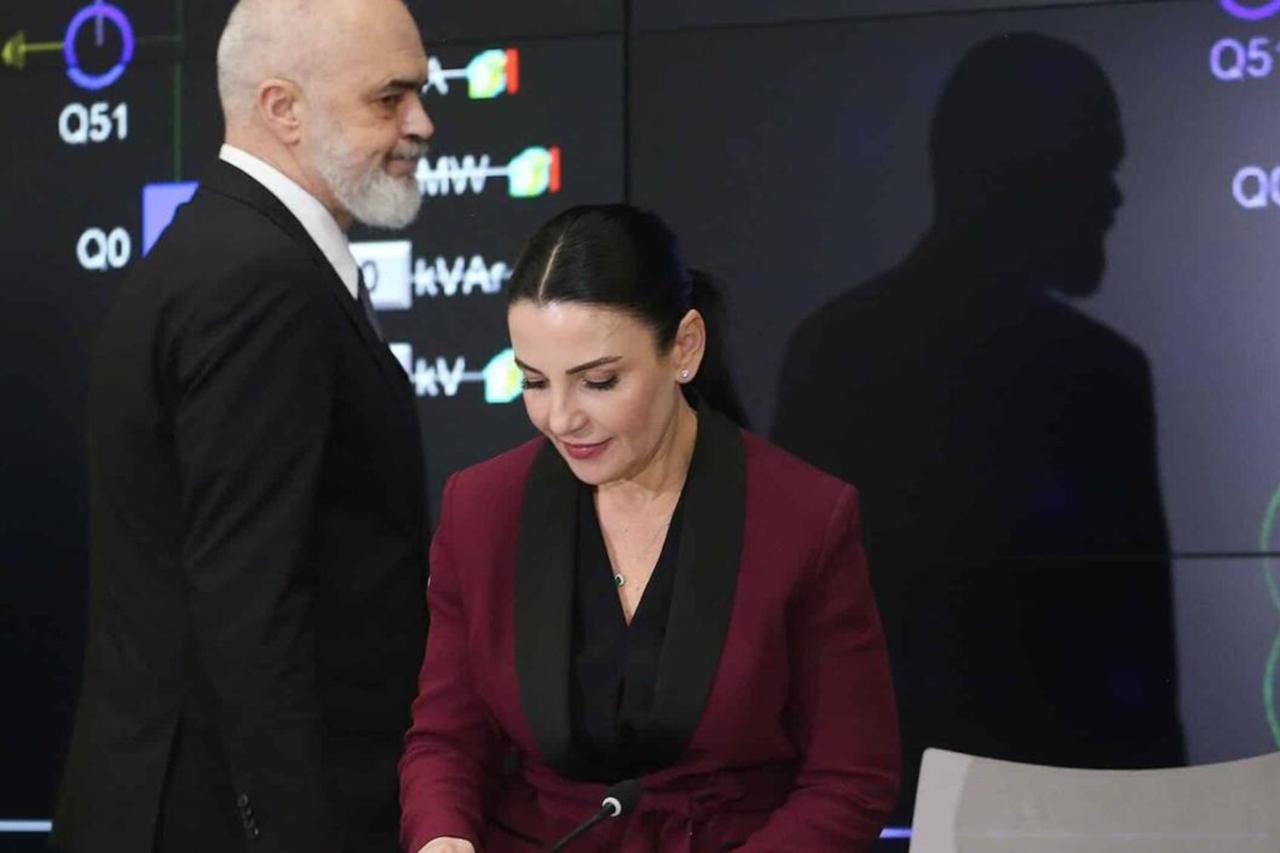


From a distance, it looks procedural.
A cabinet reshuffle.
A portfolio reassigned.
A new deputy prime minister.
The language is managerial. Responsible. Calm.
But politics is not about paperwork. It is about power—who exercises it, who constrains it, and who ultimately bends.
The decision to replace Belinda Balluku, however artfully presented as a broader reshuffle, was a concession. And there is no elegant way to disguise that fact.
Balluku was suspended, not convicted. No court ruling compelled removal. No indictment tested in adversarial proceedings demanded immediate political severance. The timeline of the investigation itself suggests that any courtroom reckoning remains distant.
The move was not constitutionally inevitable.
It was politically responsive.
And that distinction matters.
There is a growing unease—one that cannot be dismissed as partisan paranoia—that SPAK has been operating with a disturbingly low evidentiary threshold in high-profile cases. Preliminary suspicion, prosecutorial ambition, and public signaling have too often been enough to trigger political consequences before legal standards have been rigorously tested.
In any functioning democracy, investigations are necessary. But investigations are not verdicts. And when the bar for launching politically explosive cases appears calibrated for maximum disruption rather than maximum proof, prosecutors cease to be merely legal actors. They become political ones—whether by intention or by structural effect.
That is worrisome.
Because when accusation becomes punishment, suspension becomes a sentence. And when governments restructure themselves in anticipation of prosecutorial pressure rather than judicial conclusion, the constitutional balance begins to tilt.
Add to this a more uncomfortable reality: certain international actors, cloaked in the language of reform and rule of law, have demonstrated an appetite for influence that extends beyond oversight into leverage. External pressure, amplified through institutional channels and diplomatic signaling, can easily morph from partnership into power arbitration.
At that point, the question ceases to be legal. It becomes existential.
Is this about accountability—or about control?
If prosecutorial momentum, reinforced by external pressure, becomes the mechanism through which elected leadership is gradually weakened, then the democratic will expressed at the ballot box is being overridden indirectly.
Not by voters.
By process.
There is no sugarcoating this.
The reshuffle was a concession. It signaled that pressure works. It demonstrated that institutional escalation produces structural change. And it did so at the beginning of a renewed mandate—a mandate that was supposed to consolidate authority, not recalibrate it.
History in the region offers a sobering lesson. In Kosovo, the Specialist Chambers were created under the banner of justice and international credibility. The same political actors who enabled them eventually found themselves indicted—and judged—by the very mechanism they had accepted. Institutions once framed as neutral guardians evolved into instruments that reshaped the political landscape entirely.
Power rarely stops at its first concession.
Once the logic of judicial primacy over electoral legitimacy is accepted, the endpoint is predictable. Today, a minister. Tomorrow is a party figure. Eventually, the prime minister himself.
If the final objective—implicit or explicit—is to sack the head of government through judicial attrition rather than electoral defeat, then we are no longer operating within healthy democratic tension. We are witnessing a slow transfer of sovereignty away from voters and toward institutional actors whose accountability is far less direct.
This is not an argument against the law.
It is an argument against imbalance.
If wrongdoing is proven in court, consequences must follow. But governments should not preemptively restructure themselves at the investigative stage simply to demonstrate compliance with pressure, domestic or international.
Authority, once ceded in increments, is rarely recovered in full.
So let us speak plainly.
This must be the last concession.
Either the prime minister governs on his own terms—sets the threshold for political consequence at judicial conclusion rather than investigative suggestion—or he should resign now and spare the country a prolonged drama in which elected authority is eroded step by step.
Because there is no middle ground between governing and being governed by forces you do not control.
In politics, weakness is cumulative. Concessions compound. And once adversaries—institutional or otherwise—sense vulnerability, they do not retreat.
They advance.
There is no sugarcoating this.
Stand and draw the line.
Or step aside.
This article was first published on the Kosovo Dispatch website.
DISCLAIMER: The views and opinions expressed in this article are those of the author and may not necessarily reflect the editorial policy of Türkiye Today.


 Set as preferred source
 Set as preferred source


 2 min read
 1 min read