Newsletters





For years, Bosnia and Herzegovina existed inside a familiar Western script.
Washington defended Dayton. Brussels spoke about reforms. NATO enlargement hovered in the background as both promise and pressure. And whenever Bosnia drifted too close to crisis, international actors stepped in to pull it back from the edge.
That script may now be changing.
The latest U.S. State Department's "Report to Congress on United States Policy to Promote Regional Stability and Prosperity in the Western Balkans" is being read across the region less as a routine policy paper and more as a signal that Washington is redefining what it actually wants from the Balkans and, particularly, from Bosnia.
At first glance, the document sounds familiar. It still speaks about stability, territorial integrity, institutional reform and countering Russian and Chinese influence. The language of preserving Bosnia’s sovereignty remains intact. Even the phrase “territorial integrity,” which many Balkan observers feared had quietly disappeared from recent diplomatic messaging, appears repeatedly.
But what makes the report striking is not only what it says.
It is what it avoids saying.
The European Union is almost absent from the document. NATO integration is mentioned only indirectly. Democracy promotion and constitutional reform no longer appear as the emotional center of American engagement in the region.
Instead, the report reads like a transactional security document: stability matters because instability threatens investment, energy routes, migration management and geopolitical competition with Russia and China.
In other words, Bosnia is increasingly being viewed not as an unfinished democratic project, but as a strategic corridor.
That shift explains why energy appears so prominently in the new American approach.
The Southern Gas Interconnection project between Bosnia and Croatia is framed not merely as infrastructure, but as part of a broader geopolitical architecture aimed at reducing Russian influence in Southeast Europe.
This is not insignificant. Bosnia has long been trapped between competing international visions: the EU’s slow bureaucratic conditionality, Russia’s destabilizing leverage through Republika Srpska, Türkiye’s balancing role, and now an increasingly transactional American policy focused on strategic outcomes rather than political engineering.
The report effectively confirms that Washington no longer wants open-ended nation-building in the Balkans. Stability is the goal. And stability, from this perspective, appears increasingly defined through energy diversification, investment security and containing Moscow and Beijing.
But Bosnia’s problem has never simply been instability.
Its problem is unresolved power.
And that is where the contradictions inside the new U.S. approach become impossible to ignore.
Because while the report strongly defends Bosnia’s territorial integrity, it avoids directly addressing the most destabilizing political actor inside the country: Milorad Dodik.
That omission matters.
Particularly because it comes after the Trump administration’s controversial decision in late 2025 to lift sanctions against Dodik, members of his family and dozens of his allies.
For years, Washington described Dodik as a direct threat to the Dayton Peace Agreement and Bosnia’s constitutional order. U.S. Treasury statements accused him of corruption and attempts to dismantle the post-war framework that ended the Bosnian war.
Now, suddenly, the tone has shifted.
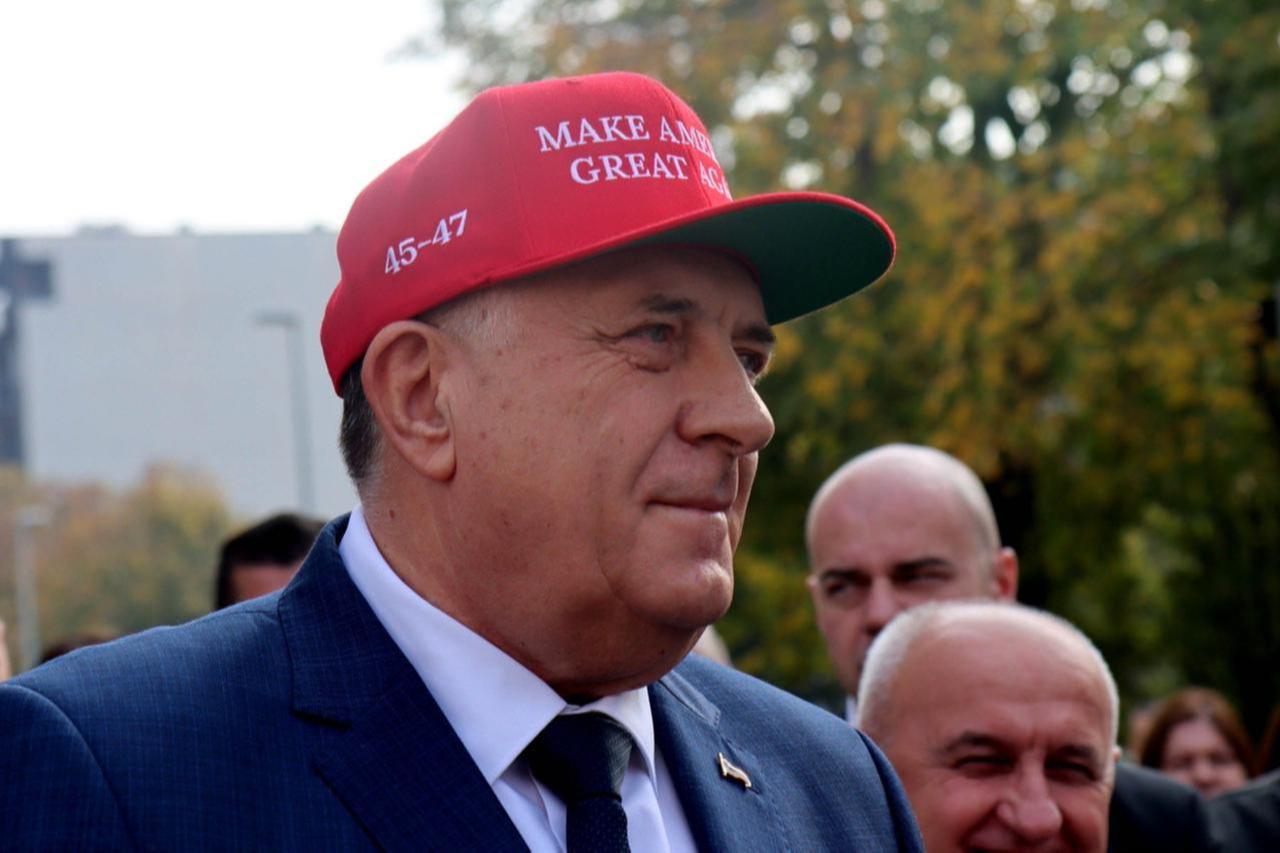

The new report never fully explains why sanctions were lifted. Nor does it seriously address Dodik’s continued secessionist rhetoric, attacks on state institutions or lobbying campaigns in Washington.
That silence has alarmed many Bosnia observers.
We should ask ourselves whether the United States is moving toward a model of pragmatic accommodation with strong regional actors rather than confrontation. The report repeatedly refers to “weak governance” in the Balkans, yet never clearly defines whether Washington still supports deep constitutional reform based on European Court of Human Rights rulings and democratic restructuring, or if it is more open now to ad-hoc political deals that simply preserve short-term stability.
The ambiguity is dangerous in Bosnia, where short-term stability has historically often meant freezing dysfunction rather than resolving it.
And there is another uncomfortable question hovering over the document.
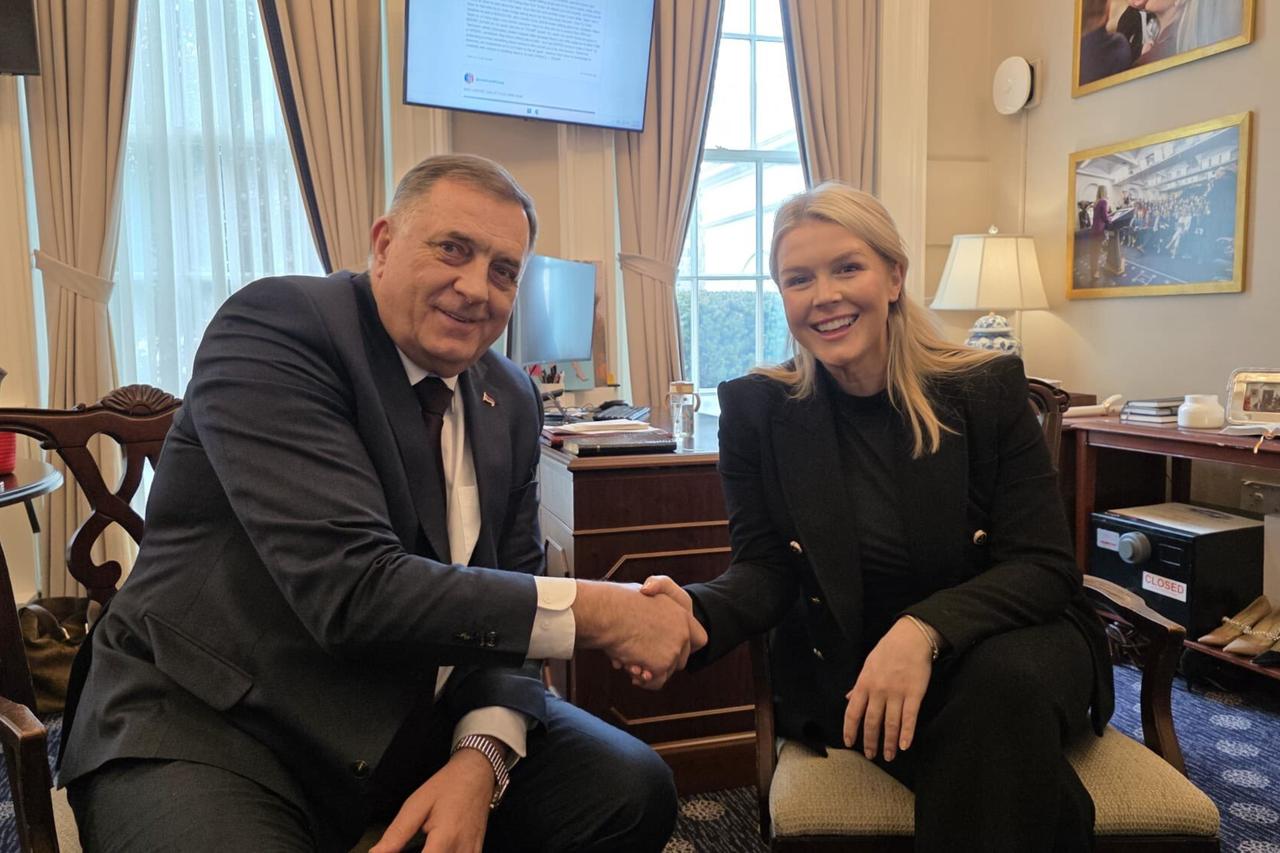
If Washington still sees Dodik as a threat to Bosnia’s territorial integrity, why did the bipartisan members of Congress recently demand that sanctions be reimposed?
In March, senior Republican and Democratic lawmakers warned that Dodik’s actions continue to threaten the Dayton framework and Bosnia’s sovereignty. They specifically referenced his lobbying operations in Washington and his efforts to undermine state institutions.
The contradiction is becoming increasingly difficult to ignore. Parts of the American system still describe Dodik as a destabilizing actor, while broader U.S. regional policy appears to be moving toward selective engagement and geopolitical pragmatism.
For Bosnia, that creates deep uncertainty.
Especially at a moment when Europe itself appears weakened.
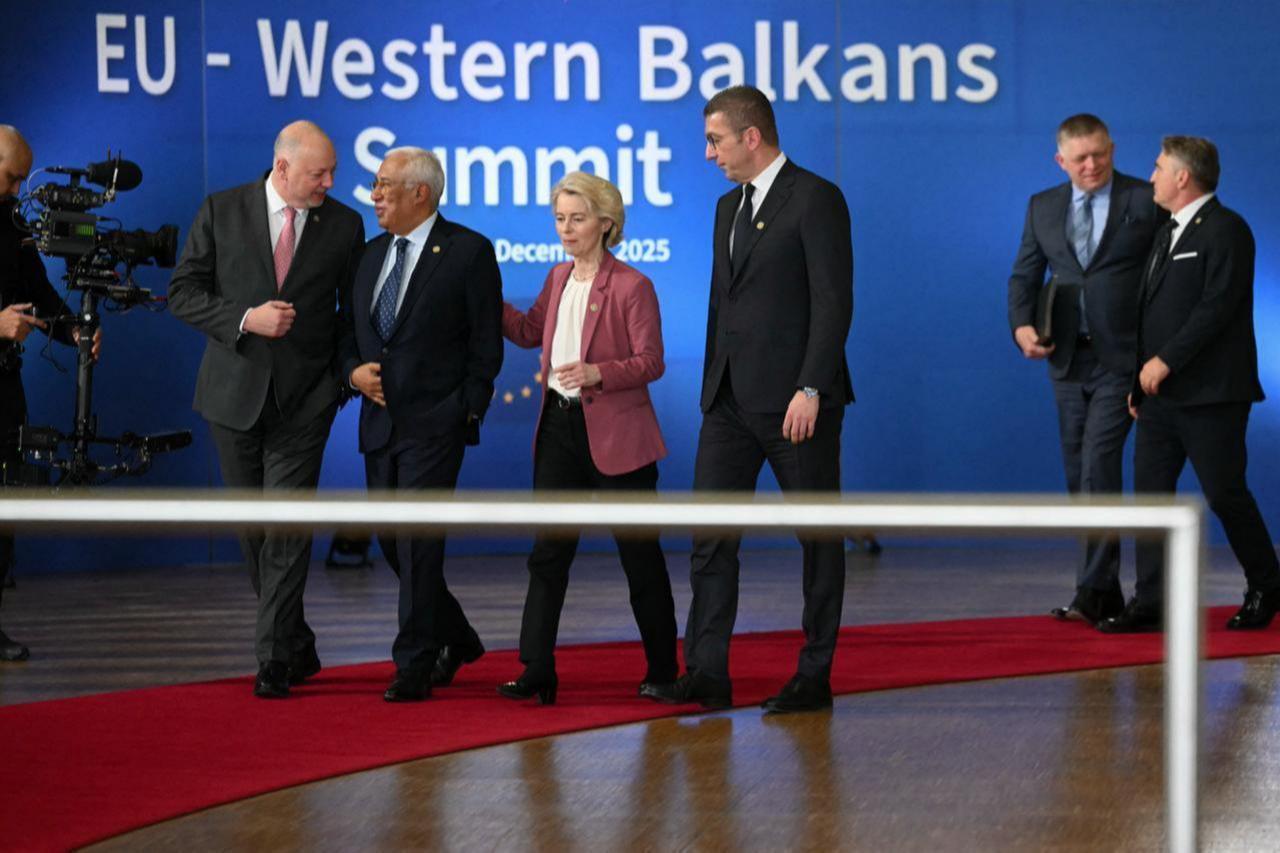
Some Balkan analysts noted that the EU’s absence from the document reflects not only American thinking, but also Europe's irrelevance. Brussels still speaks the language of accession and reform, but increasingly struggles to shape realities on the ground. Bosnia’s political paralysis, the slow collapse of enlargement credibility, and divisions inside the EU itself have all created a vacuum.
And vacuums in the Balkans never remain empty for long.
Russia continues to exploit ethnic polarization. China expands its influence through infrastructure and loans. Gulf states deepen economic footprints. And now the United States appears increasingly focused on strategic infrastructure and energy competition rather than democratic transformation.
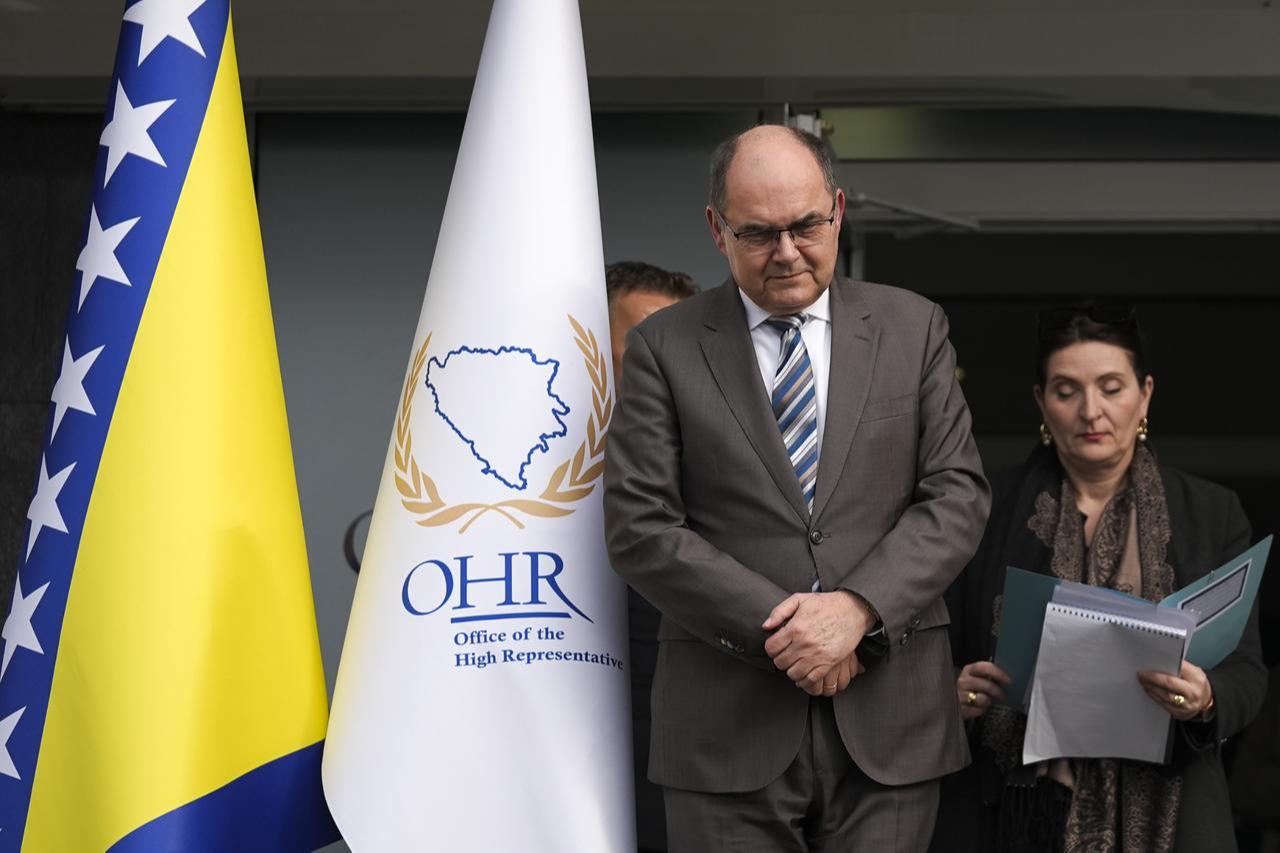
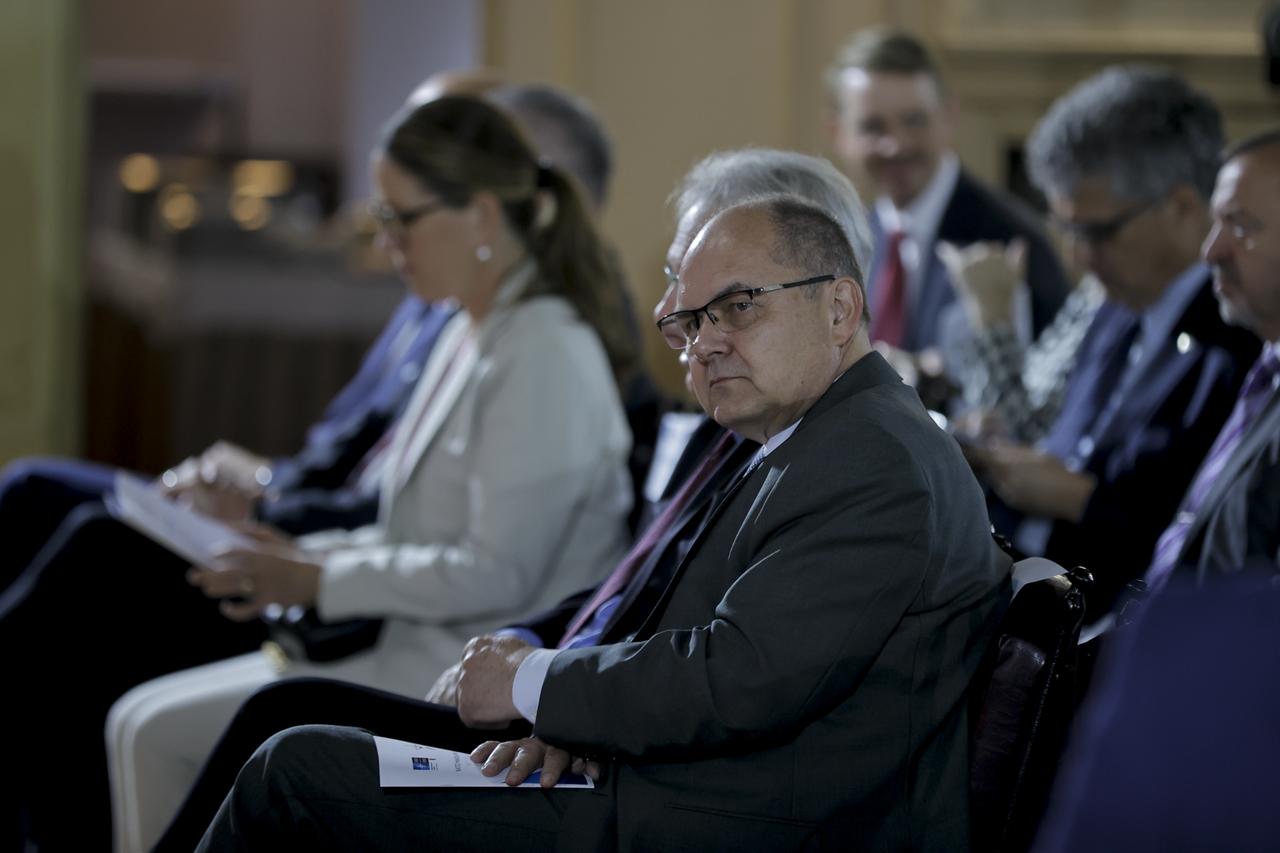
This broader geopolitical shift also explains why Christian Schmidt’s resignation as high representative feels larger than one man leaving office.
Schmidt became a symbol of the old international order in Bosnia: interventionist, heavily involved, deeply controversial, yet ultimately based on the idea that the West still had both the will and legitimacy to shape Bosnia’s political trajectory.
His departure arrives precisely when that assumption is collapsing.
Bosnia is entering a new phase where international actors may still defend the country’s borders, but are increasingly less willing to fundamentally reshape its political system.
And that may become the defining dilemma of Bosnia’s future.
Because preserving Bosnia territorially is not the same thing as making Bosnia politically functional.
The new American doctrine appears to say: prevent collapse, secure strategic interests, reduce Russian influence and maintain regional calm.
But Bosnia’s long-term crisis has never been only about preventing collapse.
It has always been about whether the international community still believes Bosnia can evolve into something more than a permanently managed crisis.


 Set as preferred source
 Set as preferred source


 1 min read

 1 min read