Newsletters




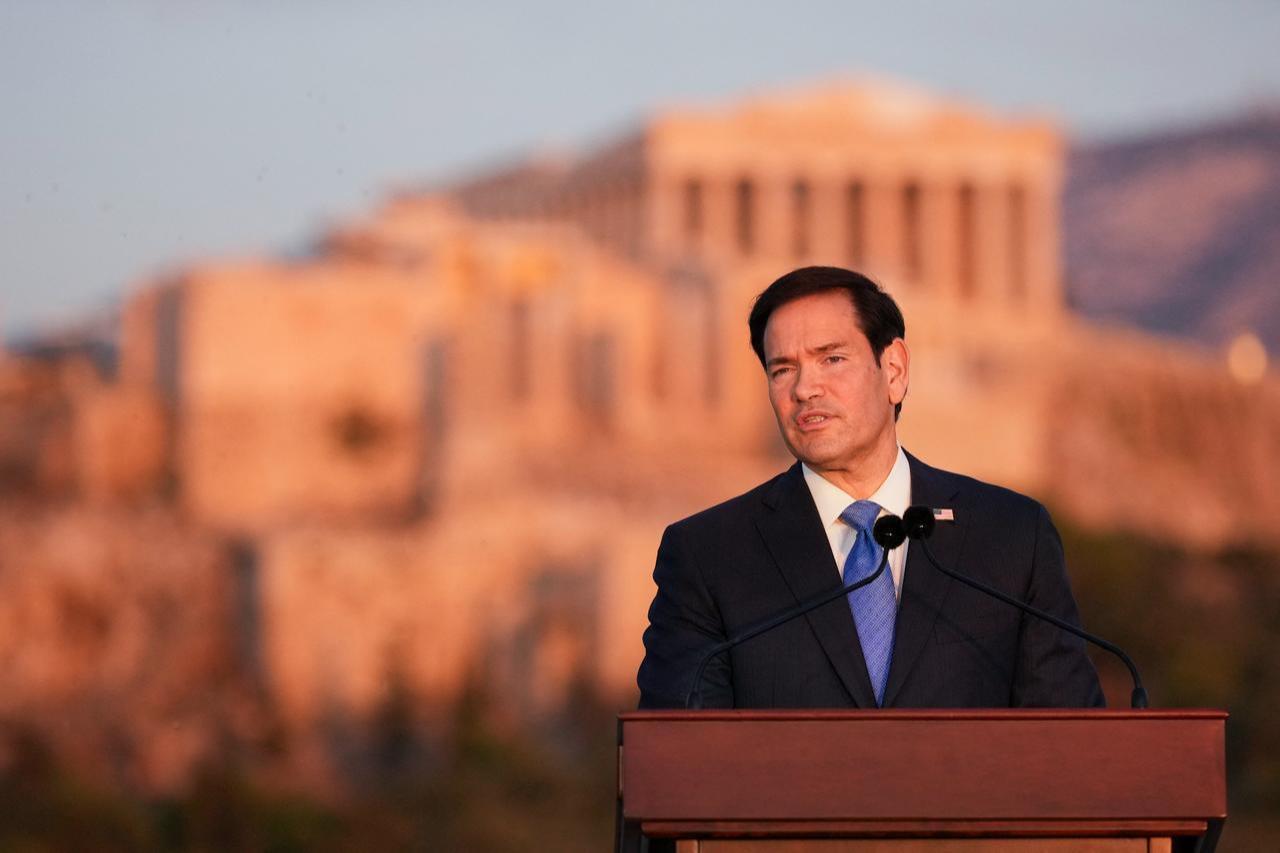
On the Acropolis, where democracy first learned to speak, U.S. Secretary of State Marco Rubio spoke on Oct. 7 of dominance instead, of chips, drones, and critical minerals as instruments of national power.
Somewhere between them, a quieter question took shape: who owns the sky?
Rubio’s speech was an unusually explicit statement of what he called America’s “unapologetic pursuit of national power."
Its significance went beyond Athens: it recast the Trump administration’s technology agenda as a civilizational project for the whole West.
Secretary Rubio called for the United States to dominate future technologies, including AI, drones, chips, critical minerals, and cyber capabilities.
He did not name any specific technology company in his speech. Instead, he cast American corporate capabilities as part of a national project, arguing that private innovation matters because it strengthens American power.

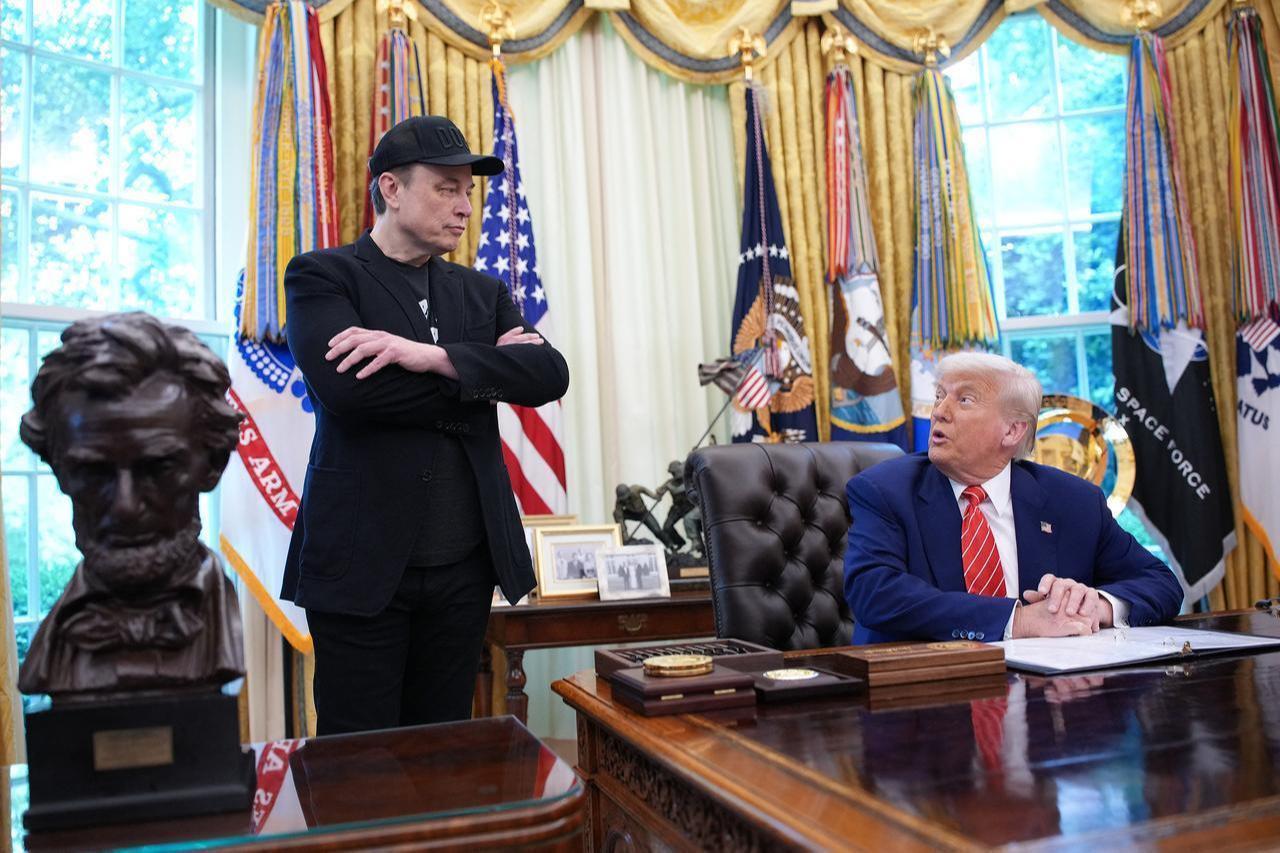
Immediately after the speech, Elon Musk, the prominent American tech entrepreneur and the world’s richest person, took to X to criticize India over delays in licensing his Starlink service.
Starlink, which provides direct satellite connections for internet, has been trying to enter India since 2021. It secured its operating license and space-regulator authorization in 2025 and signed distribution deals, yet it still cannot launch its commercial operations because final security clearance and spectrum assignment are pending.
That was the backdrop when Musk, who says he has spent "five years complying with every single law," accused Mukesh Ambani, India’s richest businessman, of lobbying to block Starlink.
The dispute over Starlink’s entry into India highlights the tension among American technology companies, U.S. national power and government, and the sovereignty of other middle powers.
Samir Saran, president of the Observer Research Foundation, one of India’s prominent think tanks, argues that India is actually welcoming Starlink, yet welcoming a capability does not mean waiving accountability and applying different rules to foreign and domestic companies.
The real question is when does a legitimate technological sovereignty become protectionism for domestic incumbents. The answer is not clear.
Tech backlash was popular in the U.S. in the early 2020s. Today, the Trump administration is embracing big tech, while emerging middle powers are pushing back.
A case in point is President Recep Tayyip Erdogan’s speech at the U.N. General Assembly two weeks ago. He warned that “techno-polarization” and “digital hegemony” would benefit neither the U.N.-centered system nor the states that constitute it.
In Istanbul the following month, he sharpened the language, warning against “techno-oligarchs” seeking to shape the future according to their own interests, including “commodifying the sky and even space.”
Both Türkiye and India have conservative governments. Like Rubio, they are skeptical of a global order that constrains national choices. Yet they differ from the American administration in their positions in the technology contest.
Rubio presents American technological dominance as an expression of national power. Middle powers, by contrast, warn that digital hegemony should not weaken nation-states' regulatory authority.
The nationalist stance produces very different technology policies depending on whether a country controls the platforms or depends on foreign corporations for the services and goods.
Silicon Valley has historically been a cradle of liberal thinking and a pioneer of frontier technologies. Recently, the former has changed and evolved into something new.
The leading technology investors and founders are increasingly willing to use political power to advance their interests both at home and abroad: looser regulations, public funding for AI and defense technologies, and renewed opportunities for acquisitions. They leverage liberal ideas, but with an amalgamation of national conservatism.
The new Silicon Valley thinking is best observed in the book entitled “Technology Republic,” authored by Peter Karp, founder of Palantir, Valley’s primary defense technology company.
Rubio's speech also parallels this line of thought, arguing that private companies are now indispensable to the American government because they originated within the U.S.
For middle powers like Türkiye, the challenge lies in balancing the presence of foreign technology companies at home with the parallel development of national capacity.
The rising motto of “ domestic and national technology” under President Erdogan fits a wider trend in which the state and domestic technology companies join forces around security and strategic capacity.
However, producing everything at home is neither technically nor economically feasible. A middle power like Türkiye needs capabilities that serve national priorities, connections to larger markets and technology ecosystems, and credible alternatives when a supplier, platform, or geopolitical relationship becomes unreliable.
This requires middle powers to carefully balance their national interests against those of private technology companies and foreign governments—primarily the U.S. government in the technology sphere.
This endeavor also calls for a new kind of diplomacy, combining traditional state-to-state relations with alliances involving non-state actors and diaspora networks, grounded in an understanding of global technology dependencies.
Technology sovereignty is more of a diplomatic issue than a regulatory one.
For middle powers, technological sovereignty ultimately means having credible options when they are needed.


 Set as preferred source
 Set as preferred source


 1 min read

 1 min read