Newsletters




What does a warrior who crossed the sea to destroy an Anatolian city have to do with American foreign policy in 2026?
Quite a lot, apparently.
Standing before the ancient ruins of Athens, U.S. Secretary of State Marco Rubio reached back three millennia to invoke Achilles, the most feared warrior of the Trojan War, as an emblem of Western civilization. But there was one rather inconvenient detail in this celebration of heroism: Achilles was not defending his homeland. He was invading someone else's.
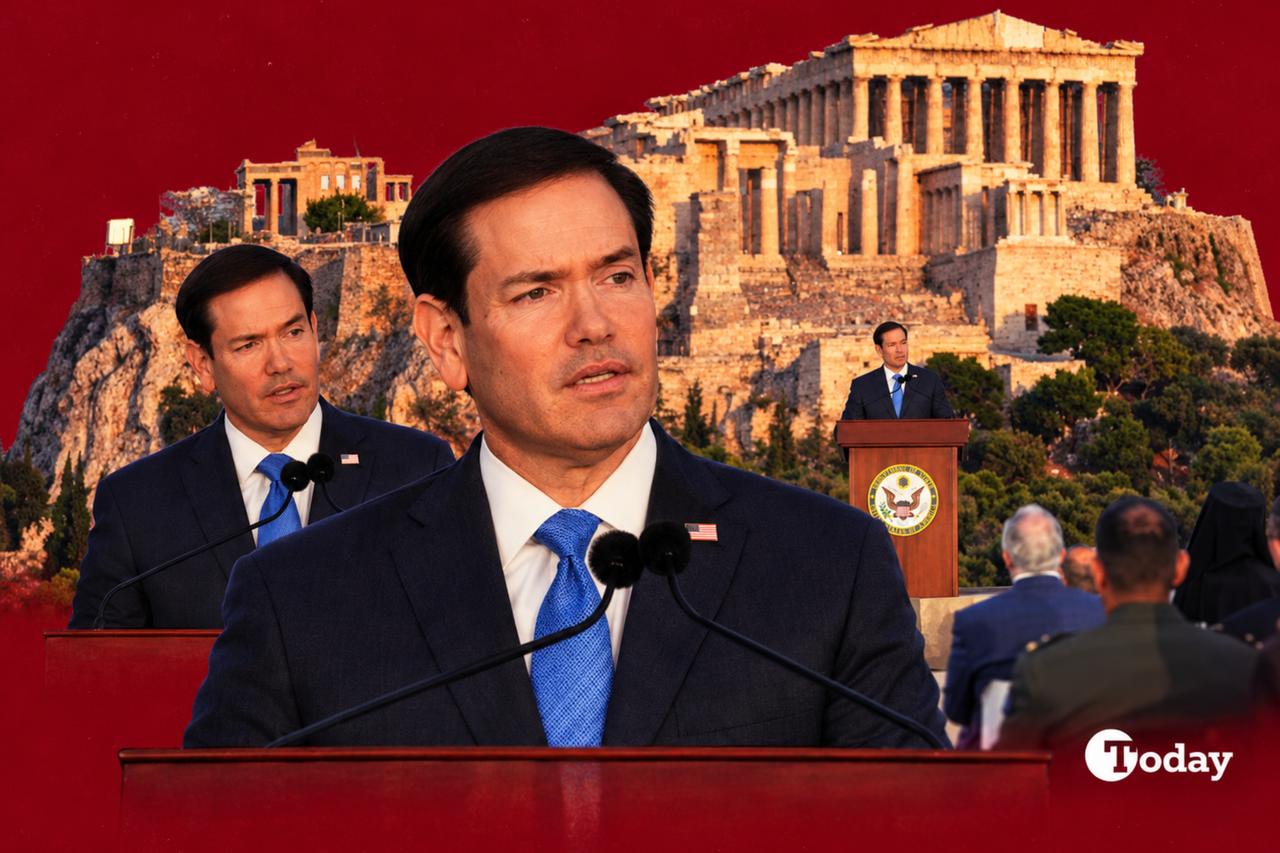
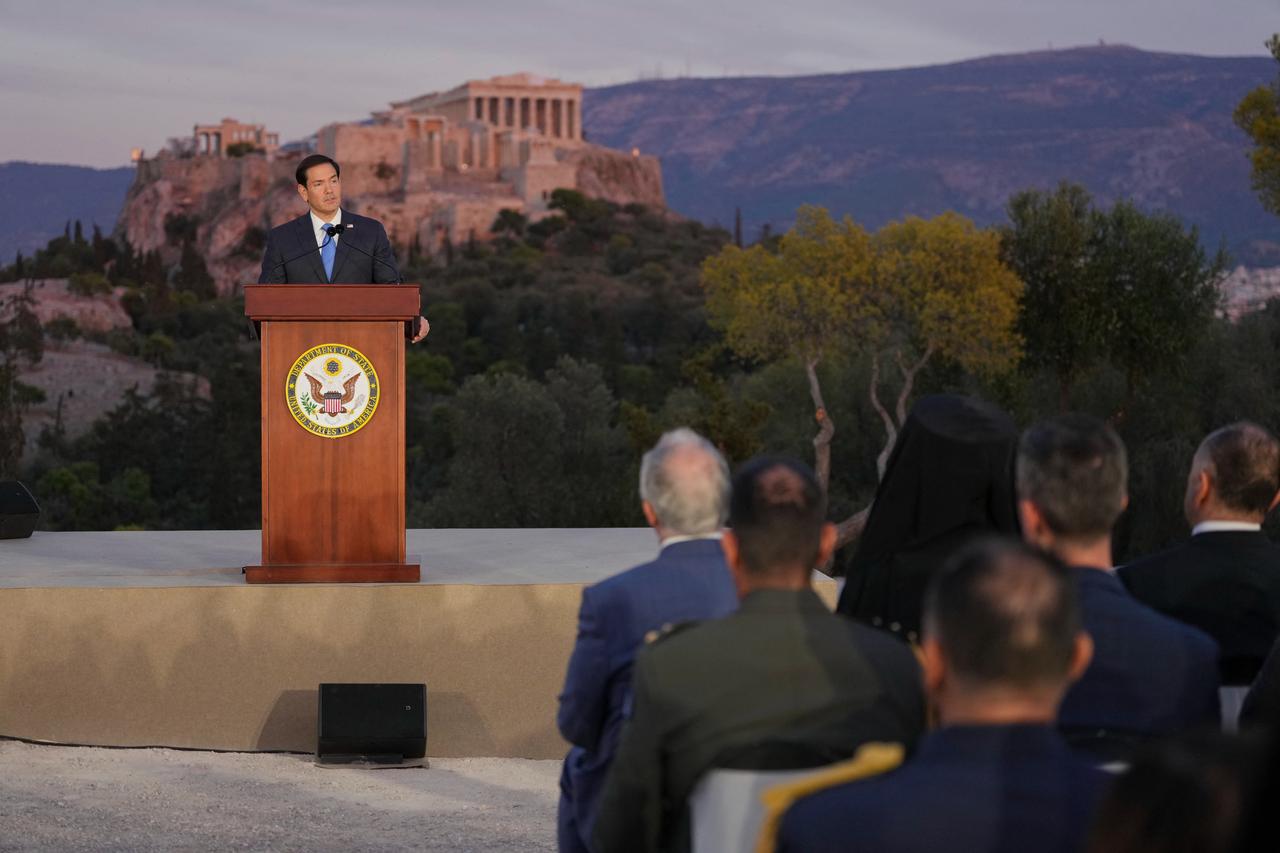
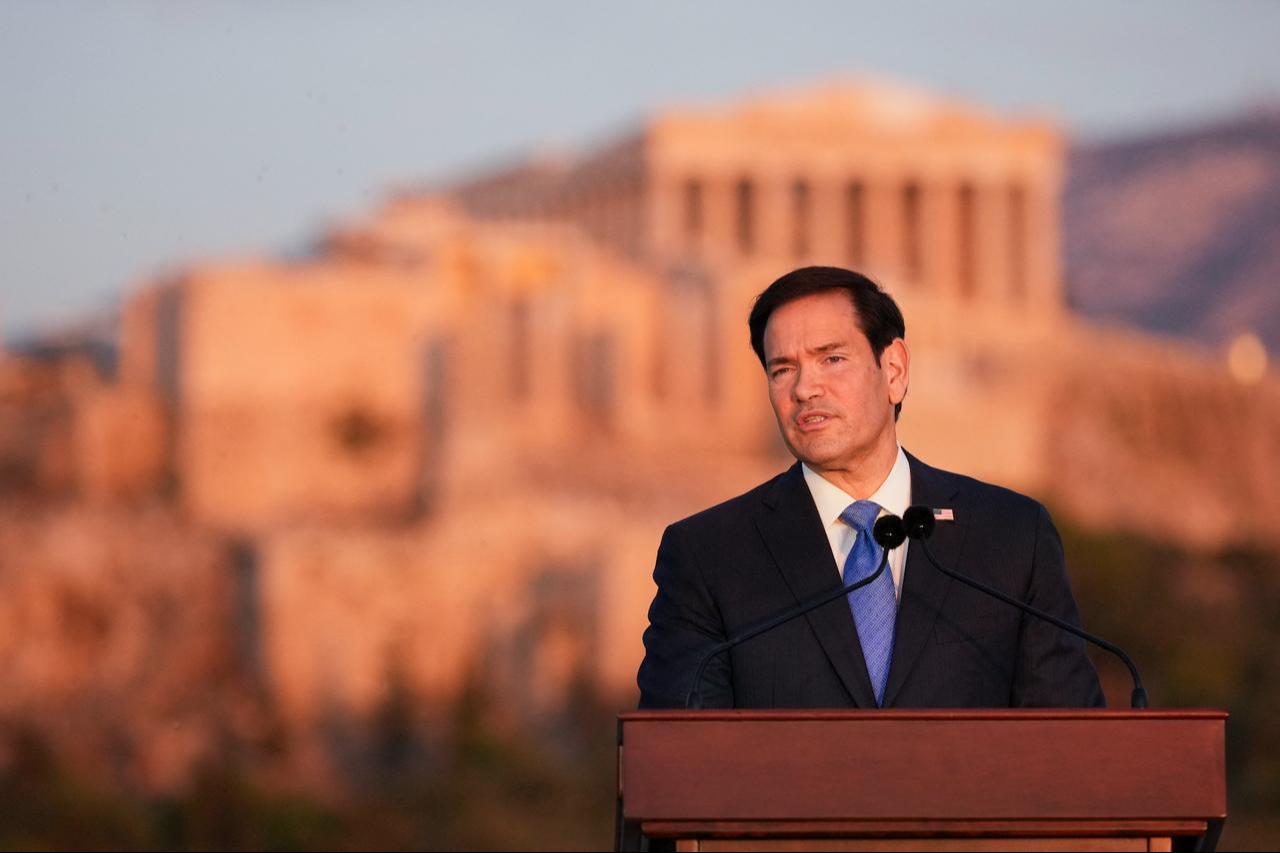
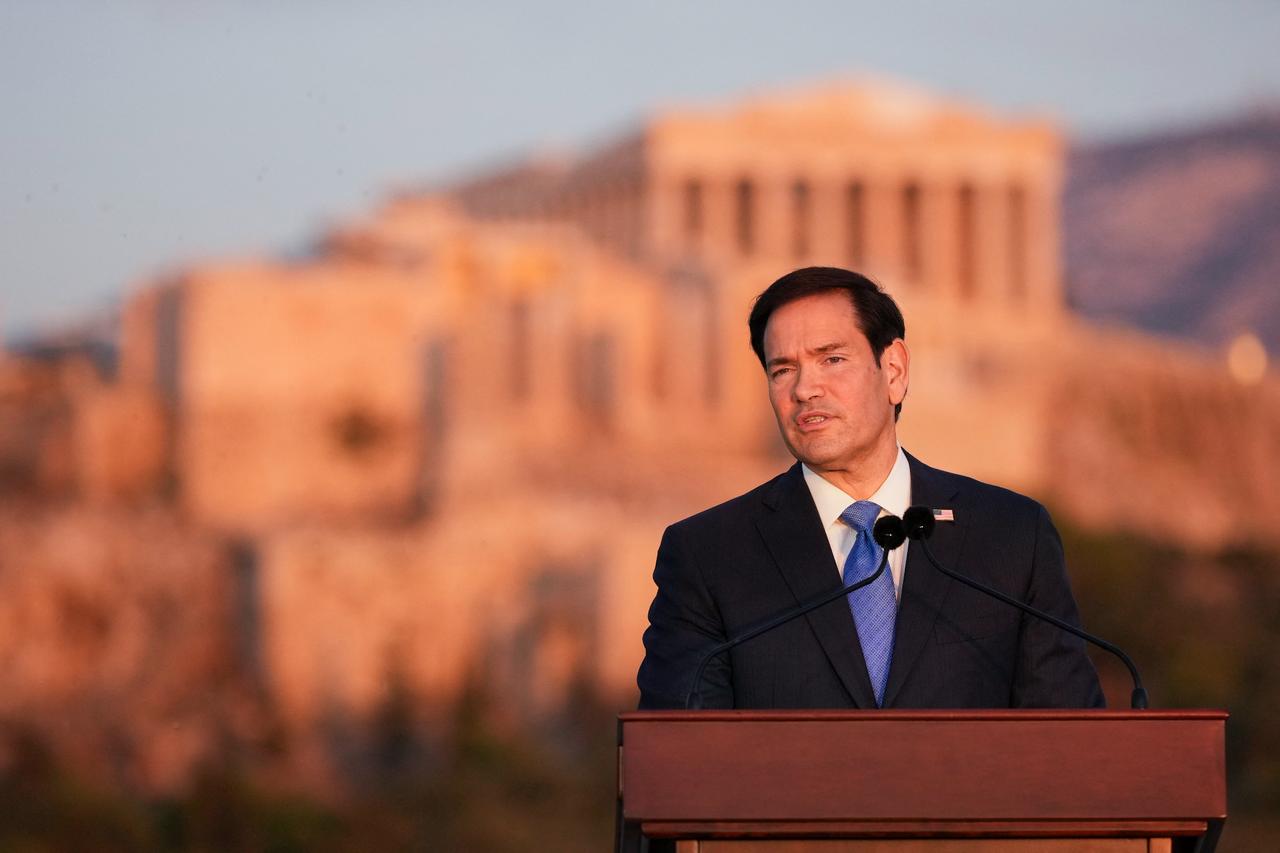
On Oct. 7, Rubio stepped up to the podium with the 2,500-year-old columns of the Acropolis in Athens behind him. His speech, announced under the title "In Defense of Western Civilization," was far more than an ordinary diplomatic engagement. It was an attempt to construct an uninterrupted, seamless, almost sacred genealogy stretching from the Parthenon to the neoclassical monuments of Washington.
Speaking in the shadow of marble ruins, Rubio turned the ancient setting behind him into a platform for geopolitical legitimacy.
He began with the resistance of the Athenians who defended the Acropolis at the cost of their lives against the armies of the Persian ruler Xerxes in 480 B.C. From there, he moved to the sacrifice of the 300 Spartans who refused to surrender at Thermopylae and marched toward certain death, to Socrates drinking hemlock in the name of truth, and to the philosophical foundations laid down by Plato and Aristotle.
He even recalled that democracy, the idea of the republic, modern science, and the very name of Philadelphia, the city where the U.S. Constitution was born, had sprung from these ancient lands.
In Rubio's telling, the West slid into an age of decline and a "guilt complex" because it had forgotten this inheritance: competitive ambition, determination to defend its borders, its military strength, and the unrestrained passion for struggle that the ancient Greeks called thumos. Salvation, he suggested, lay in returning to these roots and once again asserting superiority and power.
Yet Rubio's captivating, sculptural, seemingly flawless narrative begins to crack under the weight of the very historical and mythological references he invokes.
The figures he brings together under the banner of the "noblest virtues of Western character" actually contradict one another, represent fundamentally different worlds, and have opened some of the bloodiest divisions in history.
It is here that another figure Rubio praises as an emblem of heroism enters the picture: Achilles, son of Peleus. And with him comes the devastating emotion expressed in the very first word of Western literature: menin, or rage.
Homer's "Iliad" does not open with a proclamation of justice, virtue, or the defense of one's homeland. Instead, it begins with a single word: menis. It is the terrible, almost divine rage of Achilles, son of Peleus, which, in the poet's words, brought countless sufferings upon the Achaeans.

The first and most profound contradiction in Rubio's speech emerges precisely here. On one side stands his moving tribute to the desperate but righteous Athenians who defended their sacred hill against the Persian invasion in 480 B.C., rolling stones down the cliffs to prevent their temples from being burned.
Yet only a few paragraphs later, without the slightest moral hesitation, Rubio places Achilles, who joined the Achaeans in sailing across the sea to besiege the Anatolian city of Troy, within the same pantheon of "Western nobility."
In the Trojan expedition, which Herodotus regarded as the first spark of the age-old hostility between East and West, Achilles was no hero defending his homeland. He was an invader who set out to destroy a foreign city in pursuit of personal glory, immortal fame (kleos), and the spoils of war.
The moral standard shifts unmistakably. On one side is the Athenian who dies defending his land and temple; on the other is the Achaean warrior who burns and destroys someone else's land and sanctuary.
For Rubio, both are justified under the same banner of "civilization," because what ultimately matters in his worldview is neither justice nor the defense of one's homeland, but an unchecked appetite for conquest and the determination to subjugate others.
This moral double standard also lays bare the selective nature of Rubio's historical memory.
A perspective that can still feel the smoke rising from the wooden temples burned by the Persians on the Acropolis 25 centuries ago somehow fails to remember how Alexander the Great reduced Persepolis, with its libraries and palaces, to ashes during his eastern campaign.
The same historical consciousness that approaches the broken columns of the Acropolis with almost sacred reverence turns a blind eye to the looting of thousands of years of Mesopotamian heritage from Baghdad's National Museum during the American invasion of Iraq in 2003.
It leaves out any reckoning with civilization over the devastation of Gaza, where smart bombs have reduced the city, its mosques, and ancient harbors to rubble, or over the ancient heritage sites struck in Iran in recent history.
Moreover, this selective blindness is hardly confined to Mesopotamia or the Eastern Mediterranean. The European continent, which Rubio portrays as an uninterrupted succession of virtues, is carefully shielded from confronting the very monsters it created.
Where, along the supposedly seamless line stretching from the luminous columns of the Parthenon to the Renaissance and onward to modern Western democracies, should we place the industrialized death camps built in the heart of Europe in the mid-20th century, in Germany, a country celebrated as a cradle of philosophy and music?
Which ancient Greek virtue can explain the totalitarian madness that devastated the continent, or how the "rational order" Rubio glorifies could be transformed into the most meticulously organized machinery of extermination in history?
And where, within the ancient virtue of moderation, sophrosyne, does the American decision to unleash humanity's first nuclear inferno over Hiroshima and Nagasaki belong, turning hundreds of thousands of innocent people into shadows in an instant?
The drive for expansion that Rubio aestheticizes under the banner of a "desire for discovery and progress" has, without question, meant little more than bloodshed, exploitation, and indelible trauma for much of the rest of the world.
The footprint of European civilization upon those it considered "others" was not written in the white marble of the Parthenon, but in the severed hands of millions of Africans who failed to meet rubber quotas in the Congo and in the mass graves left behind by the Belgium of Leopold II.
The systematic torture left behind by French colonialism in Algeria, Madagascar, and Indochina, along with the skulls of indigenous warriors who were beheaded and carried off to Parisian museums as trophies, reveal the dark, brutal, and possessive face of what Rubio describes as an "appetite to know and understand the world."
This is precisely why the urgency running through Rubio's speech feels so familiar.
He resembles the cunning Odysseus in the "Iliad," who stood in the path of exhausted Achaean soldiers as they rushed desperately toward their ships, sickened by the senselessness and destruction of war and eager to return home.
Just as Odysseus swung his staff before the fleeing soldiers and forced them back into battle through intimidation, threats, and promises of a "great victory," Rubio now stands before a weary West, one that is gradually descending from its global throne, urging it to rearm, mobilize once again, and embrace the arrogance of conquest anew.
Yet what the West needs today is not more weapons, more menis, more rage, or more arrogance. It needs the ability to confront honestly the continents it colonized, the ancient cities it reduced to ruins, and the wreckage of the past it created with its own hands.
In fact, Rubio's perspective is hardly unique.
In 1915, a British battleship that sought to pass through the Dardanelles and occupy Istanbul bore the name of Agamemnon, commander-in-chief of the Achaean army. In 2026, the figure summoned from the Achaean ranks to lend his strength was Achilles.
And it is precisely here that we must ask the most important question: If Rubio identifies himself, and the West standing behind him, with Achilles, then who are the Trojans in this equation? Whom is Rubio placing in the crosshairs behind the walls of Troy?
Whether you accept it or not, we are those Trojans.
Just as Sultan Mehmed the Conqueror and Mustafa Kemal Ataturk declared, we are those Trojans! We are the ancient people of these lands, who have defended their walls, their culture, and their dignity for thousands of years.
This is precisely the truth that Rubio and the worldview he represents are incapable of understanding: True civilization does not mean weaving marble-clad fantasies upon the ruins of others or calling upon ancient killers for help. It means having the courage to confront the wreckage of the past honestly.
What the West needs today is not more weapons, more rage, or more arrogance. Even if eyes blinded by menis cannot see it, the scales of history measure not the arrogance of the conqueror, but the virtue of those who defend their land and their dignity.


 Set as preferred source
 Set as preferred source


 2 min read
 1 min read