Newsletters


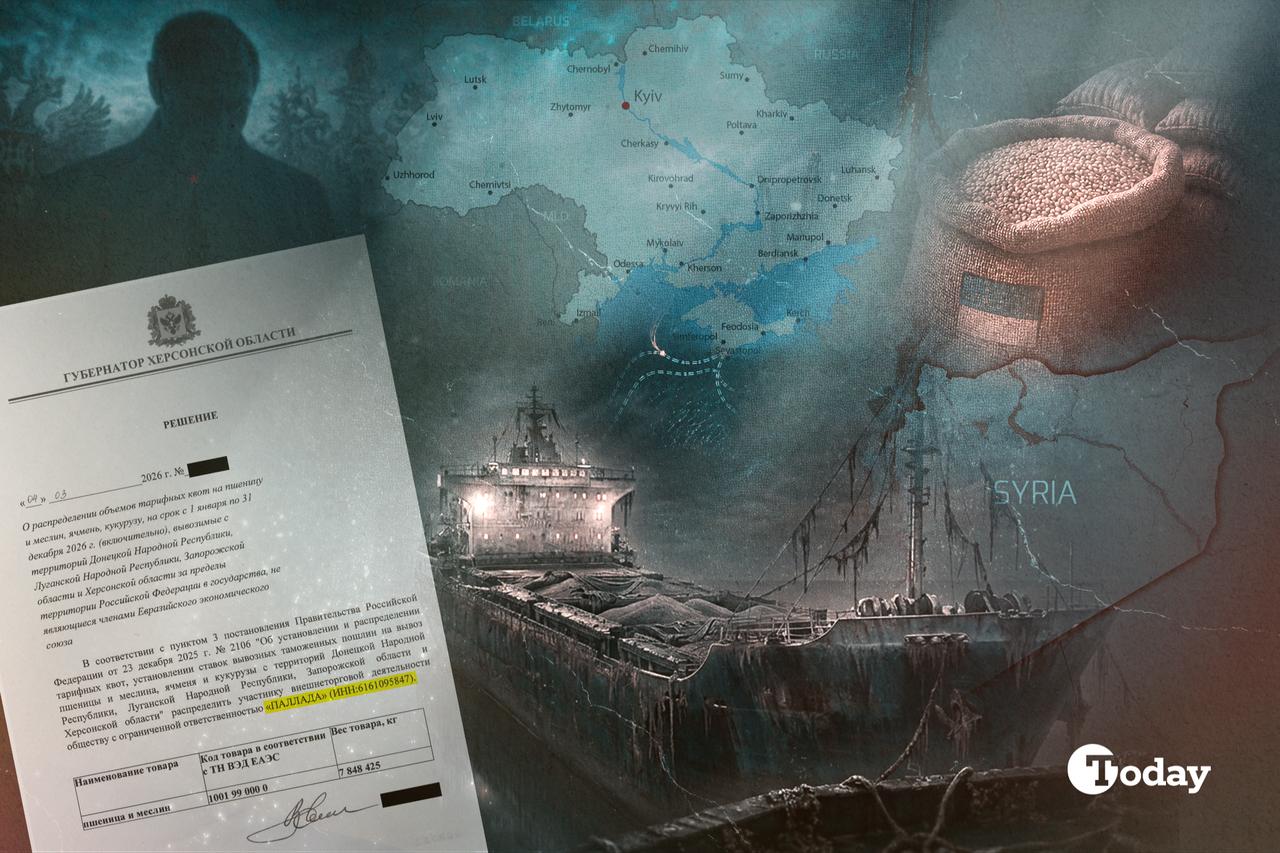


The collapse of the Assad regime and restoration of diplomatic ties between Kyiv and Damascus failed to deter Russian ghost fleets from smuggling tens of millions of dollars' worth of Ukrainian grain into Syrian ports.
A "ghost fleet" of Russian vessels is bypassing international scrutiny by disabling navigation signals and forging documents of origin, funneling profits directly into Moscow's war efforts.
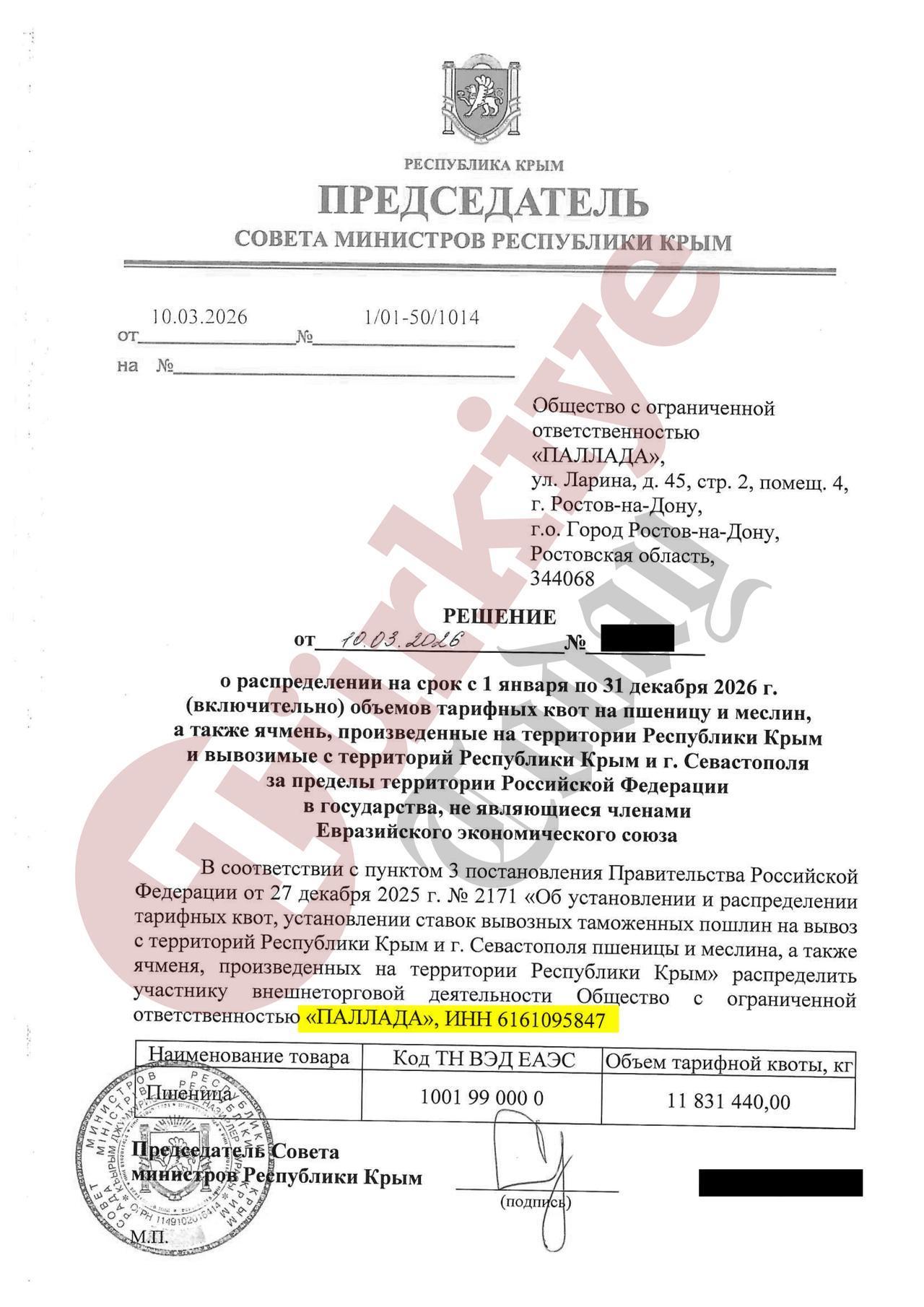
While the smuggling of Crimean grain remains an "open secret" publicly denied by Russia, new documents obtained by Türkiye Today reveal that Moscow now officially permits private companies to trade this grain on international markets.
The illegal grain trade—temporarily halted when Syria's new government took power in late 2024—has resumed at volumes mirroring those seen under Bashar al-Assad.
One of the central players of the grain trade from Ukrainian territories under Russian occupation is Pallada LLC.
Official Russian decrees obtained exclusively reveal that occupation authorities have granted Pallada massive grain export quotas for 2026, pulling directly from occupied Ukrainian territories.
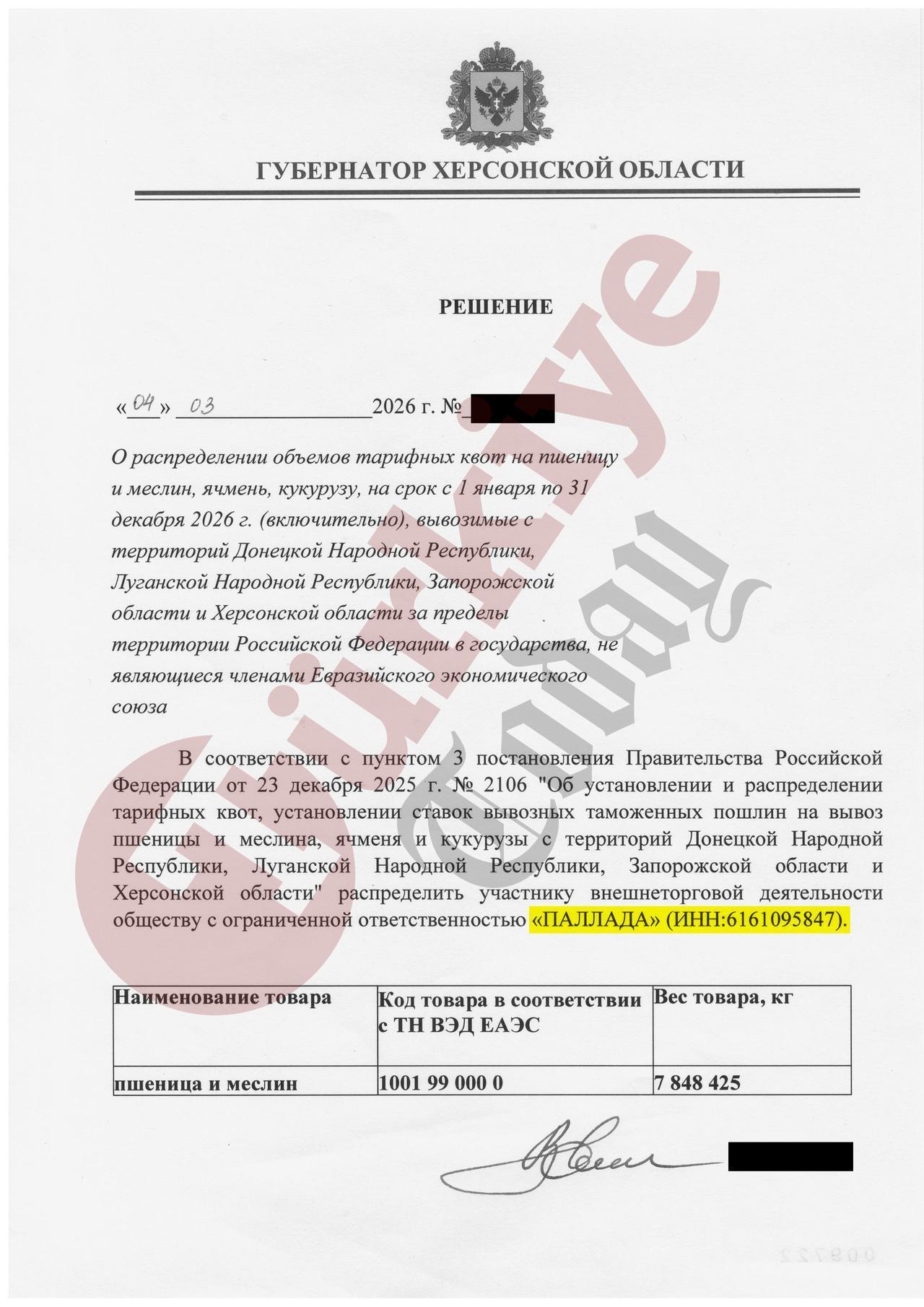

Official documents reveal that local occupational authorities granted Pallada extensive export quotas for wheat and meslin, allocating approximately 13,820 tons from the Zaporizhzhia Oblast, 11,831 tons from the Crimea, and an additional 7,848 tons from the Kherson Oblast.
The Russian company is notorious for trafficking Ukrainian grain to Syria and several other international markets.
These documents confirm that Moscow is heavily relying on the private sector to systematize the exportation of Ukrainian agricultural resources.
Kyiv-based Ukrainian source, speaking anonymously, noted that taxes paid by firms like Pallada flow directly into Russia’s budget to fund its ongoing military operations.
The maritime logistics of this operation rely on deliberate obfuscation. To circumvent international law, Russian vessels routinely disable their automatic identification systems (AIS) and present fake bills of lading.
"They turn off their navigation, and they establish fake documents of origin," a source stated, adding that this tactic makes it incredibly difficult for neighboring countries, including Türkiye, to intercept the shipments. While Ankara has repeatedly expressed a readiness to act against such smuggling, the lack of definitive, traceable proof often ties its hands.
Syria remains the largest market for stolen Ukrainian grain, as Russian vessels face a dwindling list of buyers due to tightening Western sanctions. However, a separate investigation by the Israel-based newspaper Haaretz revealed that Russian ghost fleets are now offloading grain in Israel. According to the report, four shipments of stolen Ukrainian grain have already been unloaded at Israeli ports in 2026.
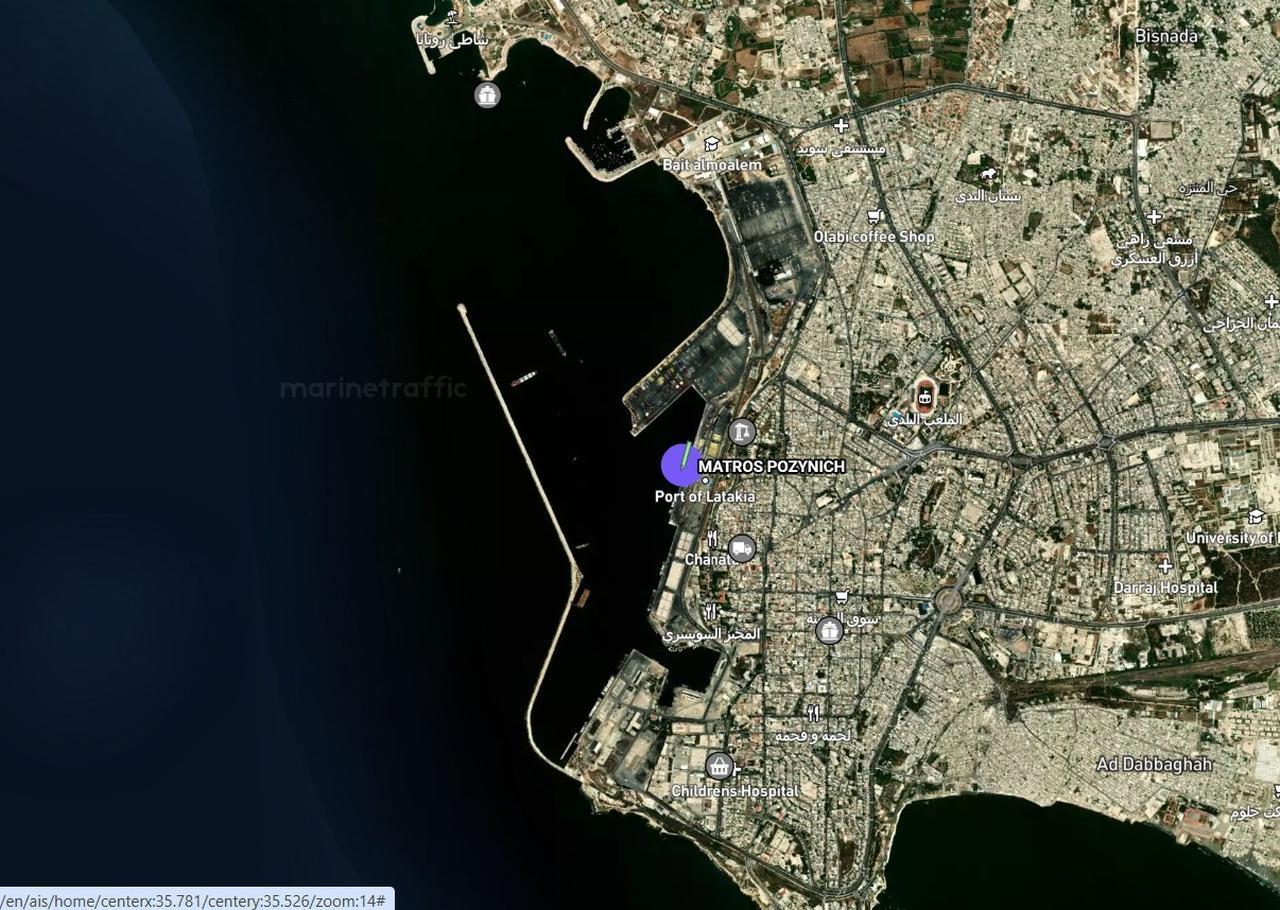
A Ukrainian researcher tracking maritime traffic confirmed that the Syrian ports of Tartus and Latakia remain the primary destinations for the stolen grain. In one recent incident, the Russian bulk carrier Matros Pozynich loaded 27,500 tons of wheat in occupied Sevastopol between March 26 and April 4, 2026. The vessel arrived in Syria and entered the port for unloading on April 24. At current market prices of $225–$250 per ton, that single shipment is valued at approximately $7 million.
Interestingly, the economic dynamics of the trade have shifted.
Under the Assad regime, Russia sold wheat to Syria at vastly inflated prices—up to $375 per ton.
Today, the stolen grain is being sold at roughly average market rates, or at a slight discount, reflecting Russia's limited ability to find willing buyers. While the vast majority of the illegal shipments end up in Syria, tracking data suggests vessels occasionally reach Egypt, Israel, and Libya.
The resumption of this smuggling route comes at a highly sensitive time for Ukraine-Syria relations, which have been steadily rebuilding since the fall of the Assad regime.
The initial post-war contact was established on Dec. 30, 2024, when Ukrainian Foreign Minister Andrii Sybiha traveled to Damascus to meet with Syria's new leader, Ahmad al-Sharaa.
The state of the relations remains positive, and both countries hope to cooperate on trade and the defense industry. Türkiye Today's columnist Omer Ozkizilcik wrote on April 6, ''Syria could produce Ukrainian anti-drone systems en masse and deliver them to regional states, particularly the Gulf countries.''
In 2025, an alternative, legal route was established through the U.N.'s World Food Programme (WFP) and the “Grain from Ukraine” initiative.
Ukrainian grain was shipped to Turkish ports, processed into flour, and transported to the Syrian border to provide humanitarian relief. This initiative is currently active, and it is known that Ukrainian flour has been delivered to Syria through the new food delivery infrastructure.
For many Ukrainians who initially celebrated the fall of Assad, the new Syrian government's willingness to quietly accept stolen Russian grain is a bitter pill.
"I remember how we rejoiced at the change of power in Syria, hoping for change and the restoration of the country," said a Ukrainian journalist. "And now we feel a bit disappointed, but we can change things."


 Set as preferred source
 Set as preferred source


 3 min read