

 Newsletters


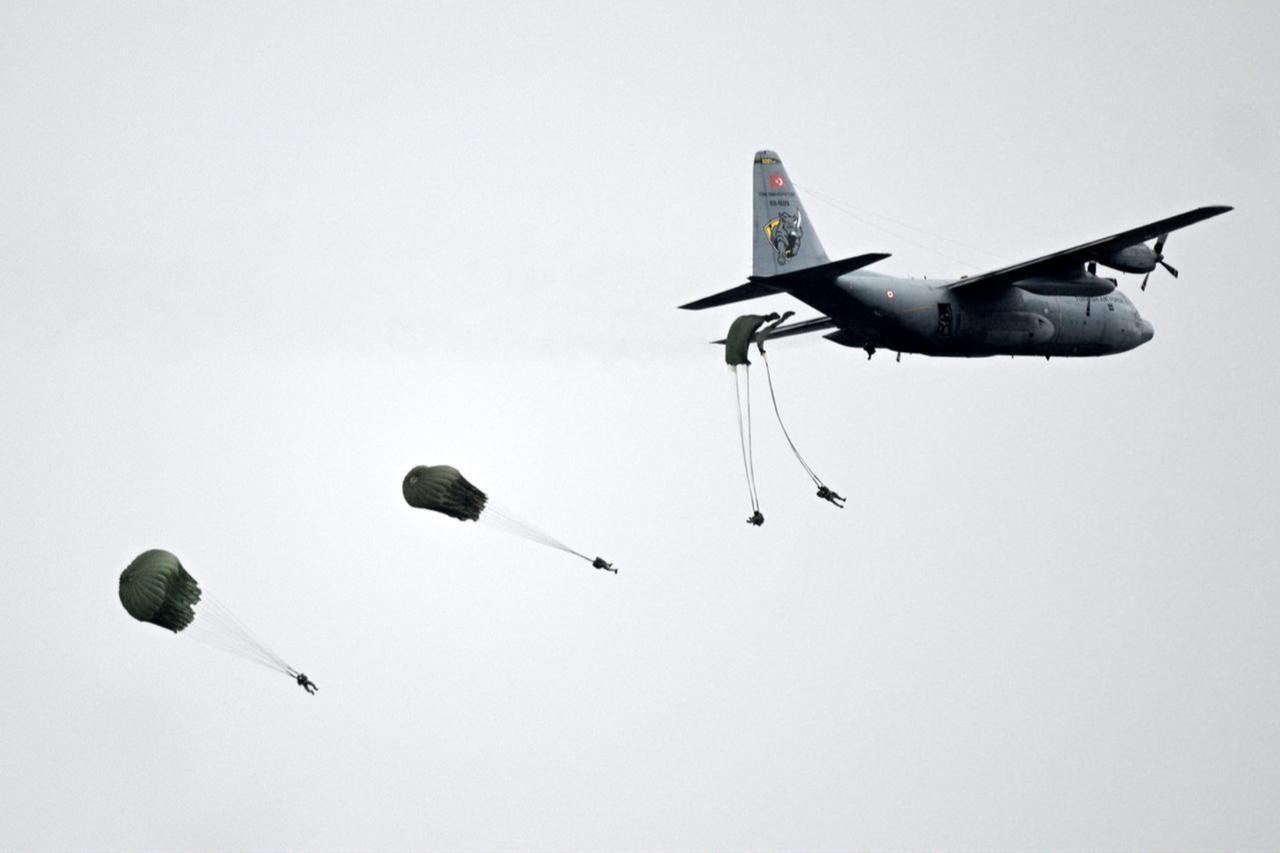


In 2005, I was at the lobby of a five-star hotel in Konya. It was filled with Israeli air force officers enjoying their beers. When I asked around, I learned they were practicing long-distance flights in Konya, Türkiye’s largest plain. Even then, bilateral relations were far from perfect, but a conflict scenario was entirely unimaginable.
Recently, Israeli politicians have adopted a discourse that makes that era feel like a very distant memory. Politicians and experts are now actively articulating scenarios of a confrontation between Israel and Türkiye.
So, will Israel and Türkiye go to war in the next decade? This is not a likely scenario, but it is a useful question to test whether the architecture that once made such a war nearly unthinkable still holds.
The relationship between Türkiye and Israel moved from close cooperation in the security sphere to strategic suspicion because the political and economic dynamics around them have changed: Israeli domestic politics, the collapse of the Palestinian process, America’s new right, Europe’s anti-migration politics, geopolitical shifts in the Middle East, and uncertainty over NATO’s future.
Social media has become exceedingly central to political discourse, such that polarization is no longer solely an internal concern but also a significant factor that shapes political discourse in international relations. Political power, more or less everywhere, increasingly rests on defining oneself against the other. In this environment, a negative framing of the other as an enemy is more practical in political terms than a positive self-definition.
Twenty years ago, Israel’s public diplomacy relied on the image of a liberal, technologically advanced “Startup Nation.” Instead of funding social media trolls, Israel used to fund photo shoots of female soldiers at the IDF for the Western gentleman’s magazines. Those days are now over.
Public diplomacy is no longer only about national branding; it is now about framing the narrative of warfare through a discourse of polarization. This narrative addresses dichotomies: identifying those portrayed as modern, those depicted as dangerous, those affiliated with the Western security institution, and those marginalized outside of it.
Israel’s 2026 budget reportedly allocates roughly $730 million to public diplomacy—a shift from branding to narrative warfare. The foreign minister, Gideon Saar, says social media is a weapon as important as the Iron Dome against enemy missiles.
In Europe, the political environment is already moving in a direction where anti-immigration and anti-Islam narratives travel easily. In the United States, the language of “political Islam” can still be mobilized quickly. Türkiye sits uncomfortably at the intersection of both narratives.
Low-probability scenarios are useful because they reveal how this architecture can be challenged by shifting political and economic dynamics. So let us consider one:
Let’s assume that in early July this year, President Trump makes an impulsive decision not to travel to Ankara for the NATO Summit. The summit ends with disappointment. European countries accelerate their efforts to institutionalize the EU security structure. Given the opposition by France and Greece, Türkiye is kept out of the European security alliance.
With his term ending in 2028, President Trump secures his legacy with a unilateral withdrawal from NATO. Simultaneously, escalating Iranian attacks push the Gulf States to their breaking point, souring relations with Washington over the high costs of the prolonged conflict. As American forces move out of the Gulf, the U.S. chooses a secure and trusted ally, Israel, as the new hub for its forces in the Middle East.
In the meantime, Netanyahu and his right-wing coalition secure victory in Israel’s October 2026 elections. With Hamas, Hezbollah and Iran perceived as degraded threats, a political doctrine rooted in permanent security mobilization inevitably seeks a new "other." Depending on Ankara's response, the pace of political polarization may undermine the mechanisms established between Türkiye and Israel since the post-1948 period.
 1 min read

Over the past two decades, the divergence between Israel and Türkiye has often been attributed to leadership, ideological differences, and the situation in Gaza. Nonetheless, a more profound and structural shift has taken place: Israel’s security doctrine has become increasingly preventive and militarized; American politics have grown less predictable; and Europe has exhibited heightened concern regarding migration and Islam.
While this scenario relies on multiple "ifs," crossing each threshold dismantles critical safeguards and accelerates the path toward escalation.
The point is to understand what currently prevents a war, and to examine the underlying dynamics that undermine these deterrents. This progression illustrates how rapidly an architecture built over decades can be eroded by domestic polarization and narrative warfare.


 Set as preferred source
 Set as preferred source


 1 min read



