Newsletters




There’s a wave of instant karma engulfing America right now. Call it a frequency, a low, persistent hum of dread—that buzzes less like politics than pathology.
Not disagreement but disintegration.
The numbers, when you line them up, read like a diagnostic chart for a patient in systemic distress: 600,000 people sleeping rough tonight; 40% of adults one $400 mishap away from financial collapse; insulin priced like a luxury good, rationed like contraband; medical debt metastasizing into the leading cause of bankruptcy.
These are not anomalies. They are symptoms.
And yet the spectacle insists on itself. The theater of power—its pageantry, its vulgarity, its algorithmically amplified absurdities—demands attention even as the underlying structure buckles.
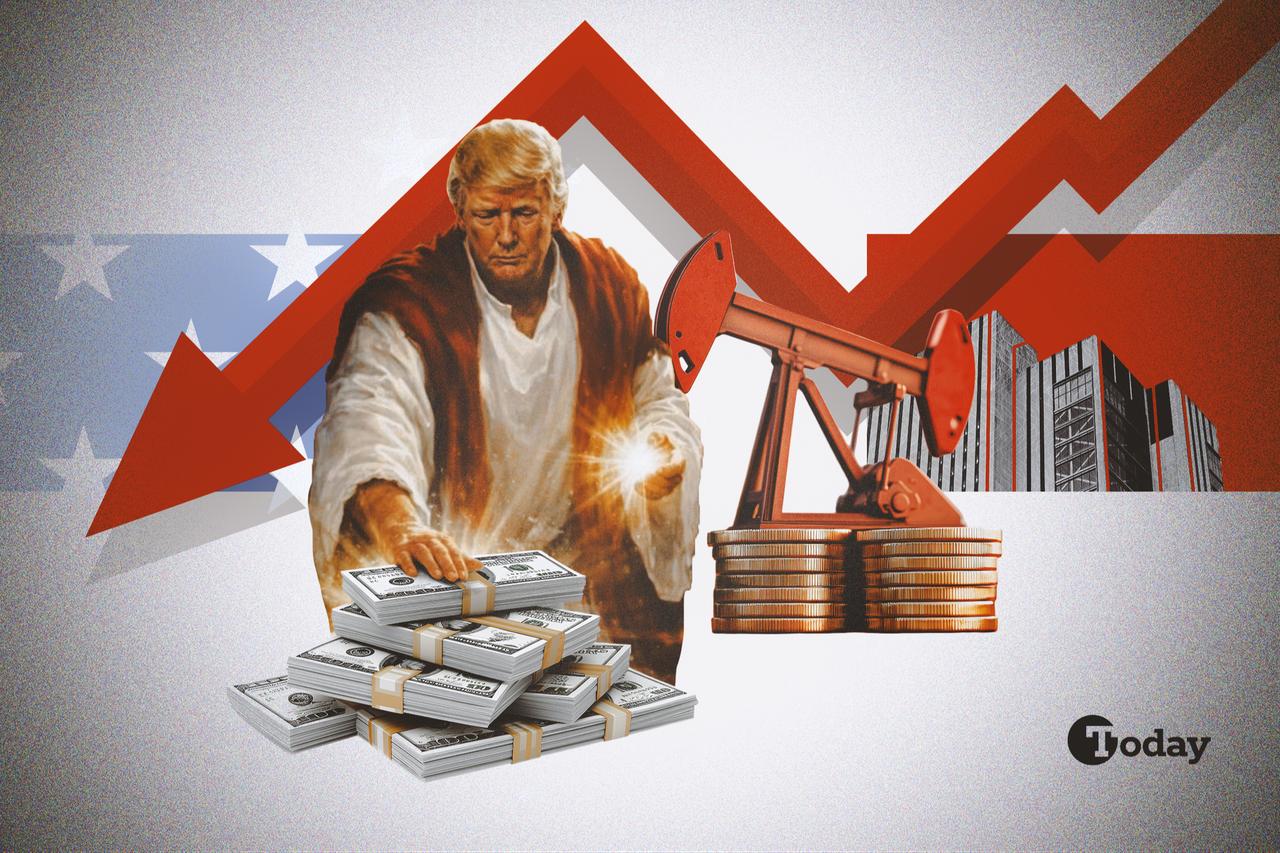
A president posts an AI-generated image of himself as Jesus Christ, and the culture, half-amused, half-horrified, dutifully reacts. But the real story is not the blasphemous kitsch of the image; it is the vacuum it fills. When governance becomes incoherent, symbolism grows grotesque.
Consider the peculiar religiosity on display. Donald Trump, a man who cannot name a favorite Bible verse, is selling $60 “God Bless the USA” Bibles bundled with founding documents, as if scripture were a commemorative plate set.
A convicted felon who admits he has never asked for forgiveness is now urging legislators to pass a voter ID bill “for Jesus.” This is not faith in any recognizable theological sense. This is branding. It’s religion as aesthetic, as a prop, and as an instrument of political affect.
Meanwhile, the material conditions tell a harsher truth. Life expectancy in America, that most basic measure of a society’s health, is moving backward, an almost unthinkable regression in a developed nation. Infant mortality rates are shamefully high.
Children rehearsing for slaughter between math and English lessons, the choreography of active shooter drills is now as routine as fire alarms are. A country awash in weapons, yet paralyzed when confronted with the consequences of their ubiquity.
Then there is the carceral paradox: the self-proclaimed “land of the free” incarcerating more of its own population than any other nation on earth. Two million people are behind bars, a staggering proportion of them not even convicted but detained pretrial because poverty, in this system, is indistinguishable from guilt. Freedom, it turns out, is contingent, means-tested, bail-secured, and selectively applied.
Economically, the contradictions deepen. A minimum wage frozen in time for 15 years, eroded by inflation into near-irrelevance. Teachers, the nominal stewards of the future, are working second jobs to survive. Veterans—those once valorized as embodiments of national sacrifice—sleeping under bridges.
And over it all, the lingering shadow of trillion-dollar wars, their costs socialized, their consequences privatized, their justifications long since evaporated.
It’s in this context that the rhetoric of national greatness begins to sound less like aspiration and more like incantation, a desperate repetition meant to ward off the encroaching evidence of decline.
When the president derides other countries as “poorly run,” the claim lands with a hollow echo. Comparisons, once the domain of academic debate, now feel almost accusatory.
Places with universal health care, free education, and low incarceration rates—societies where illness does not equate to financial ruin—stand as implicit rebukes.
Let’s forget Trump’s talk of invading Greenland and seizing Canada and instead take a trip to Riyadh, where the Saudis are pacing their marble floors like nervous bookies, whispering into every secure line they can find: “Call off the Hormuz chokehold, open the damn gate, get back to the table before this whole thing detonates.”
Because from where they’re sitting, Trump’s slamming the Strait of Hormuz shut like a bar at closing time looks less like strategy and more like an invitation for Iran to go medieval and torch every other artery of global shipping in sight.
The blockade itself is a blunt instrument, the kind you swing when subtlety has already fled the room. The idea is simple: squeeze Iran’s economy until it wheezes. But the Saudis aren’t buying the clean narrative. They’re warning—quietly, urgently—that Tehran could answer by strangling the Bab al-Mandeb, that narrow Red Sea throat where the kingdom’s last lifeline of oil slithers out to open water. Shut that down, and suddenly the desert pipelines turn from salvation into a trap.
This is the problem with trying to pry open Hormuz with a crowbar. The whole structure starts to groan. The Persians already made their opening move early in the conflict, lashing out at ships and turning the waterway into a no-go zone. Thirteen million barrels of Saudi shampoo a day. Gone. Prices are spiking past $100 like a merciless fever dream. The market didn’t just flinch. It got dandruff.
Then came Monday. The blockade snapped into place after a weekend of threats, bluster, and backroom chatter that went nowhere fast. Bombardment was floated, diplomacy was teased, and Iran didn’t blink. So now we’re here—ships stalled, nerves frayed, everyone pretending this is still under control.
Back in Washington, the line is polished and steady. Trump wants the strait wide open. The administration, they say, is in constant contact with Gulf allies, keeping Iran from turning the whole affair into a high-stakes extortion racket. It’s a clean message, almost too clean for the chaos it’s meant to contain.
But perhaps the most revealing moment is not the boast or the insult but the historical amnesia. “NATO wasn’t there when we needed them,” comes the complaint.
Yet memory, inconvenient and stubborn, recalls the invocation of Article 5 after Sept. 11—the only time in history the alliance has mobilized in collective defense. Soldiers from across the globe deploying, fighting, and dying in a war not of their making but undertaken in solidarity.
The erasure of that fact is not merely an oversight; it is indicative of a broader pattern, a selective rewriting of reality to suit the needs of the present narrative.
And then there’s the long goodbye.
Afghanistan, the elongated war, concluded not with resolution but with retreat, executed in a manner that left allies scrambling and adversaries emboldened.
The image lingers: a departure in the dead of night, coordination abandoned, consequences deferred. It is tempting to see in that moment a metaphor for the larger trajectory, a superpower slipping its own commitments, leaving behind a mess for others to manage.
What emerges, when you step back, is not a single crisis but a convergence of crises: economic precarity, institutional distrust, cultural fragmentation, and a leadership style that oscillates between spectacle and grievance. The psychological state of the nation mirrors its economic one: volatile, anxious, prone to sudden swings between bravado and despair.
And yet, there remains a peculiar resilience, or perhaps inertia. The system persists, even as it malfunctions. The markets fluctuate, the news cycle churns, and the rituals of democracy continue in attenuated form. But one question hangs unanswered: how long can such contradictions be sustained?
In the end, the AI Christ image may prove more emblematic than absurd. Not because it reveals anything profound about religion or even about the man who posted it, but because it encapsulates the strange fusion of technology, ego, and unreality that defines the current moment.
A simulation of divinity, generated by code, circulated for engagement and was consumed as content. It’s governance as spectacle, leadership as performance, and reality as something increasingly negotiable.
And beneath it all, the numbers remain. Unyielding, indifferent to spin. A ledger of bad karma that no amount of rhetorical alchemy can transmute into success.


 Set as preferred source
 Set as preferred source


 7 min read