Newsletters


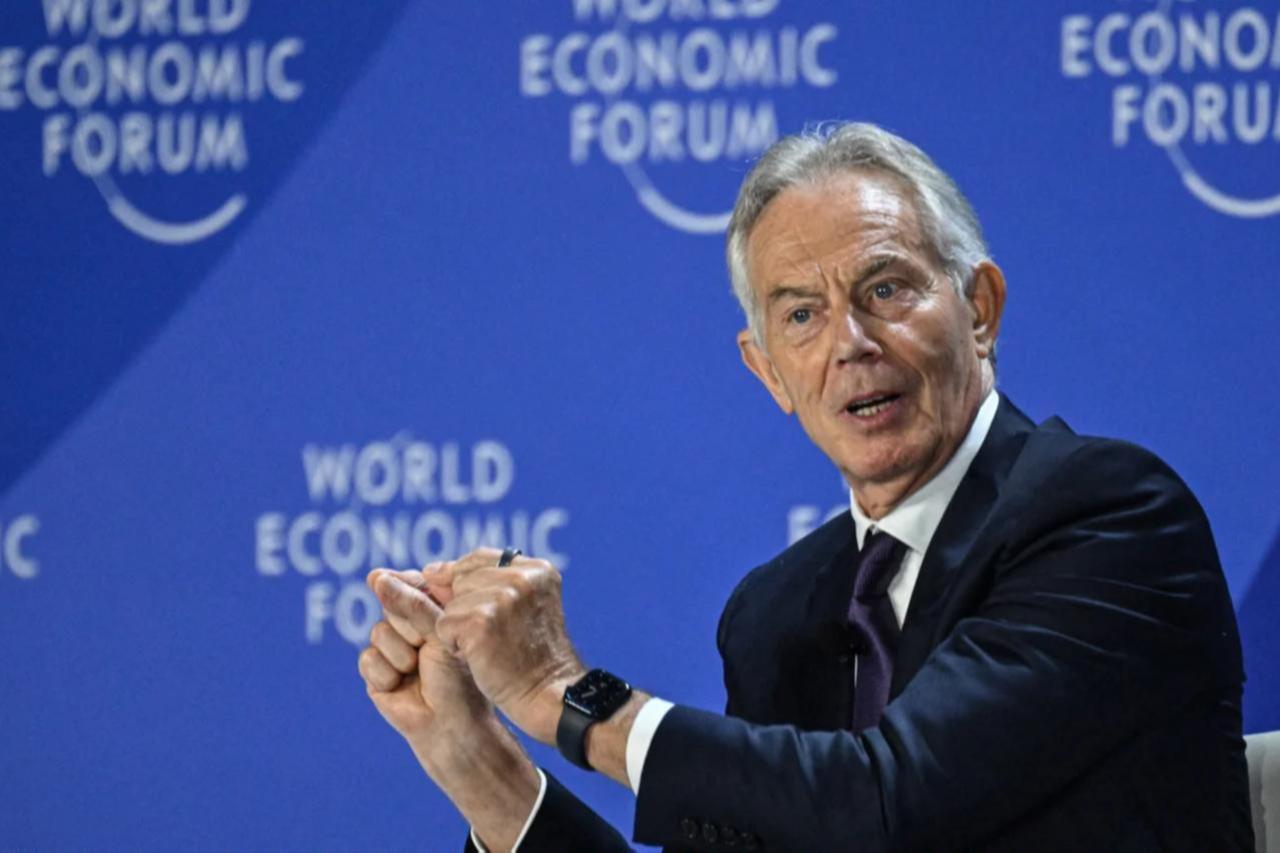


Tony Blair, the former British prime minister, oversaw numerous political developments during his nearly 10-year tenure in office. His decision to participate in the invasion of Iraq alongside U.S. President George W. Bush in 2003 is widely regarded as one of the most significant turning points of his career.
This decision attracted extensive criticism both domestically and internationally. His assertions regarding the existence of weapons of mass destruction during the Iraq invasion, which were later proven to be false, led critics to label him “Bliar.”
Blair ended his active political career in 2007 but re-emerged in 2025 in the context of the genocide in Gaza. The Trump administration appointed former British Prime Minister Sir Tony Blair as a founding executive board member of the “Peace Council” for Gaza.
Donald Trump is set to chair this Peace Council, which forms part of his 20-point plan aimed at ending the war between Israel and Palestine. Although Blair was initially rumored to serve as the chair of the council, he was ultimately appointed as a member. He is expected to be one of Trump’s most prominent supporters throughout this process.
However, many who are eager for peace question how Blair, who is regarded by some as bearing responsibility for atrocities and civilian casualties in Iraq and is known as the “Butcher of Iraq,” can deliver to Gaza the peace he failed to bring to Iraq. To explore this question, it is necessary to examine who Tony Blair is and what he is capable of.
His full name is Sir Anthony Charles Lynton Blair. He is a British lawyer, politician and former prime minister. Blair was born in Edinburgh. As the son of a lawyer, he studied law at the University of Oxford. Although his education was largely shaped by interests in music and religious studies, it is often noted that he entered politics after meeting his wife, Cherie Booth, who was also a lawyer.
The 1980s marked a period of political ascent for Blair. At a time when the Conservative Party was in power and the Labour Party was experiencing consecutive electoral defeats, Blair emerged as a leading figure among younger politicians who argued that the party should reposition itself closer to the political center.
By 1988, he began to openly advocate for a departure from the party’s traditional statist policies. In 1992, he was appointed Shadow Home Secretary.
Following the sudden death of Labour Party leader John Smith in 1994, Blair was unexpectedly elected leader of the Labour Party in the subsequent leadership contest. In 1997, he became prime minister of the United Kingdom, bringing an end to 18 years of Conservative Party rule.
With nearly 10 years in office, Tony Blair ranks among the longest-serving prime ministers in British history.
However, what renders him a controversial figure today is not his domestic reforms, such as the establishment of devolved parliaments in Scotland and Wales, the Human Rights Act (1998), or the Freedom of Information Act (2000), but rather his actions in the Middle East. In this regard, Blair’s record in the region can be seen as a precursor to the role he may seek to play in Gaza.
The event of 9/11 marked a decisive turning point in Blair’s foreign policy. He demonstrated close alignment with George W. Bush, offering full support for the doctrine of the so-called “war on terror.” In the immediate aftermath of 9/11, Britain joined the international coalition and became involved in the military operation in Afghanistan.
The operation, which began in 2001, aimed to overthrow the Taliban regime, which was accused of harboring al-Qaeda. Blair justified the deployment of British troops to Afghanistan because the Taliban had created an environment conducive to terrorism.
However, the operation, which was initially intended to be short-lived, extended over many years, resulting in the deaths of 457 British soldiers. Following the withdrawal of the United Kingdom and the United States from the region in 2021, the Taliban regained control of Afghanistan, as they had before 2001.
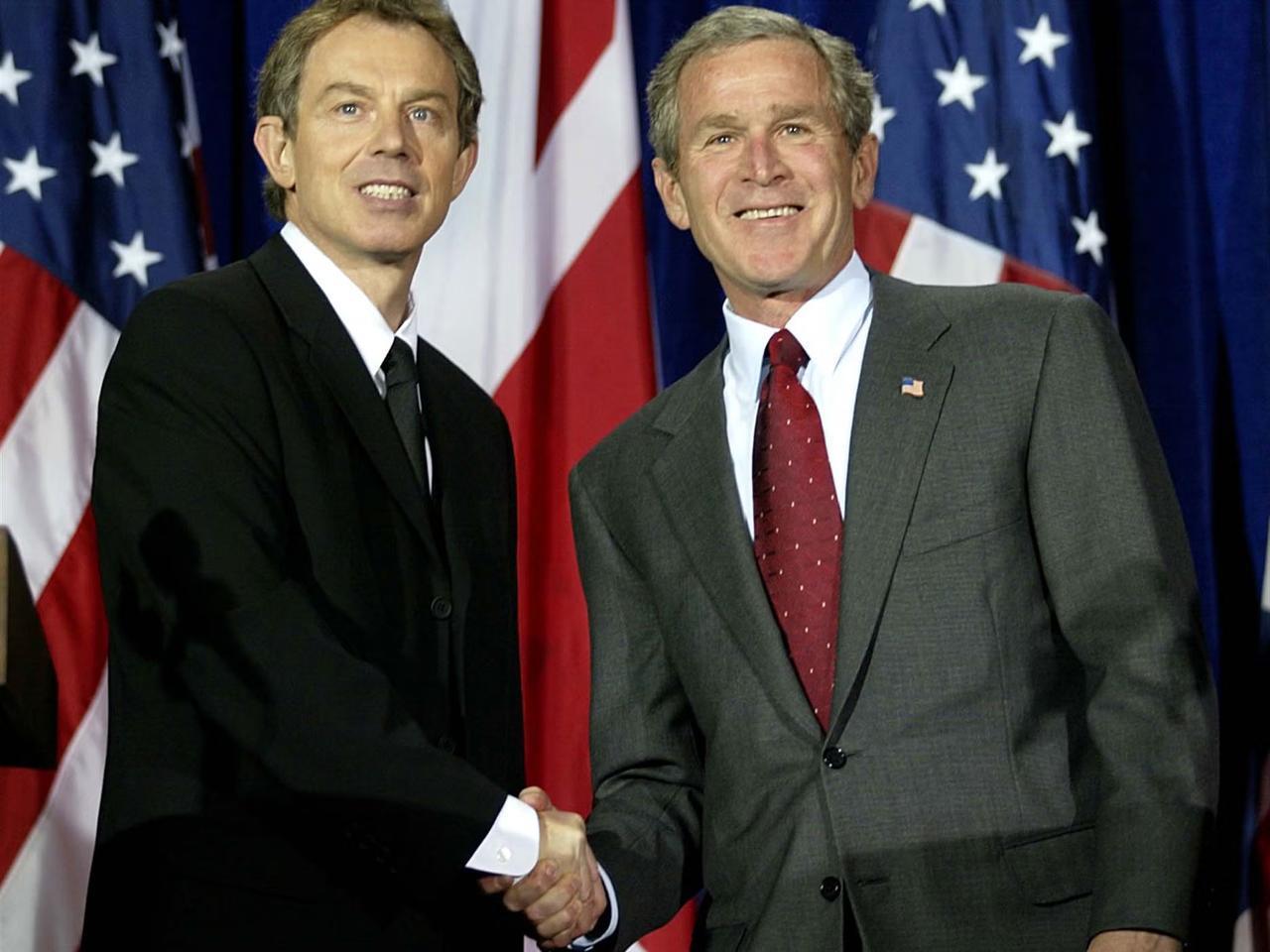

The most controversial foreign policy episode of the Blair era was the invasion of Iraq. Blair proceeded with the operation despite the absence of authorization from the United Nations Security Council, arguing that the regime of Saddam Hussein was developing weapons of mass destruction (WMD) and posed a threat to international security.
The Blair government regarded participation in a coalition to overthrow Saddam Hussein as necessary for Britain’s national interests and for global stability.
However, the lack of U.N. approval and the failure to publicly disclose intelligence evidence prompted strong criticism from numerous domestic and international actors. In London, more than one million people took to the streets, chanting “Not in My Name,” calling on the Blair government to halt the operation.
In the immediate aftermath of the war, Saddam Hussein’s government was overthrown, and Saddam Hussein was later executed. While these developments were presented as successes by the Blair government, no weapons of mass destruction or concrete threats to international security were ultimately found in Iraq. By contrast, over 200,000 Iraqi civilians lost their lives as a result of the war, while many others were injured or forced to flee their homes.
The 2016 Chilcot Report concluded that Blair’s assessment had been flawed and that the intelligence reports presented regarding the WMD were based on unverified sources.
The report further found that Britain had entered the war without exhausting peaceful alternatives and that the Blair cabinet had decided under “unsatisfactory circumstances.” Blair responded to these findings by stating, “It is difficult for me to apologize for taking the world away from Saddam.”
Blair has played an active role in the Palestinian issue since the 1990s. He initially expressed support for the Oslo Peace Process, held meetings with Palestinian and Israeli leaders, and urged George W. Bush to announce a “Road Map” in 2003.
Following the victory of Hamas in the Palestinian elections in 2006, Blair’s approach to peace and his stance toward the Palestinians changed markedly. Rather than recognizing the elected Hamas government, he advocated, alongside the United States and Israel, for Hamas’s exclusion from the international arena and for support of the former power center, Fatah.
Blair supported sanctions that excluded Hamas, thereby becoming one of the proponents of the de facto division between Gaza and the West Bank. However, in a 2017 interview, he expressed regret over these earlier actions, stating that “the international community should have tried to draw Hamas into dialogue at that time.”
In 2006, as his premiership was drawing to a close, Blair’s position during the war between Israel and Hezbollah constituted one of the clearest illustrations of his Middle East policy and contributed to growing criticism. As civilian casualties mounted during the conflict, the Blair government did not call for an immediate ceasefire and refrained from openly criticizing Israel.
Moreover, the government’s failure to adopt a clear position against continued Israeli settlements and human rights violations in the Palestinian territories provoked strong reactions, including within Blair’s own party at the domestic level.
In the nearly 20 years since leaving active politics, Tony Blair has held a range of positions in the Middle East and on the international stage. Previously appointed as the Special Envoy for Middle East Peace, Blair spent eight years attempting to advance a two-state solution, but these efforts ultimately proved unsuccessful. He is now set to return to the Middle East as a member of the Peace Commission.
It can be argued that over the past three decades, peace has not been achieved in the Middle East; instead, civilian casualties and armed conflict have continued to increase. Consequently, whether Blair can bring peace to Palestine after his actions in Iraq remains the most pressing question in the minds of innocent civilians.


 Set as preferred source
 Set as preferred source


 7 min read