Newsletters


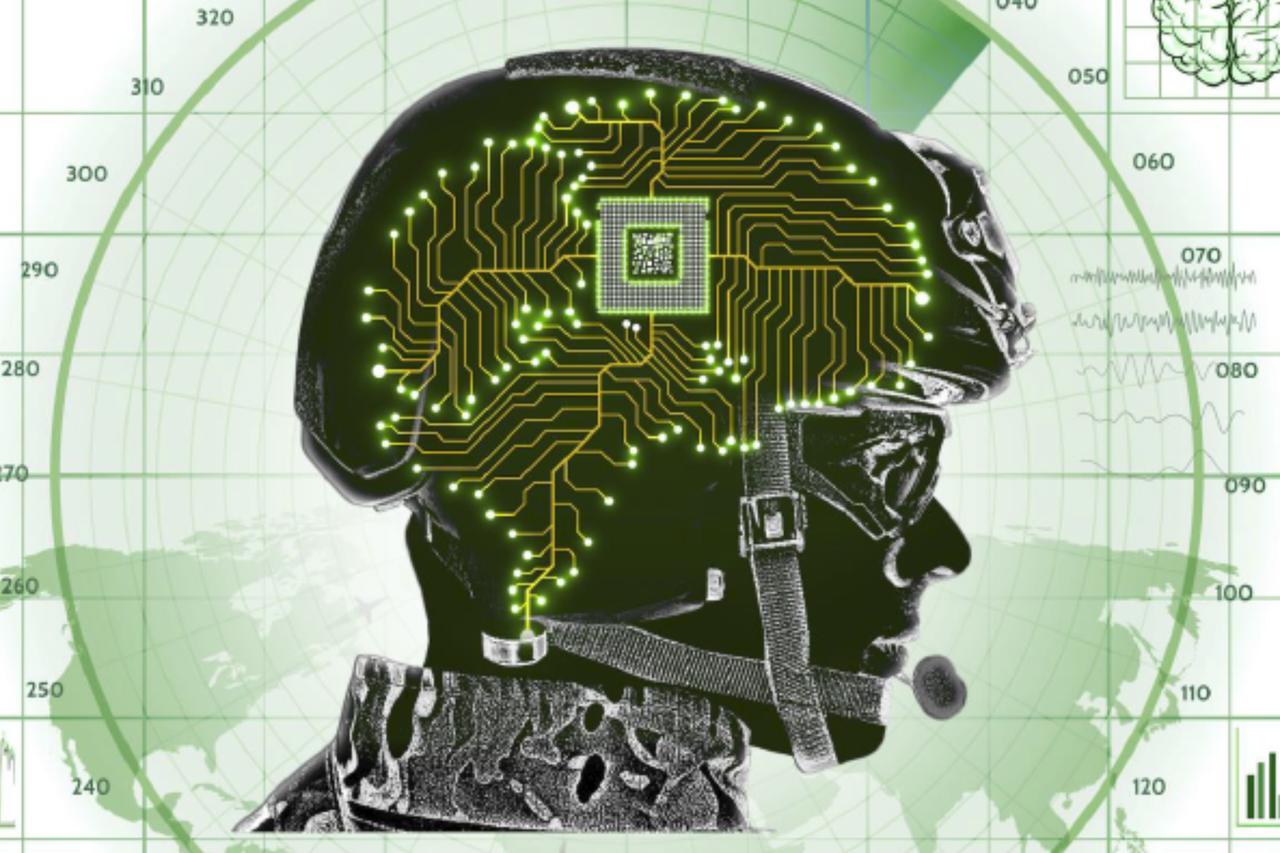


The concept of geopolitics generally brings to mind the control of physical assets such as oil, trade routes and the territories controlled by countries. However, in the 21st century, the focus of power has shifted from physical assets to intangible ones, namely data, algorithms and digital infrastructure. The fact that both political and personal information of countries is now accessible through cyberattacks and used as a tool of threat has led to the emergence of new dynamics in international relations. Consequently, artificial intelligence (AI) has become central to global strategic competition.
One of the most important perspectives that AI has introduced to diplomacy is the concept of algorithmic power. Algorithmic power refers to the ability of countries to process data and operationalize decisions within and beyond their borders by collecting large amounts of information through advanced algorithms. Compared to traditional conceptions of power, it enables states to pursue diplomatic influence through prediction, automation and optimization processes without relying on territorial control or physical coercion.
In essence, algorithmic power transforms information superiority into decision-making superiority. It also plays a key role in managing perception and narratives. States capable of rapidly analyzing financial flows, social media trends, migration patterns, or energy shifts are no longer limited to confronting problems only after they arise; instead, they gain the ability to predict and monitor developments in advance. From a geopolitical perspective, this shortens decision-making processes and reduces uncertainty, thereby increasing strategic agility. This can place countries in a highly advantageous position, particularly in regions such as the Middle East, where even a 24-hour delay can be significant.
After explaining algorithmic power, the ways in which artificial intelligence can provide geopolitical advantages to countries on the ground can be examined under three headings: decision-making superiority, narrative control, and military technology.


A state’s success in diplomacy is directly proportional to its ability to make the right decisions quickly. In classical security and governance models, decisions are made through bureaucratic processes involving limited data sets and human analytical capacity. Artificial intelligence, by contrast, overcomes these limitations by enabling more targeted, accurate, and faster decision-making. In this context, decision-making superiority can be defined as an actor’s ability to track developments in a multidimensional and rapidly flowing data environment before its competitors, using artificial intelligence, and to generate solutions through analysis.
Decision-making superiority also enables states to act proactively rather than reactively, as not only speed but also access to accurate information as early as possible is critical. In this way, countries can identify developments such as escalating conflicts, social mobilization, or energy supply disruptions before they fully materialize by relying on AI-driven early warning and prediction systems. This transforms states from crisis managers into crisis shapers.
This capability may be more advantageous for medium-sized or regional powers than for major actors. Using artificial intelligence to anticipate crises and design strategies for situations that would otherwise be difficult to manage with limited resources and military power can help states avoid significant losses in both material resources and manpower.
Another transformative effect of artificial intelligence in geopolitics is the significant increase in a state’s capacity to manage and direct the flow of information and public perception. Narrative control refers to an actor’s ability to define, frame, and legitimize processes not only on the ground but also through platforms such as phones, televisions, and social media, which are present in everyday life. In this context, power is shifting from knowing what something is to managing how it is perceived.
Within this framework, artificial intelligence can be used to support micro-targeted influence production under the concept of narrative control. While traditional mainstream media outlets convey one-sided and limited messages to broad audiences, AI-powered systems can analyze individuals’ digital behaviors, ideological leanings, identity affiliations, and emotional responses, allowing messages to be customized at the micro level. Rather than relying on mass mobilization or consolidation processes, states can use artificial intelligence to produce micro-targeted and tailored narratives through personal digital devices, thereby managing perceptions and consolidating communities in line with their strategic objectives.
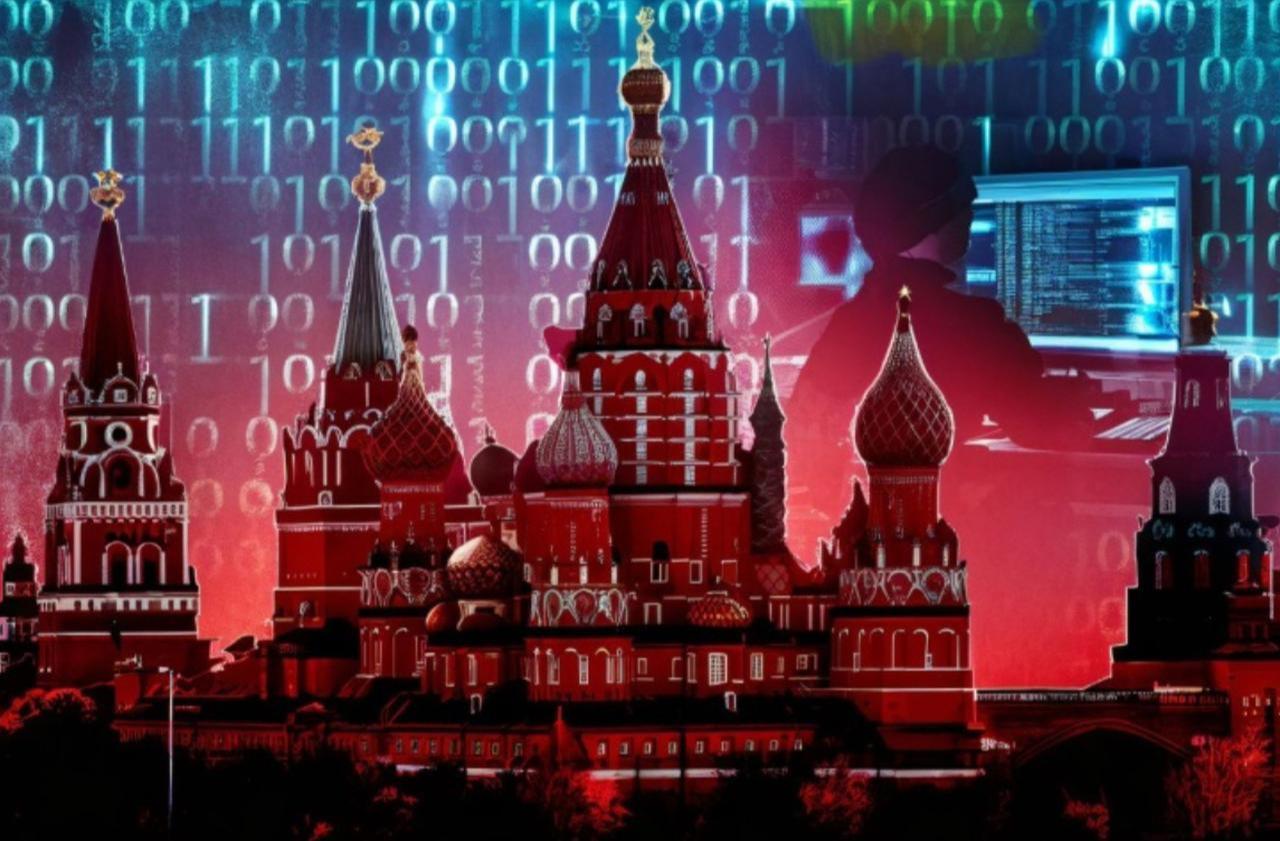
While decision-making superiority and narrative control describe the theoretical and desk-based aspects of geopolitical processes, many wars are ultimately decided on the battlefield and through the use of force. In this context, the profound changes brought about by artificial intelligence in military technologies have significantly altered the balance of power and traditional methods of warfare.
Whereas classical military superiority has largely relied on personnel numbers, ammunition stockpiles, networked weapons systems, and logistical capacity, AI-powered military systems are transforming these dynamics into a more flexible, lower-cost, and highly precise structure.
In times of war, one of a country’s greatest needs is manpower. Accordingly, AI-powered unmanned systems represent one of the most prominent examples of this transformation. Autonomous or semi-autonomous air, land, and sea platforms offer lower costs and longer operational endurance than manned systems in reconnaissance, surveillance, target detection, and limited offensive missions. While these systems previously focused primarily on data collection, they have increasingly adapted to developments on the ground and have become active actors themselves.
The key to transforming military technologies into concrete and successful outcomes lies in intelligence and information flow. Artificial intelligence turns the challenge of large data volumes into a strategic advantage in this field. When satellite imagery, signals intelligence, open-source information, and social media data are analyzed together using AI algorithms, complex security environments become more comprehensible. This enables earlier threat detection, more accurate assessments of actors’ intentions, and faster and more precise decision-making.
Considering all these factors, it can be argued that a country that enhances its speed and accuracy in perception management, field operations, technology, and intelligence significantly increases its geopolitical relevance.
AI offers Türkiye a new avenue to expand its geopolitical influence in the Middle East, not only through military force or traditional diplomatic channels but also through more flexible and indirect means. Through AI-powered defense technologies, intelligence analysis tools, and border security systems, Türkiye can maintain its presence on the ground at lower cost and with more limited risk, while simultaneously becoming a more responsive and predictive actor.
Moreover, artificial intelligence’s capacity to shape information flows and public perceptions strengthens Türkiye’s ability to produce narratives about the region. In this way, influence can be built not only through actions on the ground but also through how these actions are interpreted and understood. Smart security solutions, digital public infrastructures, and AI-based governance applications can position Türkiye as a technology partner—and even a point of reference—for some Middle Eastern countries. This may pave the way for quieter yet longer-term dependency relationships, distinct from traditional military alliances.
At the same time, the risk that increasing automation may escalate tensions due to misjudgments, the blurring of ethical boundaries, and the counter-AI capabilities of rival actors highlights the fragile aspects of this process. Therefore, artificial intelligence should not be viewed as a tool that automatically strengthens Türkiye’s position in the Middle East, but rather as a challenge that, when supported by sound governance and strategic thinking, can deepen its influence; otherwise, it may generate new areas of risk.


 Set as preferred source
 Set as preferred source



 7 min read