

 Newsletters


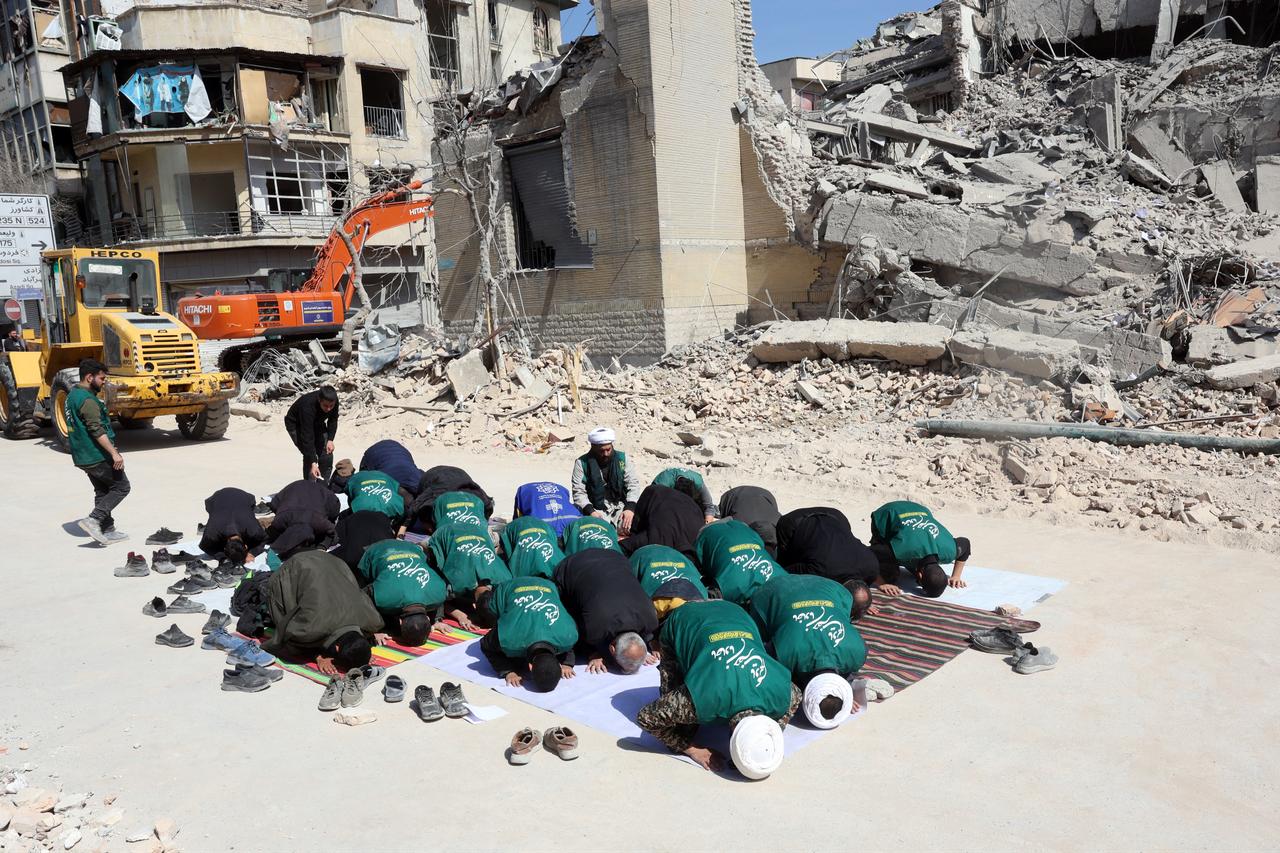


The idea of Kurdish armed groups entering western Iran is under discussion, once again, following the U.S.-Israeli war waged against Iran.
Some U.S. policymakers believe this could trigger a wider uprising against the regime. Their logic is simple. Kurdish fighters tie down Iranian forces in the west. This creates space for protests and unrest in major cities.
Iran is not an easy place for this strategy.
Iran has a strong tradition of a central state. The political core of the country is the Persian population in cities like Tehran, Isfahan, and Shiraz. When the country faces an external threat, this core often closes ranks.
Political theory describes this dynamic as Burgfrieden. Rival political factions pause their internal struggles. They unite in response to an external challenge.
A similar reaction could appear in Iran.
If Kurdish forces launch attacks inside Iran with visible outside support, the result may not be regime collapse. The more likely effect is consolidation in the Persian core. Reformists, conservatives, and parts of the opposition could rally around territorial integrity.
Recent tensions inside the Iranian opposition show how fragile it already is. Kurdish political groups have formed alliances and are speaking out about political rights and self-determination. At the same time, monarchist opposition figures accuse them of threatening Iran’s territorial unity. These divisions make a unified anti-regime front unlikely.
Washington also appears cautious about the Kurdish option.
US Defense Secretary Pete Hegseth said today that “none of our objectives are premised on the support of the arming of any particular force." So what other entities may be doing, we’re aware of, but our objectives aren’t centered on that.”
The statement suggests the United States is aware of contacts with Kurdish actors. But it does not see them as the center of its strategy. Geography also limits what Kurdish forces can achieve. Western Iran is mountainous. The terrain favors insurgency and raids. It does not favor rapid advances or decisive breakthroughs. Even if Iran’s air defenses weaken, the war in that region will still be decided on the ground.
This would shape the conflict in a different way. Instead of a nationwide revolution, the fighting would remain concentrated in the Kurdish borderlands.
In that scenario, Kurdish groups could pressure Iranian security forces in some areas. But this pressure would not necessarily collapse the Iranian state. The conflict could turn into a long peripheral insurgency.
Some analysts point to the anti-Daesh campaign as a model. Kurdish forces played a major role in Iraq and Syria with Western support.
Iran is very different. Iraq and Syria were fractured states when that campaign began. The central authority had already collapsed. Many armed groups competed for territory. Iran still has functioning institutions and a coherent security structure.
Because of that, the Daesh model is unlikely to work in Iran.

Another limitation is the Kurdish movement itself. Kurdish political and military groups are not unified. They have different ideologies and goals.
Some want autonomy. Others talk about federalism. Some focus mainly on weakening the current regime.
This fragmentation weakens their ability to act as a single national opposition force.
The likely outcome is therefore different from what some expect. Kurdish military activity inside Iran would be more likely to trigger internal conflict than regime change.
At the same time, the Persian core of the country could move toward a Burgfrieden dynamic. Political rivals in the center may temporarily unite to defend the state.
In that sense, a Kurdish insurgency in western Iran may deepen instability. But it may also strengthen political cohesion in central Iran.


 Set as preferred source
 Set as preferred source


 2 min read

 1 min read


