Newsletters


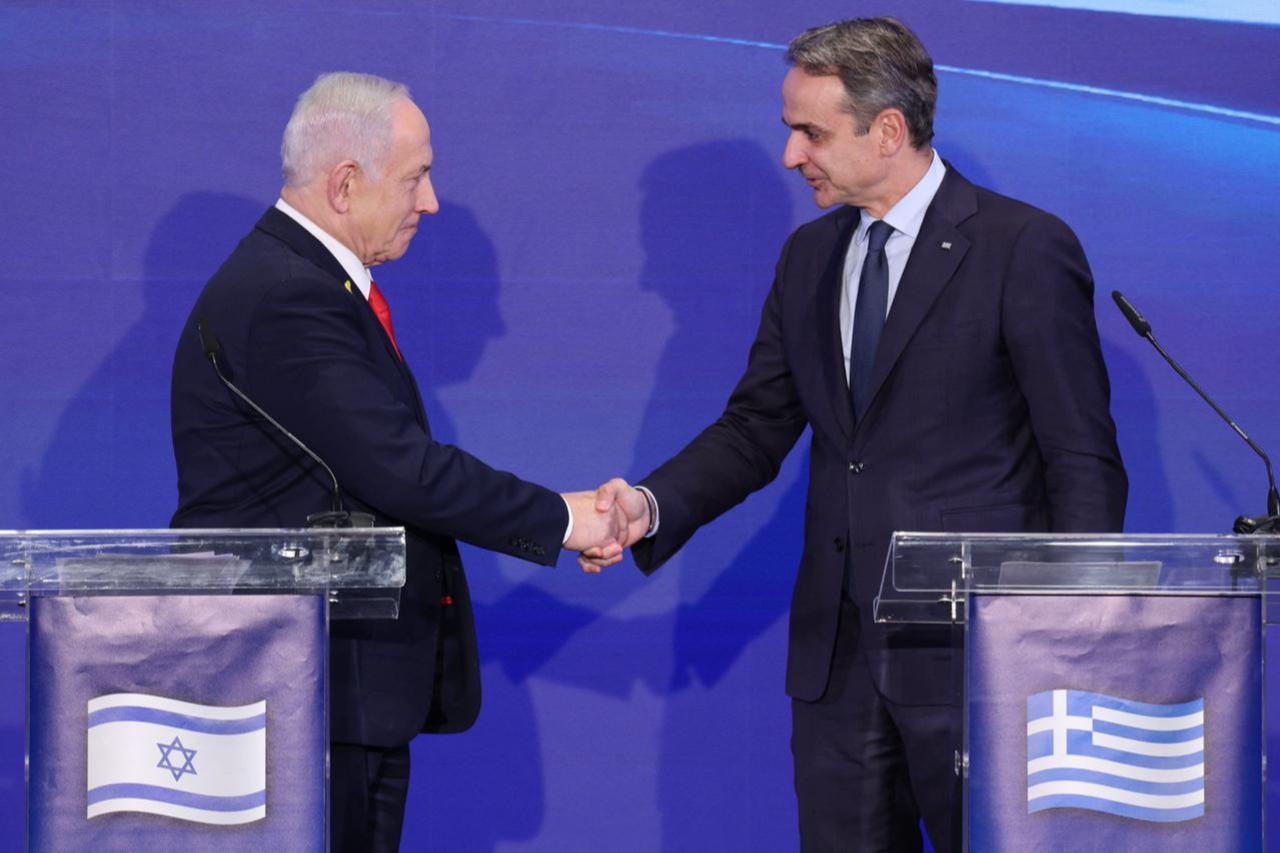


On Dec. 22, Greek Prime Minister Kyriakos Mitsotakis met Israeli Prime Minister Benjamin Netanyahu in Jerusalem for the 10th Trilateral Summit between Greece, the Greek Cypriot Administration (GCA) and Israel. This meeting marked a further deepening of political, security and energy cooperation between the three countries.
In a joint declaration issued after the talks, the leaders committed to expanding collaboration on defense, counterterrorism, energy infrastructure, maritime security and regional connectivity, while reaffirming support for Israel’s security policies and the U.S.-backed framework for Gaza’s future.
The language and timing of the statement triggered immediate political backlash in Greece, where opposition parties and commentators accused the government of abandoning a balanced foreign policy and aligning uncritically with the Israeli government at a moment of intense international scrutiny.
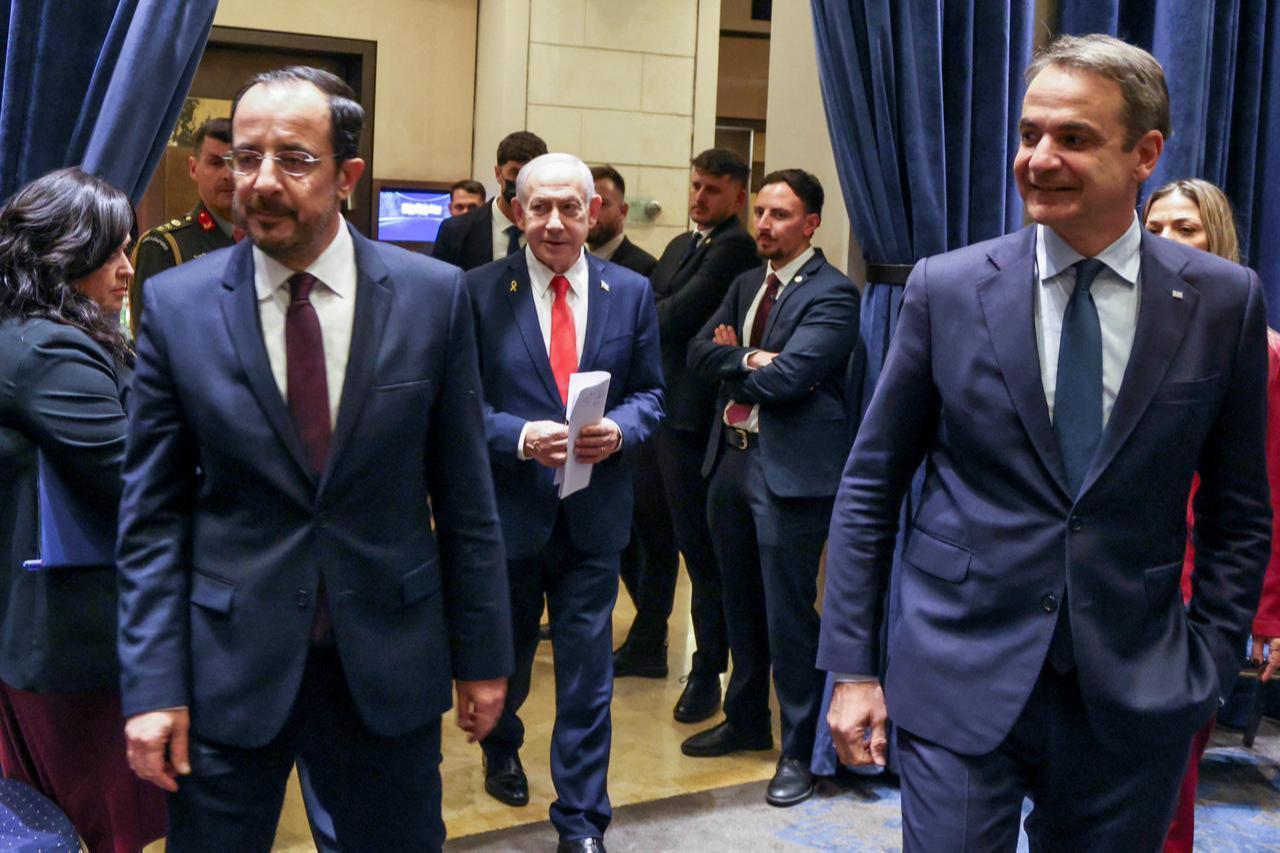

The joint declaration issued after the trilateral summit makes clear that the meeting went far beyond symbolic diplomacy.
Greece, Israel and the GCA committed to deepening cooperation across security, defense, energy and regional connectivity, framing their partnership as a pillar of stability in the Eastern Mediterranean.
The text places particular emphasis on military coordination, maritime security, counterterrorism and critical infrastructure, while also endorsing the expansion of the 3+1 framework with the United States.
More notably, the declaration aligns closely with Israel’s security narrative, explicitly:
At the same time, it does not refer to Palestinian statehood, civilian casualties or the humanitarian dimension of the war.
The language of international law appears selectively, invoked to focus on stability and security rather than to address the wider legal and political questions raised by the conflict.
Taken together, the document signals a clear political choice: to prioritize strategic alignment and regional security cooperation, even as the war in Gaza remains a source of international controversy.
It is this framing, as much as the meeting itself, that set the stage for the political and public reactions that followed inside Greece.
The reaction inside Greece was swift and sharply critical.
Within hours of the trilateral meeting in Jerusalem, opposition parties accused the government of abandoning diplomatic balance and aligning itself politically with the Netanyahu government at a moment of intense international scrutiny.
The former ruling party, SYRIZA, was among the first to respond. In a statement issued the following day, party executive member Rania Svingou said that Prime Minister Kyriakos Mitsotakis had once again chosen to “speak hypocritically about international law” while signing a declaration that fully adopted the Israeli government’s narrative.
She argued that the joint text amounted to “another step of full alignment with the government of a prime minister wanted for war crimes,” adding that the declaration accepted Israel’s positions on Gaza while dismissing international criticism as “unfounded claims.”
Svingou also criticized the absence of any reference to Palestinian rights or humanitarian protection, noting that while other European governments had moved toward recognition of Palestine, Greece had instead chosen to “stand openly and uncritically with Netanyahu.”
The criticism was even sharper from MeRA25, the left-wing opposition party founded by former finance minister Yanis Varoufakis, which framed the summit as a strategic and moral misstep.
In a statement titled “The Trilateral of Shame, Subservience and the Weakening of Greece,” the party accused the government of dragging Greece into what it described as a dangerous alignment that undermines both national security and international credibility.
“The image of Mr. Mitsotakis standing next to a prime minister wanted for war crimes captures the moral degradation and strategic decline of the country,” the statement read.
They further warned that Greece was being drawn into a military framework that would not offer real protection in the event of a crisis, arguing that Israel “would not lift a finger” in a confrontation involving Greece, while arms cooperation and missile defense purchases risked escalating regional tensions rather than containing them.
Beyond party statements, critical commentary in the Greek press focused on the broader implications of the government’s choices.
Several analysts questioned whether Athens was confusing strategic cooperation with political identification, particularly at a time when Israel’s conduct in Gaza has become a subject of growing international dispute.
The absence of any reference in the joint declaration to civilian casualties, humanitarian law or a two-state solution was widely noted, reinforcing the perception that Greece had chosen alignment over diplomatic balance.
Beyond party politics, the government’s stance has begun to surface in everyday public life, revealing a more complex and, at times, tense social atmosphere.
In early August, this tension became visible in a public dispute between Athens Mayor Haris Doukas and Israel’s ambassador to Greece, Noam Katz, after complaints over anti-Israeli graffiti in the capital.
Katz said Israeli visitors felt “uncomfortable” in Athens due to what he described as tolerance of vandalism by “organized minorities.”
Doukas responded sharply, rejecting the accusation and saying Greece “does not take lessons in democracy from those who kill civilians,” adding that it was “revolting” to focus on graffiti while “an unprecedented genocide is taking place in Gaza.”
The exchange, widely covered in Greek and international media, was one of the biggest signs of how the war in Gaza has increasingly entered Greece’s public debate.
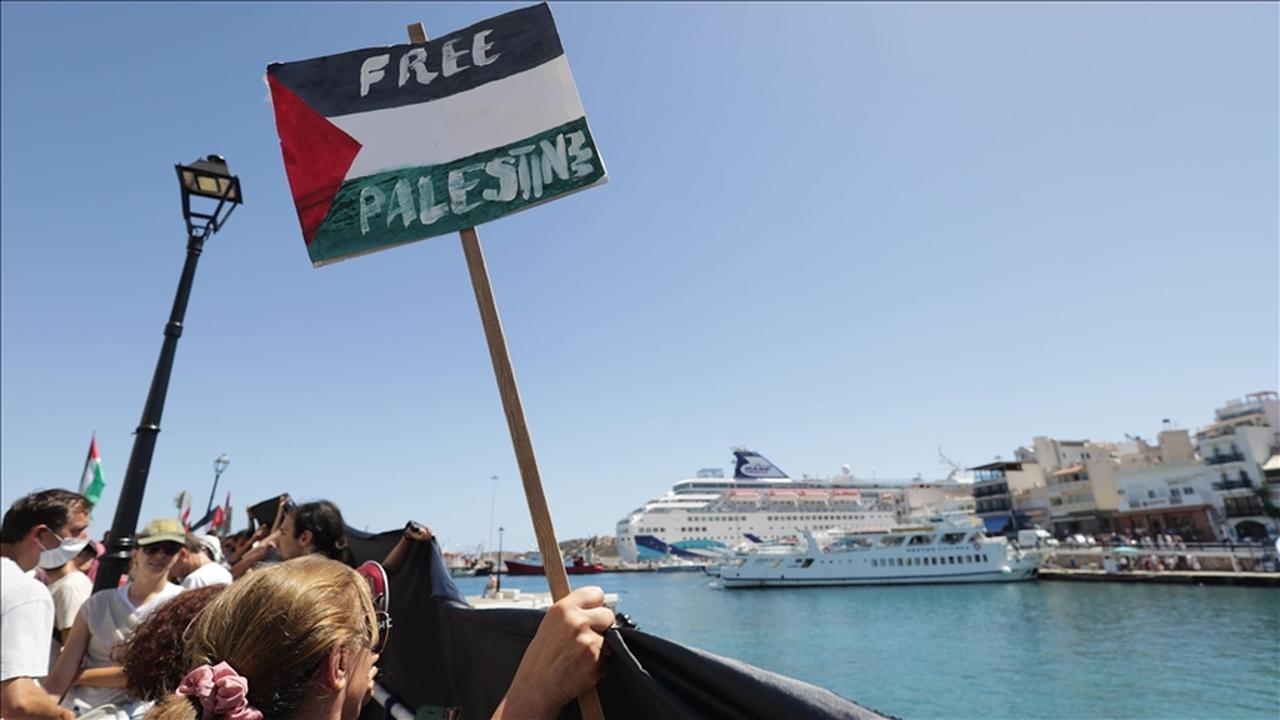
Pro-Palestinian demonstrations have taken place in several Greek cities since Oct. 12, 2023. In some cases, Israeli cruise ships were unable to dock after protests erupted at multiple ports.
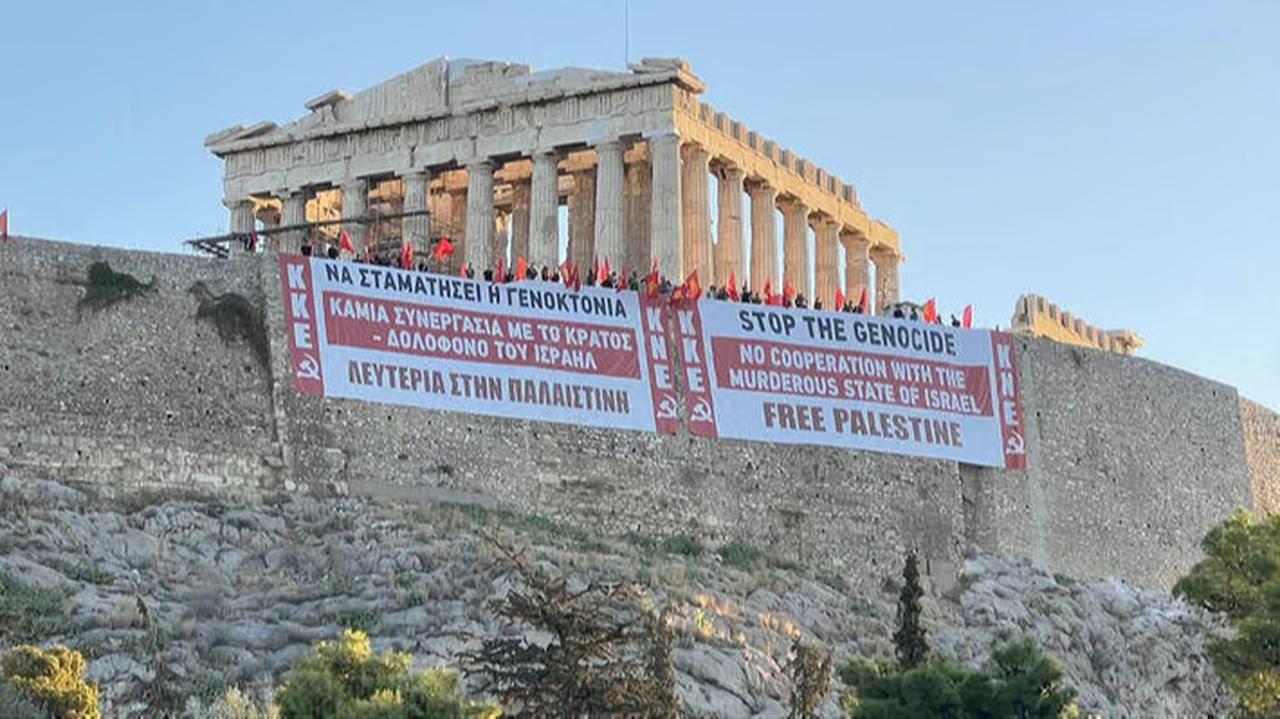
On Sept. 19, two large pro-Palestine banners were hung from the Acropolis cliffs in Athens, reading, “Stop the genocide – no cooperation with the murderous state of Israel – Free Palestine.” Activists gathered to express solidarity with Palestinians and to condemn what they described as the “massacre in Gaza,” while also criticizing Israel, the United States, NATO and the European Union.
Similar tensions have appeared around military logistics. In recent years, and with increasing frequency in 2025, shipments linked to Israel have faced protests and blockades, reflecting growing opposition to Greece’s role in regional military cooperation.

At the same time, economic and social dynamics have added another layer to the unease.
Data published this year shows that Israeli buyers now rank among the most active foreign purchasers of property in Greece, particularly in Athens and Thessaloniki, alongside Turkish investors.
According to figures from RE/MAX Greece and the Greek Migration Ministry, Israeli nationals hold hundreds of Golden Visa permits, with demand rising further since the outbreak of the Gaza war.
Yet, this growing economic presence has not softened public sentiment. Despite Israeli investment and increased economic ties, criticism has remained focused not on nationality or religion, but on Israel’s military actions and the conduct of the war in Gaza.
For many protesters and commentators, the issue is framed explicitly as a political and moral objection to the war itself rather than hostility toward Israelis or Jewish communities. In that sense, opposition has been directed at state policy and military conduct, not identity.
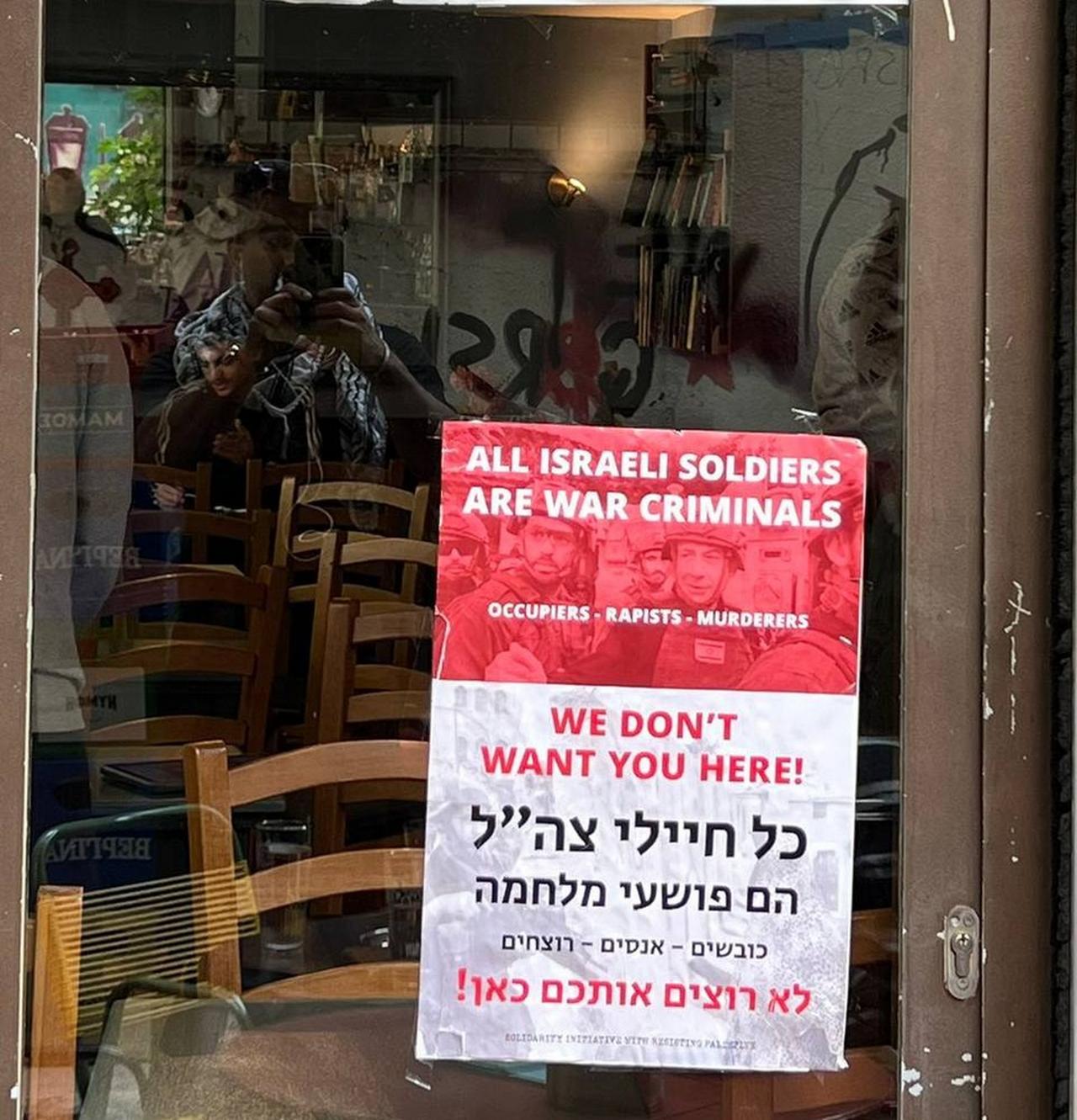
This tension has also become visible in the urban landscape itself. Beyond graffiti, pro-Palestinian posters, slogans and Palestinian flags have appeared across central and tourist-heavy areas of Athens.
In some locations, messages written in Hebrew stating “IDF soldiers not welcome” have appeared on walls and street signs.
These expressions have emerged alongside rising Israeli investment, highlighting a growing disconnect between economic openness and political sentiment on the ground.
Taken together, these developments suggest that Greece’s relationship with Israel is no longer confined to diplomacy or security cooperation but is increasingly felt in everyday life.
While this does not amount to a unified public backlash, it reflects an increasing discomfort among Greek citizens who see the government’s close alignment with Israel as increasingly difficult to reconcile with developments in Gaza and with Greece’s traditional self-image as a mediator in the region.


 Set as preferred source
 Set as preferred source



 7 min read