Newsletters


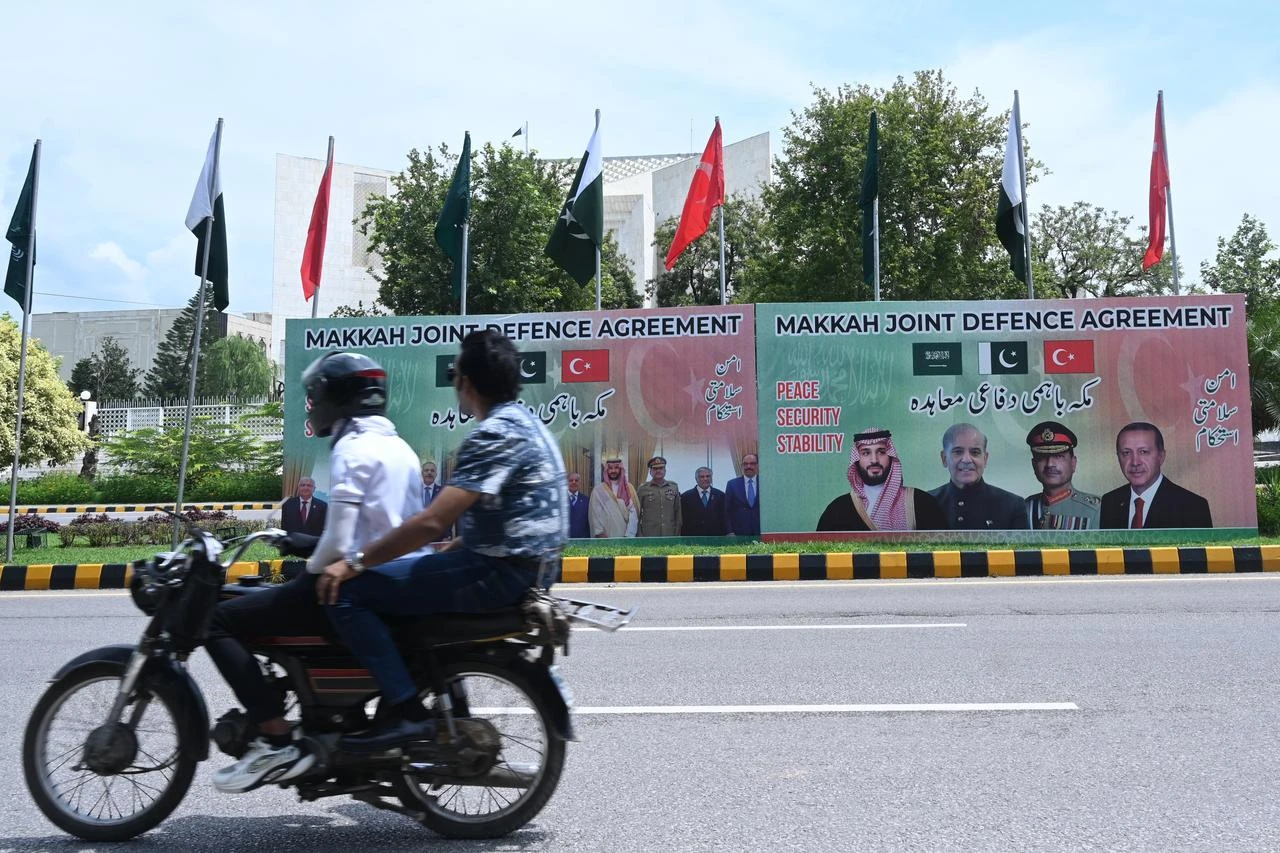


On paper, the Mecca Joint Defense Agreement is modest: a mutual-defense pact between three states who insist, almost in unison, that it targets no one.
In practice, it has managed to unsettle Tehran, unnerve Tel Aviv, and unsettle New Delhi — all without a single shot fired or a single country named. That contradiction is the real story.
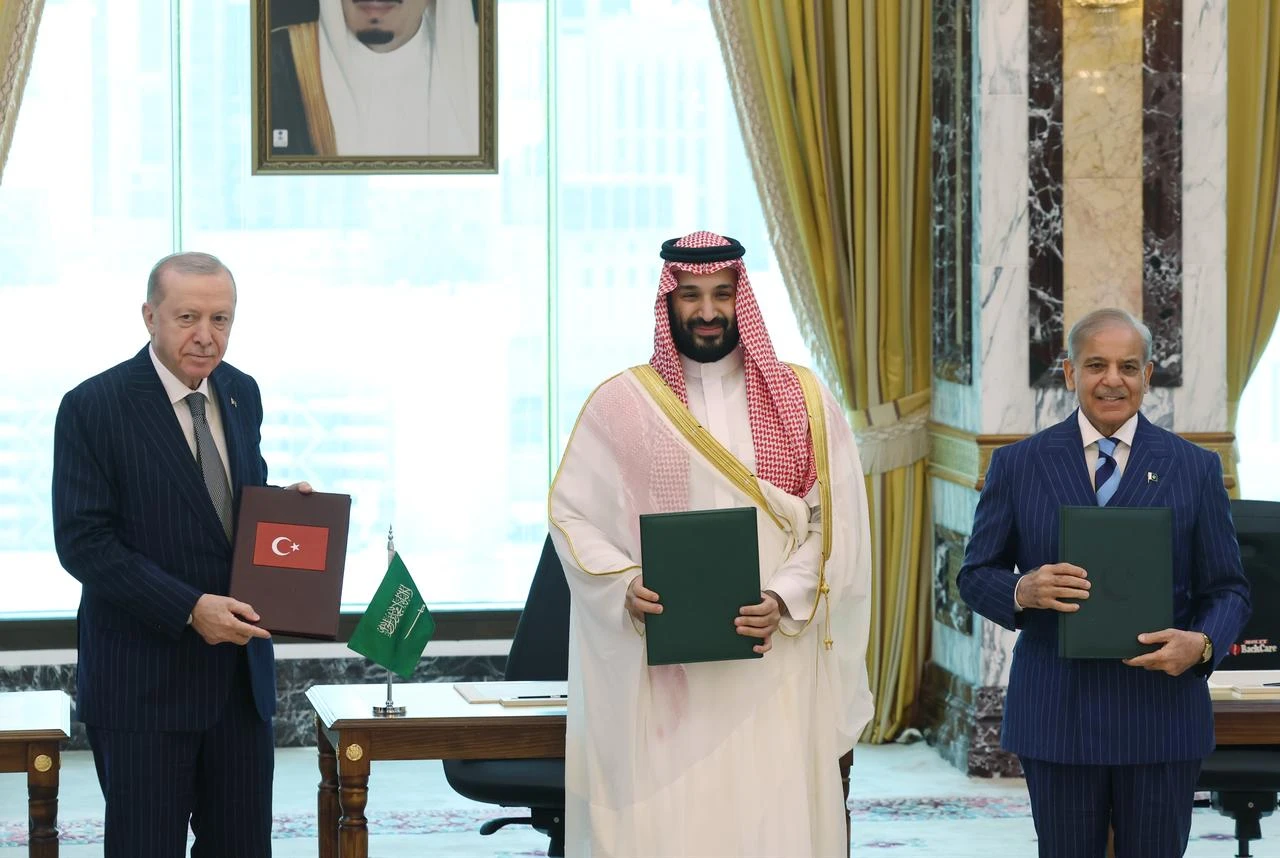
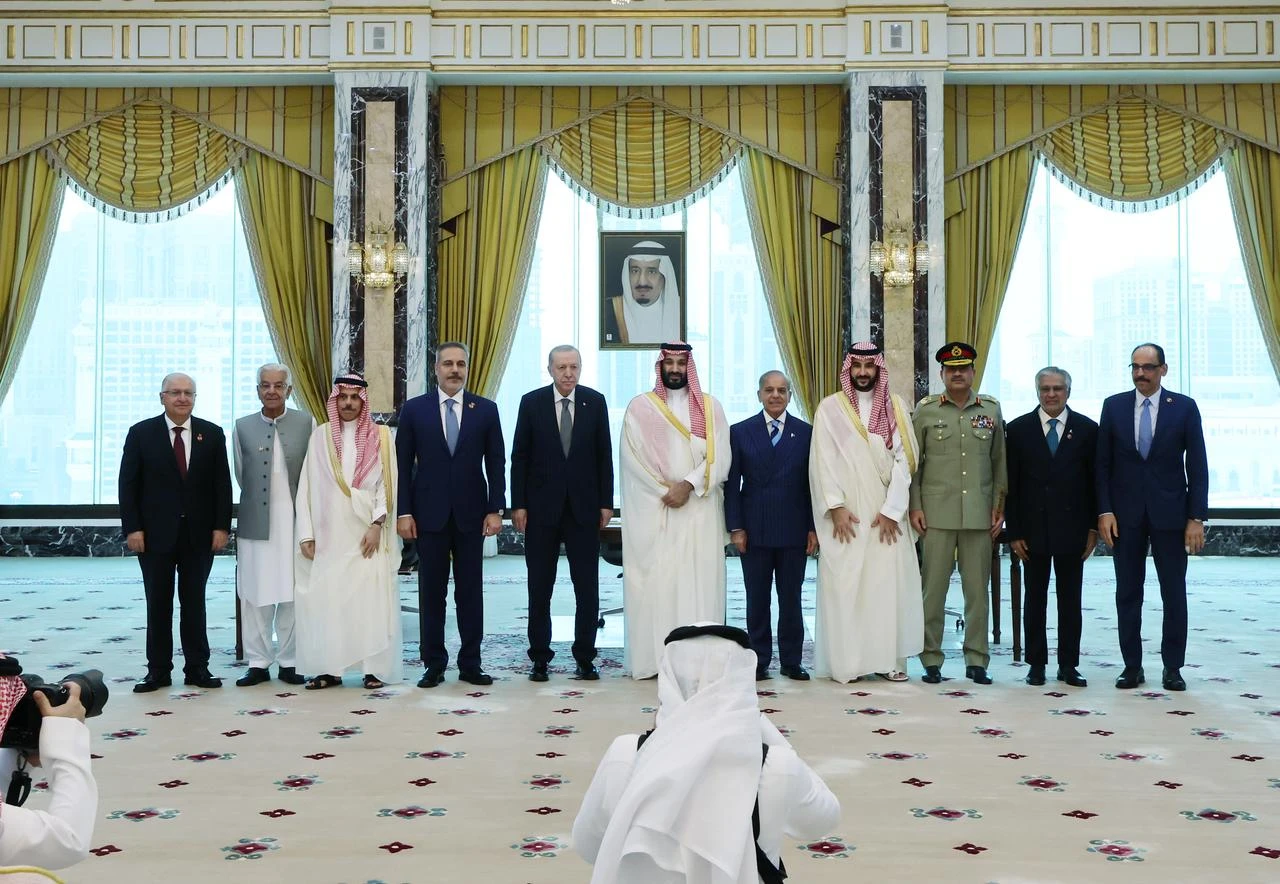
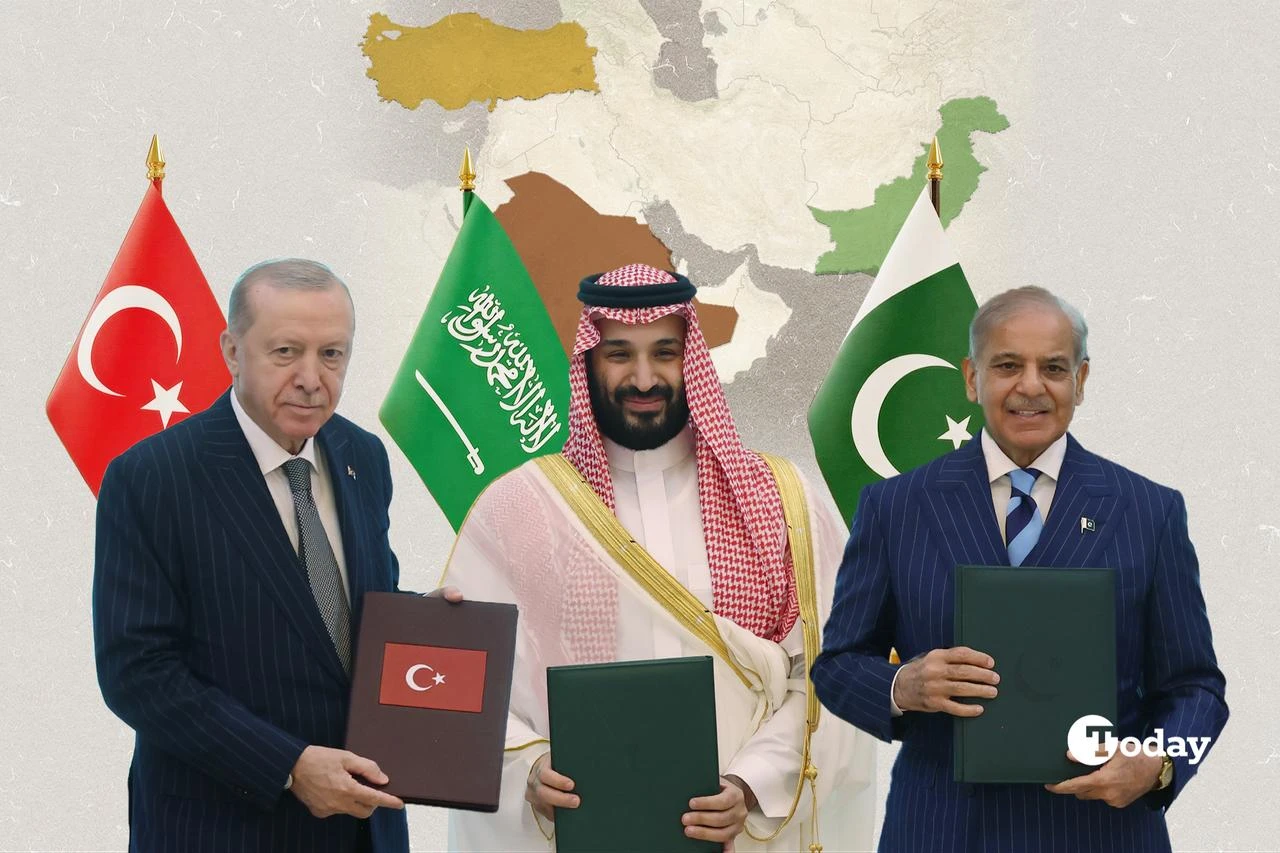
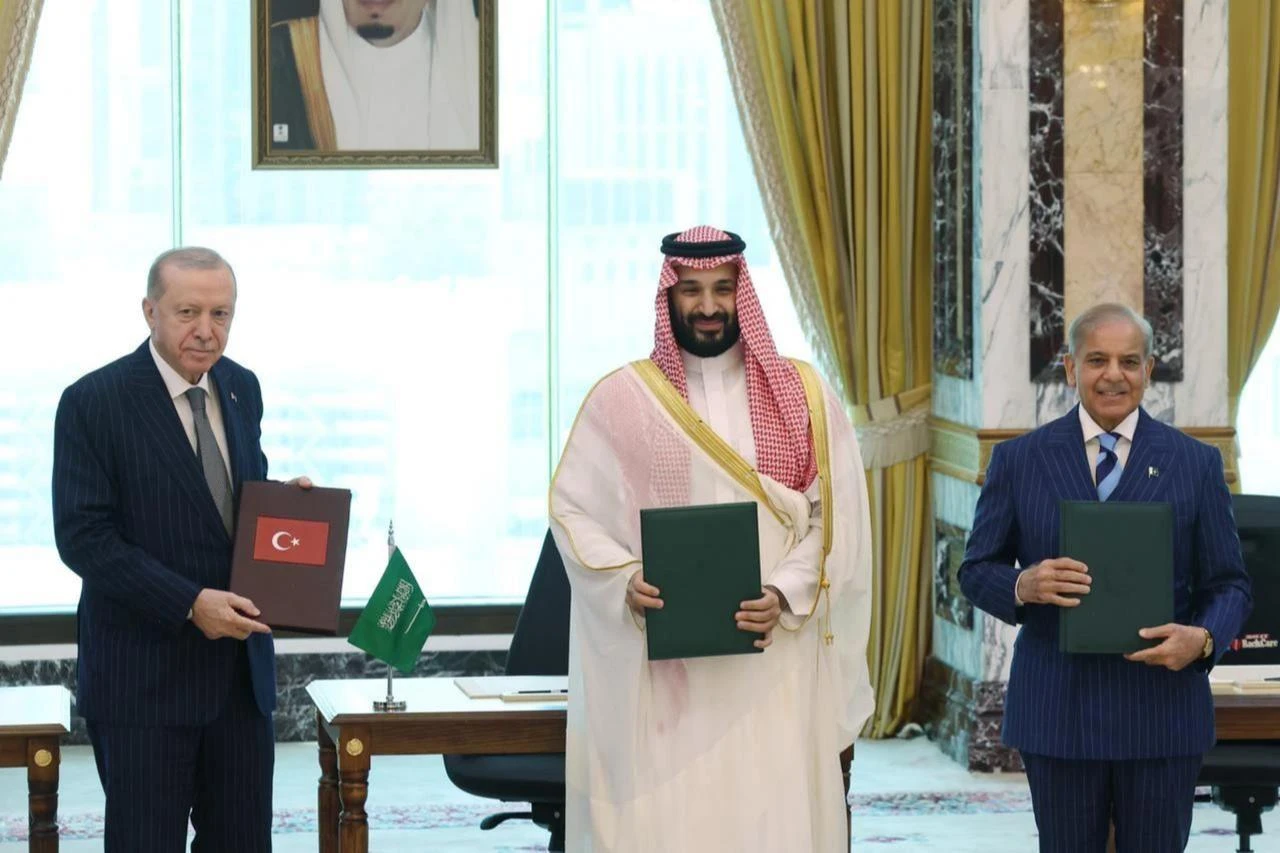
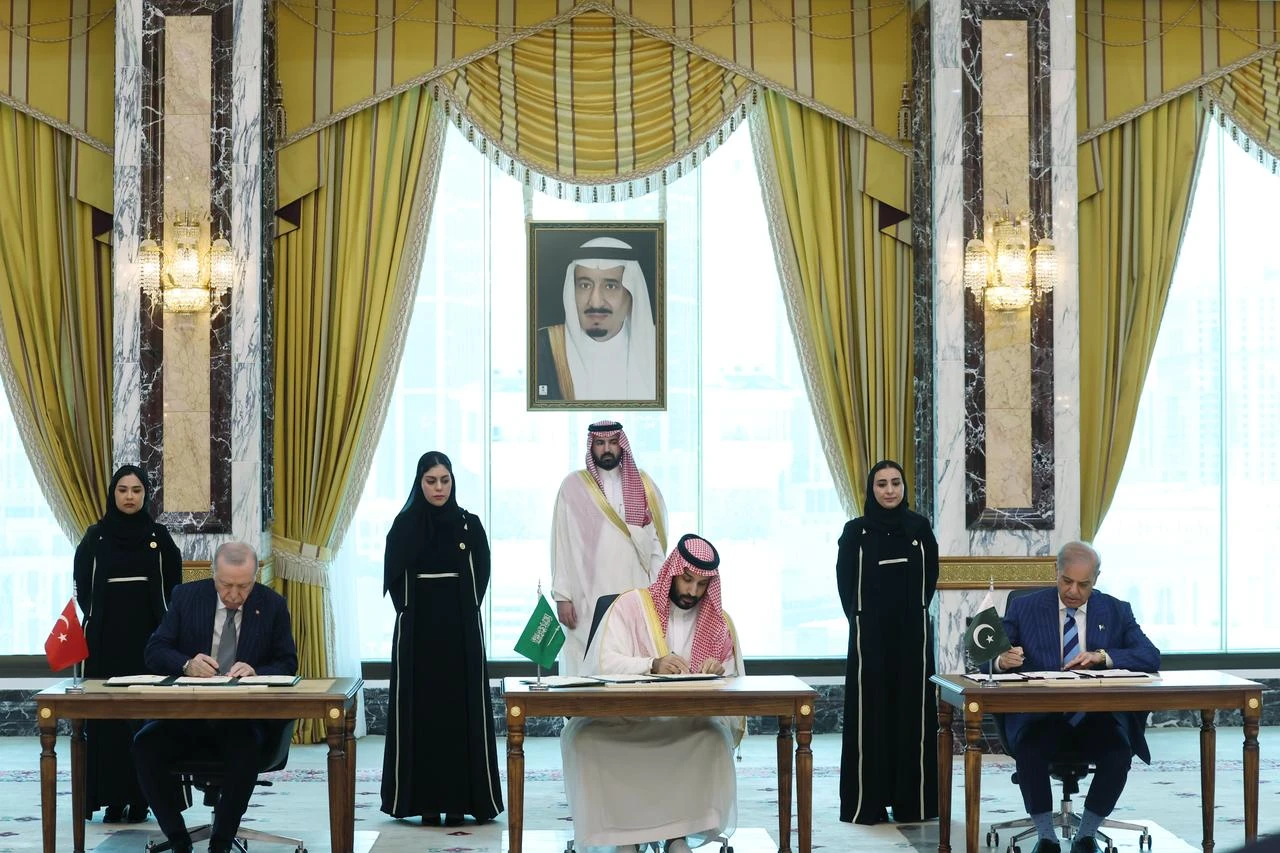
On Aug. 7, Saudi Arabia, Türkiye, and Pakistan signed the Mecca Joint Defense Agreement in the holy city of Mecca. The pact commits the three countries to treat an armed attack on any one of them as an attack on all, while expanding defense cooperation, deterrence, and industrial collaboration.
It builds on an earlier bilateral Saudi-Pakistan understanding from 2025 and arrives amid the ongoing regional conflict involving Iran, repeated attacks on Gulf infrastructure, questions about U.S. security reliability, and broader instability across West Asia.
Signatories have repeatedly described the agreement as purely defensive, not directed against any specific country, open to other friendly states, and not intended to create a sectarian or military bloc.
That said, the pact does not ignore or collapse the threat perceptions and priorities of the member states into a single set. Saudi Arabia is particularly concerned about threats emanating from the Gulf and the wider Iranian-Israeli confrontation; Türkiye is concerned about instability in the Levant and Israel’s hegemonic agenda across its wider neighborhood; and Pakistan's principal conventional security concern remains India.
Regional reactions have been notably restrained, varied, and often cautious.
Up until now, no major power has issued a strongly confrontational response, yet the agreement has prompted careful monitoring, skepticism, quiet concern, and strategic calculations across the Middle East and South Asia.

Iran’s reaction has been the most publicly critical among the countries examined, though still measured. The first and most prominent elite reaction came from Ebrahim Rezaei, a member of the Majlis National Security and Foreign Policy Commission, who was one of the first officials to comment on the pact.
On X, he brushed it off as a "paper agreement," one that would do nothing to secure Saudi Arabia.
This view was widely quoted across Iranian and international coverage of Tehran’s reaction.
Iran’s foreign ministry spokesperson said that “there is no reason to worry about the Mecca pact because Iran has deep ties with Türkiye, Pakistan, and even Saudi Arabia,” as he claimed.
Although Foreign Minister Abbas Araghchi tried to portray the agreement later as aligned with what he called broader Iranian rhetoric on regional solidarity, Iran’s actions have always defied its rhetoric. None of Iran’s neighbors was spared from Tehran’s interference or aggression, including these three states.
Tehran has been spying on Türkiye and targeted it with missiles at the beginning of the war this year. Iran has been using its proxies against Saudi Arabia for years.
Pakistan is constantly seen in Iran as a tool for the U.S. Iran even targeted Pakistan in 2024 with ballistic missiles and drones.
As for Israel, it has maintained official silence. Prime Minister Benjamin Netanyahu’s office and the Foreign Ministry declined to comment. This quiet posture contrasts with underlying strategic unease expressed by the Israeli security establishment, political elite, and expert voices.
Former Prime Minister Naftali Bennett had earlier described Türkiye as “the new Iran” and warned of efforts to build a hostile Sunni axis involving Pakistan that could turn Saudi Arabia against Israel.
Likewise, Minister of Diaspora Affairs Amichai Chikli has warned that Israel should prepare for the possibility of a direct military confrontation with Türkiye, including a potential naval clash in the Eastern Mediterranean.
Israeli media, particularly The Times of Israel, reported the pact factually while noting that the three signatories are wary of both Iran and Israel.
In a previous statement, Netanyahu vowed to prevent the realization of such a pact –calling it an emerging radical Sunni axis and introduced the “Hexagon Alliance,” comprised of Israel, India, Greece, Greek Cyprus and some member states of the Abraham Accords, as a way to counter it.
Recently, Netanyahu has been putting Israel’s weight behind lobbying efforts in Washington to prevent Ankara from receiving its F-35s or even rejoining the program.
Israeli newspapers highlighted concerns about Türkiye’s regional ambitions, the nuclear dimension brought by Pakistan, complications for future Saudi-Israeli normalization, and the possibility that the agreement could raise the costs of Israeli military operations in the region.
The dominant Israeli assessment views the pact primarily as a response to Iranian threats and U.S. unreliability, yet treats the strengthening of Turkish-Pakistani-Saudi coordination as a development that requires careful watching because it may limit Israeli strategic freedom over time and close the gap with its Western-granted military superiority in the region.
India’s official response has been deliberate and non-committal. The Ministry of External Affairs stated that New Delhi is “closely following” the development and will provide updates as needed.
This language closely mirrors India’s earlier reaction to the 2025 Saudi-Pakistan bilateral pact, when it said it would study the implications for national security and regional stability while remaining committed to protecting Indian interests.
Indian strategic commentary has focused on broader implications of the pact rather than the immediate risks. For some of them, Türkiye is the one to be blamed as it “has historically been geopolitically antagonistic to New Delhi and has already demonstrated the maturity of its military cooperation with Pakistan.”
Accordingly, this pact has sabotaged a decade-long effort to increase India’s influence in the Gulf through Saudi Arabia. The pact is seen not only as deepening Pakistan’s influence and agency vis-a-vis India but also as pulling Riyadh away from India.
Others argue that the agreement constitutes a setback for India. Kanwal Sibal, India’s former foreign secretary, described the development as a "very negative development for Indian interests."
Although the pact does not create an automatic collective-defense obligation against India in the event of a crisis with Pakistan, such as another limited military operation, India's point of view focuses on the fact that Islamabad could potentially benefit from intelligence cooperation, weapons flows, diplomatic support or financial assistance.
The United Arab Emirates has issued no public statement so far. UAE leadership and the Foreign Ministry have not commented, and Emirati media coverage has been limited. Saudi officials have stressed that the agreement does not harm ties with other Gulf partners and is not at the expense of any of them, a formulation that includes the UAE.
However, Abdulkhaleq Abdallah, an Emirati expert and commentator, implicitly criticized the pact in one of his X posts.
External analysis notes that the pact raises questions about Saudi-Emirati relations, which have shown both convergence and divergence in recent years. Some observers interpret the Mecca agreement, alongside other Saudi initiatives, as reflecting a Saudi strategic path that differs from closer Emirati engagement with India and Israel.
Abu Dhabi’s silence on the issue so far suggests a preference for observation while protecting its own diversified partnerships with actors seen as problematic for the region at best.
Whether the pact evolves into deeper military integration or remains largely political will shape how these initial reactions harden or soften in the months ahead.


 Set as preferred source
 Set as preferred source


 1 min read
 1 min read