Newsletters


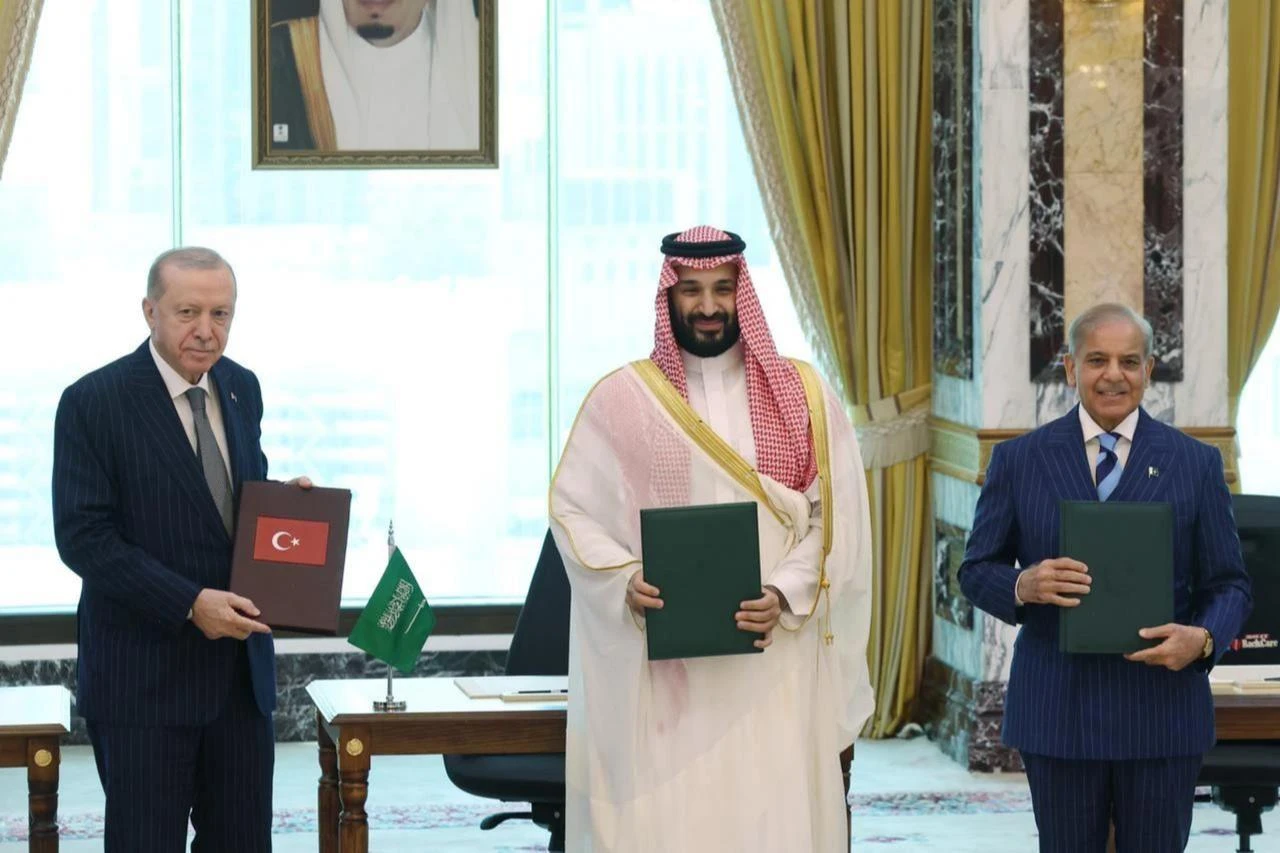


China has said nothing official about the Mecca Joint Defense Agreement. It has also said quite a lot.
In the days since Türkiye, Saudi Arabia and Pakistan pledged to treat an attack on one as an attack on all three, Chinese state media and top scholars have picked the pact apart in unusual detail, debating what it means for American credibility and for Beijing's own allies. The Foreign Ministry, conveniently, is on summer recess.
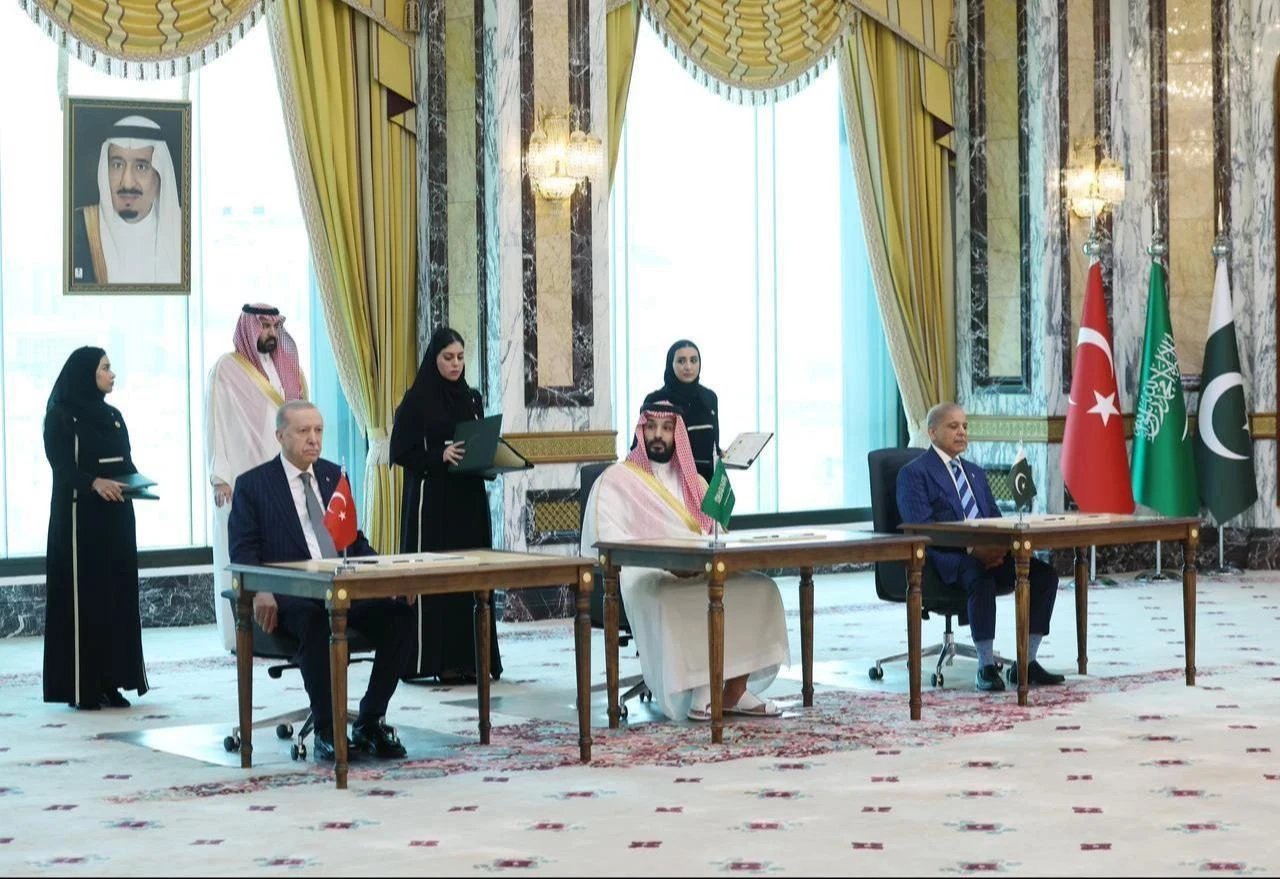
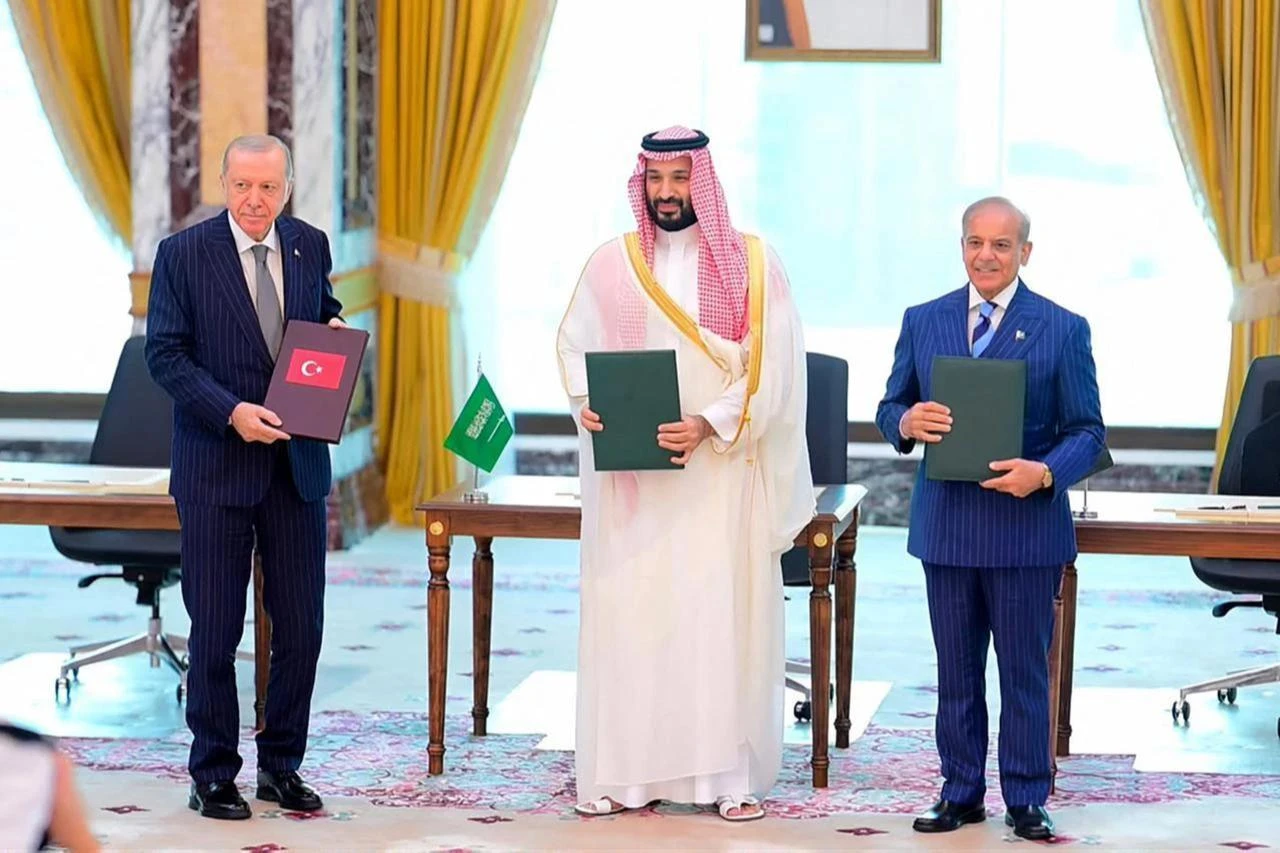
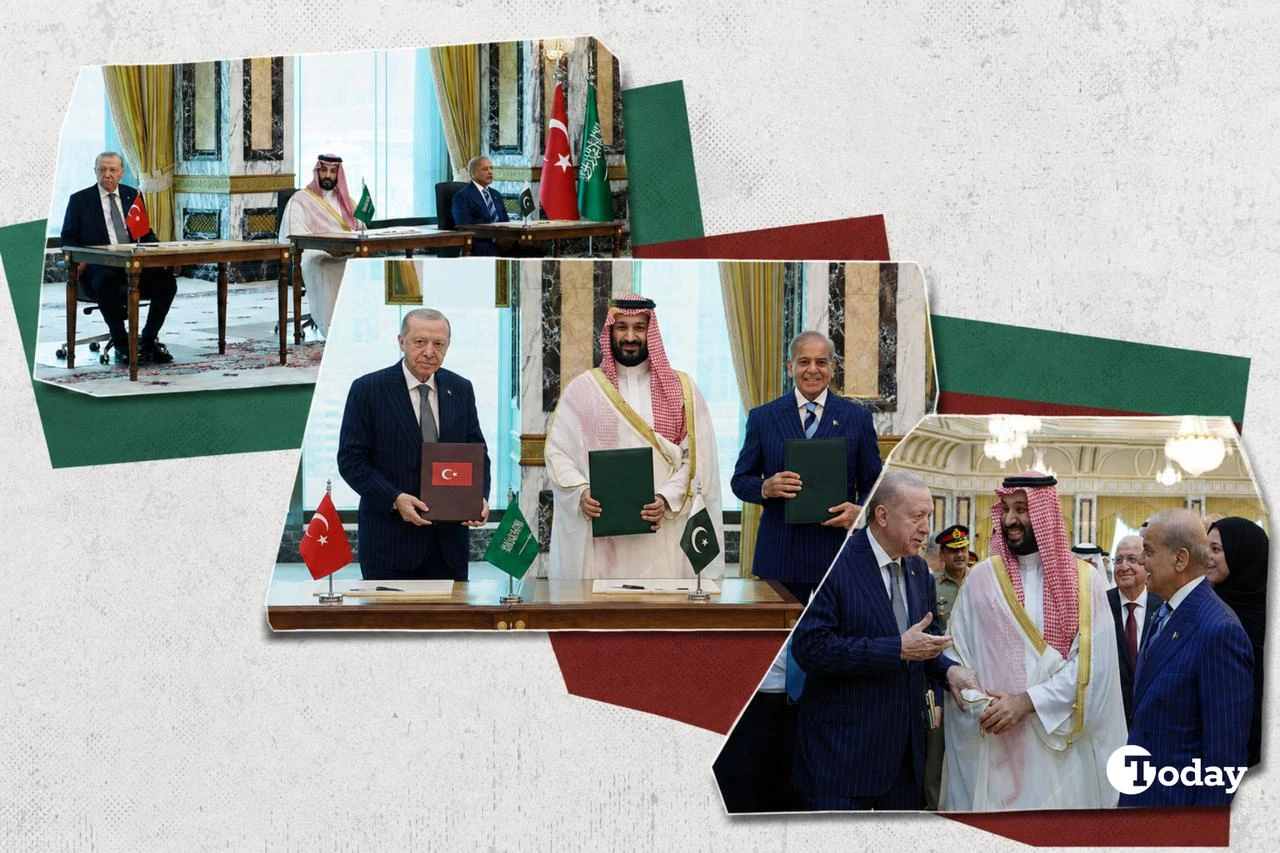
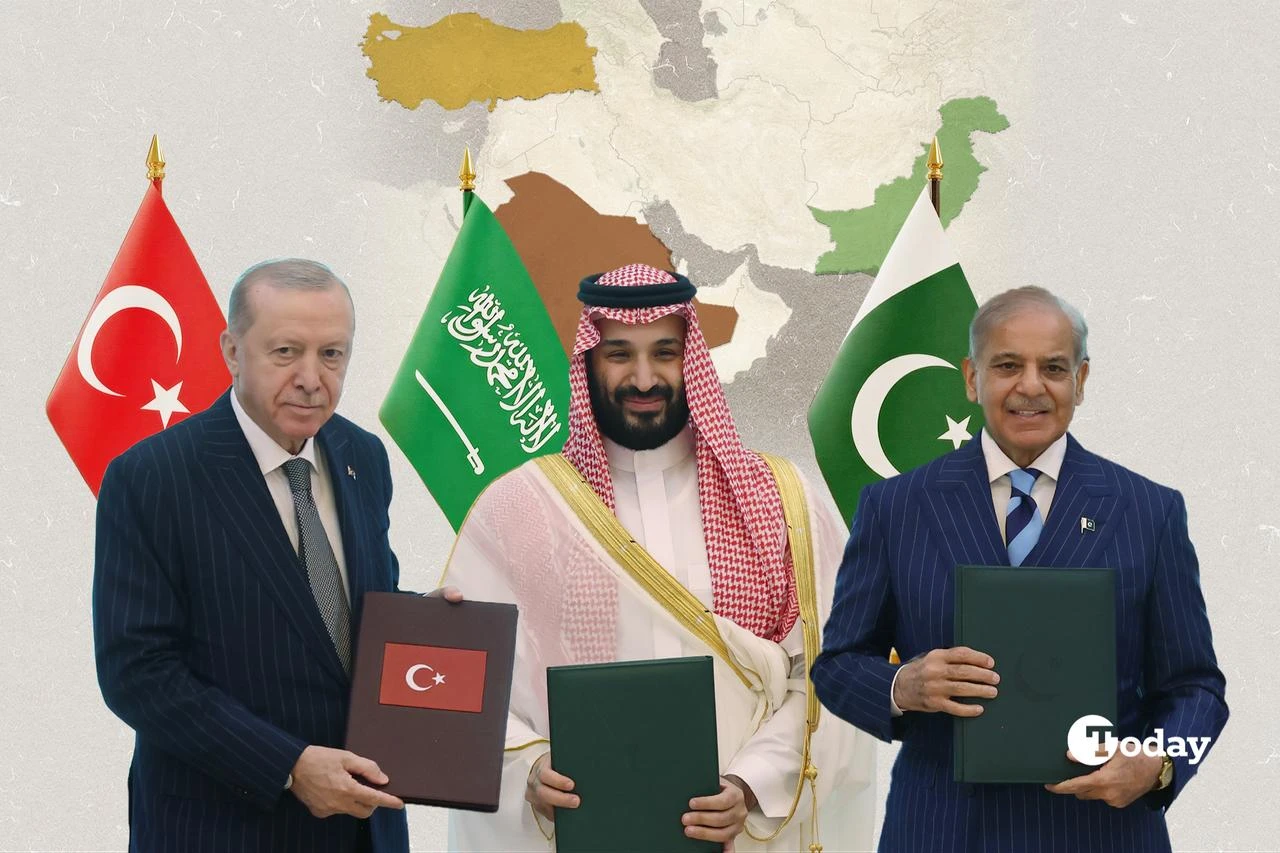
The Mecca Joint Defense Agreement brings together three states that sit in different security systems. Türkiye remains anchored in NATO, Saudi Arabia is still closely tied to the United States, and Pakistan combines a nuclear arsenal with exceptionally close defense relations with China.
Their decision to treat an armed attack on one member as an attack on all three therefore reaches beyond a routine defense accord. That combination gives Beijing several reasons to watch closely, since the pact touches the Gulf, South Asia, the Red Sea and several of China's major political and economic partners at the same time.
In one of the first reactions carried by state news agency Xinhua, Hu Ruoyu framed the agreement around doubts about American security guarantees. The report cited Tsinghua University scholar Yan Xuetong, who asked how Washington could protect Middle Eastern partners if American forces could not protect their own bases.
The same Xinhua report grouped Türkiye, Saudi Arabia, Pakistan and Egypt among states that increasingly see greater regional responsibility for security as necessary.
Concern about U.S. guarantees also ran through other Chinese coverage, including an assessment in Guangming Daily and a commentary published by Qiushi, although later assessments were less categorical about American decline.
One Guangming Daily analysis described the Saudi approach in terms of security diversification. A recurring question in these commentaries is how much more responsibility regional states can assume for their own defense while keeping their American relationships intact.
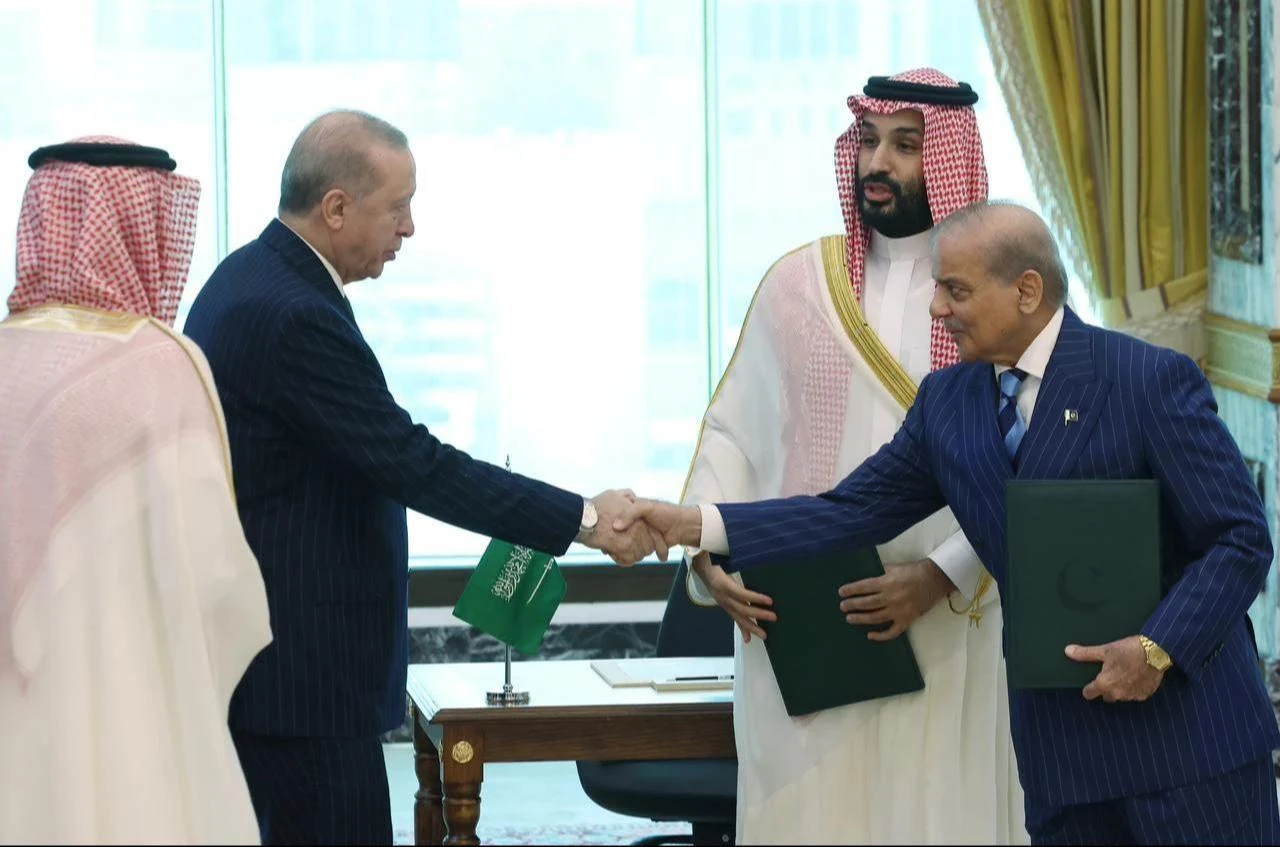

Wang Yuxinhong's report in Guangming Daily presents Riyadh's policy in precisely those terms. Saudi Arabia can preserve its American relationship while adding Türkiye and Pakistan as security partners. That reading is more convincing than talk of a post-American Middle East.
Wen Jing of Tsinghua University's Center for Strategy and Security notes that the three countries still depend heavily on U.S.-linked capabilities in advanced weapons and intelligence, and cannot quickly reproduce American strengths in areas such as satellite reconnaissance or long-range strike.
Her assessment envisages a layered arrangement in which Washington retains functions that are difficult to replace while regional powers assume more responsibility for coordination and deterrence.
Chinese commentary can therefore question American reliability without assuming an American withdrawal, while the Mecca Agreement gives its members another security option and more room for maneuver alongside their existing ties with Washington.
Chinese analyses often treat Türkiye as the member capable of connecting security environments that usually remain separate. Guo Bingyun of Sichuan International Studies University draws attention to Türkiye's NATO experience, its operations in Syria and Libya, its security presence in Qatar and its growing defense industry.
His analysis notes that deeper cooperation in the Gulf and South Asia could expand Turkish joint production and technology partnerships and give Ankara a larger role in regional security arrangements. The mobile edition of the same analysis carries the same argument.
Pakistan's nuclear status introduces a different issue, namely whether the agreement carries any form of extended nuclear deterrence. Chinese coverage has generally been more cautious on this point than some of the commentary surrounding the agreement, and a later Xinhua assessment does not treat Pakistan's nuclear arsenal as an automatic guarantee for Türkiye or Saudi Arabia.
Kong Dejun in The Paper places the agreement against the record of earlier Islamic cooperation mechanisms that often remained political declarations, arguing that the planned ministerial committee and permanent secretariat could give this arrangement greater durability.
His article is equally clear about what remains unknown. Joint command, intelligence sharing and military reinforcement have yet to be tested, which makes descriptions such as an "Islamic NATO" premature.
There is also an interoperability problem that should interest Beijing. Pakistan operates Chinese-made J-10CE fighters, while Türkiye belongs to NATO and has built a sizeable domestic defense industry.
Any serious common-defense structure would eventually have to reconcile equipment, communications and doctrine drawn from different military ecosystems. China's embassy in Pakistan has documented the J-10CE's entry into Pakistani service.
 2 min read
As time passed and longer assessments appeared, Chinese commentary became increasingly concerned with implementation. CNR Military commentator Teng Jianqun points to unresolved questions over common objectives, military integration and costs.
Xinhua's later assessment also warns against treating the pact as a finished NATO-style structure, while CNR's broader military analysis stresses how much institution-building would still be required.
The harder cases may involve the kinds of attacks Saudi Arabia has actually faced in recent years. A conventional attack by another state is relatively easy to classify. Houthi missiles, drones or attacks by other armed groups raise more difficult questions about attribution and the level of assistance expected from the other members.
Guangming Daily's discussion of the Red Sea dimension is cautious about how quickly political commitments of this kind can become usable military capacity.
Beijing has so far issued no official statement supporting the agreement. Wang Yi did call in January for China and Islamic countries to develop a "security partnership," but those remarks preceded the Mecca Agreement by more than six months and cannot reasonably be presented as an endorsement of it.
China's regular Foreign Ministry briefings are on summer recess until Aug. 17, which partly accounts for the absence of a routine press response so far. The original Foreign Ministry readout makes no reference to the later agreement.
Taken together, the Chinese readings are more cautious than the early "Islamic NATO" headlines suggest. They describe regional powers trying to carry more of their own security burden while retaining relationships they are not yet able or willing to replace.
Whether the Mecca Agreement becomes more than an additional layer of deterrence will depend on a much less dramatic question. The answer will come when the three governments have to decide what mutual defense actually requires in a real crisis.


 Set as preferred source
 Set as preferred source


 1 min read