Newsletters




On Oct. 22, Sudan’s army retook the Bukuri military base near Ad Damazin in Blue Nile state, close to the Ethiopian border. It was a small victory on a new front.
But it came four days before an anniversary that explains why the war now looks so different from the way it did a year ago.
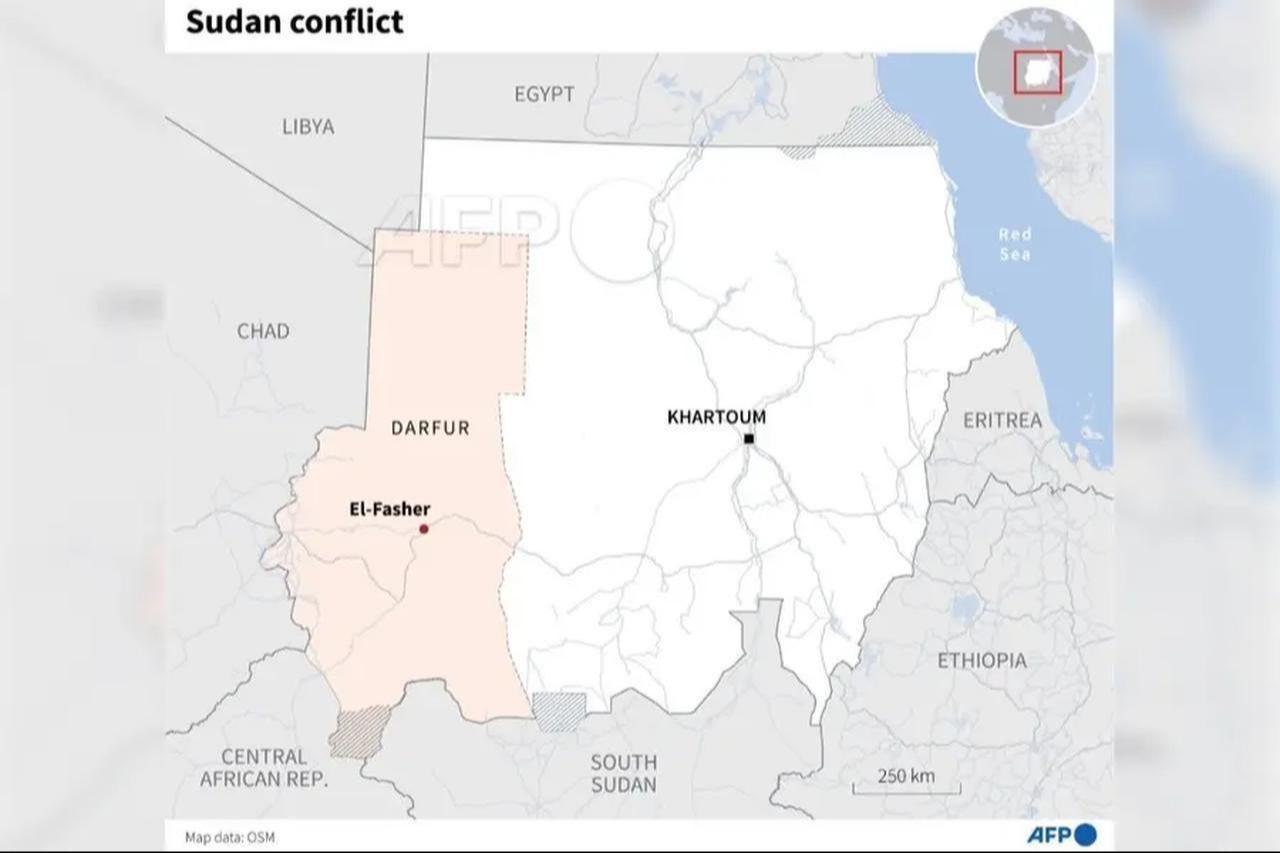
On Oct. 26, 2025, the Rapid Support Forces (RSF) stormed el-Fasher, the army’s last garrison in Darfur. Its fighters filmed themselves killing unarmed men. In three days, at least 6,000 people died, according to the U.N. human rights office. Only weeks before, the RSF’s leader, Mohamed Hamdan Dagalo, or Hemeti, had been sworn in in Nyala as the head of a rival government.
Since then, the RSF has become a pariah. Governments that once spoke of “two generals” now speak of a state and a militia. Its claim to govern Sudan has collapsed, and its fighters are defecting.
What keeps it going is a supply chain run from the United Arab Emirates, routed through Chad, Libya, Somalia and Ethiopia, and backed by a political alignment with Israel that Prime Minister Benjamin Netanyahu has now drawn on a map.
Within days of the city’s fall, “boycott Dubai” was trending. The Gaza ceasefire had only just begun, and activists who had spent two years mobilizing for Palestine found a new cause in Sudan.
What they were reacting to was footage the RSF had made itself. Abu Lulu, a commander who had built a following on TikTok, uploaded videos of himself executing prisoners. From orbit, satellites recorded the blood on el-Fasher’s streets.
None of it came as a surprise to those who had been watching. In July 2023, Yale’s Humanitarian Research Lab had told policymakers that the city’s capture could end in mass killing. Through the siege, its analysts logged the RSF torching Zaghawa farming villages to choke off el-Fasher’s food.
That combination of warning, self-incrimination and timing is what set el-Fasher apart. The RSF’s ethnically targeted killings of Masalit in el-Geneina in 2023, and its assault on the Zamzam camp in April 2025, had passed with little lasting reaction abroad. This time, the world could not look away.

Nairobi tells the story in miniature. Kenya hosted the launch of the RSF’s parallel government in 2025. Today it says it has no links to the group, and it is in Nairobi that victims lodged the first war crimes complaint against RSF members anywhere outside Sudan.
Others have drawn the same line. The African Union and the Arab League urged members not to recognize the Nyala administration. British diplomats who sat down with RSF officials in Kenya in September went out of their way to say the meeting conferred no recognition. Washington’s Africa adviser, Massad Boulos, says the U.S. will never recognize a rival government.
Legal verdicts have piled up behind that isolation. A U.S. genocide determination in January 2025 once stood alone. In February 2026, the U.N. human rights office added findings of war crimes and ethnically targeted killings, and the U.N. fact-finding mission concluded that the assault on the Zaghawa and Fur bore the hallmarks of genocide.
The U.K., the EU, the U.N. Security Council and the U.S. Treasury sanctioned RSF commanders, Hemeti’s brother and deputy, Abdelrahim Dagalo, among them.
For a movement that claimed to speak for Sudan’s marginalized periphery, the damage is self-inflicted. In el-Fasher, it targeted the Zaghawa and Fur, two of that periphery’s largest communities.
Burhan’s travel schedule shows who now counts. After el-Fasher, Sudan’s army chief went to Riyadh, Cairo and Ankara. In Ankara, Recep Tayyip Erdogan laid on full state honors and later praised him as “a leader worthy of Sudan."
Around the same time, Burhan dismissed a Quad truce proposal, arguing that no plan could be fair while the UAE helped write it.
The diplomatic heavy lifting came from Saudi Arabia. On Nov. 19, at a Saudi investment forum in Washington, Donald Trump revealed that Crown Prince Mohammed bin Salman had urged him to do “something very powerful” on Sudan, and pledged to work with Riyadh and regional partners to stop the atrocities.
According to reports, the crown prince also wanted Washington to lean on Abu Dhabi. Riyadh and Cairo followed with curbs on Emirati cargo flights through their airspace suspected of serving the RSF, and Libya’s Kufra airport went quiet for a time.
By August, Saudi Arabia, Türkiye and Pakistan had formalized their alignment in a mutual defense pact signed in Mecca. In these capitals, Sudan’s war is no longer a quarrel between two generals. It is a state facing a militia.
The military picture has moved the same way. ACLED, which tracks conflict data, says the lifting of the RSF siege of el-Obeid ended 18 months of stalemate in North Kordofan.
Defections have followed. Major General al-Nour “al-Qubba,” who had led forces in the el-Fasher offensive, crossed to the army in April. In August, 21 commanders and 270 fighters did likewise.
None of this means the RSF is finished as a fighting force. It still controls territory. Politically, though, the verdict is in. Governments, U.N. investigators and a public that watched el-Fasher on their phones agree that the RSF will have no role in whatever Sudan becomes.
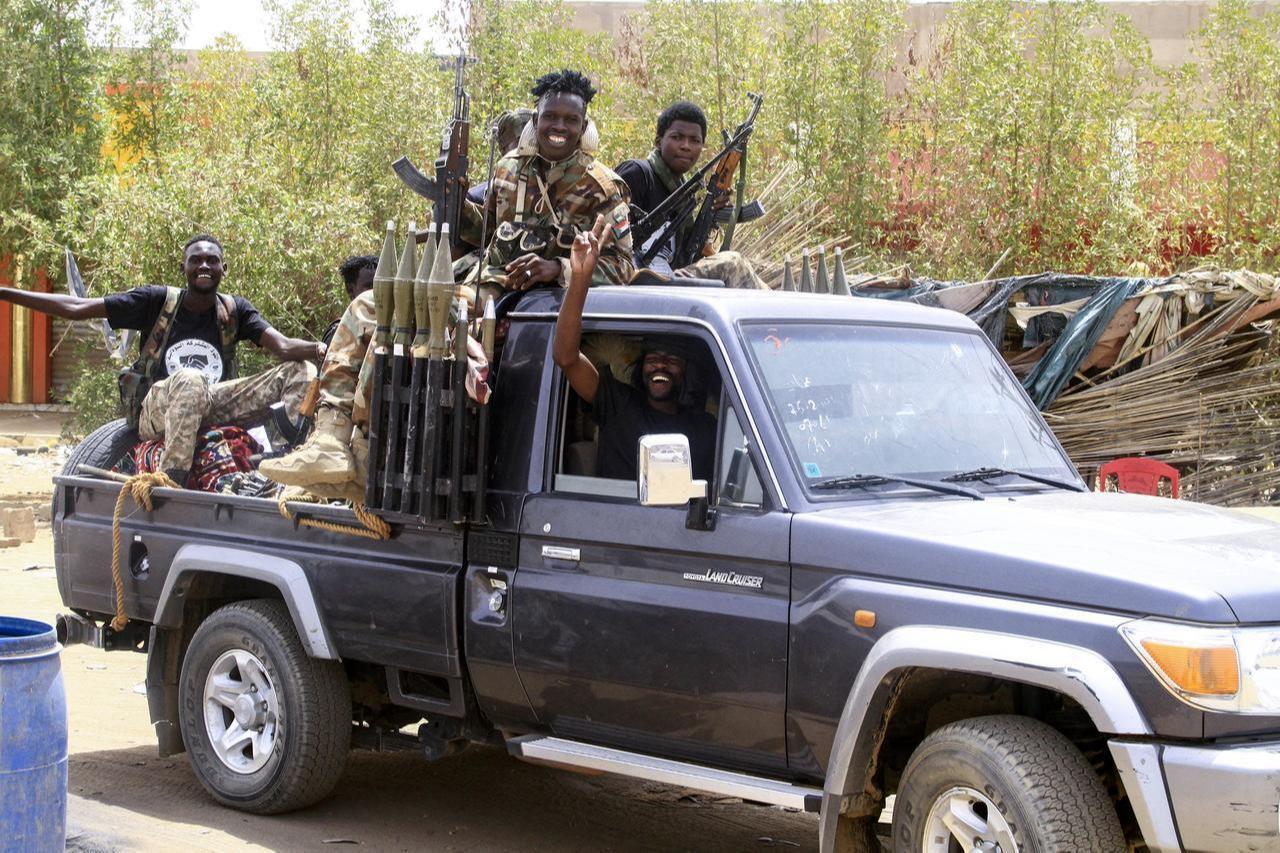
Some of the clearest evidence of who sustains the RSF comes from Colombia. Human Rights Watch followed Colombian recruits from Bosaso in Somalia’s Puntland region, through the UAE and Chad, to Nyala; witnesses saw them outside el-Fasher as it fell.
In September, U.N. investigators put the number of Colombians recruited at up to 2,000 and identified Bosaso as a recurring hub for howitzers, air-defence systems and fighters headed to the RSF. Middle East Eye had earlier reported Emirati cargo planes at Bosaso unloading supplies for the RSF, and Colombian fighters moving through a camp nearby.
Bosaso is one stop on a longer route. Investigators first traced an air bridge via Amdjarass in Chad, then via Kufra in Khalifa Haftar’s eastern Libya. When Saudi and Egyptian pressure closed one corridor, the UAE sent flights back through Chad, Egyptian military sources told Middle East Eye.
Abu Dhabi denies arming either side. U.N. investigators have cautioned that states supplying the RSF despite a known risk of atrocities could be in breach of international law, and in some cases complicit. Washington has not acted on that warning.
In June, the Senate Foreign Relations Committee voted 15 to 7 against linking U.S. arms sales to the UAE to an end of its RSF support, despite a letter from 21 senators urging exactly that.
The war’s newest front runs along Sudan’s border with Ethiopia. This year, the RSF and its SPLM-N allies pushed into Blue Nile state and took Kurmuk and Geissan. The army’s recapture of Bukuri on Oct. 22 shows the front can be rolled back.
Whether it is, or whether the triangle of Ethiopia, the UAE and the RSF hardens and spreads the fighting, may decide how long the war lasts.
Khartoum already sees Addis Ababa as a party. In May, after drones it says were launched from Bahir Dar hit Khartoum airport, Sudan recalled its ambassador. Ethiopia rejects the accusation.
The evidence behind Sudan’s suspicion has been building since February. Reuters disclosed a hidden camp where thousands of RSF recruits were being trained, funded by the UAE, according to eight sources.
Yale’s lab concluded that an Ethiopian army base at Asosa was assisting the RSF militarily. And Middle East Eye logged an Emirati cargo plane flying again and again into the Ethiopian air force’s main base.
On Oct. 18, Benjamin Netanyahu unveiled a new security doctrine alongside a map of the region. It grouped Israel and the UAE in a “Hexagon Alliance” and coloured RSF-held Sudan, Haftar’s eastern Libya and southern Yemen’s separatists as friendly to it.
Opposite stood a “Sunni diamond” of Saudi Arabia, Egypt, Türkiye and Pakistan. The capitals Burhan courted after el-Fasher fall on one side of that line. The RSF falls on the other, not as a Sudanese alternative but as a client of outside powers.
The chart made public a relationship with a long history. Hemeti had cultivated Mossad before the war, and once it began, Israel kept channels to both generals, according to the scholar Alex de Waal. Burhan’s government had signed the Abraham Accords in 2021, yet it was the RSF that kept coming to Israel.
An Africa Intelligence investigation, reported by Middle East Eye, says RSF delegations under Abdelrahim Dagalo met Israeli foreign ministry and intelligence officials in Tel Aviv in May 2025 and again in February 2026, while U.N. investigators were publishing their el-Fasher findings.
One more detail fuels the suspicion, widespread in the region since el-Fasher, that the RSF is a piece in someone else’s design. The Emirati cargo plane tracked to Ethiopia had, days before, made three round trips between Bahrain and what appears to be Israel’s Ovda air base. What it carried remains unknown.
A year on, the RSF’s fate is no longer an open question in most capitals. The cost of backing it, however, remains low.
Three governments carry that responsibility. The UAE denies arming anyone, but U.N. investigators, rights groups and regional states still regard it as the RSF’s main supplier.
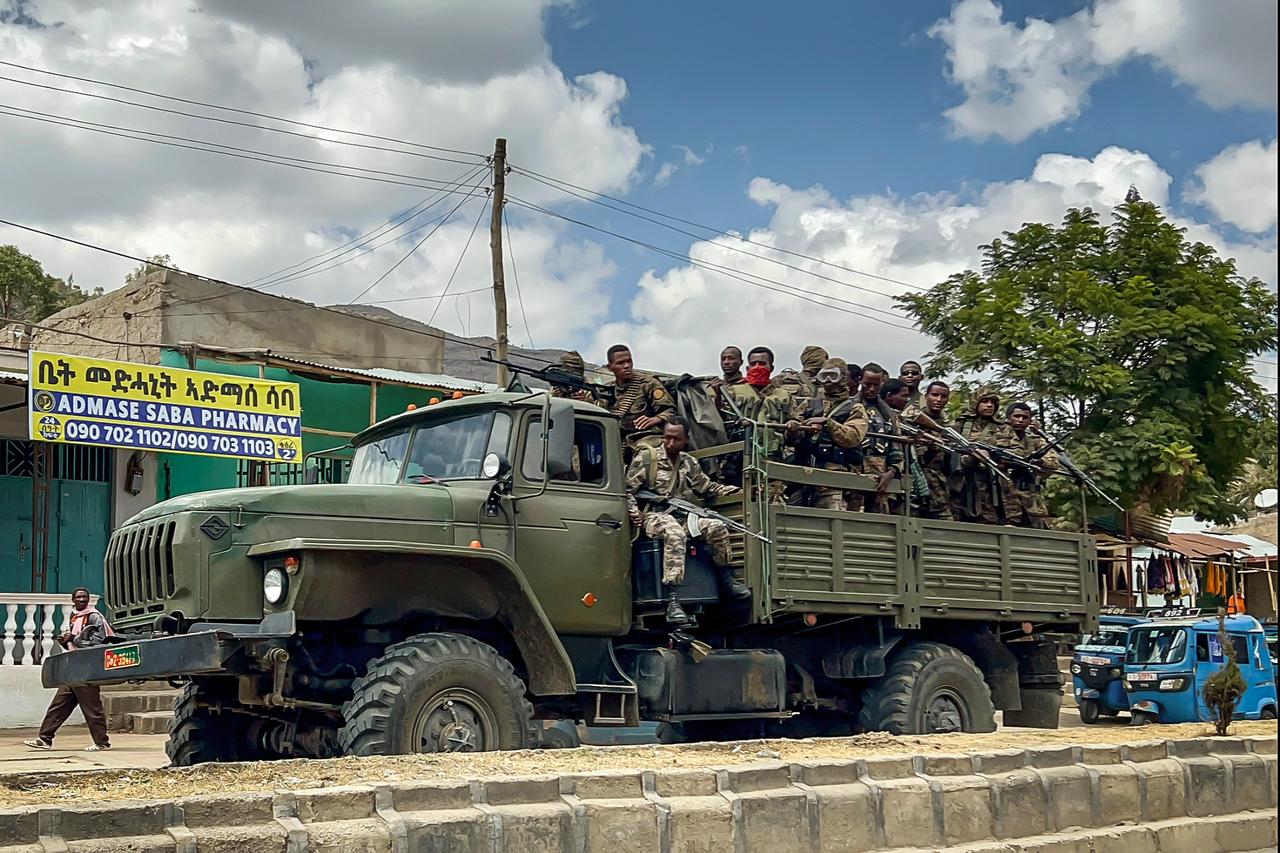
Ethiopia, which also denies any role, now offers a training ground, a military base and a border from which to open new fronts. Israel has kept its lines to the RSF open and, through Netanyahu’s map, has written it into its own alliance.
As long as Abu Dhabi, Addis Ababa and Tel Aviv see value in the RSF, it can go on fighting a war it can no longer win. The army has the upper hand, but peace depends on the UAE accepting the judgment the rest of the world has already reached, and on Ethiopia and Israel concluding that an RSF foothold in Sudan costs them more than it gains.


 Set as preferred source
 Set as preferred source


 2 min read
 1 min read