Newsletters


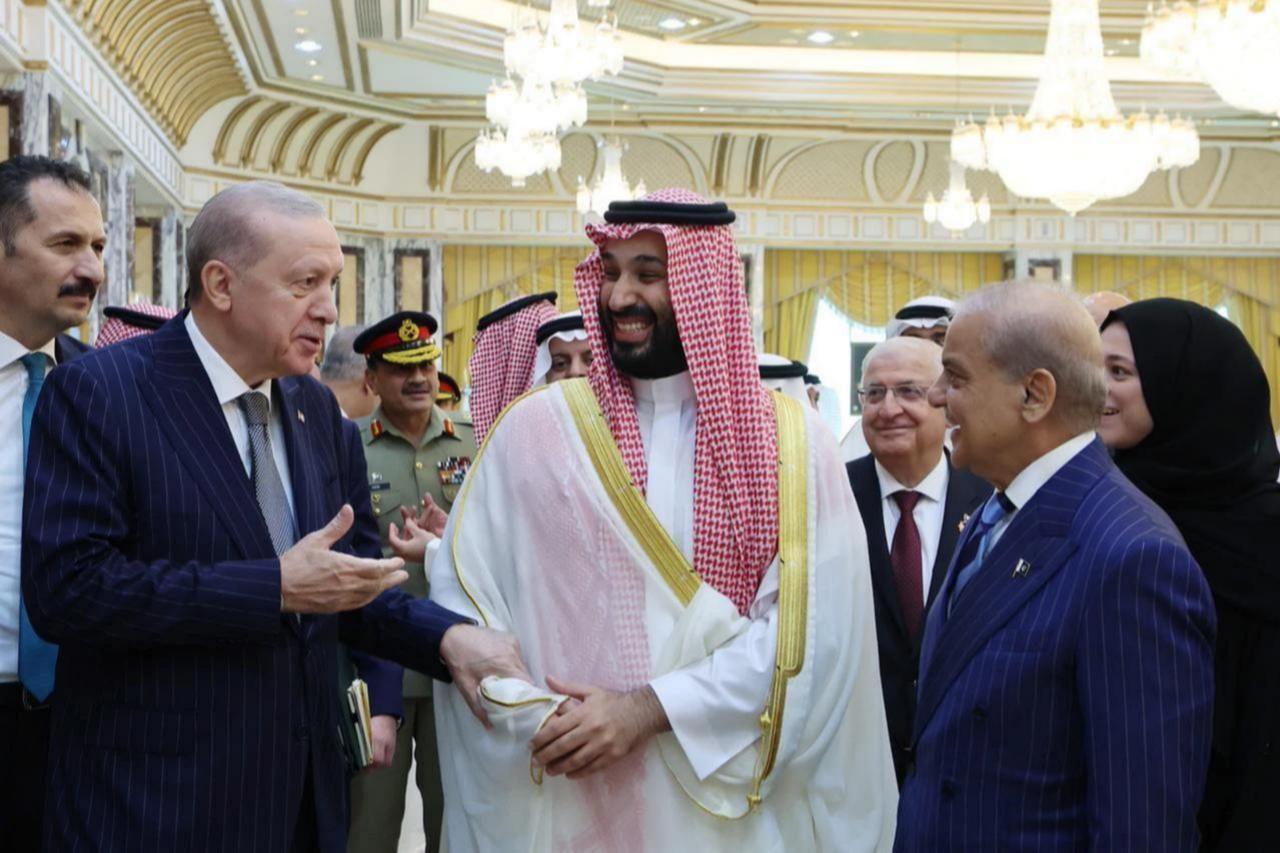


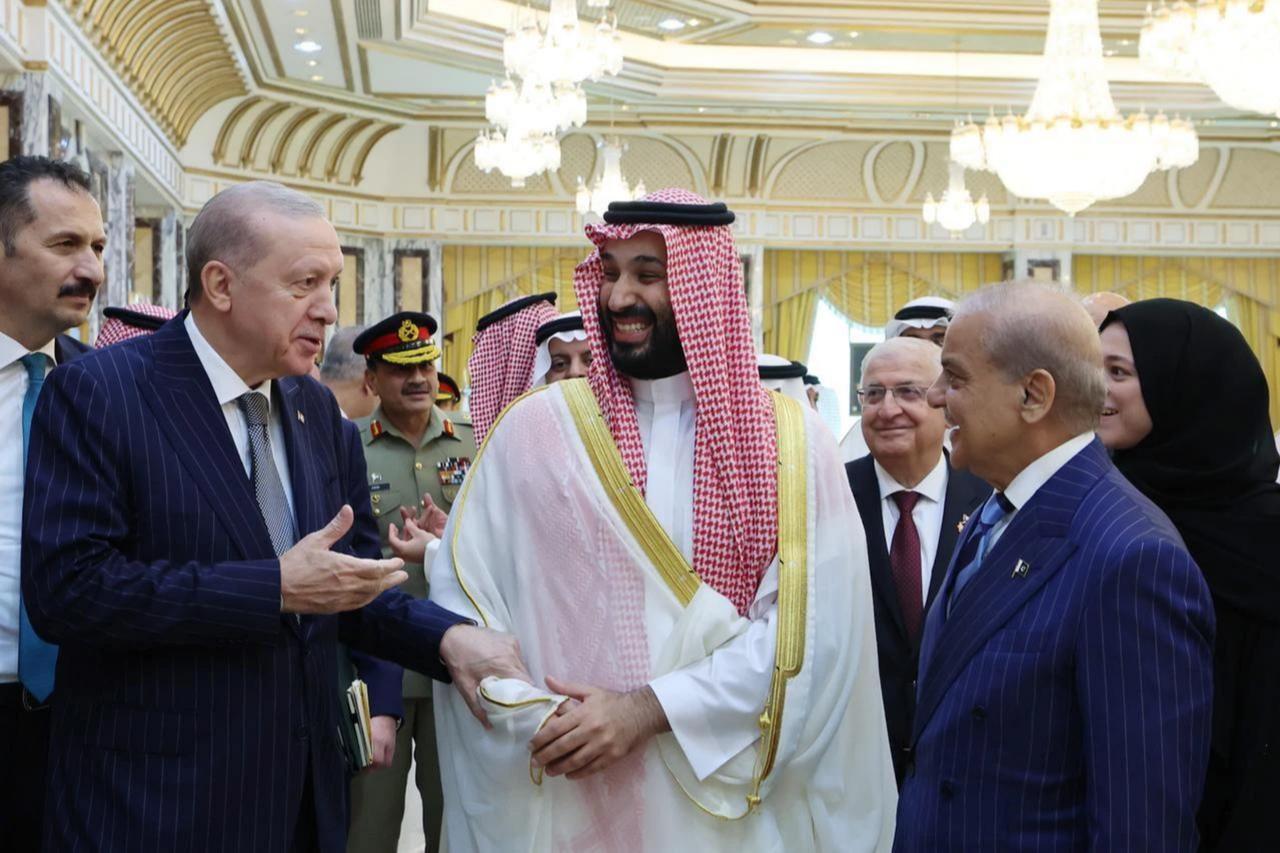
The Mecca Joint Defense Agreement was signed on a Tuesday. By Wednesday, the world had already decided what it meant.
In Washington, the briefing rooms were lit up. In Brussels, diplomats reached for old logs. In London and Paris, the same question: had the middle finally chosen a side?
Türkiye had done nothing of the sort.
What looked like alignment was actually something older, sharper. A refusal to be owned. A partnership with Pakistan and Saudi Arabia, not as a bloc, but as a buffer. Three powers were betting that survival in a fragmented world means keeping every door open.
The West called it hedging. Türkiye called it sovereignty.
On the contrary, guided by the competent institutional statecraft of the Turkish diplomatic establishment, it embodies a sophisticated model of strategic hedging and network-based minilateralism.
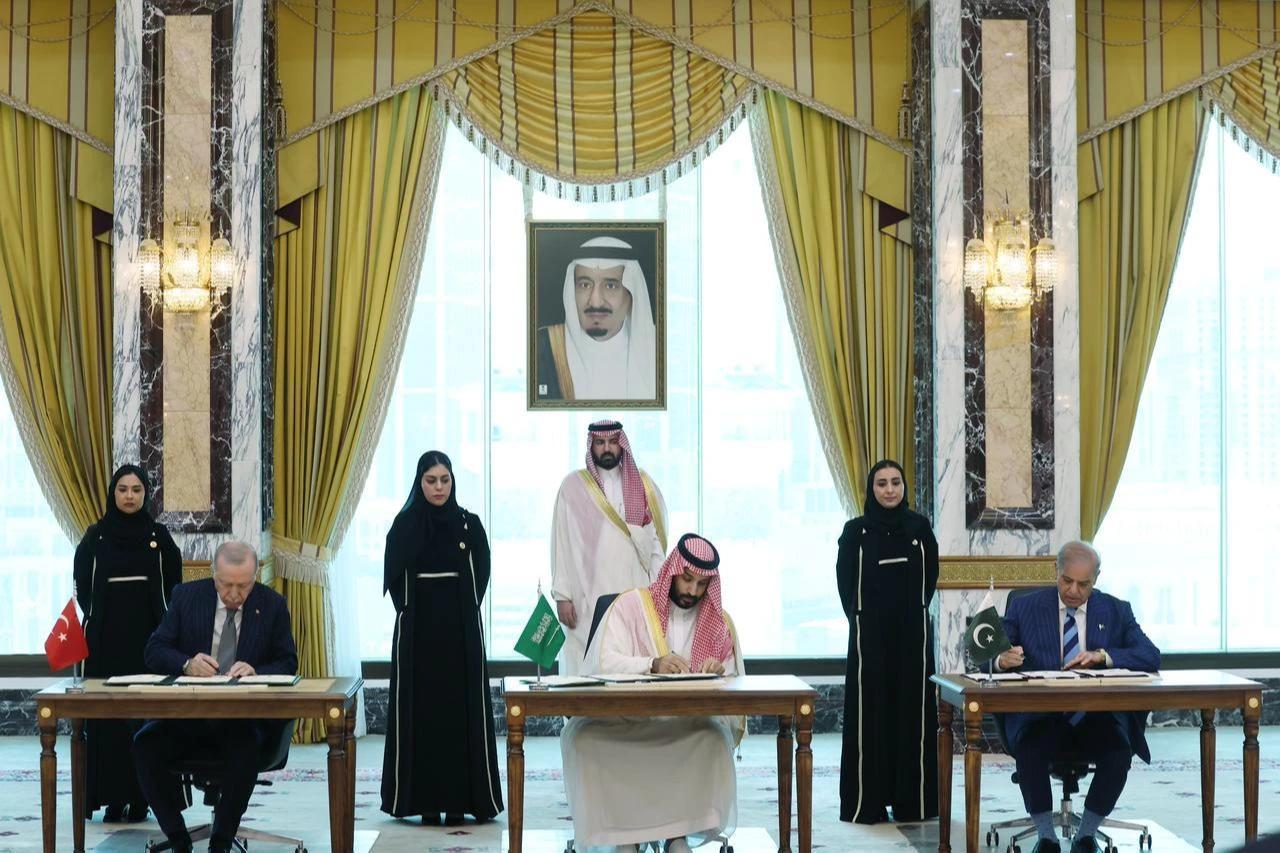

For decades, structural realism explained international security through a sharp dilemma: states either engage in hard balancing against an emerging hegemon or bandwagon with the strong.
In today’s post-hegemonic, polycentric international order, this dichotomy is an analytical burden.
The erosion of monolithic security commitments by great powers has left middle powers facing systemic vulnerability. The response of these powers is neither submission nor ideological confrontation; rather, it is a posture of strategic hedging that actively multiplies options, diversifies partnerships, and limits exposure to the zero-sum external rivalries of great powers.
In international relations theory, strategic hedging is a hybrid behavioral pattern where middle-power actors—operating under structural uncertainty and power asymmetry—resort neither to overt hard balancing nor to complete bandwagoning.
Instead, they simultaneously pursue contrasting policies to minimize risks. Anchored in neoclassical realism and rational choice models, hedging involves maintaining economic and diplomatic engagement with great powers on one hand while building an indirect "soft balancing" through military modernization, defense industry partnerships, and flexible minilateral networks on the other.
The core rationale is to disperse the strategic vulnerability and abandonment risk that would arise from depending on a single hegemon or alliance during a systemic crisis, thereby optimizing the trade-off between autonomy and security guarantees by creating multiple options.
The Mecca Agreement represents the apex of this theoretical evolution across the Levant, the Gulf, and South Asia.
The framework is not designed to directly clash with Washington, Beijing, or Moscow. Instead, it functions as a rational, modular arrangement that merges the asymmetric state capacities of the parties into a coherent strategic equilibrium.
Within this balance, Ankara provides its operational expertise and evolving defense ecosystem; Islamabad brings its military experience and strategic capabilities; while Riyadh contributes its economic capacity and strategic presence along energy corridors.
More importantly, the joint declaration issued in Istanbul prioritizes calculated institutional design over vague political rhetoric.
The establishment of a permanent Secretariat based in Saudi Arabia, to be initially headed by a Pakistani Secretary-General for a three-year term, demonstrates that this initiative is not a temporary, transactional encounter but an institutionalized framework designed for operational continuity.
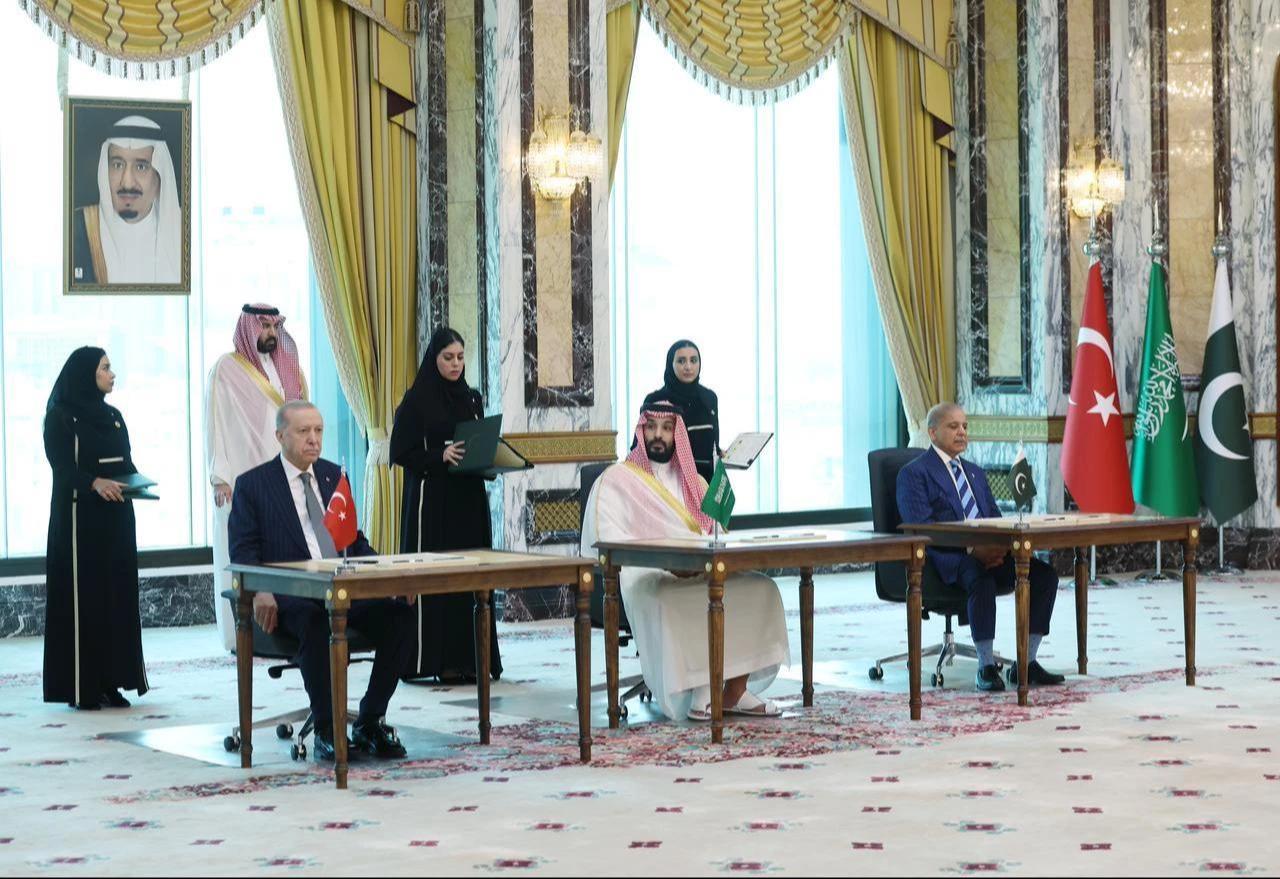
The most striking aspect of the Istanbul summit is how clearly it reflects the institutional ethos of Turkish diplomacy. Ankara's integrated statecraft has long proven its skill at managing delicate balances without losing its momentum.
Far from viewing NATO obligations and southern regional partnerships as mutually exclusive axes, Ankara conceptualizes them as complementary layers of a comprehensive national security architecture.
While meticulously preserving its contractual and legal status under the North Atlantic Treaty, Ankara simultaneously weaves flexible mini-lateral networks along its southern flank to close security gaps that traditional alliances were never designed to manage.
This reflects a well-measured diplomatic approach. The Mecca framework prioritizes joint technology development, co-production in defense, and technological synergy—areas where the Turkish defense ecosystem acts not merely as an exporter but as a strategic norm-setter.
By grounding this partnership in the principles of regional ownership, a just and lasting peace, and the prevention of escalation, the establishment has built a deterrence mechanism that provides stability and cooperative security rather than polarization.
A recurring critique of multi-regional defense arrangements points to geographic divergence: Türkiye’s vital interests are concentrated in the Eastern Mediterranean and the Levant, while Saudi Arabia focuses on the Red Sea and the Gulf, and Pakistan on South Asia.
However, measuring this alignment against the obsolete template of classical collective defense institutions is a profound methodological error.
Traditional alliances like NATO were constructed—in accordance with the conditions of their era and historical perspective—around centralized, permanently integrated command structures such as SHAPE, based on specific paradigms against a single, homogeneous adversary.
In contrast, the Mecca model operates as an adaptable, network-based architecture. Its command structure adopts flexible, ministerial-level coordination and an agile, consultative secretariat rather than cumbersome centralized bureaucracies. Instead of preparing for a single adversary, the model focuses on polycentric, asymmetric, and hybrid threats shaped by regional realities.
The operational backbone of the collective deterrence and defense targeted by the agreement is defined not by rigid military dictates that bind parties in advance, but by targeted technology transfer, armed forces interoperability, joint research and development, supply chain resilience, and consultative mechanisms.
Systemically, it does not aim to build a new global bloc; rather, it functions as a deliberate hedging mechanism that maximizes the strategic autonomy of each member.
This operational flexibility provides the three countries with vital strategic breathing room.
For Riyadh, the cooperation creates a foundation that gradually supports the domestic technology and defense goals of Vision 2030, without overshadowing regional normalization efforts.
For Pakistan, it offers geopolitical depth and the opportunity to build institutional bridges with Middle Eastern decision-making hubs, moving beyond traditional South Asian rivalries.
For Türkiye, it ensures a permanent, self-sustaining ecosystem for defense innovation and export scale while shielding its southern borders against unpredictable power vacuums.
The Aug. 31 Istanbul declaration proves that regional leaders and rising powers are no longer obliged to accept the pre-packaged, rigid security frameworks of the 20th century.
The Mecca framework does not fracture the international order; it provides the calm and disciplined load-bearing scaffolding needed to navigate its current disorder.


 Set as preferred source
 Set as preferred source


 2 min read

 1 min read