Newsletters




“Nei”—“No.”
That was the answer given by 52.8% of Icelanders when asked whether accession negotiations with the European Union should resume. The icy-summer referendum received relatively little attention in the European mainstream media.
If a similar referendum were to take place in Türkiye, it would dominate the agenda in Europe, with anxieties fueled by right-wing politicians—much like Boris Johnson did during the Brexit vote, despite being the great-grandson of an Ottoman vizier.
Most European coverage attributed the result to Icelanders’ desire to retain control over their distinctive fishing sector or their reluctance to surrender sovereignty. Others saw it as evidence that the EU has become less attractive to small and wealthy European countries.
From where I stand—and probably for many Turks of my generation who grew up with the ideal of EU membership— it is difficult to understand why a European country would say no to EU membership.
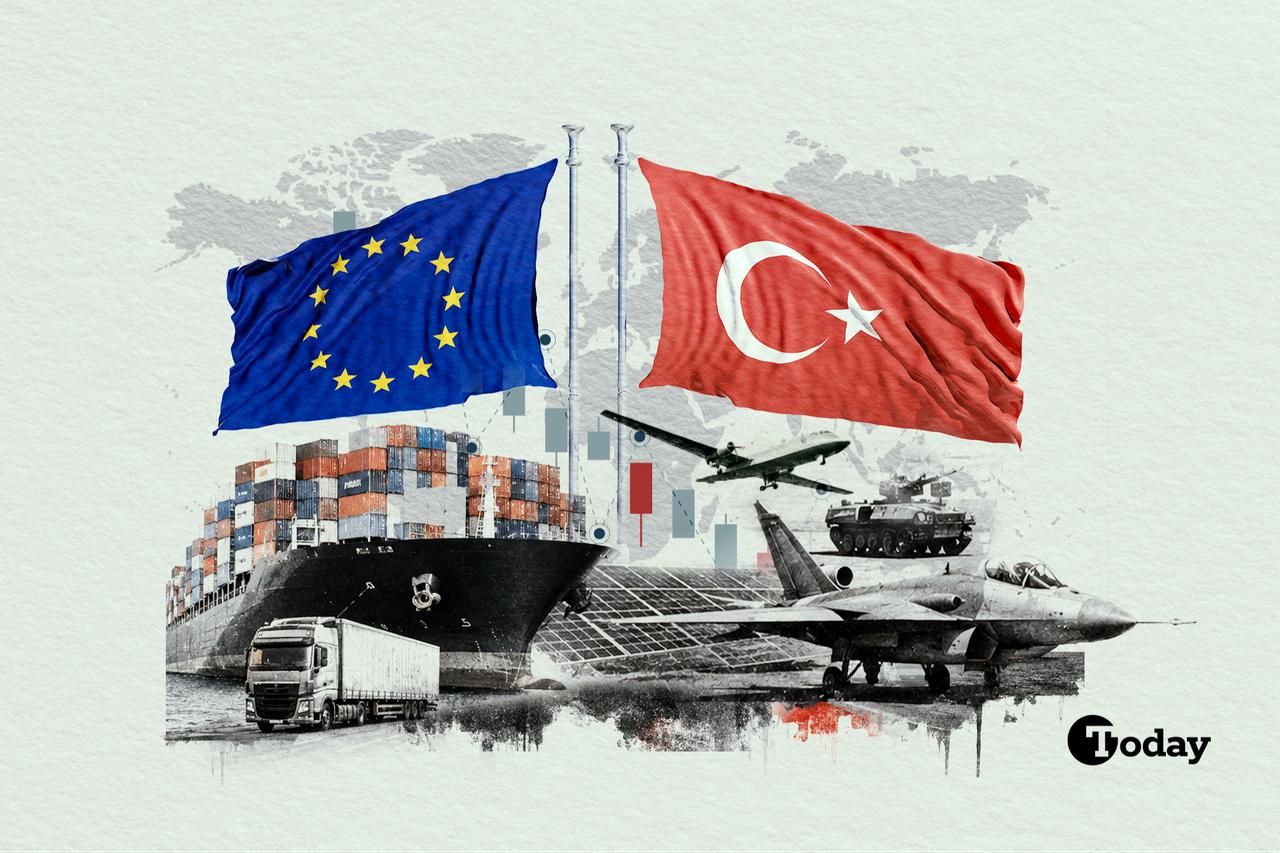
Türkiye’s EU adventure began in 1963 with the Ankara Association Agreement between Türkiye and the European Economic Community. The Customs Union followed in 1995 and has played an important role in Türkiye’s economic development, making the EU its leading trading partner.
The early 2000s marked a period of intense “Europeanization,” with constitutional and legislative reforms aligning Türkiye with EU standards, including changes to civil-military relations and the judiciary, recognition of the primacy of international and European law, abolition of the death penalty, and greater protection for freedom of expression, civil society and Kurdish cultural rights.
These reforms helped pave the way for the EU’s 2004 decision to open accession negotiations, which began in 2005.
Of the 35 negotiating chapters, 16 have been addressed, and only one has been provisionally closed. Opposition from France and the Greek Cyprus contributed to serious tensions and helped stall the accession process.
The March 2016 EU–Türkiye migration deal briefly improved relations, with commitments to advance visa liberalization and upgrade the Customs Union. Public support for EU membership subsequently reached a record 78.9% in 2017, according to IKV, compared with 71% in 2004 and less than 50% in 2007–2008.
However, this momentum did not last. Progress on the 2016 commitments remained limited, while the failed coup attempt in July 2016 led to further tensions over the rule of law and human rights. In June 2018, the Council concluded that accession negotiations had effectively come to a standstill.
Meanwhile, countries that began accession negotiations around the same time moved ahead: Croatia, for example, started negotiations in 2005 and joined the EU in 2013.
Greek Cypriot Administration’s (GCA) accession before the Cyprus issue was resolved, together with opposition to Türkiye’s membership from several EU countries, has reinforced the perception in Türkiye that the EU has applied double standards.
That frustration is increasingly visible in public opinion: an IKV survey in June 2026 found that support for EU membership had fallen to around 46%.
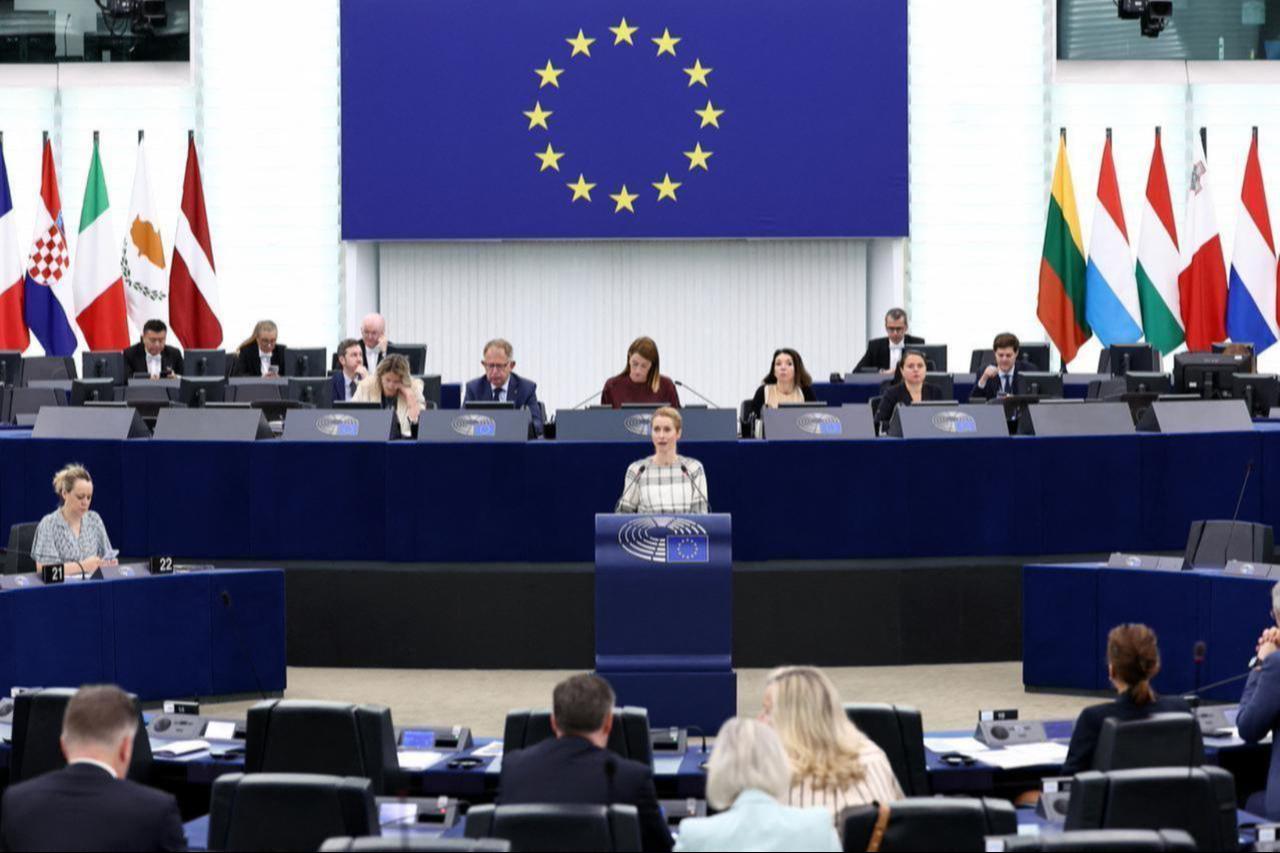

The pro-EU government led by Prime Minister Kristriun Frostadottir had initially planned to hold a referendum in 2027 on resuming EU accession negotiations.
But growing security concerns, including the U.S. calls for Europe to take greater responsibility for its own defense, increasing great-power competition in the Arctic, and President Trump’s repeated interest in acquiring Greenland, prompted Icelandic policymakers to bring the vote forward.
Iceland, the only NATO member without its own military, relies on its allies, particularly the United States, under a bilateral defense agreement.
Trump’s repeated confusion between Iceland and Greenland in a January speech only added to the sense of uncertainty.
Icelanders were ultimately asked whether the country should resume accession negotiations with the EU. Turnout reached a record 82.6%, with 52.8% voting “No.”
Since Russia’s invasion of Ukraine, the EU has significantly expanded its security and defense policies, including joint procurement, arms production and military preparedness. Yet the changing security environment did not translate into greater support for EU membership in Iceland.
Yet defense and security were not the main issues driving Iceland’s EU debate. The main concerns were domestic: the impact of EU membership on Iceland’s fishing industry, particularly over shared quotas and competition; the potential loss of sovereignty to EU institutions; and fears that membership could put the country’s economic prosperity at risk.
Iceland, hit by the 2008 financial crisis, applied for EU membership in 2009. Accession negotiations began in 2010 but were halted in 2013 as the economy recovered. In 2015, Iceland requested that it no longer be regarded as an EU candidate country.
Iceland is already deeply integrated with the EU through the European Economic Area and Schengen, and the EU is its largest trading partner. Membership would nevertheless bring additional benefits, including participation in the EU Customs Union and, eventually, the eurozone, as well as a seat in the European Council and representation in the European Parliament that would be significant relative to its small population.
For its proponents, the result is therefore a missed opportunity for both Iceland and the EU: accession could have strengthened the bloc’s Arctic presence, demonstrated that membership remains attractive to prosperous and well-integrated countries, and given fresh momentum to post-Ukraine enlargement.
Iceland’s “No” suggests that full membership is not universally attractive, but the EU continues to attract countries such as Albania, Moldova, Montenegro, North Macedonia, Serbia and Ukraine.
Bruegel, a leading Brussels-based think tank specializing in economics, takes a more positive view of Iceland’s rejection.
In an op-ed and a podcast following the referendum, it argues that European integration is increasingly possible without EU membership, highlighting emerging cooperation in defense, economic security, space and payment systems.
Bruegel points to existing models of integration beyond membership: Norway, Iceland and Liechtenstein participate in the EEA; Norway and Iceland are also part of Schengen; Switzerland has sectoral agreements with the EU; the U.K. has its Trade and Cooperation Agreement; and Türkiye is integrated through the Customs Union.
Bruegel then highlights newer forms of cooperation, including loans for joint procurement under the Security Action for Europe (SAFE) and the U.K.–EU Security and Defense Partnership, which gives the U.K. access to EU defense initiatives.
It also points to Canada’s growing bilateral cooperation with the EU, including its trade agreement with the EU and participation in SAFE and Permanent Structured Cooperation (PESCO).
Bruegel Senior Fellow Heather Grabbe describes this expanding network as “wider Europe beyond the EU,” a new model of integration that does not necessarily require membership.
These new forms of cooperation could allow non-member countries to deepen their integration with the EU without full membership.
Türkiye has long sought to modernize the Customs Union, limit the disadvantages created by the EU’s new free-trade agreements, and participate in SAFE.
Yet there is little sign of progress. The lesson may be familiar: just as with enlargement, Europe’s new forms of integration ultimately depend on political will.


 Set as preferred source
 Set as preferred source


 7 min read