Newsletters


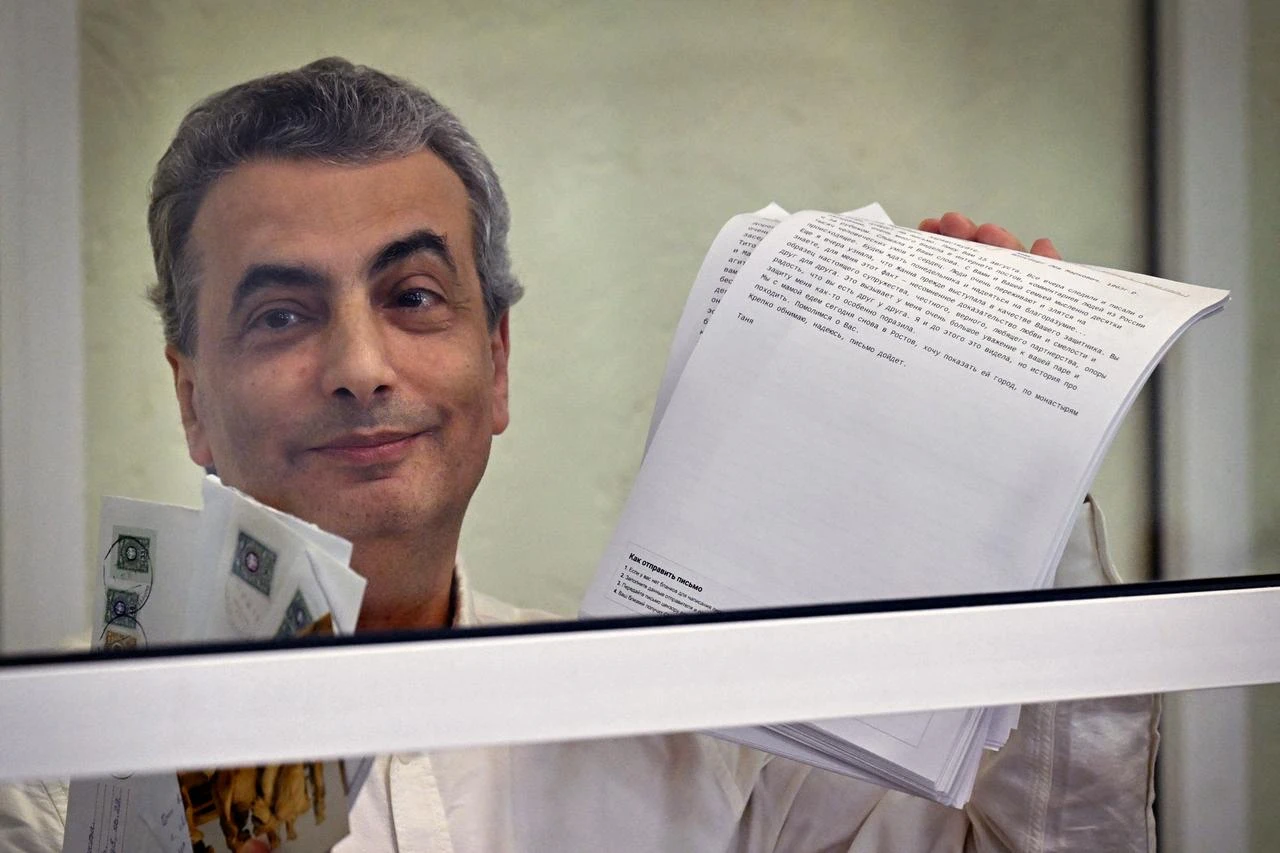


Delivering his final statement to a Pskov court near the Estonian border on Aug. 14, 2026, Lev Shlosberg pressed forward through repeated judicial interruptions to assert his right to speak. He warned that once the full, named death toll of the war is finally made public, the entire country will be gripped by horror.
Three days later, the same court sentenced him to 11 years and one month in a penal colony, a remote labor camp of the kind Russia inherited from the Soviet Union, on charges of repeatedly discrediting the Russian armed forces and spreading false information about them. Shlosberg is deputy chairman of Yabloko, the only registered Russian party still publicly advocating a ceasefire in Ukraine.
The sentencing came on the day the Supreme Court in Moscow rejected Yabloko's appeal against its removal from the Sept. 18-20 elections to the State Duma, the lower house of parliament.
Shlosberg, 63, founded the regional newspaper Pskovskaya Guberniya, which reported the deaths of Russian paratroopers in the Donbas in 2014 before the state acknowledged them. He was assaulted and hospitalized shortly afterward. He has been designated a foreign agent since 2023 and is among the few prominent war critics who did not leave Russia.
The discrediting charge stemmed from a debate in which he called the war "a bloody game of chess" and urged an immediate ceasefire. The false information charge rested on nothing he said. It rested on a repost: a Daily Mirror front page pairing Vladimir Putin's photograph with Olena Kurilo, a schoolteacher whose bloodied, bandaged face after the strike on Chuhuiv became the first widely seen image of the invasion.
It ran that morning on the front pages of the Guardian, the Sun and Bild, one of the most widely published images in Europe that day. Shlosberg posted it on Feb. 25, 2022, the day after the invasion began. The law he was charged under was signed on March 4, seven days later. His defense argues he is being prosecuted for an act that was not an offense when he committed it.
All three of his lawyers were absent for closing arguments, and the judge declined to grant a postponement, appointing a state lawyer over his objection.
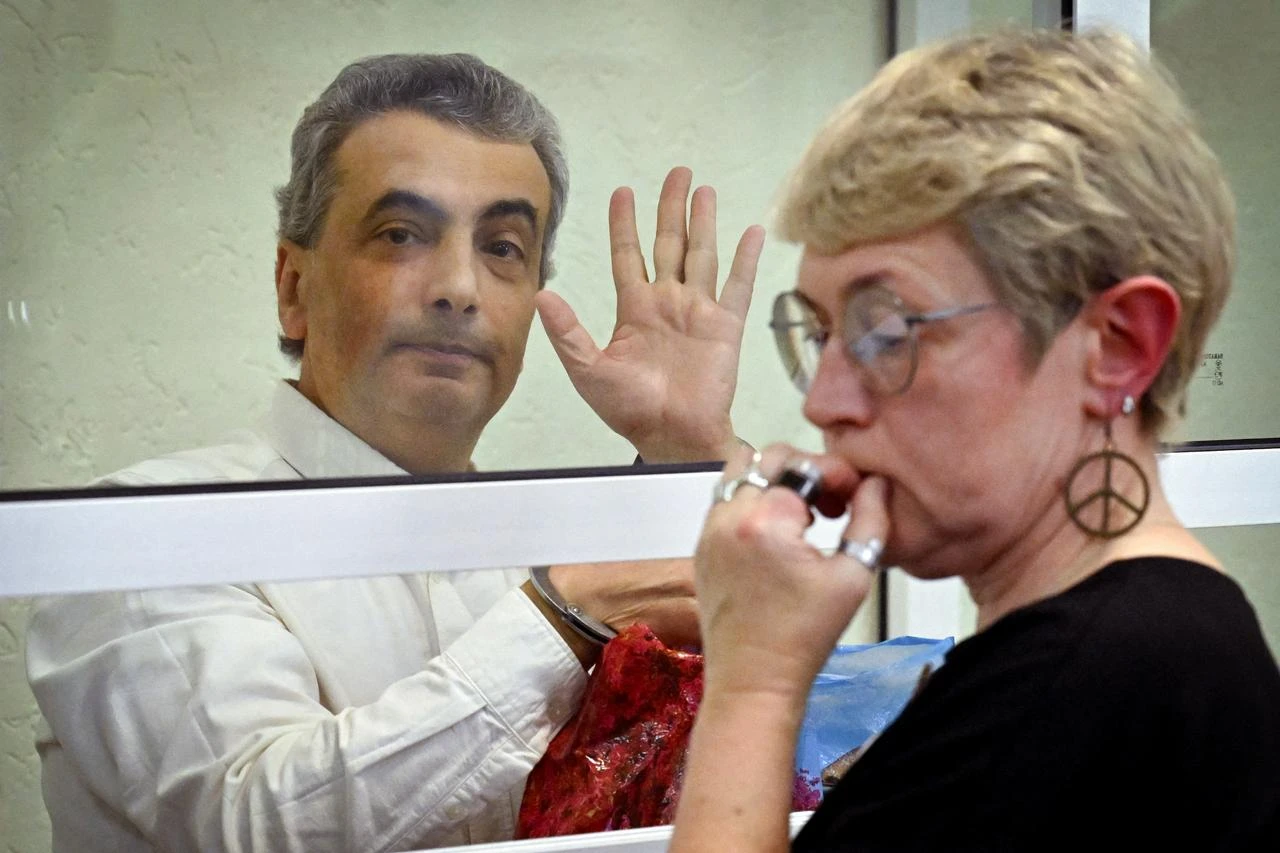

Shlosberg's argument for ending the war rested on the claim that it was failing.
The court did not examine that claim, but the available data does. The Institute for the Study of War recorded roughly 30 square kilometers of Russian advance in June 2026, against 481 a year earlier, and Russian-held territory contracted between December 2025 and May 2026.
Independent researchers have named more than 239,000 Russians dead, with a separate estimate placing total losses near 352,000 by the end of 2025. Russia itself does not publish these figures; instead, volunteers compile them from obituaries and probate records.
Yabloko's removal from the ballot rested on grounds unconnected to its platform. On Aug. 10, 2026, the Supreme Court struck the party after a suit by the nationalist Rodina party alleged its campaign materials infringed copyright, Soviet-era song lyrics, published polling data, and an AI-generated image. Rodina had also argued that calling for a ceasefire amounted to extremism, but the court declined to rule on that claim.
Rodina's chairman has called Yabloko's members national traitors; the Central Election Commission and the Prosecutor General's Office both backed the removal. Maxim Kruglov, another Yabloko deputy leader, had already received seven years in June over two 2022 Telegram posts citing U.N. casualty figures from Mariupol and Bucha. The party lost two senior leaders within three months, on a timeline closing just before the vote.
What is notable is not only the outcome but the division of labor behind it. Criminal law removed Shlosberg. Election law removed Yabloko. Copyright law supplied the reason. At no point did any court have to rule that opposing the war is illegal.
Such a ruling was never needed, and it would have been costly. A single anti-war statute gives critics one thing to point at, one law to demand the repeal of. Three unrelated rulings give them nothing. Each is defended on its own technical ground, and none stands as evidence for the others.
Whether the dispersal is deliberate or not, it works better than a ban. A ban is a fact you can point to. This is an inference you have to argue for.
The pattern extended beyond Yabloko. Four days after Shlosberg's sentencing, police detained Nikolai Bondarenko, a Communist Party candidate for the Duma and a widely followed opposition blogger, over a 2024 post carrying a photograph of Alexei Navalny on a channel he says he does not administer.
He was fined about $12 the same day, under an article that bars a person from standing for election for one year. Boris Nadezhdin had been fined the identical amount under the identical article weeks earlier.
Yabloko's supporters were handled differently again. More than eighty were detained outside the Supreme Court on Aug. 17.
Days later, police began arriving at the homes of those who had attended the earlier hearing, opening cases for taking part in a rally the party says never happened. At least four received 10-15 days. None of these cases invokes the same statute or names anti-war speech as the offense.
Whether this reflects direct coordination or a system in which each actor has learned independently what result is expected is hard to establish, and it may matter less than it seems.
A dispersed mechanism yields the same electoral outcome as a centrally ordered one, and it is harder to challenge, since no single actor can be shown to have decided that candidates should disappear.
The technique is not unique to Russia. Hungary has used tax audits against NGOs, and Nicaragua has stripped opposition parties of their legal registration on procedural grounds. But the density of cases here, all of them resolving before a single election, is unusual.
What remains unresolved is whether this is the visible signature of a coordinated strategy or simply what a legal system does once it no longer needs to be told what outcome is wanted.


 Set as preferred source
 Set as preferred source



 7 min read