Newsletters


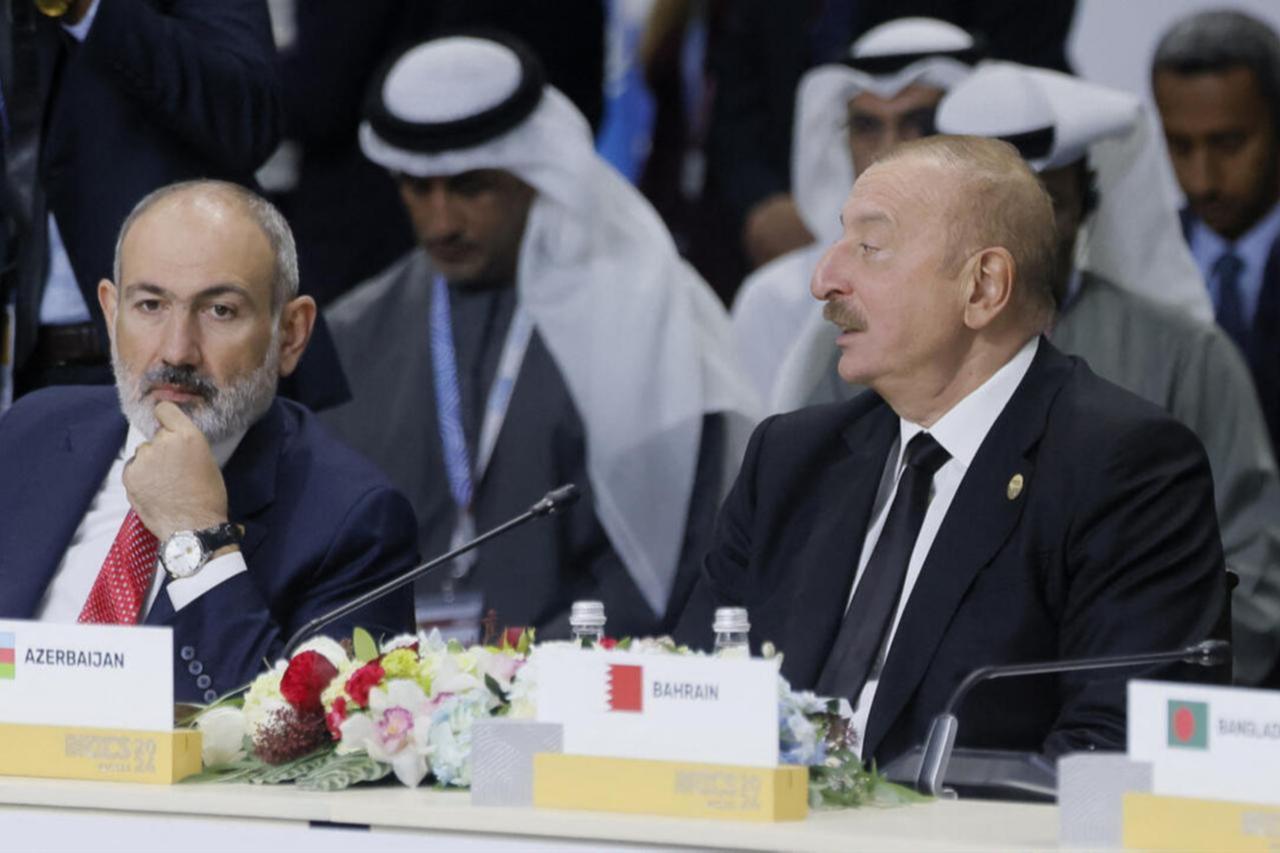


If the war in the Middle East intensifies further, it can torch the South Caucasus. Even without the war, the region remains one of the world's less stable areas. Currently, there is no peace agreement between two of the three countries in the region, Armenia and Azerbaijan.
To complicate things, both share a border with Iran. The risk of the fire in the Gulf spreading to the region cannot yet be ruled out. However, the region will likely rise as an indispensable bridge in Eurasia in the aftermath of the war.
Azerbaijan has a complicated relationship with Iran. Two countries are first and foremost ethnically tied. Azerbaijan is a Turkic country, while Iranian Turks just across the border constitute a quarter of the Iranian population.
However, they are not just an ethnic minority. Historically and culturally, they are an integral part of Iran. Despite such fraternal connections, Iran, since the 90’s, has supported Armenia in the Nagorno-Karabakh conflict, which has been an existential issue for Azerbaijan.
The two countries also have conflicting types of regimes. Azerbaijan, although a Shia country, has a strong secular legacy as a former USSR republic. All these differences have led to serious suspicions of each other.
Azerbaijan, since its independence, has built a very strong partnership with Israel despite Turkish and Iranian criticism. Today, Azerbaijan is the largest supplier of oil to Israel and a customer of Israeli weaponry. Naturally, Iran views Israeli presence in Azerbaijan as a direct threat.


So far in the war, Azerbaijan has not been hit by Iran except for a drone strike targeting Nakhchivan Airport on March 5. A significant advantage for Azerbaijan is its minimal reliance on Tehran, as trade with or through Iran accounts for only 10% of Azerbaijan's total foreign trade turnover.
More importantly, as a major energy producer, Azerbaijan is energy independent. On the other hand, Iran could target Azerbaijan’s energy infrastructure, which supplies Israel, if Tehran decides to widen the war.
Armenia is more dependent on Iran than on Baku. As Armenia’s borders with Türkiye and Azerbaijan are closed, Yerevan relies on Iran and Georgia to reach international markets. About 20% of Armenia’s trade goes through Iran. Secondly, Armenia is a customer of Iranian gas, and a disruption in Iranian gas flow could affect Armenia's electricity production.
Both countries fear a possible influx of refugees. Armenia has already had to accommodate over 100,000 refugees from Nagorno-Karabakh after the 2023 war with Azerbaijan. For a country of just 3 million, that is a serious burden.
The Iran war, even if it ends soon, will have long-lasting geopolitical consequences for the whole region. Unless there is a comprehensive peace settlement, the region can remain on edge for years to come.
The Gulf and the Levant will continue to have considerable security risks. These risks will have implications for the region's role as a connecting point between European and Asian markets.
India–Middle East–Europe Economic Corridor (IMEC) could be hit hard as it depends on Gulf states and Israel as transit points between India and the EU. The Houthis threat to the Bab-el Mandeb Strait also diminishes the role of the Middle East as a safe passage between Asia and Europe.
Iran’s role as a gateway to the Caspian region will diminish as well under the current scenario. The South Caucasus regional role as a North-South corridor will not be spared, as Iran is the region’s only exit to the south.
However, there is a geopolitical opportunity for the South Caucasus as well. The region will stand out as a critical bridge on the East-West axis. As the Middle East remains volatile, the Trans-Caspian International Transport Route (TITR), also known as the Middle Corridor, will be a safer alternative.
This corridor connects China through Kazakhstan, Azerbaijan, and Georgia to Türkiye and then to Europe. TITR is also the shortest trade corridor between China and the EU.
In the final analysis, the war in the Middle East is a direct threat to the South Caucasus’ fragile stability. However, if Armenia and Azerbaijan can navigate through this difficult period and establish the region as an island of stability, they will have the chance to elevate their status on the international stage.


 Set as preferred source
 Set as preferred source


 2 min read

 1 min read