Newsletters




This article was originally written for Türkiye Today’s weekly newsletter, Saturday's Wrap-up, in its April 11, 2026, issue. Please make sure you subscribe to the newsletter by clicking here.
As the first missiles of the day streaked into the Tel Aviv sky on March 9, 2026, a courtroom in Istanbul was convened for a trial that, under any other circumstances, would have brought Türkiye to a standstill.
The defendant was former Istanbul mayor Ekrem Imamoglu. The charge was corruption, a case the opposition has long decried as politically motivated. Yet as the judge began the proceedings, media and public attention had already shifted to the missiles, not the trial, as the former mayor spent a year waiting for this day in his cell.
According to a recent Konda survey, the shift in public perception on the Imamoglu case is staggering: only 27% of respondents now describe the case as “absolutely political,” a sharp decline from 46% just one year ago. While 62% said Imamoglu’s imprisonment was against the law last year, it went down to 57% in April 2026.
It seems the government’s thinking paid off—a bet that the public would forget him over time, given that he lacks a large personal political base or a distinct ideology. In the government’s view, his only advantage was his ability to gather anti-Erdogan votes into a single bloc, aided by his Black Sea accent and mosque visits before elections.
Beyond the border, the geopolitical climate has granted President Recep Tayyip Erdogan a quiet advantage. In years past, a trial against a figure like Imamoglu would have triggered a firestorm of international condemnation.
One recalls the 2021 joint statement by 10 ambassadors regarding the Osman Kavala macase. Today, such a collective diplomatic rebuke is unimaginable. The geopolitical fire pushes such issues aside.
President Erdogan’s political resilience has often relied on his ability to pivot during crises. As the U.S.-Iran-Israel conflict intensifies, the Turkish electorate is experiencing a profound "rally 'round the flag" effect.
For many Turks, an attack on Iran feels fundamentally different from previous interventions in Iraq or Syria. There is a deep-seated respect for Iran’s ancient civilization, and its current plight has sparked a haunting question across the political spectrum: "Is Türkiye next?"
This anxiety is playing directly into Erdogan’s hands. He is no longer just a political leader; he is being framed as the "man for stability." In a region where F-35s and ballistic missiles define the news cycle, Erdogan’s decade-long investment in the homegrown defense industry has become his most potent campaign asset. I am sure some of you may remember how Türkiye’s TCG Anadolu, a multi-purpose amphibious assault ship, was opened for visitors right before the elections.
In addition, by positioning Türkiye as a potential mediator, even attempting backchannels with Donald Trump for a U.S.-Iran summit, he satisfies a public that, according to a GENAR survey, overwhelmingly prefers mediation over intervention.
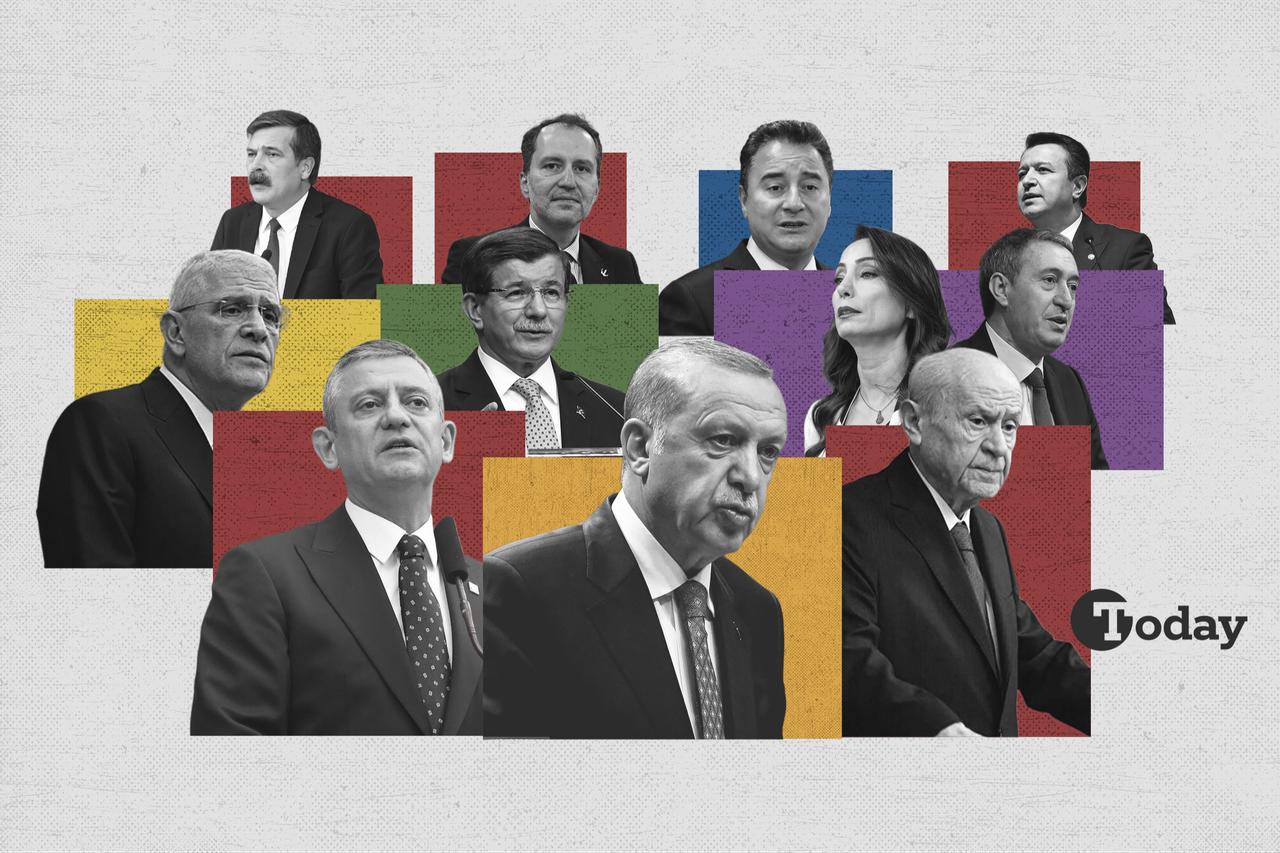
As we approach the next presidential cycle, a new variable may have entered the equation this week: the government ally Nationalist Movement Party (MHP)’s push for a formal alliance between Türkiye, Russia, and China.
During a recent visit to Moscow after the war on Iran started, a key government ally advocated for this "Eurasianist" pivot.
The deputy chairman of MHP, Ilyas Topsakal, said the party’s unofficial condition for maintaining its coalition with Erdogan's Justice and Development Party (AK Party) ahead of the 2028 elections is "not ministerial posts, but the adoption of a program for cooperation with Russia and China."
While the defense industry still relies on certain Western components, the "Greater Israel" narrative and the perceived threat from the West are pushing the junior partner of the governing alliance to demand a more definitive break from the Atlanticist axis.
Don’t be hyped. It is still early to understand if this is going to lead to a rift between the partners, as the glue between them is not easy to break.
The upcoming elections will likely be fought not on the grounds of economic statistics or democratic norms, but on the terrain of existential security. For Imamoglu and the opposition, the challenge is no longer just proving their innocence in a courtroom; it is proving their relevance in a country that currently views political freedom as a luxury it may not afford in a time of war.


 Set as preferred source
 Set as preferred source


 7 min read