Newsletters




The U.S.-Israeli military operation against Iran faces accusations of ambiguity and unclear motivations, coupled with widespread skepticism and claims that it has failed to topple the Iranian regime as easily as initially promised.
This doubt comes not only from peace activists but also from seasoned military figures, such as retired U.S. General Steven Anderson.
In response, President Donald Trump defended his actions by asserting that the United States was nearing a confrontation with a real threat after Iran acquired nuclear weapons.
He goes further, boasting of achievements—particularly weakening the regime, targeting its military infrastructure, and killing key figures, the latest being Ali Larijani, head of Iran’s Supreme National Security Council, following Supreme Leader Ali Khamenei.
The war’s repercussions extend beyond shifting regional security equations, creating global crises and sharp divisions in viewpoints—not just between the United States and its European allies, who rejected calls to join the conflict, but even within the U.S. itself and within the Republican camp.
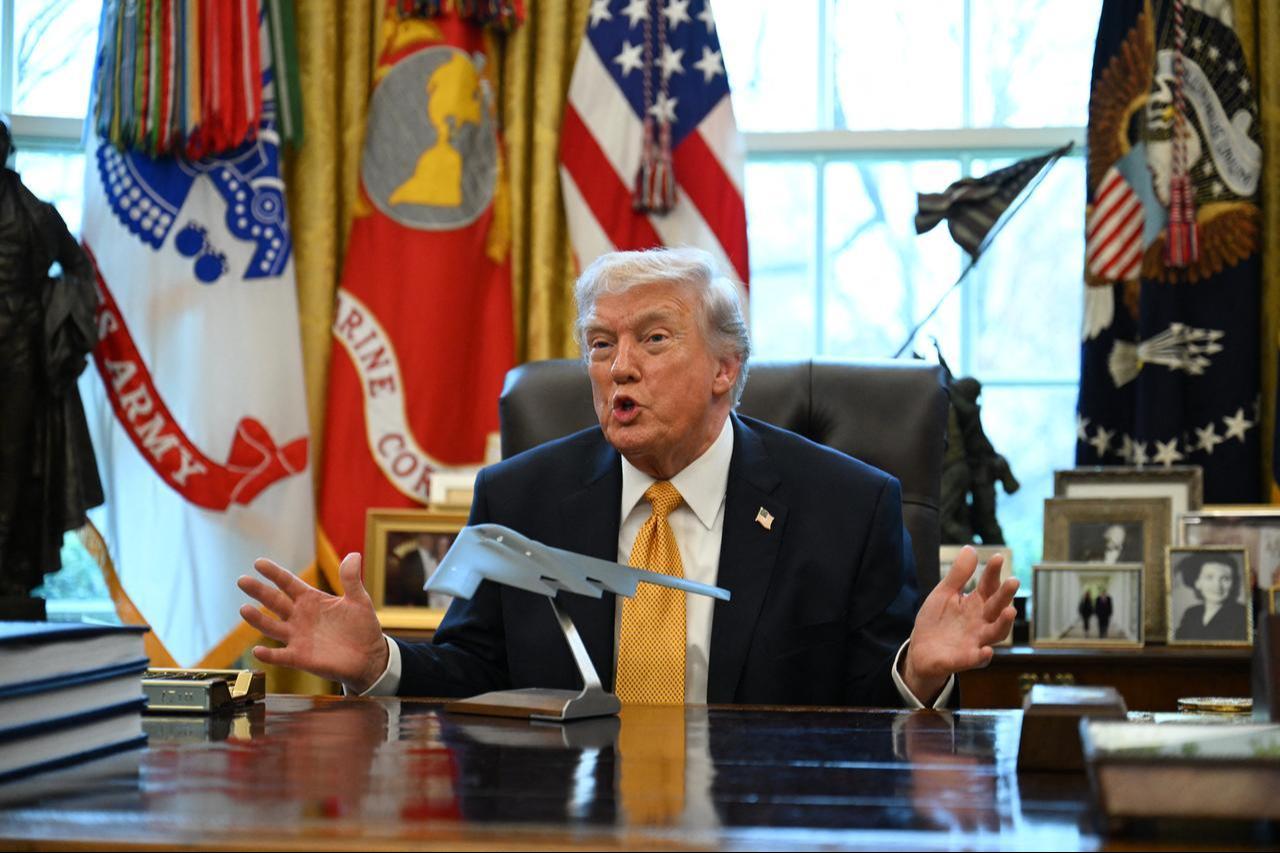

Early this week, news broke of the resignation of Joseph Kent, director of the U.S. National Counterterrorism Center (NCTC)—a significant event given that Kent was part of President Trump’s close national security circle and one of the figures who consistently supported his choices and actions.
In his resignation statement, Kent said he chose to distance himself from a war he views as lacking justification—the clearest case yet of dissent within the security apparatus aligned with Trump.
Kent stated he could not, “in good conscience,” endorse the ongoing war, arguing that Iran did not represent an imminent threat to the United States and that the conflict erupted under pressure from Israel and its influential lobby in Washington.
Kent highlighted Trump’s contradiction: until June 2025, the president described Middle East wars as traps that drained American lives and wealth, yet he has now become an enthusiastic advocate for opening new fronts.
The resignation reveals how the Iran war has opened an internal front of opposition, even among those closest to and most loyal to Trump. Kent was no ordinary official; he held a pivotal role in decision-making.
In downplaying Kent’s departure, Trump attempted to minimize his significance, but a quick review of the man’s background shows he was far from ordinary: a former military officer with nearly two decades of service, a former intelligence operative, and an emerging political figure.
Kent’s shift in perspective may stem from his personal tragedy in 2019, when his wife, Shannon—a fellow intelligence professional—was killed in a distant land by an ISIS-claimed suicide bombing in Manbij, Syria.
Kent ran for Congress twice in Washington state with Trump’s endorsement, losing in 2022 and 2024. That period tied him closely to Trump’s ideas, drawing criticism for associations with far-right figures and groups.
As NCTC director, Kent operated at the intersection of intelligence and politics—not a field commander, but responsible for integrating and evaluating terrorist threat information and elevating it to top decision-makers.
His claim that Iran posed no imminent threat strikes at the intelligence and legal foundation on which the war was built, adding weight to legal debates over the “imminent threat” criterion as justification for force and whether Tehran truly posed one.
The resignation also exposes divisions within the “America First” camp itself. Kent did not come from the traditional Republican school favoring foreign interventions; he emerged from the wing opposing new Middle East wars and prioritizing pure American interests.
This aligns politically with figures like Tulsi Gabbard, the Director of National Intelligence, who has opposed military entanglements, and echoes Trump’s own campaign rhetoric criticizing the Iraq and Afghanistan wars.
Thus, Kent’s “defection” is the strongest signal yet that the Iran war is fracturing not only the broader American landscape but also Trump’s coalition—split between an isolationist wing wary of wars and another more willing to engage militarily.
Kent fought hard to hold his position, particularly against Democratic opponents. One notable clash involved Senator Mark Warner (a Democrat from the state of Virginia), vice chair of the Senate Intelligence Committee, who accused Kent of pressuring analysts to alter intelligence assessments on the Venezuelan gang Tren de Aragua to fit the administration’s political narrative.
The gang—known for drug trafficking, human trafficking, and other crimes—was designated a transnational terrorist entity by the U.S., but Warner objected to reports exaggerating its threat to the U.S. or linking it directly to President Nicolás Maduro (later abducted in a U.S. operation). The assessments were not changed.
Kent’s resignation confronts us with endless ironies: A president who built his vision on criticizing foreign military interventions now enthusiastically ignites wars, while Kent—who faced attacks from foes for politicizing evidence and intelligence reports—now steps forward protesting a war he deems politicized and unjustified.


 Set as preferred source
 Set as preferred source


 1 min read
 1 min read