Newsletters


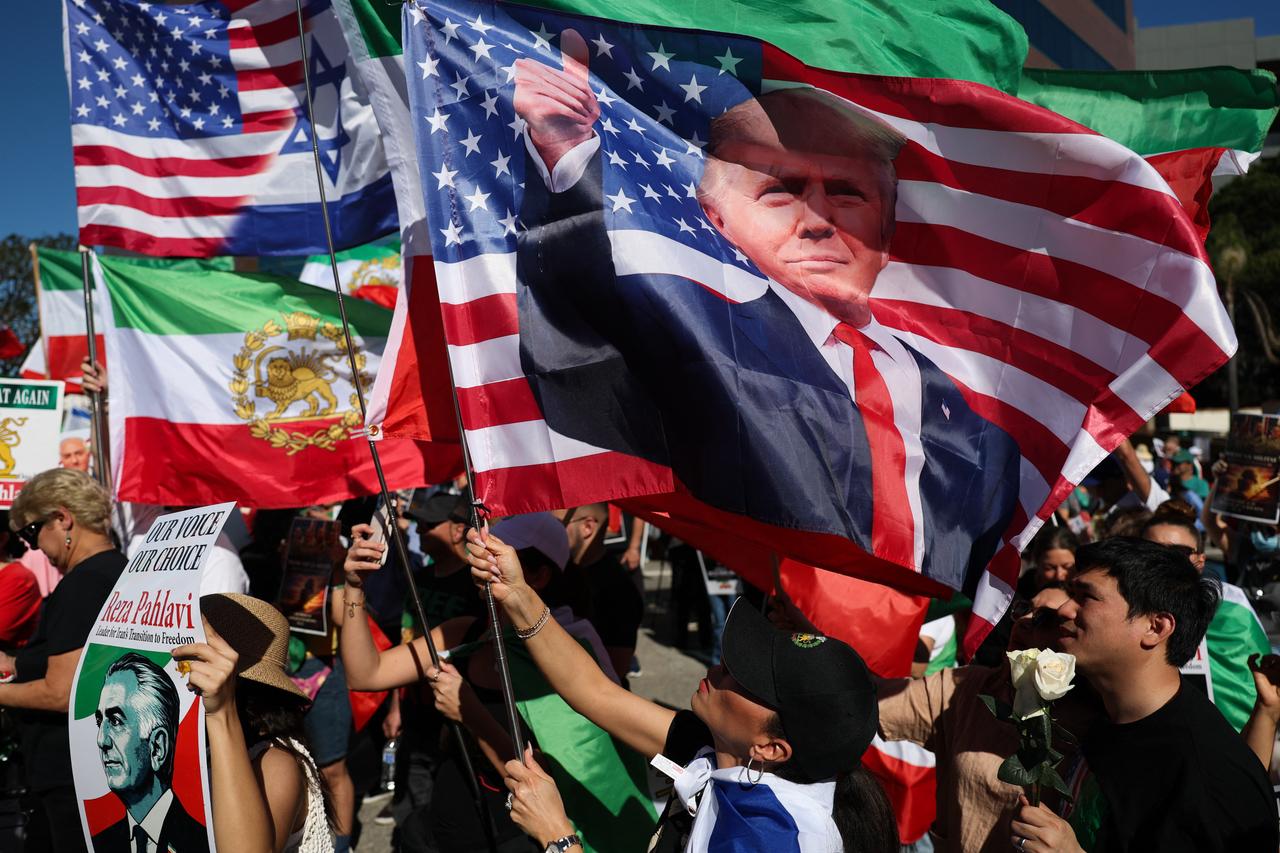


“For they are the spirits of devils, working miracles, which go forth unto the kings of the earth and of the whole world, to gather them to the battle of that great day of God Almighty (…) And he gathered them together into a place called in the Hebrew tongue Armageddon.” (Revelation 16: 14-16)
“And I saw heaven opened, and behold a white horse; and he that sat upon him was called Faithful and True, and in righteousness he doth judge and make war.” (Revelation 19:11)
These passages are quotations from the Book of Revelation in the Bible, referring to the end times, the Battle of Armageddon, the final war between good and evil, and the return of Jesus Christ.
These statements were not from a Sunday church sermon; rather, similar remarks were reportedly used by U.S. commanders in military briefings after the war with Iran began to explain why the United States had launched the conflict and to boost soldiers’ morale.
Commanders asked the officers attending the briefings to reassure the troops under their command not to be afraid, telling them “that the Iran war is part of God’s plan and that President Donald Trump was ‘anointed by Jesus to light the signal fire in Iran to cause Armageddon and mark his return to Earth.’” Many additional references from the Bible were reportedly used in these briefings.
In the days following the outbreak of the war, more than 200 complaints were submitted to the Military Religious Freedom Foundation (MRFF)—an organization that works to combat religious pressure and abuse within the U.S. military. Soldiers reported that their commanders had used biblical references to justify the war.
This is not the first time American presidents have framed wars in religious terms. For example, after the Sept. 11 attacks, President George W. Bush described the war on terrorism as a new “crusade,” and in his January 2002 State of the Union speech—more than a year before the 2003 invasion of Iraq—he labeled Iran, Iraq, and North Korea an “axis of evil.”
Given the administration’s rhetoric—particularly the emphasis on Western Christian civilization and the strategic use of biblical references—serious questions arise: is religion being employed merely as a political tool, or is the United States undergoing a fundamental shift toward a value-based diplomacy grounded in a specifically Christian worldview?
Looking at speeches by Trump since his first presidency, as well as statements by Vice President J.D. Vance, Secretary of Defense Pete Hegseth, and Secretary of State Marco Rubio, similar Christian themes and values appear frequently.
In their previous speeches, they have emphasized the centrality of Christianity to Western civilization and the United States. They highlighted the idea that the U.S. political order derives from divine authority, the belief that America’s existence is based on God-given rights rather than government, and a perceived U.S. mission to defend a divine moral order. They emphasized the defense of Judeo-Christian values and civilization; the need to bring religion back into public life in the United States and pursue national renewal through faith; the belief that Western civilization is under threat from migration and framed political conflicts in moral or spiritual “good vs. evil” terms.
Recently, during a Pentagon news briefing, U.S. Secretary of Defense Pete Hegseth, known for his public Christian stance and for promoting Christian values within the Pentagon, said: “Crazy regimes like Iran, hell-bent on prophetic Islamic delusions, cannot have nuclear weapons.” By using language echoing the false prophets described in biblical end-times narratives, his remarks reinforced the perception that the war was framed in religious or apocalyptic terms.
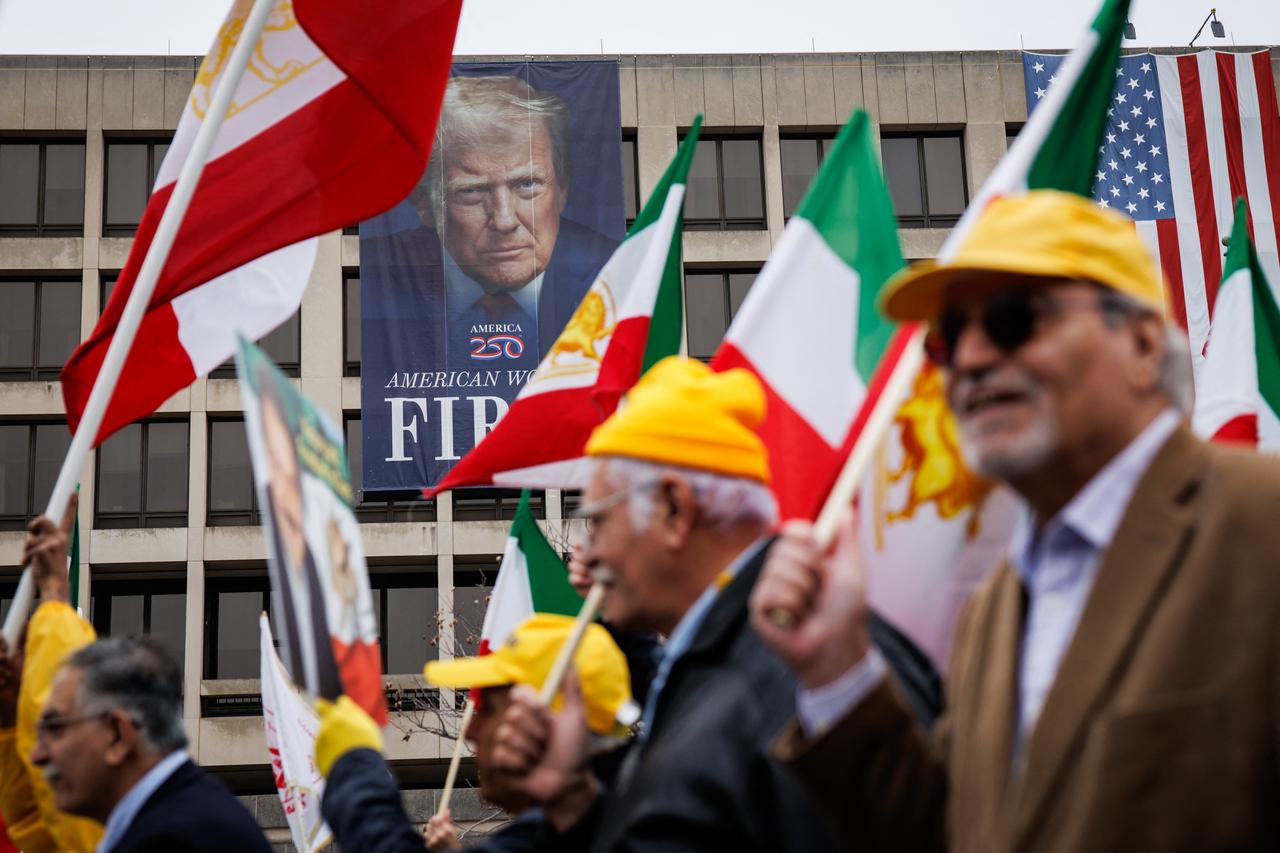

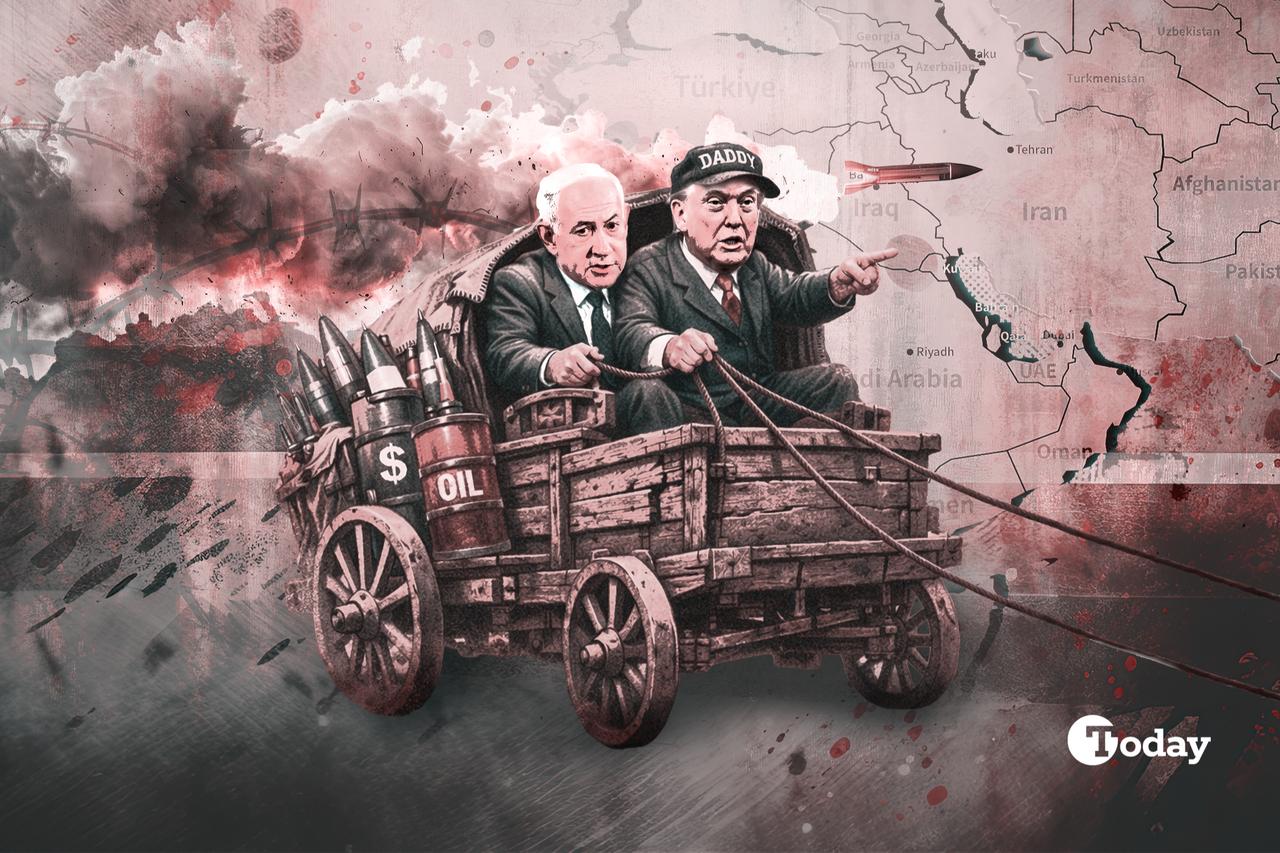
Because the U.S. administration has struggled to clearly explain the urgency of entering the war and has offered contradictory justifications, criticism has grown. Secretary of State Marco Rubio’s comment that Israel was already going to enter the war and that the United States therefore joined it further fueled arguments that this conflict is Israel’s war rather than America’s.
Criticism of the “endless wars” that Trump had promised to end has returned, and a group within the MAGA movement opposing the war has appeared.
According to MRFF president Michael Weinstein, complaints about religious messaging in the military tend to rise “anytime Israel or the U.S. is involved in the Middle East,” often involving rhetoric tied to end-times narratives.
Among evangelical Christians—around 80% of whom voted for Trump in recent elections—some of the more radical believers view the return of Jews to the Holy Land and the rebuilding of the Jerusalem Temple as steps leading to the Battle of Armageddon and the eventual return of Jesus Christ. Many evangelicals and Christian Zionists therefore interpret conflicts in the Middle East through an “end-times” religious narrative, which partly explains their support for wars in the region.
Comments by U.S. Ambassador to Israel Mike Huckabee, an evangelical Christian, suggesting it would be “fine” if Israel took “essentially the entire Middle East” because it had a biblical right to it, should also be understood within this ideological and theological framework.
These religious narratives are also echoed by Israeli Prime Minister Benjamin Netanyahu, who frequently uses biblical references. Netanyahu recently invoked Amalek, an ancient enemy of Israel mentioned in the Old Testament, to justify the war on Iran. Even the name chosen by Israel for the operation—“Rising Lion”— references the Bible, which states, "Behold, the people shall rise up as a great lion."
Recently, the Council on American-Islamic Relations (CAIR) criticized what it described as attempts by Hegseth, Netanyahu, and U.S. commanders to frame the war against Iran as a “holy war.”
 1 min read
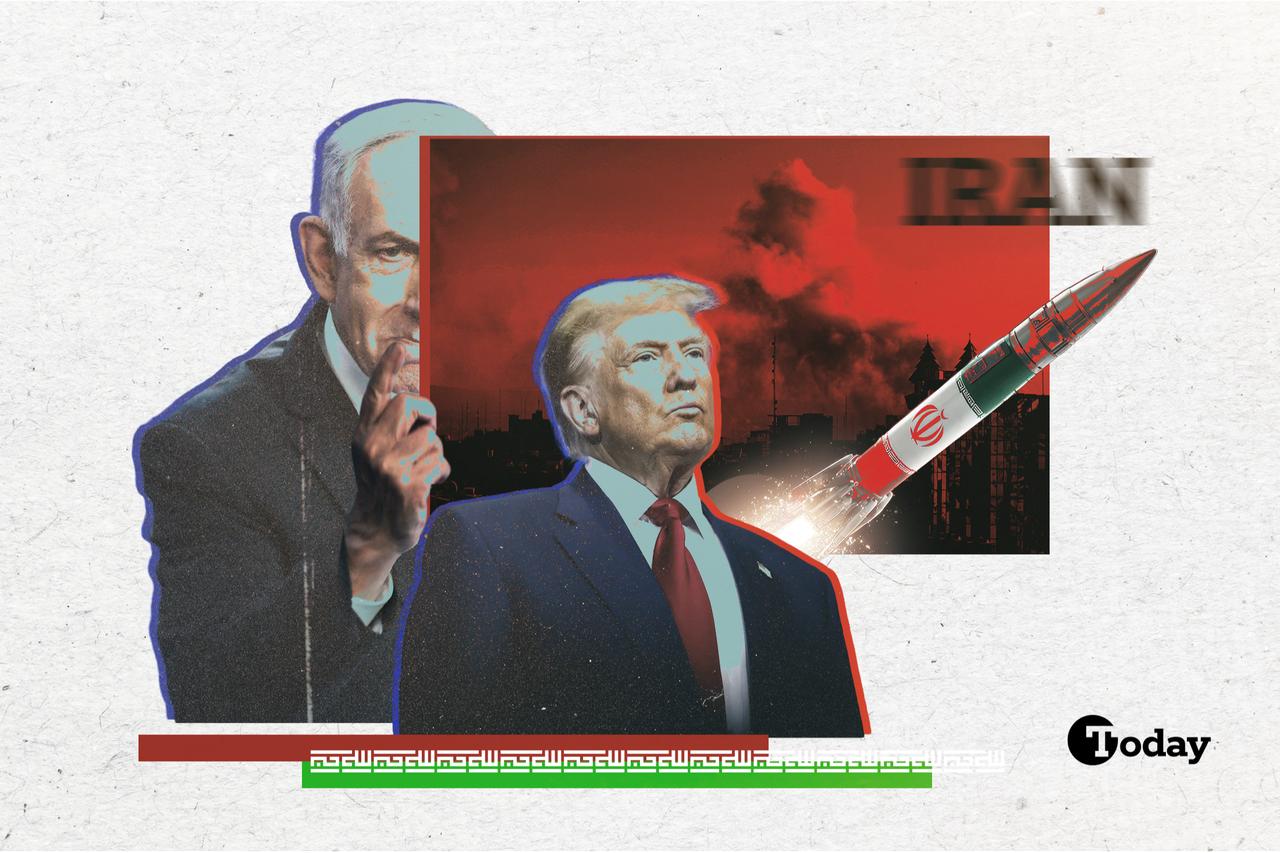
The debate over whether this is America’s war or Israel’s war also reflects a significant domestic political divide, particularly within the MAGA movement. After the Oct. 7 attacks and the war in Gaza, a tension emerged between “America First” and “Israel First” perspectives. One group prioritizes American national interests and questions unconditional support for Israel, while another strongly supports continued and robust backing for Israel.
Whether the instrumentalization of biblical references and the use of religious rhetoric will translate into public support for the war on Iran remains uncertain. Early public opinion polls conducted in the first week of the war suggest that a majority of Americans do not support the military operation in Iran.
Three polls, conducted by CNN, Reuters/Ipsos and PBS News/NPR/Marist Poll, show that between 43% and 60% of Americans disapprove of the military action.
According to polls, 55%–79% of Republicans support the strikes, compared with only 19%–32% of Independents and 7%–14% of Democrats.
Among Republicans, 13%–23% oppose the strikes, and according to the Reuters poll, 42% said they would be less likely to support the campaign if it resulted in U.S. troops being killed or injured in the Middle East.
At the same time, President Trump is criticized for his unilateral decision to start the war and for having acted unlawfully by launching military action against Iran without congressional authorization or an urgent threat. Critics say this violates the constitutional limits on presidential war powers and could serve as grounds for articles of impeachment, especially if it leads to a prolonged conflict. However, attempts in the U.S. House of Representatives and Senate to pass war powers resolutions—to restrict or end further U.S. military involvement—were largely defeated along party lines.
While Trump said the war with Iran was initially expected to last about four to five weeks, he also acknowledged that it could continue much longer if necessary. An internal Pentagon memo obtained by Politico suggested that the conflict might last several months.
Ultimately, the duration of the war may depend heavily on domestic political pressure. If the conflict drags on, more American soldiers lose their lives, and the war produces clear negative effects on the U.S. economy, Trump could lose the political support he currently enjoys and face significant legal and political challenges. In such a scenario, the administration’s religious and civilizational rhetoric could also backfire—potentially leading critics to portray Trump himself as a false prophet rather than a divinely chosen leader.


 Set as preferred source
 Set as preferred source



 1 min read