Newsletters


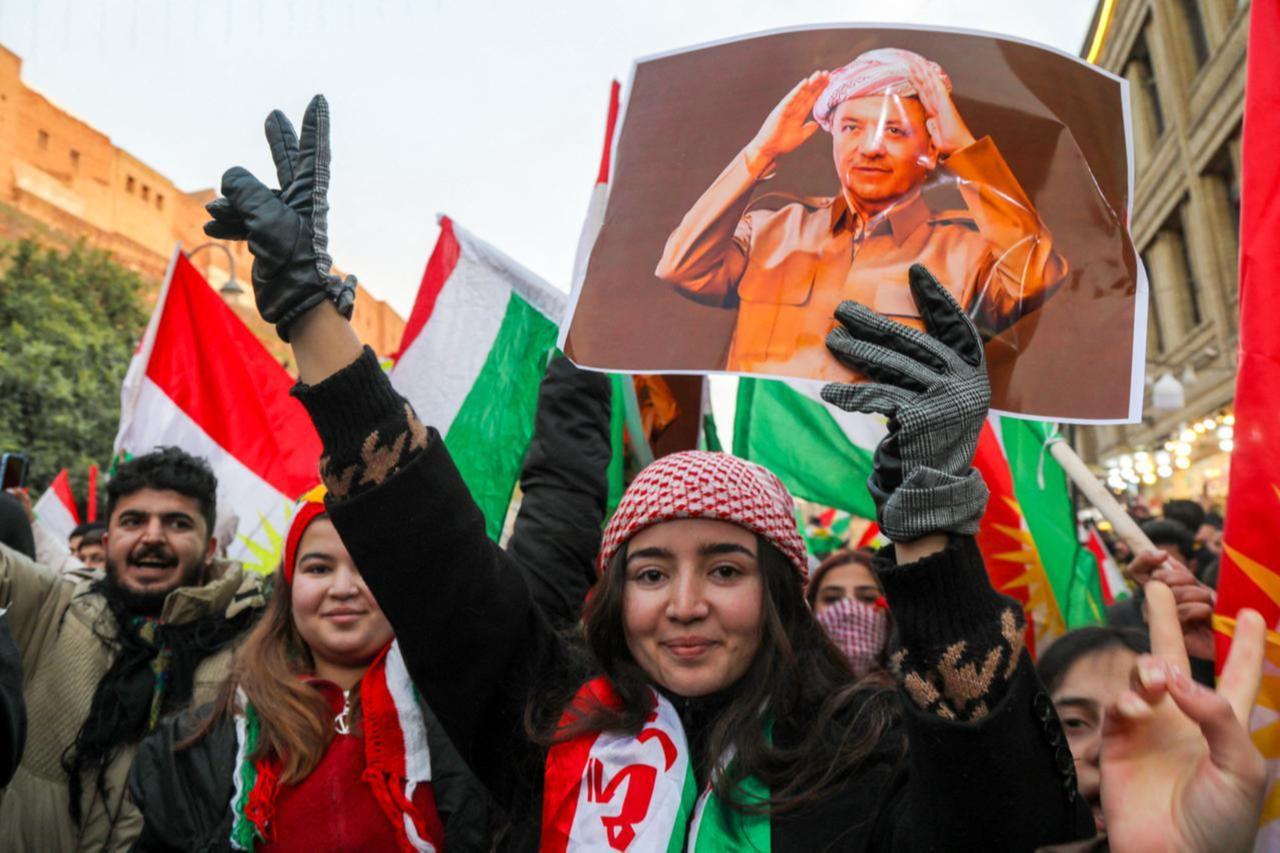


Masoud Barzani, former president of the autonomous Kurdish Regional Government (KRG) of Iraq and head of the region’s leading party, Kurdistan Democratic Party (KDP), surprised many on Friday by announcing that, if circumstances would allow it, he would send his Peshmerga forces to the town of Ayn al-Arab (Kobani) in northern Syria just as he did in 2014.
In the summer and fall of that year, Kobani had witnessed the successful Kurdish defense against Daesh involving various armed groups, besides the KDP and PUK from Iraq, also the PKK and its Syrian branch, YPG/PYD, the lead force of what would become the SDF in Syria.
"I will do whatever I can for Kobani," Barzani said on Friday, Rudaw News reported.

The comments by Barzani, a close partner of Türkiye, met with derision on social media as they followed the Syrian Army’s rapid ouster of the SDF from Arab-majority areas that the latter had claimed during its fight against Daesh in 2014-2017.
The SDF had announced an autonomous zone there in 2018 and expected to retain a significant portion of its land and perks vis-a-vis Damascus after the fall of the Assad regime in December 2024.
Now, it looks like the former KRG president was siding with the SDF against Damascus and its main regional partner, Ankara, reminding observers of another Kurdish catastrophe in 2017—that one in Iraq.
In 2014, the Peshmerga had gained control of Kirkuk—Iraq’s oil-rich province, without which an independent Kurdish state could not survive—during the Daesh onslaught and the collapse of the Iraqi military and security forces. Keeping Kirkuk would have helped Barzani strengthen the KRG further and potentially build a base to demand greater autonomy (if not independence) from Baghdad in the future.
But Barzani insisted on holding an independence referendum for the KRG in September 2017, including in Kirkuk, which led to the province’s loss to Iran-backed Iraqi federal forces. The KRG never quite recovered from the political and economic aftershocks of that defeat, coming under Baghdad’s increasing sway, especially over sharing Iraq's lucrative oil trade.
Today, the KRG is apparently allowing PKK militants to cross into Syria to push back against the Syrian forces, which would add fuel to the fire. Is Barzani playing a poor hand badly in Syria after playing a good one catastrophically in Iraq in 2017?
Probably not.
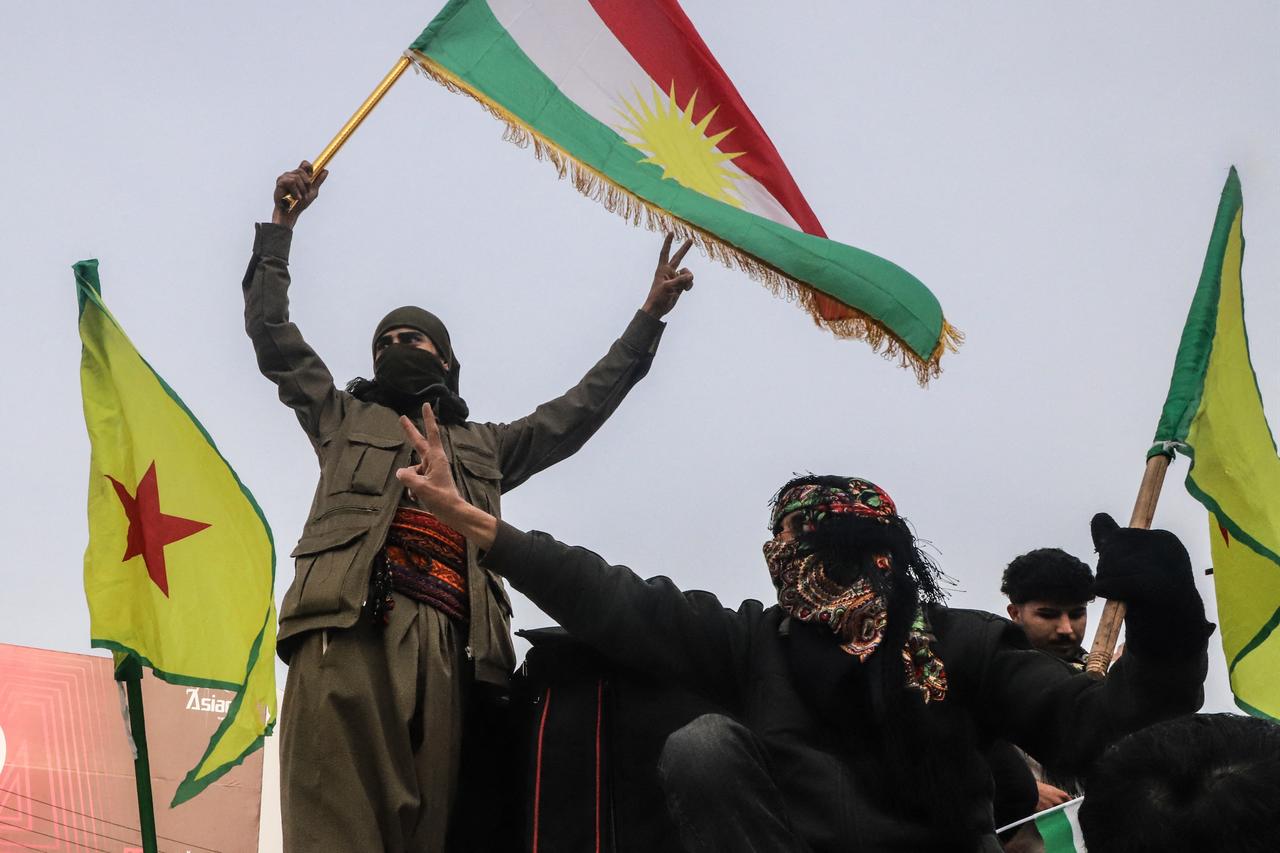
What Barzani and other KRG leaders, especially his nephew Nechirvan Barzani and son Masrour Barzani, the president and prime minister of the KRG, respectively, probably aim to accomplish is to let the PKK spend its actual and metaphorical ammunition and energies in Syria, thus cease being a problem for the KRG and the broader region. Barzani said as much during his visit to Pope Leo at the Vatican, when he called the PKK/YPG a “burden” for Syrian Kurds, according to various Turkish news outlets.
Barzani is likely seeking two outcomes here: carving a role for himself as a political hub for various Kurdish factions across the region while fortifying the positions of his nephew and son within the KRG and Iraq. Both seem to be working, at least for now.
For the first time in Iraqi federal politics, Barzani’s KDP came second in Iraq’s parliamentary elections last October with close to 10% of the popular vote and about 8% of the seats in the Council of Representatives in Baghdad. This would expand the profile of the KDP within Iraqi federal politics at a time when the country’s search for its next prime minister continues.
The regional moves might work as well. KDP leaders have offered their services as mediators to Türkiye in its disarmament talks with the PKK, whose main base of operations is in the mountain hideouts within the KRG borders. In a sign of tangible progress, President Nechirvan persuaded Turkish President Recep Tayyip Erdogan to lift the ban on Sulaymaniyah Airport's use of Turkish airspace. Ankara had imposed the ban in April 2023 on account of PKK/YPG/PYD leaders using the airport as a transit route to Syria.
Similarly, the KRG leadership, especially the KDP, made a smart move in disarming another Kurdish group, the KDP-Iran (despite sharing a history and brand names, the two parties had diverged ideologically over the decades), which ceased its attacks against Tehran in 2023.
The move opened the door for Türkiye to get both Baghdad and the Erbil-based KRG to ban the PKK in 2024, forcing the latter to seek disarmament and peace talks with the Turkish government in 2025.
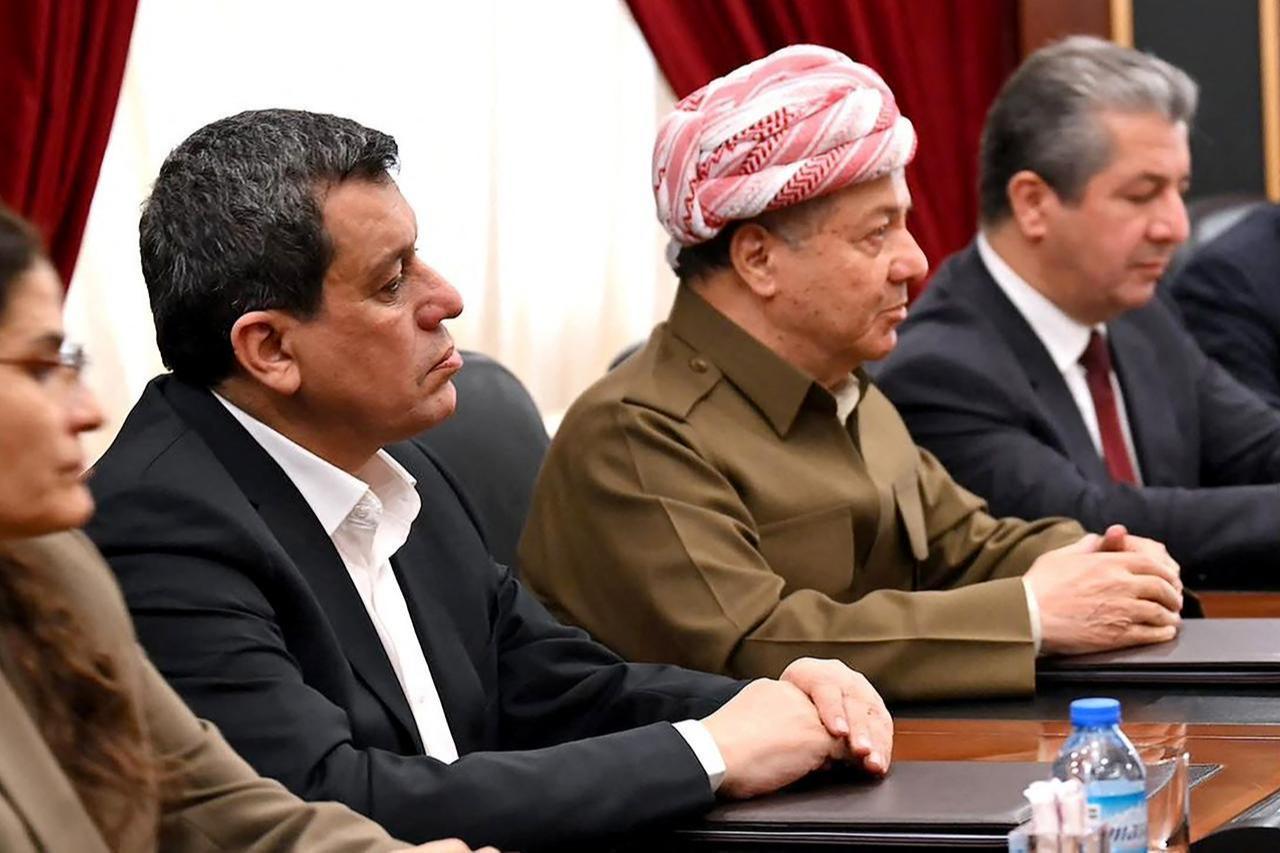
Still, there are risks in trying to become the "go-to" person in regional politics. By sitting at the same table with SDF ringleader Mazlum Abdi in his meeting with the U.S. Ambassador to Türkiye Tom Barrack, who is also the U.S. special envoy to Syria, Barzani fueled speculation in Ankara, weeks after he got into hot water for his bodyguards’ behavior in Türkiye’s Kurdish-majority town of Cizre and for his statements about President Erdogan’s partner, Nationalist Movement Party (MHP) Chairman Devlet Bahceli.
Besides overplaying their hands (as in Kirkuk in 2017 and most recently in Syria), different Kurdish factions also have the habit of reaching out to outsiders to settle intra-Kurdish rivalries. KDP notoriously did that in the mid-1990s by inviting Iraqi dictator Saddam Hussein as a counterbalance against the Sulaymaniyah-based PUK of Jalal Talabani, who was backed by Iran. PUK similarly did not resist Baghdad’s recapture of Kirkuk in 2017 when it felt that the KDP was gaining ground among the province’s Kurds.
Similarly, failure to deliver a deal to the satisfaction of Syrian Kurds might make it easy for both the PYD/YPG and the PKK to blame Barzani (and not their own stubbornness) for their problems with Damascus.
The other risk is within Iraq. At a time when Nouri al-Maliki, the former prime minister who brought Iraq to the brink of total collapse against Daesh in 2014 by pursuing sectarian policies that alienated the country’s Sunni Arab minority, might return to power. Although Maliki strikes a more prudent and mature pose today, it is questionable whether Masoud Barzani, who had a complete breakdown in his ties with the Iraqi leader in 2013, will be able to get along with Maliki should he return to power.
Still, as the region changes, managing these complex dynamics might be the ultimate test of Barzani and the KDP’s ability to improve the KRG’s political fortunes. One of the biggest tragedies of Kurds has been the lack of leaders who can read the regional and global context and prudently weigh their strengths and weaknesses against other stakeholders.
Today, Masoud Barzani and his successors could do a great service to the Kurdish people in the region by becoming a force for stability and realism.


 Set as preferred source
 Set as preferred source


 4 min read