Newsletters


The killing of Iran’s Supreme Leader Ali Khamenei in joint U.S.–Israeli strikes on Feb. 28 did more than decapitate a 47-year-long regime. It accelerated a regional recalibration that had already begun with the 12-day war and the overthrow of the Assad regime.
The Middle East is entering a new phase of strategic fragmentation and increased insecurity in which regional and global power blocs are hardening, alliances are being tested, and non-state actors are once again becoming instruments of great-power competition.
One of the most consequential dimensions of this shift concerns Kurdish actors, whose evolving role increasingly links regional power competition with Türkiye’s domestic Kurdish question.
As the Kurdish movements gain strategic relevance across borders, Ankara has begun recalibrating how it manages the Kurdish issue at home in order to reduce emerging geopolitical vulnerabilities.
For Türkiye, this is not simply an external crisis. It is a structural turning point.
Ankara is not simply reacting to this fragmentation; it has long been preparing for it. Beneath the surface of a deliberate balancing act of diplomacy lies an effort to reduce vulnerabilities before they are exposed. At the heart of that effort is an issue many observers still treat as confined to domestic politics: the Kurdish question.
In the emerging regional order, Kurdish actors are no longer peripheral players but increasingly important variables in the region’s shifting strategic landscape.
In a fragmented regional order where external powers increasingly rely on local actors to project influence, organizational capacity becomes a decisive factor. Much of the Iranian opposition ecosystem remains diffuse and diasporic, with limited ability to coordinate sustained action on the ground.
By contrast, Kurdish parties possess a comparatively stronger infrastructure for mobilization and cross-border coordination. Kurdish political and military networks already operate across Iran, Iraq, Syria, and Türkiye, giving them a degree of organizational depth that few other opposition actors possess.
A recently announced coalition of Iranian Kurdish groups reflects an effort to consolidate political messaging and operational coordination at a moment when Iran’s command structures are under extreme pressure. Still, Kurdish opposition movements remain internally fragmented, and it remains uncertain whether such coordination can be sustained over time.
Washington’s posture since the Iran escalation has clarified a broader strategic logic. The United States is attempting to weaken Iran’s regional network of proxy actors, reinforce Israel’s military superiority, recalibrate Sunni Arab alignments, and elevate key intermediaries such as Türkiye and Qatar.
Israeli Prime Minister Benjamin Netanyahu has also framed this emerging order in similar terms, describing a prospective “hexagon” of alliances linking Israel with Mediterranean and Arab partners to counter both the Iranian-led Shiite axis and what he portrays as a rising radical Sunni bloc. This architecture was visible before the strikes; the latest Iran war has made it explicit.
And it has reopened fault lines across Syria and Iraq.
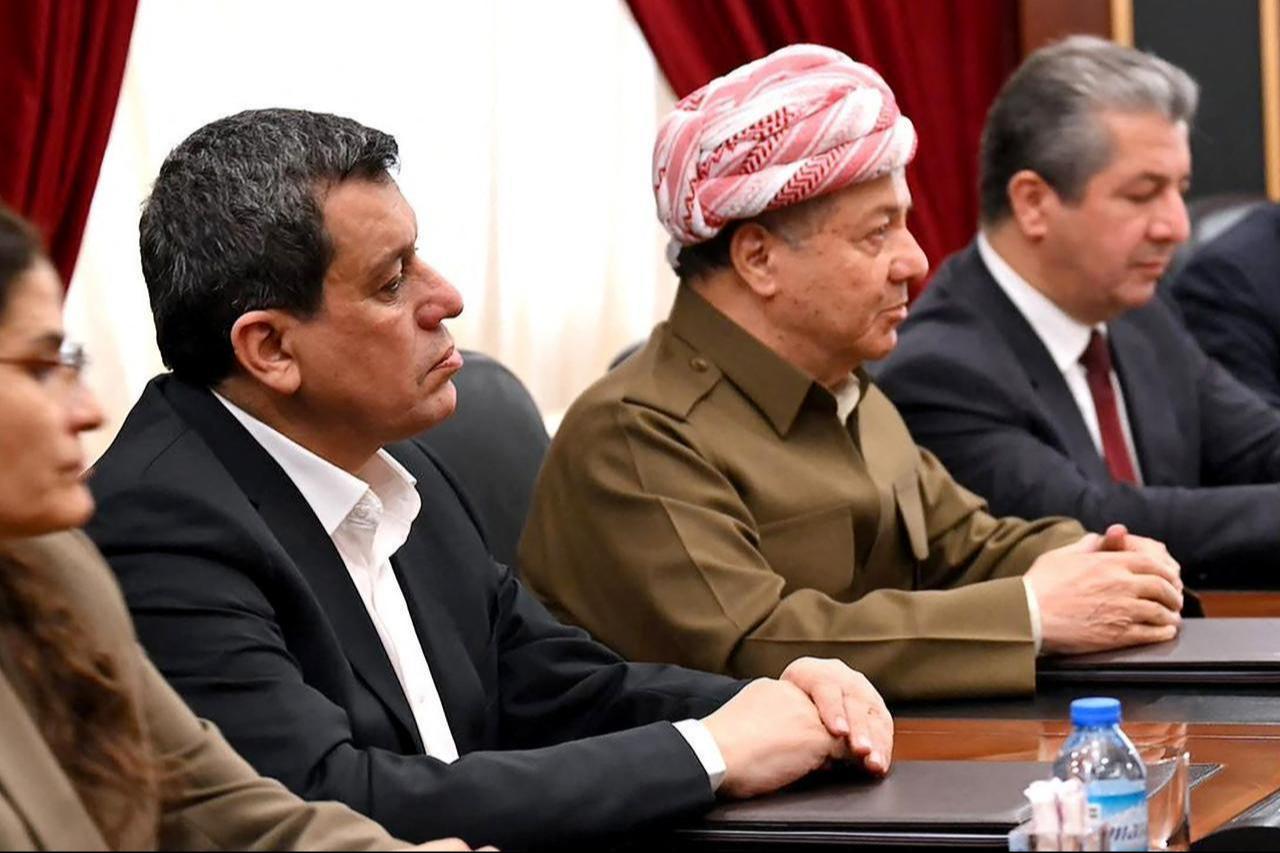
Reports of renewed U.S. engagement with Iraqi Kurdish leaders, including Masoud Barzani and Bafel Talabani, and signals of possible contacts with Iranian Kurdish opposition figures initially added a sensitive layer to an already volatile environment.
Kurdish armed groups based along the Iraq–Iran border were reported to have discussed with U.S. counterparts the possibility of stepping up attacks on Iranian security forces inside western Iran and to have sought external support that would make such operations sustainable rather than symbolic. Yet more recent signals suggest a degree of caution on all sides.
U.S. President Donald Trump has publicly indicated that Washington does not intend to pursue deeper operational engagement with Kurdish groups in Iran, a position that some observers attribute in part to Turkish diplomatic pressure.
Kurdish leaders themselves have also voiced reservations. Bafel Talabani, for instance, warned that involvement in such a confrontation could expose Kurdish actors to significant risks.
While these developments may limit the likelihood of immediate escalation, the perception that Kurdish networks could be mobilized within a broader containment strategy against Tehran is already shaping regional calculations.

For Ankara, that possibility carries strategic consequences. The emerging regional environment blurs the line between domestic politics and geopolitical competition.
Türkiye’s concern is not just Kurdish political mobilization in isolation. It is the cross-border activation of Kurdish networks at a moment when regional alignments are fluid. When Kurdish movements across Iran, Iraq, and Syria become entangled in geopolitical rivalries, their connectivity takes on strategic significance.
Under these conditions, managing the Kurdish question at home becomes a way for Ankara to limit the ability of external actors to instrumentalize Kurdish networks across the region.
This is why Türkiye’s recent domestic initiative, framed by the government as a “terror-free Türkiye” process, deserves closer scrutiny.
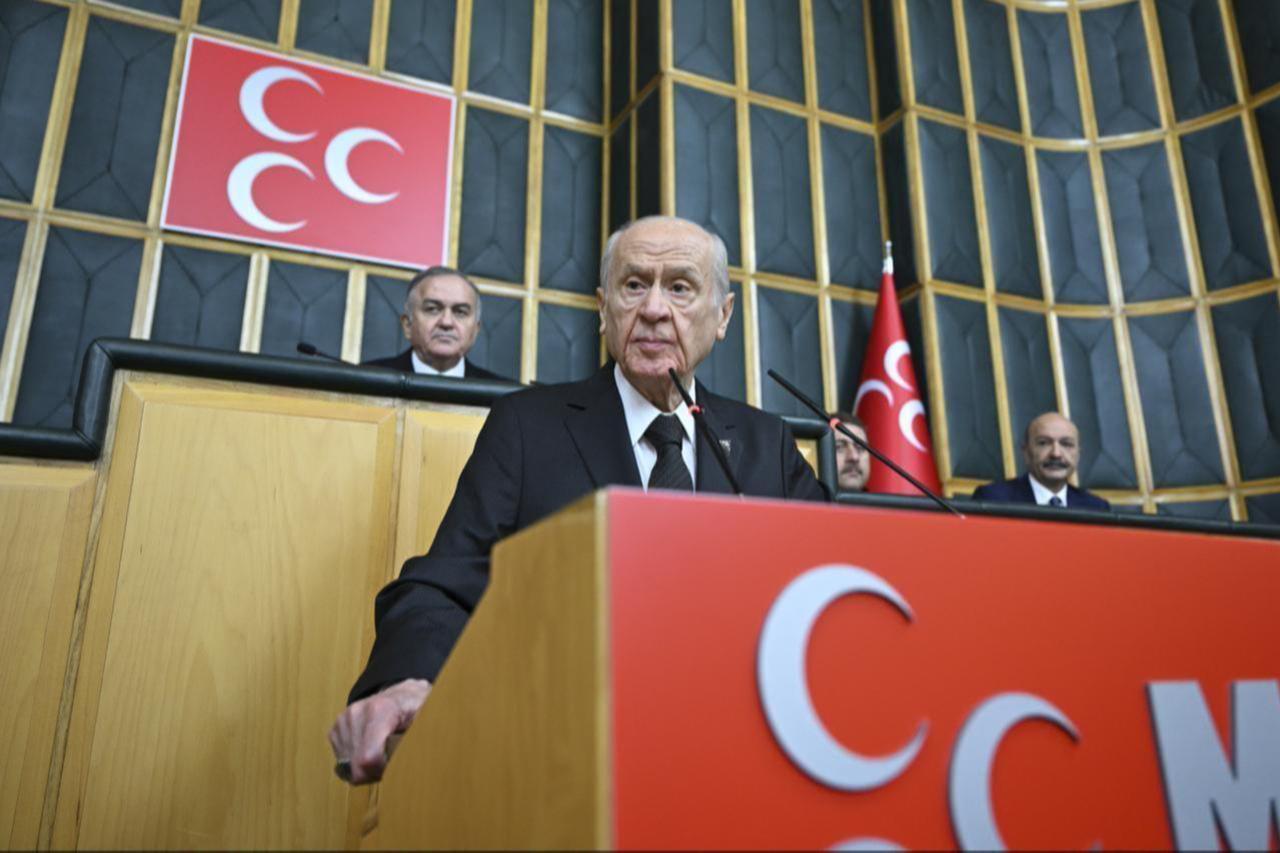
Over the past year and a half, President Recep Tayyip Erdogan, his nationalist ally Devlet Bahceli, and imprisoned PKK leader Abdullah Ocalan have aligned in the construction of a new narrative of de-escalation.
Publicly, the initiative has been presented as a matter of national unity and internal security. Critics have interpreted it as a maneuver to reshape political alliances and weaken opposition cohesion.
But seen through a regional lens, the timing looks less tactical and more preventative.
Ankara’s recalibration began way before the Iran war. It reflected a recognition that the regional environment was shifting—and that domestic fault lines could become entry points for external leverage.
By lowering the temperature of the Kurdish file internally, Türkiye aims to reduce potential spillover effects from Syria and Iran into its own political arena.
This is not reconciliation. It is strategic insulation.
Events in Syria reinforced that calculation. Following clashes in Aleppo in early 2026 and renewed negotiations between Damascus and Kurdish authorities, Kurdish actors were gradually repositioned within Syria’s emerging state structure through the integration of the SDF into national institutions.
Ankara had long lobbied for such an outcome and ultimately accepted it as part of a negotiated compromise. For Türkiye, however, the result remains ambivalent. While the integration of the SDF into Syrian state structures could reduce the risk of autonomous governance along its border, Ankara is equally determined not to see a newly emboldened Kurdish military actor consolidate power just across its frontier.
The Iran war has now heightened the stakes. Kurdish forces were once central to the U.S.-led coalition against Daesh, a role that significantly elevated their strategic relevance in Syria. As the anti-Daesh campaign faded and their position within the Syrian conflict evolved, that prominence diminished.
Yet developments in Iran could create a new strategic opening. If Kurdish actors again become strategic US partners in a broader confrontation with Tehran, they may regain regional relevance and organizational momentum. In that environment, Kurdish politics is no longer simply a minority question—it becomes embedded in the wider contest over regional order.
 1 min read
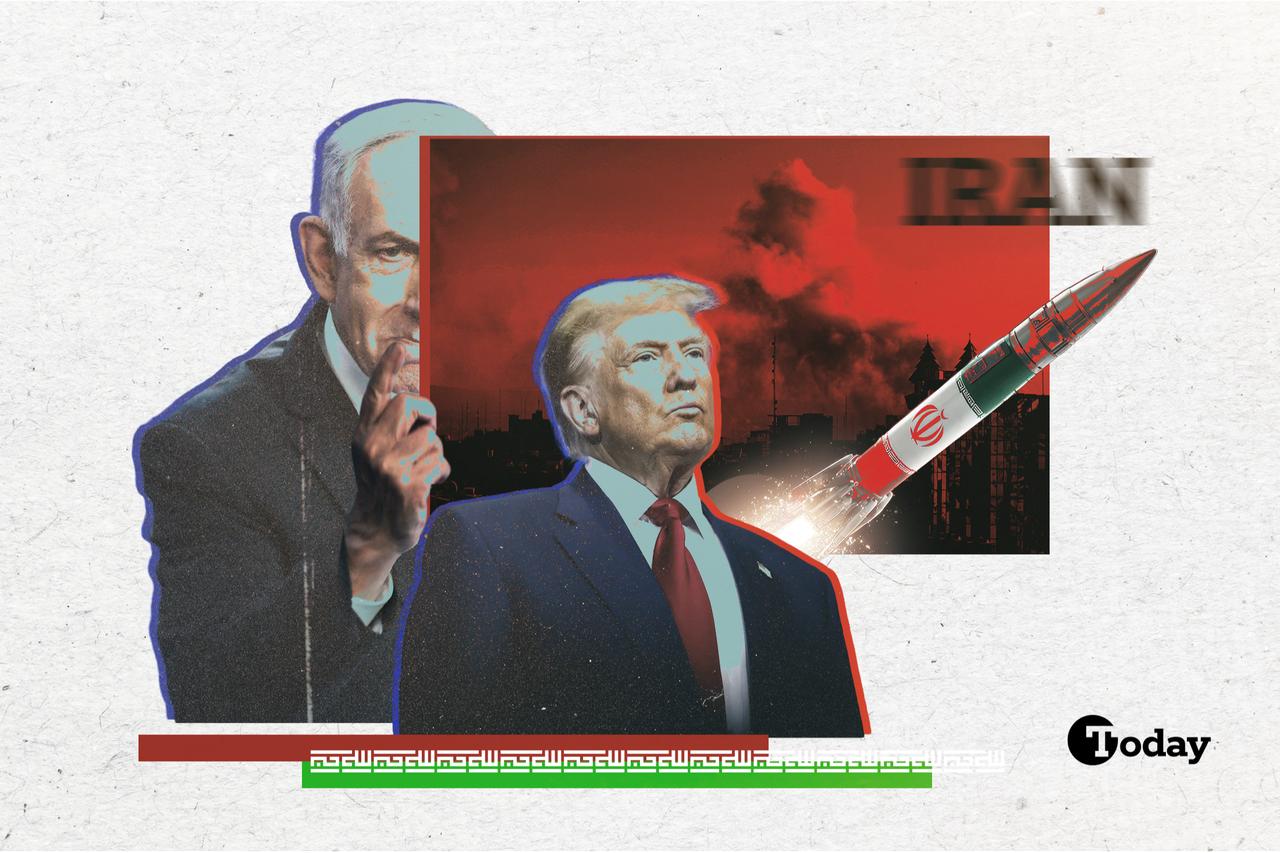
Ankara’s response has remained calibrated rather than confrontational. Since the beginning of the Iran war, Türkiye has emphasized de-escalation, maintained diplomatic channels, coordinated with Iraqi Kurdish authorities, and reiterated its red lines regarding the PKK and affiliated groups.
The recent launch of a missile that briefly approached Turkish airspace marked a significant escalation and underscored how quickly the regional conflict can spill toward NATO territory. While Iranian authorities later denied that any missile had been directed at Türkiye and said they respect the country’s sovereignty, the incident has heightened regional tensions.
Yet both Ankara and Tehran have so far signaled an interest in avoiding direct confrontation, suggesting that even moments of military friction are likely to remain contained given the high costs that escalation would impose on both sides.
Türkiye’s strategy reflects a broader pattern of regime durability mixed with a securitized approach to political management. Ankara’s cautious posture is not only a matter of foreign policy calculation. It also reflects domestic political constraints and the logic of regime survival that has shaped Turkish policymaking for more than a decade.
For over a decade, President Erdogan has demonstrated an ability to convert foreign policy activism into domestic political capital. Cross-border military operations in Syria, assertive posturing in the Eastern Mediterranean, and sovereignty-driven rhetoric reinforced regime durability at home.
External crises became tools of internal consolidation for him. However, current economic constraints are sharper. Inflation remains high, fiscal pressures limit maneuverability, and electoral competition—though uneven—still matters. Under these conditions, escalation is expensive.
This domestic reality also shapes how Ankara interprets the regional crisis. The U.S.–Iran confrontation, therefore, presents Türkiye with both risk and opportunity.
The risk lies in becoming entangled in a widening conflict whose spillover effects could destabilize Türkiye’s already fragile domestic environment. The opportunity, however, is to position Türkiye as a stabilizing intermediary in a rapidly fragmenting regional order.
Yet Ankara’s ability to play such a role abroad depends on its capacity to limit vulnerabilities at home. This is where the logic of preventive stabilization emerges.

Türkiye’s renewed management of the Kurdish question should therefore not be interpreted as a democratic opening. Rather, it reflects an attempt to manage a long-standing conflict through controlled de-escalation while preserving the existing distribution of power—a form of conflict reduction under state oversight rather than structural political change. Parliamentary discussions and commission reports suggest institutional preparation for calibrated adjustments, but not systemic reform.
Hence, for Ankara, it seems the objective is not pluralistic inclusion. It is strategic containment.
By integrating Kurdish political actors more tightly into an Ankara-centered framework, the government reduces the likelihood that external powers can instrumentalize Kurdish grievances.
Stabilization at home is politically cheaper than escalation at the border, particularly when it takes the form of controlled conflict management rather than democratization.
Türkiye’s broader foreign policy posture reflects the same logic. It remains too central to the emerging regional security architecture to remain passive, yet too exposed to fully align with any single bloc.
As a NATO member bordering Iran, Iraq, and Syria, Ankara’s geography compresses its strategic choices: a decisive tilt in either direction would carry immediate regional consequences.
What may appear from the outside as ambiguity is therefore a structural necessity. Engagement with multiple platforms, cautious rhetoric, and selective coordination are not signs of drift but mechanisms for preserving flexibility in a fragmenting regional order.
In the context of the Iran crisis, this flexibility allows Ankara to avoid premature alignment while maintaining leverage with multiple actors.
This posture reflects Türkiye’s broader strategy of peripheral autonomy—a form of strategic behavior through which Ankara seeks to preserve its independence while remaining functionally embedded in wider security structures, most notably NATO and the broader Western security system.
Rather than choosing between full alignment and detachment, Türkiye operates from the margins of overlapping regional and international orders, using this position to diversify partnerships, hedge against external pressures, and expand its room for maneuver.
Under these conditions, the boundary between domestic and external politics becomes increasingly blurred. The stabilization of the Kurdish question is no longer solely a domestic matter; it is becoming a geopolitical instrument aimed at limiting regional spillovers and insulating Türkiye from emerging security pressures.
Ankara’s strategy is therefore neither neutrality nor alignment. It is a form of calibrated ambiguity grounded in preventive stabilization. In a fragmenting Middle Eastern order, Türkiye is not seeking transformation but insulation—and this strategic choice may ultimately define its role in the next phase of regional politics.


 Set as preferred source
 Set as preferred source


 1 min read