Newsletters




This article was originally written for Türkiye Today’s weekly newsletter, Saturday's Wrap-up, in its March 7, 2025, issue. Please make sure you subscribe to the newsletter by clicking here.
The United States needs hitmen it can use against the Iranian regime without putting American boots on the ground. Direct deployment of U.S. troops is politically costly and risks triggering domestic backlash, regional escalation and a protracted entanglement with unpredictable consequences.
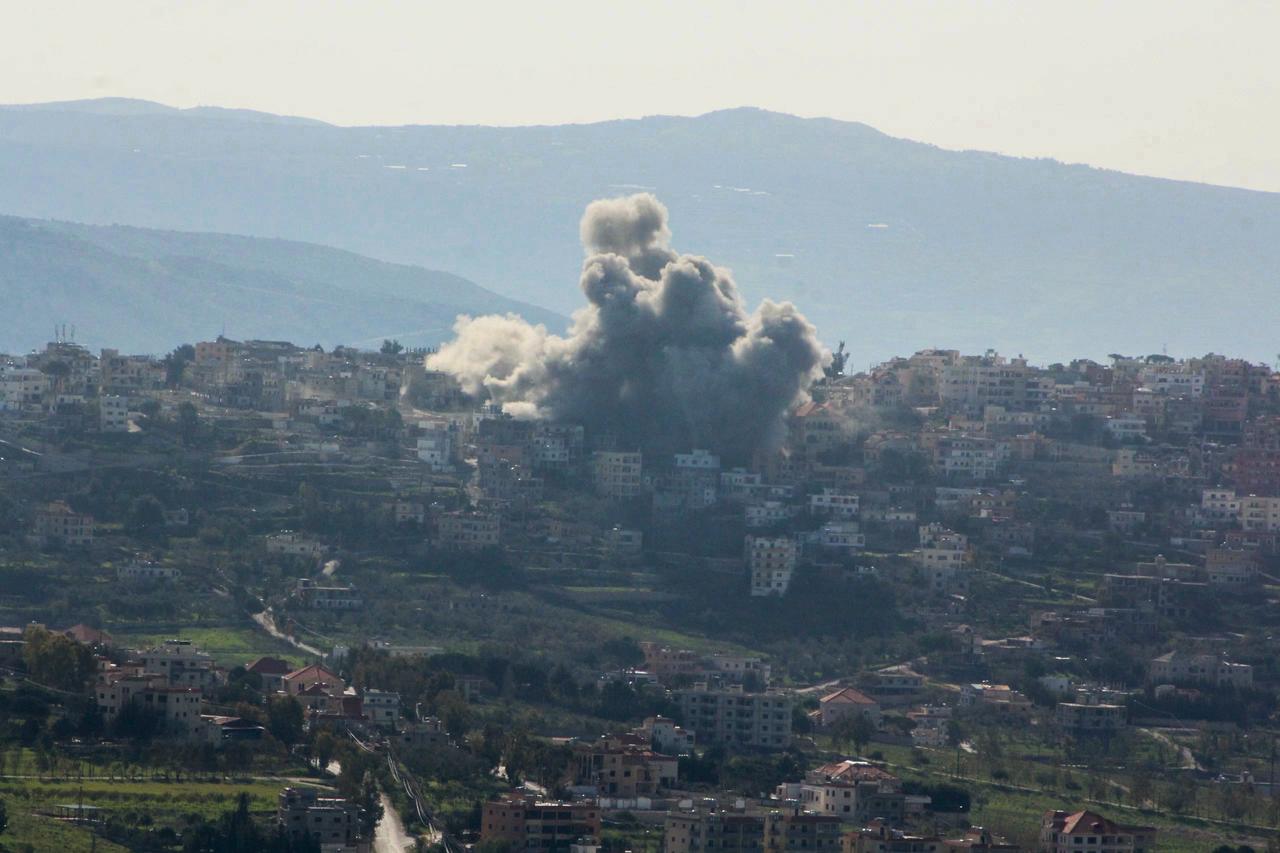
Israel cannot realistically fill that role through ground operations. Its air power is formidable, but its land forces repeatedly fail against irregular fighters; following Hassan Nasrallah’s death, Israeli troops could not decisively take two villages from Hezbollah militants. Even if Israel possessed a stronger land force and greater population depth, complex power dynamics between the U.S. and Israel would not allow the Israeli troops to be on the ground. That reality leaves Washington scanning the market for proxies. The market, however, is not highly populated.
The offer is simple: the guns, intelligence and targets will be provided. All that is required from the “partner” is to pull the trigger—and risk their life. If they fail, no compensation will be paid.
The language the Trump administration has used regarding the Kurds in Iran amounts to little more than this proposition. It is insulting and reductive, treating a historic and noble nation of the Middle East as tools to hire. While some of them are up to the job, given that the Israeli intelligence was arming small factions of Kurds inside Iran, their scale remains too limited to be game-changing.
Yet using Kurdish armed groups against the Iranian regime is far from straightforward.

As Türkiye Today contributor Levent Kemal explains, the Iranian state is structurally resilient: its political core in cities such as Tehran, Isfahan, and Shiraz tends to consolidate public support in the face of external threats, limiting the leverage that outside armed groups can exert.
Kurdish political and armed factions are fragmented and pursue divergent goals, preventing effective coordination toward a unified objective. The mountainous geography of western Iran further constrains any operations to border raids rather than decisive breakthroughs, and Iran’s cohesive security institutions make a proxy insurgency far less likely to succeed than similar efforts in Iraq or Syria. In short, Washington’s “offer” faces serious practical and strategic obstacles that cannot be solved by simply providing weapons.
The way the Trump administration has handled the issue is problematic. Holding talks with Kurdish groups only after operations have already begun suggests a lack of strategy and planning. Had this been a well conceived operation, such critical coordination would have been handled months ago. But, that is not the subject of my article. The way the Trump administration talks about the Kurds is insulting, portraying them as people to be hired, at times against Turks, at times against Saddam, and now against you know who.
Iraq’s first lady Shanaz Ibrahim Ahmed—a figure of significant influence among Kurds across the region—has issued a scathing public warning against reported U.S. and Israeli plans to enlist Kurdish forces as proxies in a military campaign against Iran.
In a statement titled "Leave the Kurds alone, we are not guns for hire," Ahmed positioned herself as a fierce critic of foreign intervention. She extensively detailed the history of Western "betrayals," citing the 1991 uprising against Saddam Hussein and the recent “abandonment of Kurdish allies” in Syria.
She argued that Kurds should refuse to be "disposable pawns" in a "Great War" that serves external interests rather than Kurdish stability. "Our blood is not a commodity for sale," Ahmed asserted, calling for regional diplomacy over armed escalation.
Similarly, Mahmud Sangawi, a commander from northern Iraq, stated that Kurdish forces' primary duty is to defend their own borders, not to act as "foot soldiers" for foreign agendas that risk regional incineration.
Washington may calculate that the strategic payoff outweighs these risks, but the geopolitical realities make this gamble far more unpredictable than many in the West acknowledge.


 Set as preferred source
 Set as preferred source


 3 min read
 1 min read