Newsletters


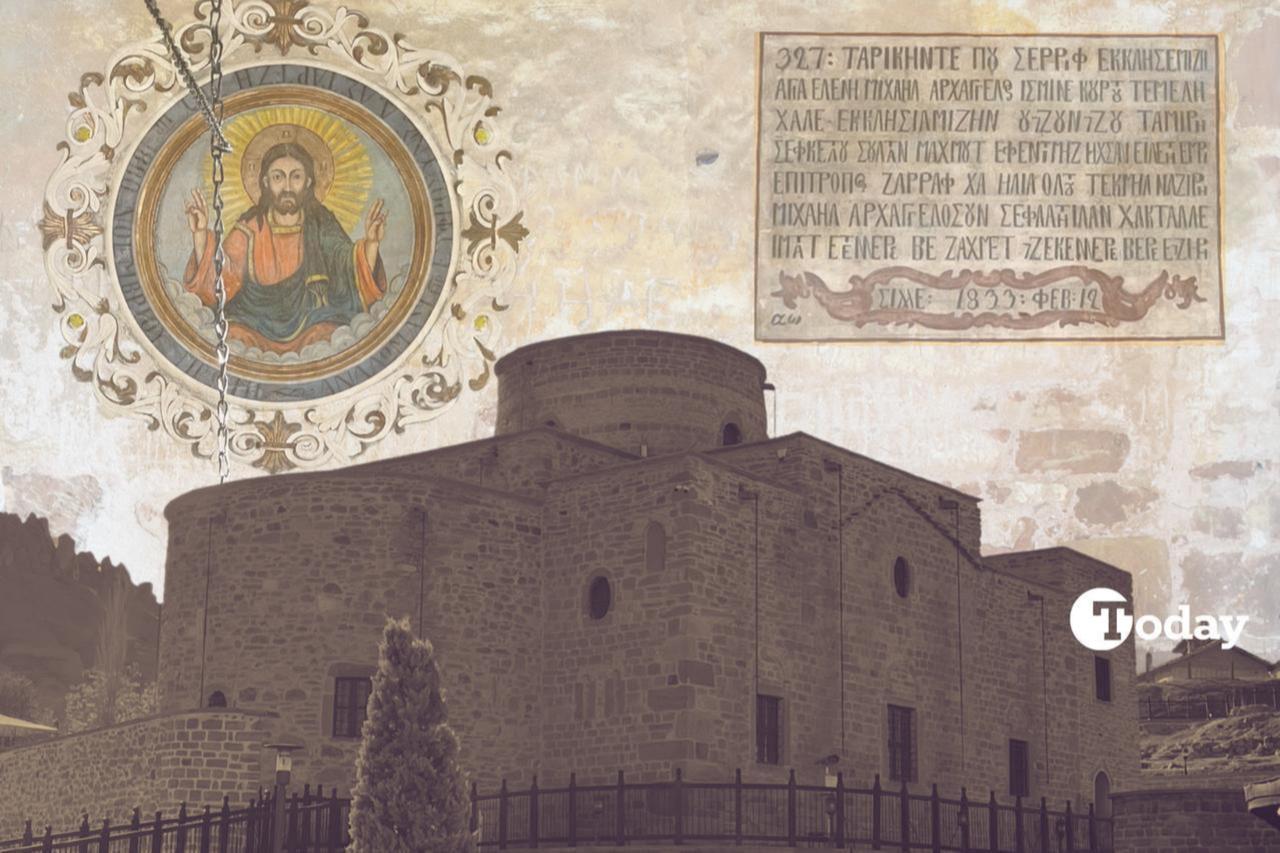


During my first year in Istanbul, the Bulgarian St. Stephen Church became a quiet beacon for me each time I returned to the neighborhood of Balat. I would often ask taxi drivers to stop near the place of worship that sat just across from Balat’s colorful row houses. As long as I could see its distinctive silhouette, I knew I could find my way home.
Soon, I came to associate the church with the neighborhood itself, an area once home to a vibrant Jewish community that has since become part of the broader construct of the Fatih district in Istanbul, which now religiously leans more traditionalist Muslim. Ironically, it was here that I first encountered Christianity as it thrives within Türkiye.
Drawing on my years in Türkiye, I write as a lifelong Catholic sharing the reality I’ve experienced firsthand. I find myself returning to these experiences more often now, as a flurry of disinformation surrounding Türkiye’s supposed treatment of Christians floods the media landscape. These narratives distort the on-the-ground reality in ways that appear tied to broader geopolitical attempts to pull the country into the current regional conflict.
The construct has gained traction in the wake of the 2026 U.S.-Israel war with Iran. Claims portraying Türkiye as an emerging Islamist theocracy, driven largely by Israeli political voices, including former Prime Minister Naftali Bennett, have begun to circulate more widely across both Israeli political circles and American fundamentalist Christian spaces.
In a recent interview, Bennett argued that Türkiye is fostering a “hostile Sunni” environment and is “the next Iran,” a rhetoric that often stokes fear among American evangelicals who have little familiarity with the country’s lived realities. Stripped down, these claims attempt to place Turkish society in the same category as a theocratic state like Iran, one that imposes religious doctrine on all its citizens regardless of background or belief.
This is simply not the case. Unlike Iran, Türkiye is a constitutionally secular state and operates as such, which can be seen within the broader societal framework. In my neighborhood near the heart of the city, bars and cafes remain bustling even during the height of Ramadan. On some days, if you’re lucky (or unlucky, depending on who you ask), you might even be stopped by a few local Mormon women weaving through the crowds, trying to educate tourists about their faith in a mix of Turkish and English.
While Christians only make up about 0.2%-0.6% of the religious population within the country, Christianity lived within Türkiye is as colorful as the country itself.
Nothing shows this layered existence more than the city of Mardin, which is sometimes referred to as “the city of cultures.” The ancient city lies on the Turkish-Syrian border, and on a clear day, Amuda, Syria, can be seen from the old city’s vantage points. While predominantly a Sunni Muslim area, the city and surrounding region are home to a diversity of religious faiths, including Syriac Orthodox, Catholics and Yazidis.
The identity of the city is shaped by its religious diversity, which is a source of pride for local people. This pride can be witnessed within the Sabanci City Museum, located within the old city. The museum proudly displays Christian art and iconography, including Christ on the Cross, The Last Supper and an exhibit educating visitors on the co-existence of Muslims and Christians over the centuries and how it helped the region flourish.
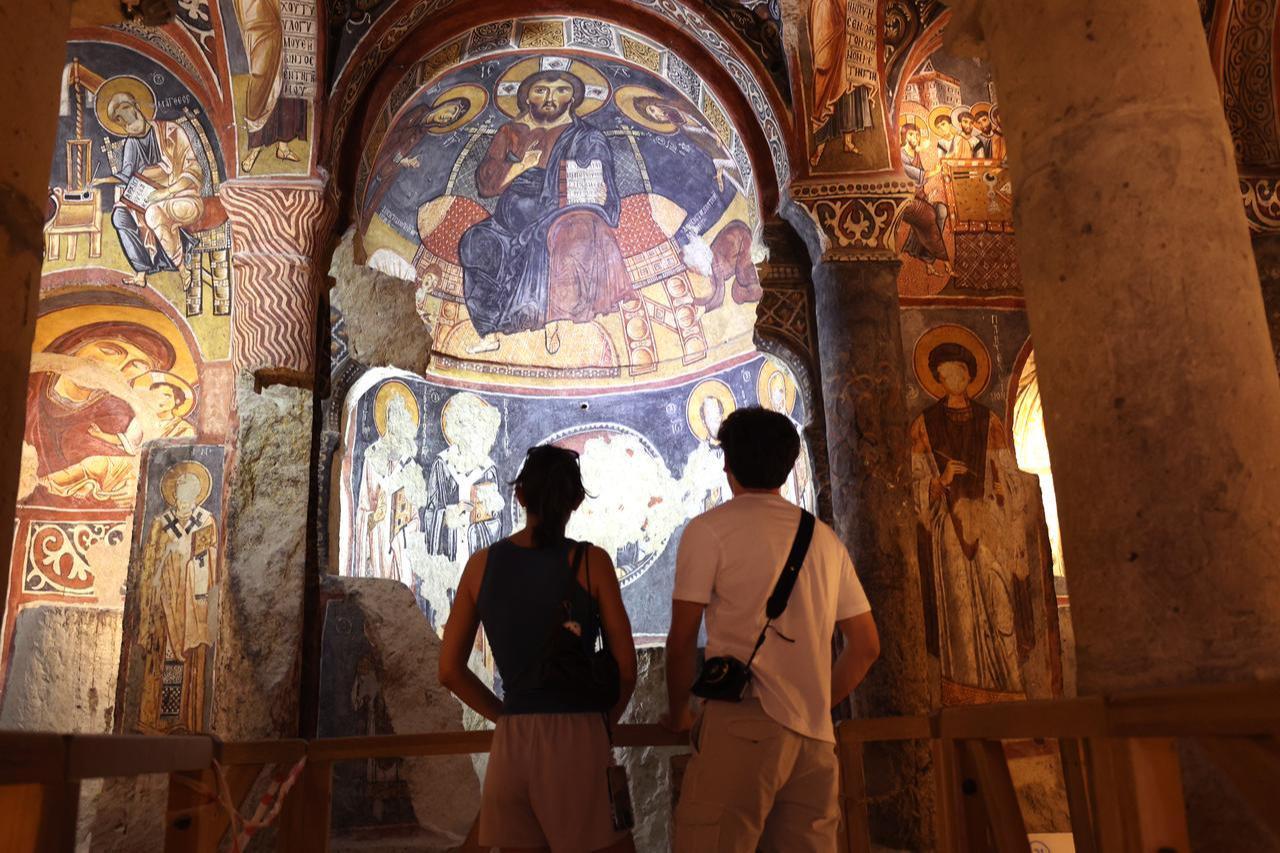

I spent much of my time in Mardin exploring some of the region’s most sacred Christian sites with a paradoxical tour guide: my then-serious partner, a traditionalist Sunni Muslim man from the area who never missed a trip to the mosque. His equally, if not more, traditionalist family chauffeured us through the countryside, where we discovered hidden Christian gems like the Deyrulzafaran Monastery, a Syriac Orthodox religious house where Aramaic, the language of Jesus, can still be heard in prayer.
Despite our religious differences, he became both my translator and religious educator in the region as we moved from Christian site to Christian site, which also included the Saint Hirmiz Chaldean Church. Dating back to the late fourth century, the site is home to a remarkable collection of Syriac manuscripts, spanning both religious and secular texts that have been preserved for centuries.
This religious interlacing in Turkish society extends far beyond Mardin, as it is found in the Mediterranean regions of southern Türkiye. In the summer of 2025, I spent extensive time in Mersin and neighboring Tarsus. Mersin is a family-friendly beach metropolis with open parks and tennis courts. During the summer months, locals spent the hot days lounging at the beach before wandering into one of the local fish restaurants that populated the shore. In my local supermarket, shelves were often stocked with prosciutto and other imported pork products, which to me served as a subtle reminder of the roughly 3,000 Christians residing within Mersin.
Historically a cosmopolitan hub for merchant families, Mersin has a small but significant Christian community that is home to Orthodox Christians, Catholics and Syriacs. During my time talking with locals and Syrians in Mersin, I soon came to realize that since 2011, the city has offered somewhat of a refuge to Syrian Christians, mainly from Latakia, who relocated to Türkiye for more stable grounds.
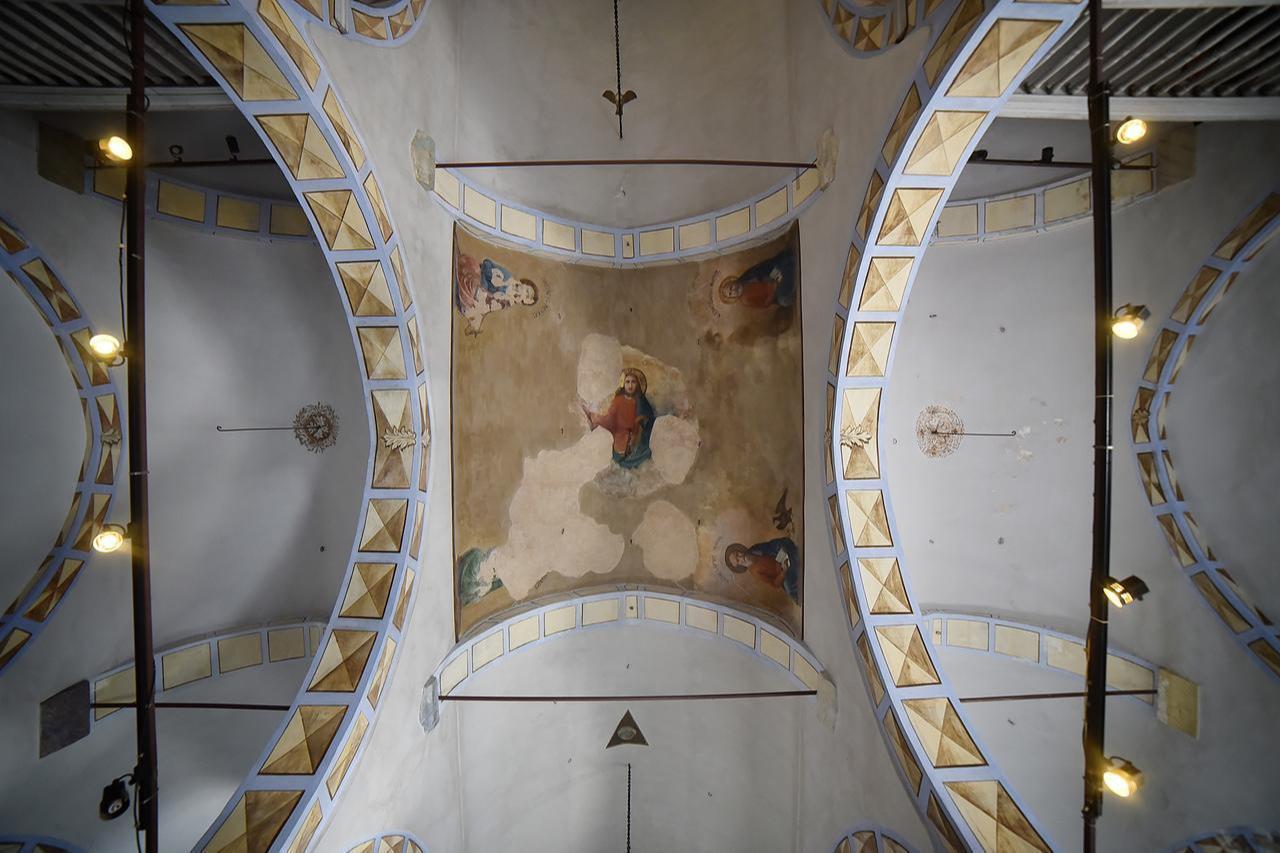
Mersin also neighbors Tarsus, which is the birthplace of Paul the Apostle.
One day, out of a mixture of boredom and curiosity, a friend and I decided to hop on a local Dolmus (a shared minibus that runs from city to nearby towns) from Mersin to Tarsus to retrace the footsteps of Paul the Apostle. My companion, a Dutch Protestant who has lived for over six years in Türkiye, saw our day trip as both a learning experience and a chance for spiritual growth, hoping that retracing the footsteps of Paul would draw us closer to our Christian faith.
While the cities are adjacent, Tarsus leans more traditional and religiously conservative, with a larger practicing Sunni population than neighboring Mersin. Yet even here, a visible Christian presence remains, often centered around the city’s main tourist attractions. It’s not uncommon to come across small tour groups from Italy and elsewhere being guided through its well-known Christian historical sites. In Tarsus, the remnants of Paul’s life intertwine effortlessly with modern life across the broader cityscape, particularly in the main city center, which contains several key ruins associated with Paul the Apostle.
This includes St. Paul’s Well, located in a courtyard garden believed to be the birthplace and childhood home of Paul the Apostle. The St. Paul Memorial Museum, a church-museum dedicated to him, is one of the city’s main attractions and sees a steady stream of tourists. Within this space, my friend and I chose to take meditative prayer as visitors quietly meandered through.
In Istanbul itself, a microcosm of different Christian faiths exists within the broader cityscape. The neighborhoods of Sisli and Kadikoy have become somewhat of a safe haven for Ukrainians and Russians escaping the war. Russian and Ukrainian Orthodoxy culture can be found burgeoning within the neighborhoods. Sisli is also home to St. Esprit Cathedral, which is the main Roman Catholic Church in Istanbul. The services, while mainly held in Turkish, have a diversity of nationalities represented within their congregation. On a warm May day in 2024, I was invited by a Dutch friend, a recent convert to Catholicism, to join one of the church Services. She, like some of her friends who had accompanied us to the service, found their faith while residing in Türkiye. The diversity of worshipers included nuns, diplomats, expats, Christian youth and local Turks. A large West African population was also present within the congregation.
It is important to recognize that while rhetoric tries to paint Türkiye’s social landscape as one similar to theocracies like Iran, a different existence is happening on the ground. The irony should also not be lost that a prevalent purveyor of this rhetoric is Israel, a state that has been actively targeting Christian villages within Southern Lebanon since the war began. We should expect that this type of narrative will attempt to take root as the conflict continues throughout the broader region. Yet it is important to separate disinformation meant to bring more countries into this conflict from how reality exists on the ground.
Amid political and media hysteria, the reality on the ground is one of Christian continuity and coexistence, where Christianity endures and contributes to Türkiye’s religious pluralism. I invite you to see for yourself!


 Set as preferred source
 Set as preferred source


 2 min read
 1 min read